South Minas Gerais Specialty Coffee Region — Flavor Profile of Semi-Washed Brazil Red Bourbon Coffee Beans
FrontStreet Coffee Brazilian Red Bourbon
FrontStreet Coffee's Brazilian coffee has long been a favorite among drinkers for its rich, low-acidity profile and its nutty cocoa aroma. Within the daily bean series there is a FrontStreet Coffee Brazilian Red Bourbon with clear chocolate and nut flavors and a full, smooth body, making it a natural pick for anyone who prefers low-acid coffee. Brazil also appears in the seasonal drip coffee bag series, a reminder of how indispensable the country is to the classic coffee flavor profile.
Impact of COVID-19 on Brazilian Coffee
Brazilian coffee consumption grows at an annual rate of about 5%. Per capita consumption has already surpassed that of the United States, making Brazil the world's largest coffee-consuming country. It is also the largest producer globally, so any disruption to its coffee production ripples straight through the world market.
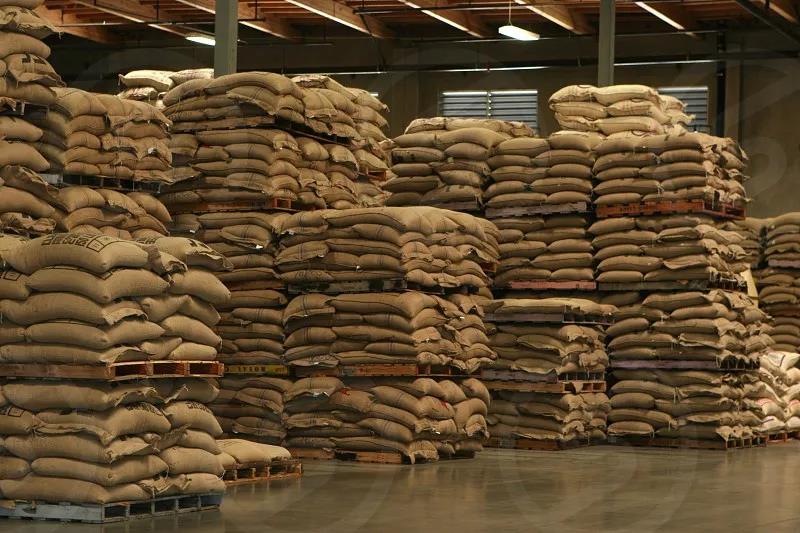
According to the latest reports from Coffee Finance Network and Bloomberg, domestic coffee warehouses in Brazil are close to overflowing, operating at unprecedented levels. Trucks loaded with beans from producing regions queue for days at warehouse entrances before they can unload. Because spot prices are high, farmers have already sold a large share of this year's production, with an estimated selling ratio of 60%, well above the usual 40% or more. At the same time, reduced demand and supply chain disruption caused by the COVID-19 pandemic have left large quantities of beans sitting in storage. A local agricultural consulting firm in Brazil reported that unloading now takes 6-7 days, and beans bound for cooperatives in southern Minas Gerais have begun to be placed in outdoor silos to keep up with demand. Because of the excessive waiting times, truck drivers now charge double fees to transport coffee beans.
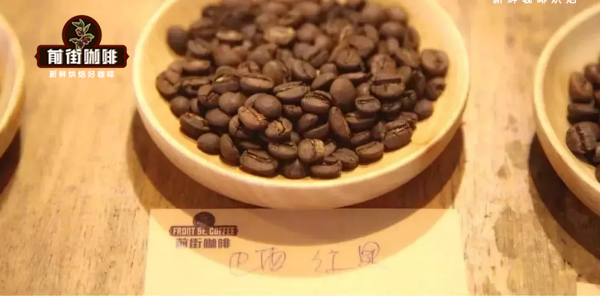
Coffee Details
Country: Brazil
Region: South Minas
Altitude: 1000 meters
Variety: Red Bourbon
Processing: Pulped Natural
Flavor: Nuts, chocolate, cream, peanuts, caramel
Brazilian Coffee Regions
Brazil sits in the Latin American region of the Western Hemisphere, on the eastern side of South America along the west coast of the Atlantic Ocean. On land it borders every country on the continent except Ecuador and Chile. The vast majority of its territory lies between the equator and the Tropic of Capricorn, giving it the most extensive tropical range of any country in the world. One-third of its territory has a tropical rainforest climate and two-thirds a tropical savanna climate. Those tropical conditions suit the growth and production of crops like coffee exceptionally well.
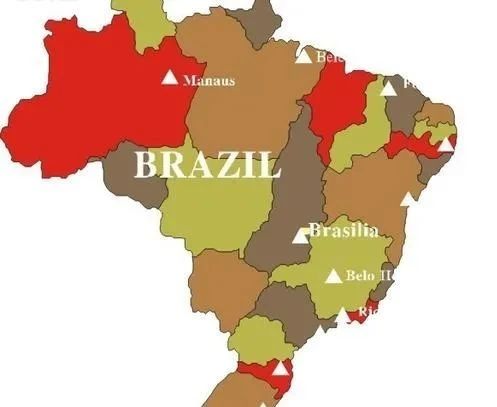
FrontStreet Coffee's Brazilian daily bean comes from Minas Gerais state. The representative coffee regions of Minas Gerais are Cerrado and South Minas, both high-altitude areas. Cerrado lies in the western part of the state, a flat plateau with altitudes ranging from 750 m to 1,200 m. South Minas is hilly terrain at altitudes of 700 m to 1,200 m. Since 1999, South Minas has produced the highest number of winners among the estates that have taken prizes in Brazil's Cup of Excellence competitions.
Coffee Variety — Red Bourbon
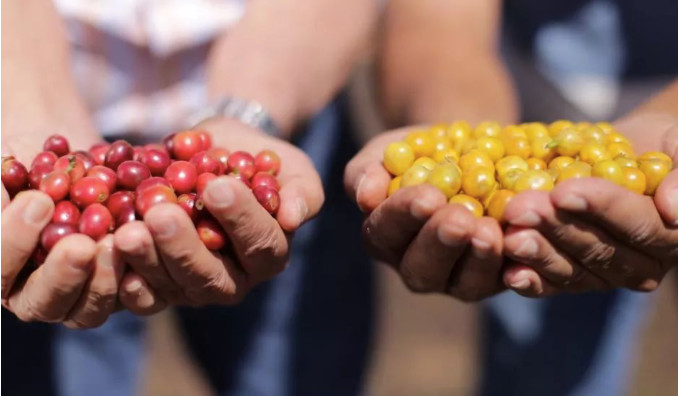
Bourbon coffee was originally cultivated on Réunion Island, which was known as Bourbon Island before 1789. The Bourbon variety is a sub-species that arose from a mutation of Typica, and alongside Typica it belongs to the oldest coffee varieties still in existence. Bourbon cherries ripen to a bright red. In general, after Red Bourbon trees flower and set fruit, the cherries change color in this sequence: green, light yellow, light orange, mature red, then a darker overripe red, which is why it is called the "Red Bourbon variety." In practice, Red Bourbon is what the industry usually means by Bourbon. Bourbon grown at high altitude tends to have better aroma quality, with brighter acidity and even wine-like flavors. Put simply, Bourbon is a coffee tree variety within the Arabica species that generally bears red fruit. There are also Yellow Bourbon and Orange Bourbon; Yellow Bourbon yields somewhat less but offers better quality.
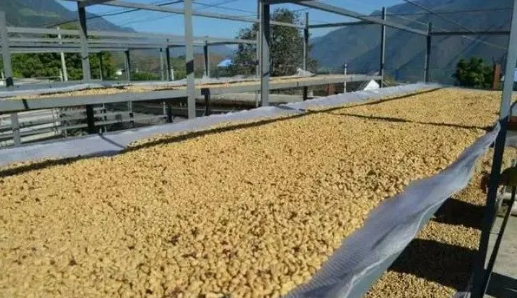
Coffee Bean Processing — Pulped Natural Processing
Pulped natural processing, also called honey processing, differs from traditional natural processing in that the pulp and skin of the cherries are removed, which allows the fermentation degree of the mucilage-coated beans to be controlled. Traditional natural processing dries the fruit with the pulp and skin intact, so mucilage fermentation cannot be monitored. Pulped natural sits between natural and washed processing, but it skips the tank fermentation and clean-water rinsing steps of the washed method, placing the beans straight into the sun to dry instead. The methods may look similar, but without the fermentation step the flavor of the bean is entirely different.
FrontStreet Coffee Roasting Analysis
Roaster: Yangjia 600 g semi-direct flame
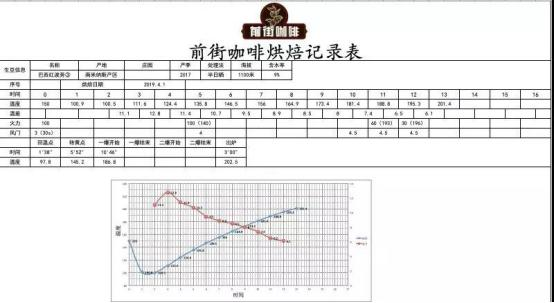
Brazilian coffee commonly grows at altitudes of 1,000-1,300 meters, giving it relatively low density, moderate moisture content and a softer bean texture that is thin from surface to core. It therefore does not tolerate very high temperatures, which would create burnt bitterness. We introduce the beans on medium heat and hold that heat through the dehydration stage. Once first crack begins, we make fine adjustments as the temperature rises to promote more complete caramelization. This FrontStreet Coffee Brazilian pulped natural bean experiences a slow rise after first crack, allowing it to be dropped just before second crack. Preheat the roaster to 200°C, open the air damper to 3, turn on the flame after 30 seconds and adjust the heat to 160, keeping the air damper unchanged. The temperature return point comes at 1'30", and heat is maintained. Yellowing arrives at 5'00", the grassy smell disappears and the bean enters the dehydration stage. Reduce heat to 130 and open the air damper to 4. At 168°C, reduce the heat again to 100. Dehydration is complete at 8'00", when wrinkles and dark markings appear on the bean surface and the toasted smell turns to coffee aroma, signaling the prelude to first crack; listen closely for the crack sounds. First crack begins at 8'50", and the air damper is opened fully to 5. Development time after first crack is 3 minutes and 10 seconds. On reaching 190°C, reduce the heat to 50, reduce again to 30 at 194°C, and drop the beans at approximately 200°C.
FrontStreet Coffee Brewing Recommendations for FrontStreet Coffee Brazilian Red Bourbon
Dripper: V60
Dose: 15 g
Water Temperature: 90°C
Grind Size: 80% pass-through on a #20 standard sieve
Water-to-Coffee Ratio: 1:15
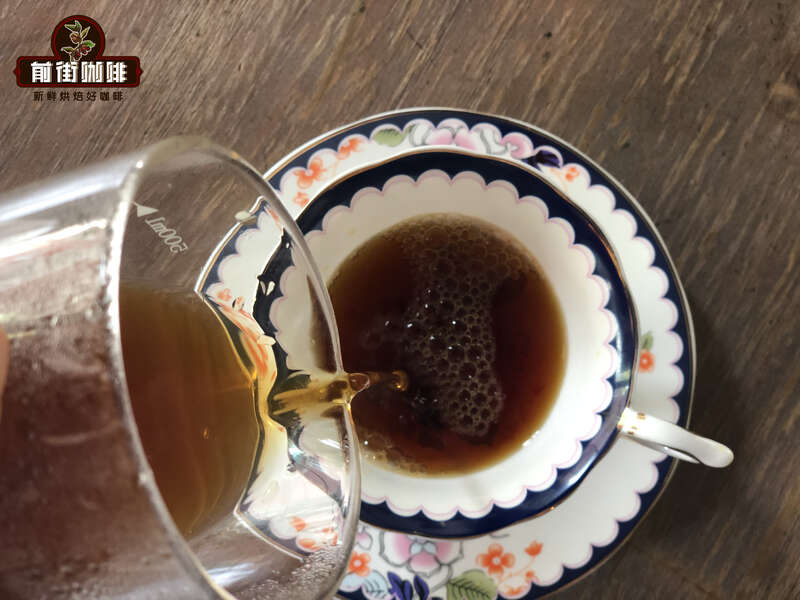
FrontStreet Coffee uses segmented extraction, with the bloom water at twice the coffee dose, meaning 30 g of water for a 30-second bloom. After a small circular pour to 125 g, the pour is segmented. Continue pouring to 225 g once the water level drops and is about to expose the coffee bed. Total extraction time is 2 minutes.
FrontStreet Coffee Brazilian Red Bourbon Brewing Flavor: High sweetness, clean, smooth, low acidity, with tropical fruit aroma.
FrontStreet Coffee Recommendation
Brazil is the world's largest coffee producer, and its beans carry a moderate acidity with a fine balance of sweetness, bitterness and body. That balance is exactly why Brazil takes so naturally to a medium roast: the result is a nutty aroma in the cup, a smooth, rich mouthfeel, and just a gentle acidity that works either as a single origin or in a blend.
For a first taste of the region, FrontStreet Coffee's Cerrado Red Bourbon is a classic Brazilian single origin. Cerrado is a well-known growing area prized for high-quality beans, and this lot is the South American Red Bourbon variety. Roasted medium, it shows creamy peanut, toasted bread, caramel and hazelnut, with a rounded body, no acidity and a slight bitter note; it works as pour-over and equally well in a moka pot, as an espresso SOE, in a siphon or in a French press.
The Queen's Farm Yellow Bourbon is the other Brazilian single origin worth knowing. It comes from Mogiana, close to South Minas, where fertile red volcanic soil feeds the fruit and builds a full aroma. Yellow Bourbon is a rare variety that arose from a mutation of Red Bourbon, and it produces a cleaner fruit character. Whether you brew it as pour-over, in a moka pot or on a home espresso machine, expect a sugarcane sweetness that other regions rarely deliver, alongside fruit and chocolate. Brazil's low acidity, balanced body and approachable price also make it the backbone of FrontStreet's espresso blends, where it supplies chocolate and cream aromas and a soft sweet-bitter balance that keeps extraction stable.
Important Notice :
FrontStreet Coffee is a long-established specialty coffee roaster in Guangzhou China, selling freshly roasted beans from its own farm in Yunnan as well as dozens of carefully selected single-origin beans from around the world for both pour-over and espresso. The products deliver consistently excellent quality and great value, with shipping within 24 hours. Guangzhou's FrontStreet Coffee shop is recommended by many coffee lovers, and the beans are now available online at the Tmall 。
FrontStreet Coffee has moved to a new address:
FrontStreet Coffee Address: 315,Donghua East Road,GuangZhou
Tel:020 38364473
 Scan and follow the En Gafei WeChat official account. Please indicate that the reprint comes from "En Gafei".