How to Brew Dark Roast Coffee Deliciously? Which Coffee Varieties Are Better for Dark Roasting? How to Brew Dark Roast Mandheling
Introduction
In a world that now celebrates light roast, floral aromatics and fruit acidity have pulled a lot of drinkers toward specialty coffee. Dark roast, with its original coffee flavor — sweet, bitter, aromatic, and full — has a harder time winning newcomers over. If a light roast is a maiden dancing in the forest, a dark roast is a mature, steady, and profound gentleman. Today we pull back the layers and look into this gentleman's heart.
Deep Roast Coffee
Mention a deep roast and certain associations come up right away: an oily black surface, a thick body, bitterness, and a powerful aroma. The biggest difference most people draw between deep roast and light roast is simple — "deep roast is bitter, bitter, bitter, while light roast is sour, sweet, and fragrant." That is not entirely wrong. With so many light roasts on the shelf, bitterness really is the first thing you notice in a dark coffee. To me, though, bitterness is only the surface. Look past it and the deeper charm appears.
First of all, "deep roast" is just a definition of roast degree. Because the roast runs longer and hotter, caramelization and Maillard reactions are pronounced. The coffee fibers begin to carbonize, which sharpens the bitterness, while floral and fruity notes shift toward nuts, chocolate, and cream.
Brewing Techniques
Bean Selection
Not every bean tastes the same when roasted dark. Deep-roasted Kenya AA, for example, shows almond, chocolate, mild acidity, and high clarity, while deep-roasted Golden Mandheling gives you pine, herbal notes, nuts, caramel, and a rich body. For this brew I have chosen Indonesia Lintong Mandheling from FrontStreet Coffee, with the following details:
- Region: Lintong, Sumatra
- Altitude: 1100-1600m
- Variety: Typica
- Processing Method: Wet-hulled
- Flavor Profile: Toast, nuts, caramel, pine, herbal
Brewing Equipment
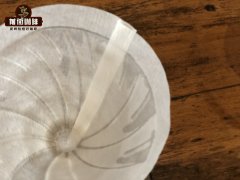
A gooseneck kettle with a wider spout works best. For filtration you can choose a Kono conical dripper, a Kalita trapezoidal dripper, or a flannel filter cloth — all of which help build a richer cup. For this brew I am using a Kalita trapezoidal dripper.
Grind Size
Deep-roasted beans have a looser structure, absorb water efficiently, and the coffee bed expands readily once water is added, which makes flavor compounds easier to pull out. To avoid over-extraction, I go with a coarse grind (a 60% pass-through rate on a #20 standard sieve).
Coarse grinding cuts the contact area between grounds and water, so bitter, astringent flavors do not rush out at the start when the water is hottest. Pour slowly to stretch the extraction time, and as the water temperature falls in the later stages, flavors and body compounds come through gradually.
Water Temperature
I brew at around 86-88°C. Dropping the temperature slightly lowers extraction efficiency, which keeps burnt bitterness and other off-flavors out of the cup.
Coffee-to-Water Ratio
I use a 1:13 coffee-to-water ratio with 20 grams of grounds. A tighter ratio makes the coffee taste more concentrated: at a given extraction rate, extracting with less water leaves you with a stronger brew.
Brewing Method
Preheat the filter, then add the grounds slowly and keep the bed as level as you can. Do not shake the dripper — shaking narrows the gaps between grounds. For the first pour, make small circles in the center with 40g of water and let it bloom for 30 seconds. The bed will gradually swell into a "hamburger" shape.
For the second pour, circle 120g from the center outward. Keep the spout as close to the bed as possible and move slowly to avoid over-agitating. For the final pour, add 100g of water, and finish when all the coffee has drained into the lower pot. Total extraction time: 2 minutes.
Flavor Profile
Herbal notes and pine resin greet the nose, while the palate finds rich nuts and chocolate. The body is excellent — the initial bitterness fades quickly, giving way to a thick sweetness that sits very comfortably on the tongue.
FrontStreet Coffee Recommendation
If this profile appeals to you, two FrontStreet Sumatran coffees are worth brewing. FrontStreet Lintong Mandheling is the everyday choice: dark chocolate and caramel up front, with the wild herbal, clove, and woody notes that wet-hulled Sumatra is known for. FrontStreet PWN Golden Mandheling is the step up — triple hand-sorted for a cleaner cup, with woody aroma and caramel coming through more clearly. Brew either at 87-88°C with 15 grams of coffee at a 1:15 ratio and a coarse sugar grind, pouring in three stages: 30 ml to bloom, 100 ml to lift the bed, then a gentle 95 ml down the center.
Important Notice :
FrontStreet Coffee is a long-established specialty coffee roaster in Guangzhou China, selling freshly roasted beans from its own farm in Yunnan as well as dozens of carefully selected single-origin beans from around the world for both pour-over and espresso. The products deliver consistently excellent quality and great value, with shipping within 24 hours. Guangzhou's FrontStreet Coffee shop is recommended by many coffee lovers, and the beans are now available online at the Tmall 。
FrontStreet Coffee has moved to a new address:
FrontStreet Coffee Address: 315,Donghua East Road,GuangZhou
Tel:020 38364473
 Scan and follow the En Gafei WeChat official account. Please indicate that the reprint comes from "En Gafei".