Pour-Over Coffee Steps: V60 Dripper Pour-Over Coffee Method & Tips
Pour-Over Coffee: Mastering the Art of Brewing
Customers new to FrontStreet Coffee often sit down at the bar and sigh: "Why is pour-over coffee so hard?" "Why can't I brew it well?" "Why does a coffee that's supposed to be bright and acidic turn bitter when I brew it?" The truth is, pour-over coffee isn't difficult at all. In this guide, FrontStreet Coffee walks through the steps and key variables of pour-over brewing — save this one or jot it in your notebook!
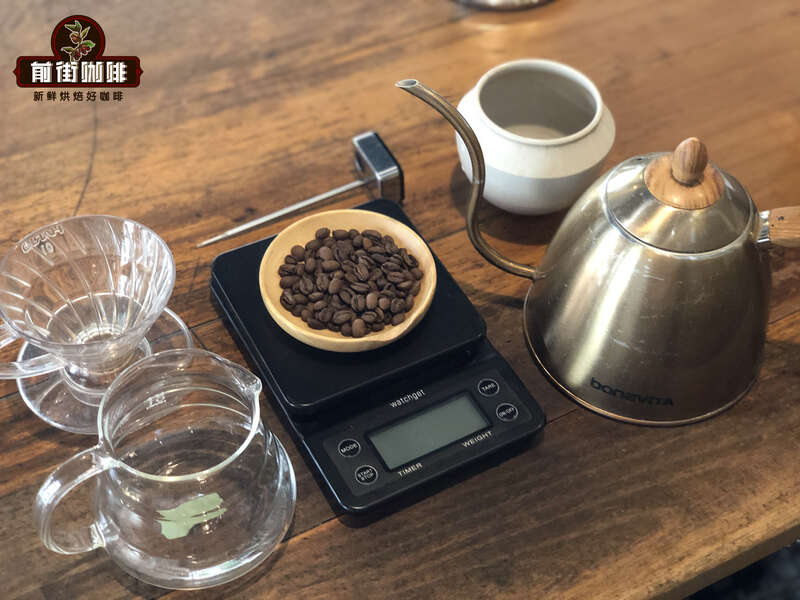
First, gather your gear: fresh coffee beans, a V60 dripper, a coffee server, filter paper, an electronic scale, a timer (built into most scales), a pour-over kettle, and a thermometer.
1. Start with Fresh Coffee Beans
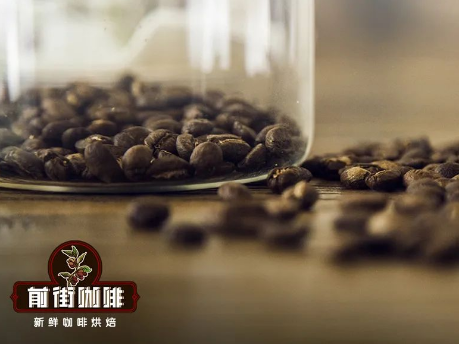
Buy from professional roasters whose bags clearly show the roasting date (not the expiration or best-by date), have brand credibility, and emphasize fresh roasting. Good coffee bags also feature a one-way degassing valve — the small button-like hole on the bag — which lets the beans release their naturally produced carbon dioxide. Point the valve toward your nose and gently squeeze the bag. If you get a rich, appealing coffee aroma, the beans are fresh. If the smell is faint or rancid and oily, the coffee has long since gone stale — skip it. Every bag FrontStreet Coffee sells uses one-way valve packaging so beans reach customers as fresh as possible, and we emphasize fresh roasting because coffee loses most of its aroma once it's more than 50 days past roast. Is fresher always better, though? Not quite — in the first two days after roasting, the aroma hasn't stabilized yet.
2. Choose the Dripper and Filter Paper
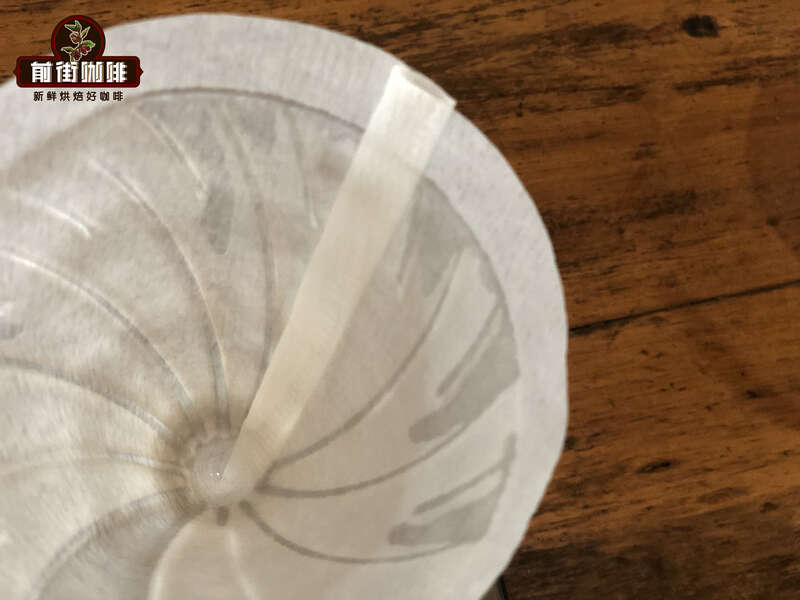
Another signature feature of the V60 dripper is the spiral ribs running along its inner wall, from bottom to top. They guide the water flow and hold the filter paper away from the walls, creating space for water to pass through quickly — making the V60 one of the fastest-flowing drippers around. Note that the ribs spiral clockwise: pouring clockwise follows the texture and flows smoothly, while pouring counterclockwise slows the flow. The large single hole at the bottom is likewise designed to promote flow speed. V60 drippers come in 01 and 02 sizes — the 01 brews 1–2 servings, the 02 handles 3–4 servings — so match your filter paper to the model!
3. Wet the Filter Paper & Warm the Server
Fold the filter paper along the crimped edges and set it in the dripper, then place the dripper on the server. Pour hot water over the paper. This does two things: it rinses away the paper taste and helps the paper adhere to the dripper walls, and it preheats the dripper and server so the brew doesn't cool too quickly and flatten the flavor.
4. Weigh the Coffee
FrontStreet Coffee recommends 15 grams of coffee per brew at a 1:15 ratio. This is based on the SCA Golden Cup extraction theory's ratio parameters for pour-over taste profiles:
[Bold flavor] 1:10–1:11 (equivalent to 1:12.5–1:13.5 on the Golden Cup standard)
[Medium flavor] 1:12–1:13 (equivalent to 1:14.5–1:15.5 on the Golden Cup standard)
[Light flavor] 1:14–1:16 (equivalent to 1:16.5–1:18.5 on the Golden Cup standard)
A coffee-to-water ratio between 1:14.5 and 1:15.5 most easily lands in the golden range of 18%–22% extraction yield and 1.15%–1.35% strength — which is why FrontStreet Coffee always recommends brewing at 1:15.
5. Grind Size
The finer you grind, the more the coffee bed compacts at the bottom of the filter paper, raising extraction resistance: flow slows, contact time lengthens, extraction yield climbs, and the cup turns strong or picks up woody, off-flavors.
The coarser you grind, the larger the gaps in the bed and the less coffee surface touches the water: resistance drops, flow speeds up, extraction yield falls, and the cup tastes thin.
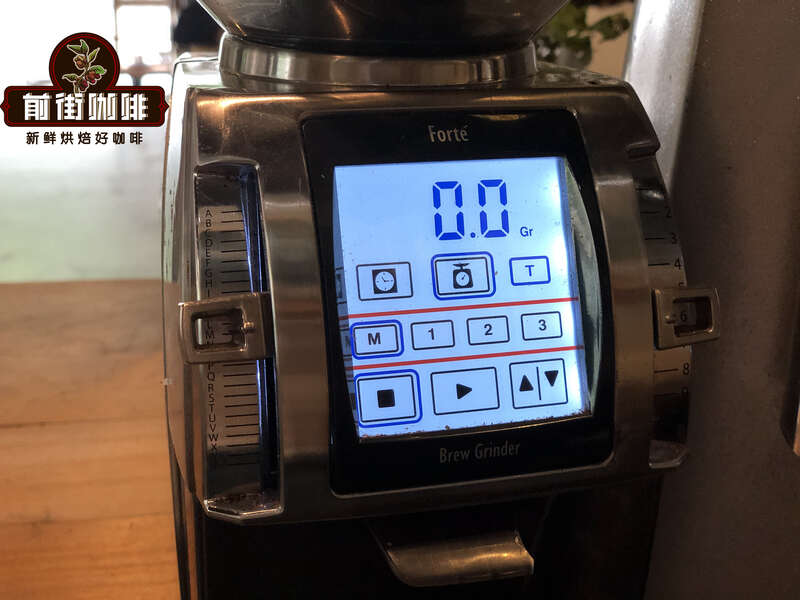
FrontStreet Coffee recommends a grind similar to fine sugar for light-to-medium roast beans (3.5 on the Fuji Royal) and one similar to coarse sugar for medium-dark roasts (4 on the Fuji Royal).
6. Water Temperature
Pour the ground coffee into the dripper and level the bed gently (don't tap the dripper — tapping settles the bed and promotes channeling, hurting extraction), then tare the scale.
FrontStreet Coffee recommends 90–91°C water for light-to-medium roasts and 88–89°C for medium-dark roasts. At a given grind size, if the cup tastes bitter, burnt, or astringent, lower the water temperature; if it tastes bland, plenty of flavor is still locked in the grounds, so try raising it.
With the right temperature and good extraction, you'll get positive, comfortable aromas and flavors: acidity that's rich and sweet-tart like plums or stone fruit, a cup so clean and transparent you can name each flavor note. The delicate, bright acidity can even recall fresh fruit — or wine — with a lingering finish that keeps you coming back for another sip.
7. The Three-Stage Brewing Method
When FrontStreet Coffee brews with the V60, we generally use three-stage pouring.
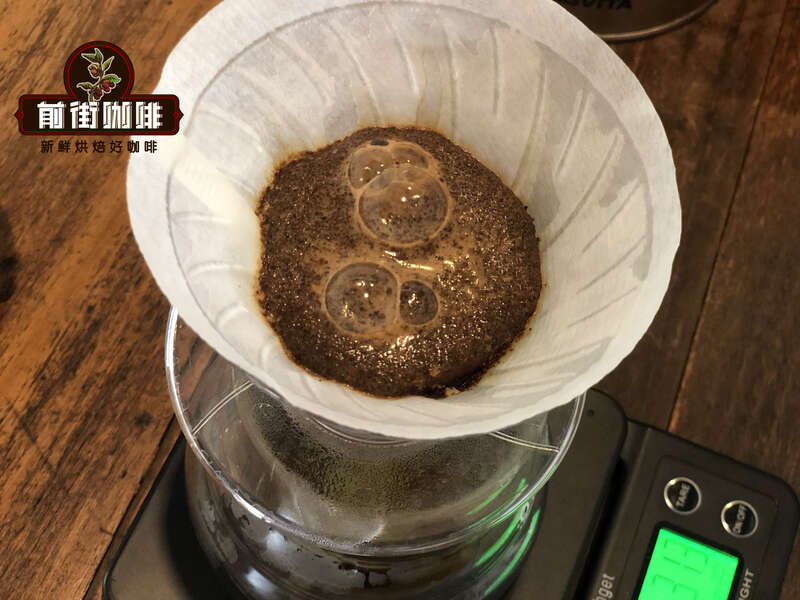
The first stage is the bloom: use twice the coffee's weight in water — 30g for a 15g dose — and wait 30 seconds. Blooming is what happens when the grounds first meet water and the coffee cells begin releasing their molecules. After wetting the grounds, stop pouring and let the carbon dioxide escape and the bed settle before adding more hot water — this yields noticeably better extraction.
The second and third stages are where the soluble molecules in the coffee cells dissolve into the hot water. A coffee bean is about 70% insoluble cellulose; the remaining 30% is soluble aromatic material, which dissolves in sequence by molecular size. First come the small molecules — acidity and aroma, like florals and citrus notes; then the medium molecules of sweetness — fruit-juice sweetness, honey, brown sugar; finally the large molecules of burnt bitterness. That's precisely where coffee's layered flavors come from.
8. Pouring Flow Rate
Your pour rate has a slightly smaller effect on strength, but it still matters. A slow pour takes longer than a fast one. Because of the V60's long-and-short rib design, a fast pour raises the liquid level up to the short ribs near the rim, letting more water bypass the grounds along the walls and shortening contact time. A slow pour keeps the level lower, the bed thicker, and the water-to-coffee contact slightly longer.
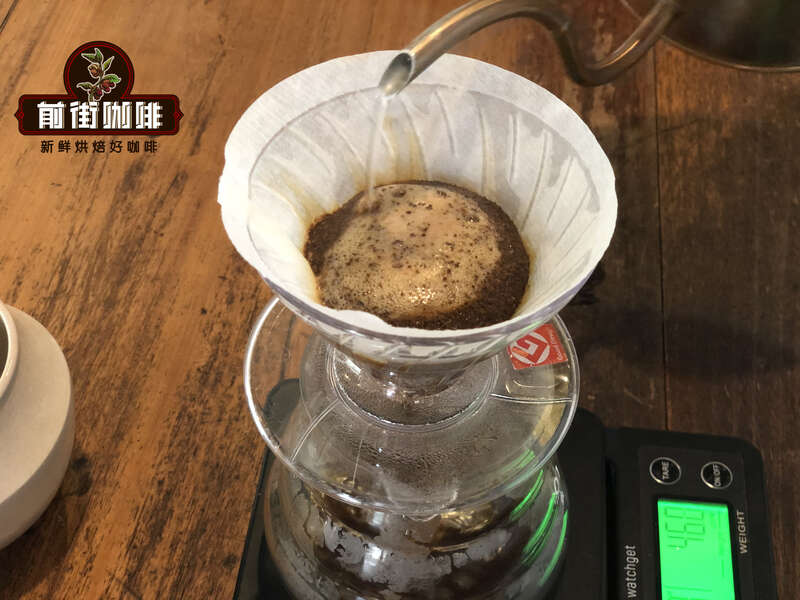
So a fast, high-flow brew is quicker and emphasizes aroma, but the cup tends toward a single, clean note. A slow, low-flow brew extends extraction and draws out fuller flavor — richer and more layered, but with a risk of over-extraction.
9. Extraction Time
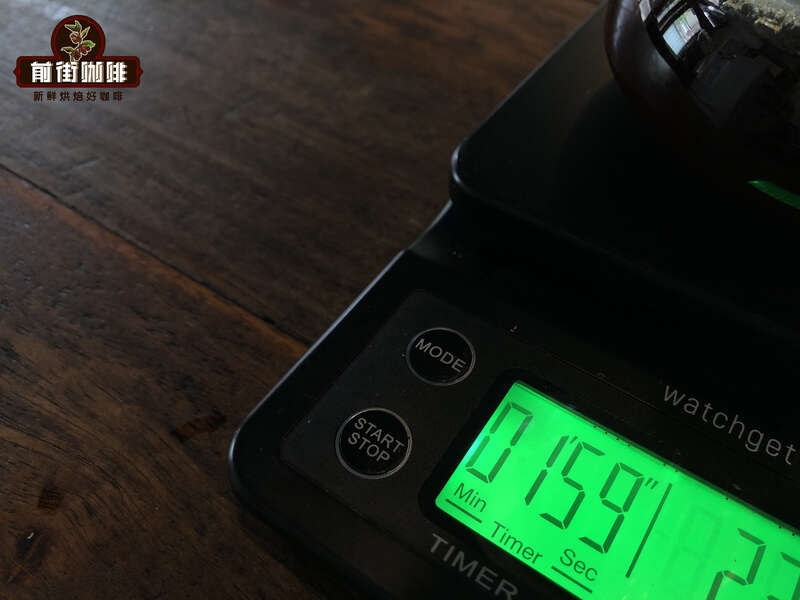
Start the timer when you tare the scale. After the 30-second bloom, begin the second pour, stopping at 125g (around 0'55"–1'00"). When the water level drops to two-thirds of the coffee bed, make the third pour, stopping at 225g (around 1'45"–1'50"). Total extraction time should fall between 2'00" and 2'10".
10. Remove the Dripper and Swirl
As noted above, a cup of coffee extracts acidity first, then sweetness, then bitterness. So once brewing is done, swirl the coffee in the server a few times to even out the liquid — that way you taste the coffee's complete flavor.
11. Add a Little Ritual to Your Day
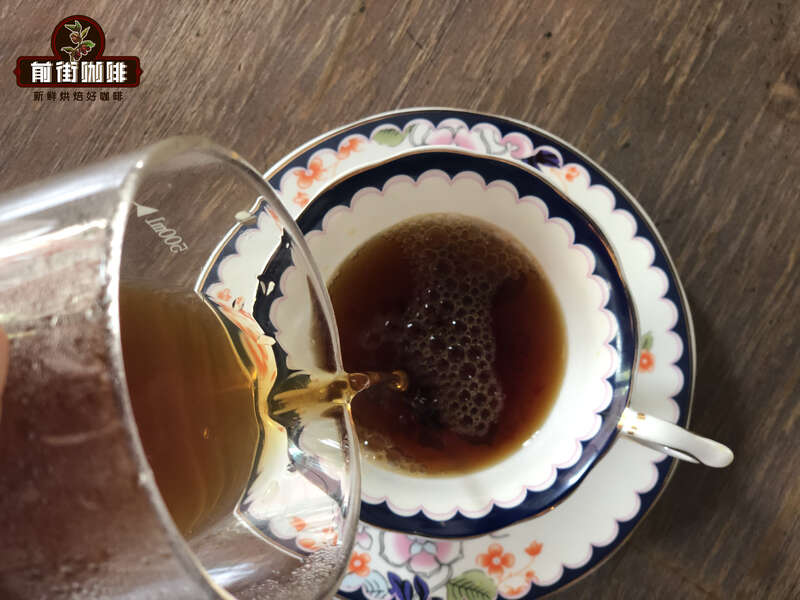
Pour it into your favorite cup and enjoy it slowly.
FrontStreet Coffee Recommendation
The V60's fast extraction is tailor-made for floral, fruit-forward coffees, so if you're stocking beans for it, start with FrontStreet Coffee's Ethiopia Yirgacheffe Guodingding — for many lovers of specialty coffee, the first stop of all. It offers vivid citrus, berry, and floral aromatics with a green-tea-like sweetness on the finish, and its acidity is soft and bright rather than sharp, making it wonderfully approachable for beginners.
For something bolder, FrontStreet Coffee's Ethiopia Huaguoi has tropical fruit aromatics that jump straight out of the cup — strawberry, passion fruit, jackfruit, even lychee — with clear sweetness, almost no bitterness, and a smooth, juice-like body. Many drinkers call it "the coffee that doesn't taste like coffee."
And if you prefer a fuller, low-acid cup from your V60, FrontStreet Coffee's PWN Indonesia Golden Mandheling is the classic answer: dark-roasted, mellow and long on the palate, layered with herbal and dark chocolate notes and a faint earthiness — perfect for drinkers who love rich flavor but shy away from acidity.
Important Notice :
FrontStreet Coffee is a long-established specialty coffee roaster in Guangzhou China, selling freshly roasted beans from its own farm in Yunnan as well as dozens of carefully selected single-origin beans from around the world for both pour-over and espresso. The products deliver consistently excellent quality and great value, with shipping within 24 hours. Guangzhou's FrontStreet Coffee shop is recommended by many coffee lovers, and the beans are now available online at the Tmall 。
FrontStreet Coffee has moved to a new address:
FrontStreet Coffee Address: 315,Donghua East Road,GuangZhou
Tel:020 38364473
 Scan and follow the En Gafei WeChat official account. Please indicate that the reprint comes from "En Gafei".