Single Origin Blend Coffee Beans Costa Rica Mira Su Geisha Panama Butterfly Geisha Blend
When people hear "blended coffee," many think of beans from different origins combined to produce a consistent flavor, usually for espresso. There is, however, another kind of blend known as a single-origin blend, which brings together different coffee varieties from the same growing region. Today FrontStreet Coffee explores what single-origin blended beans are, and whether they can still be called single-origin coffee.
The Origin Story of Costa Rica and Panama Geisha
Geisha was first discovered in the Geisha forest of Ethiopia in 1931. It was later sent to a coffee research institute in Kenya and introduced to Uganda and Tanzania in 1936. In 1953 it was brought to Costa Rica.
The renowned Panama Geisha actually originated in Costa Rica. In the 1930s the variety spread from Ethiopia and eventually reached Tanzania. In 1953 Costa Rica's research institution CATIE obtained some Geisha seeds from Tanzania for study. In 1963 Don Pachi Serracin introduced Geisha trees from Costa Rica to Panama. Because yields were low and directly affected harvest volume, farmers showed little interest in cultivating it. It was not until Daniel Peterson, owner of Panama's La Esmeralda estate, discovered by chance that beans from Geisha trees, originally planted as windbreaks at the highest point of his estate, carried the distinctive citrus and floral notes typical of African coffees. After he entered them separately in the 2004 Panama cupping competition and they found instant fame, Geisha became unstoppable, winning the championship for consecutive years. Today Geisha is undoubtedly considered the ultimate treasure among specialty coffee lovers worldwide.
FrontStreet Coffee · Panama Flower Butterfly Geisha Blend
FrontStreet Coffee's Panama Flower Butterfly was known as Cupid a few years ago. It was said to contain 30% Geisha, but over two years of sales the proportion was first adjusted to 50%, then to 70%, and it was renamed Flower Butterfly, though likely not in those exact proportions.
At this point some might ask: is Flower Butterfly a blended coffee? According to research by FrontStreet Coffee, early Geisha varieties were interplanted with Catuai and Catimor to pursue higher yields, and for easier harvesting farmers later sorted the three varieties and then mixed them directly during export to achieve the desired rich flavor. Because the three varieties in FrontStreet Coffee's Panama Boquete Flower Butterfly all come from the same origin and region, it qualifies as single-origin coffee. For comparison, FrontStreet Coffee's Ethiopian beans are also not single-variety; the difference is that the Ethiopian beans involve natural harvest blending, while Flower Butterfly involves artificial post-harvest blending.
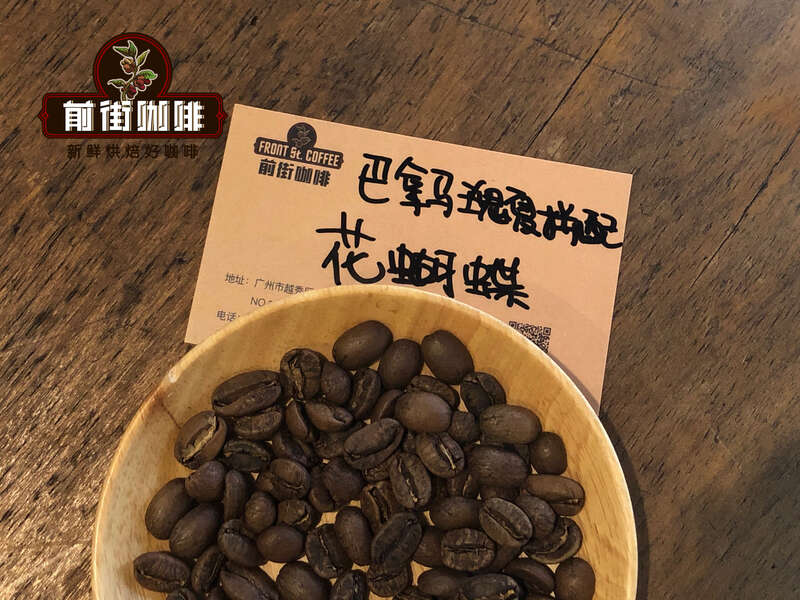
Product Name: FrontStreet Coffee Panama Boquete Flower Butterfly Geisha Blend
Region: Panama Boquete
Altitude: 1600m
Processing Method: Washed
Varieties: Geisha, Caturra, Catuai
FrontStreet Coffee · Costa Rica Mirasu Estate Geisha Blend
Similarly, FrontStreet Coffee's Costa Rica Mirasu Estate Geisha Blend consists of Geisha, ET47, SL28 and MAICO, all from the same estate, which also makes it a single-origin blend. The ET47 and SL28 varieties deserve a closer look. ET47 is a variety from Ethiopian native stock. In the 1990s the Costa Rica Coffee Research Institute supplied many imported varieties to farmers in the Tarrazú region as leaf-rust-resistant research trees. SL28 was originally bred to mass-produce beans that combined high quality with disease resistance. In some regions, though, breeding focused mainly on yield and disease resistance without considering resilience. Thanks to its Bourbon genetics, even though SL28's yield later fell short of expectations, its copper-colored leaves and broad beans deliver wonderful sweetness, balance and complex flavor, along with distinctive citrus and plum characteristics.
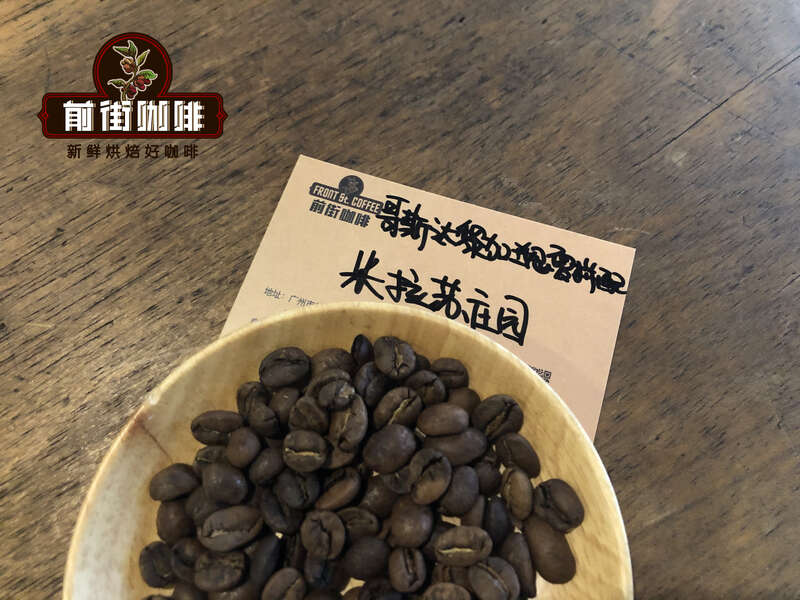
Product Name: FrontStreet Coffee Costa Rica Mirasu Estate Geisha Blend
Region: Tarrazú, Costa Rica
Estate: Mirasu Estate
Altitude: 1700m
Processing Method: Raisin Honey Process
Varieties: Geisha, ET47, SL28, MACIO
Coffee Bean Processing Methods
FrontStreet Coffee's Panama Flower Butterfly uses the washed method. After sorting, the cherries go into a depulper to remove the skin and pulp. Beans with remaining pulp and mucilage are placed in water to ferment for about 24 hours. After fermentation, the parchment-covered beans are moved into flowing water channels to wash away pulp and mucilage. Once washed, the beans are sun-dried or machine-dried to a moisture content of approximately 12%, and finally the parchment is removed from the green beans. Washing gives FrontStreet Coffee's Flower Butterfly Geisha blend brighter acidity and highlights the floral character of the Geisha beans.
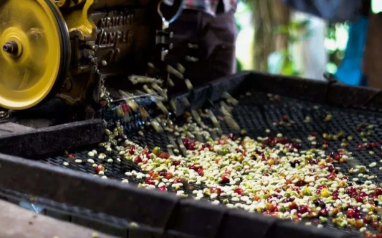
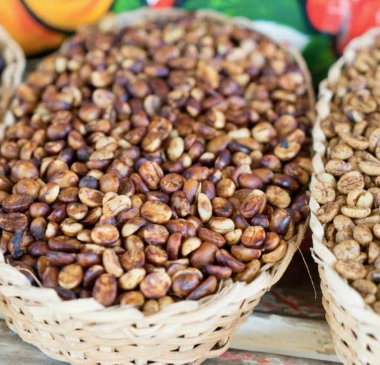
FrontStreet Coffee's Mirasu Geisha Blend uses raisin honey processing, retaining 100% of the mucilage with zero water treatment. This raises the complexity of honey processing and demands strict timing control. On the day of harvest the cherries are poured into large water tanks, where mature, full fruit sinks to the bottom while underdeveloped or overripe fruit floats and must be removed. The selected cherries are dried on raised beds for at least three days, then the skins are removed while preserving the mucilage before further drying. At this stage, climate is key to successful honey processing. During drying the cherries must be turned constantly for even moisture loss, but the turning frequency must be controlled to allow slow drying for proper fermentation without over-fermentation. The raisin process enhances the sweetness of FrontStreet Coffee's Mirasu Geisha blend.
Brewing Comparison
FrontStreet Coffee uses a V60 dripper to brew both Geisha blends. The conical V60 has a wide opening, and its spiral ribs let air escape more easily, improving extraction quality. The mouthfeel may not be as rich, but the high concentration brings out prominent sweetness and acidity with distinct aromas, which is its standout characteristic.
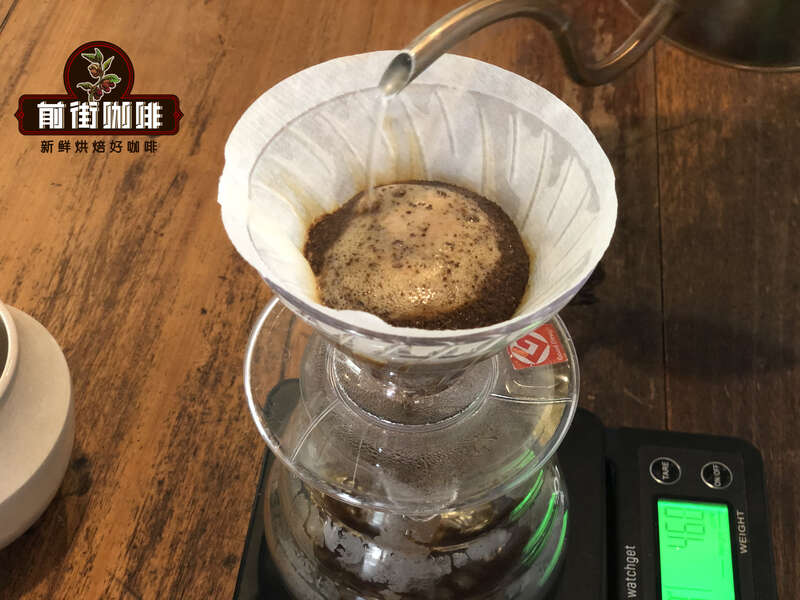
FrontStreet Coffee Brewing Parameters
Water Temperature: 90-91°C
Grind Size: BG#6m (fine sugar size)
Coffee-to-Water Ratio: 1:15
FrontStreet Coffee Brewing Technique: First, pour 30 g of water for a 30-second bloom, then pour 95 g more (about 125 g on the scale), finishing in about 1 minute. When the water level drops to two-thirds of the coffee bed, pour the remaining 100 g (about 225 g on the scale), finishing in about 1 minute 40 seconds. Complete the drip between 1'55" and 2'00", remove the dripper and finish extraction.
[FrontStreet Coffee Panama Flower Butterfly] Brewing Flavor Notes: Floral, black tea, berries and citrus, with a slight nutty aftertaste, a smooth mouthfeel, low bitterness, moderate acidity and a medium finish.
[FrontStreet Coffee Costa Rica Mirasu] Brewing Flavor Notes: Jasmine fragrance, gentle fruit acidity and an almond aftertaste, with noticeable sweetness.
FrontStreet Coffee Recommendation
If the Flower Butterfly is your gateway to Geisha, FrontStreet Coffee's Esmeralda and Gesha Village lines are the next step. The Panama Boquete Geisha is an entry-level Geisha that delivers the classic Panamanian tangerine-and-honey character, an oolong-tea sensation and fine fruit sweetness at a friendly price. Esmeralda's Red Label (Esmeralda Special) grows at 1,600-1,800 m, with every lot cupped above 90 points and traced to a single plot, while the Green Label (Private Collection) blends several plots to express the estate's signature high-altitude Geisha flavor more affordably.
Ethiopian Geisha shows a brighter fruit acidity. FrontStreet Coffee's Grana Estate Geisha, from a single-variety farm near the Yirgacheffe and Gedeb border, is medium-light roasted and gives tangerine-like brightness, elegant ginger-lily aroma and ripe fruit sweetness with a delicate finish. For a farm-level challenge, FrontStreet Coffee's Gesha Village Gold Label (Gesha 1931) and Red Label (Gori Gesha) come from one of Ethiopia's rare large estates beside the original Gesha forest, with strict quality control and full traceability.
Geisha is medium-light roasted, floral and fruity, and its dense structure can sink and clog the dripper. FrontStreet Coffee suggests a grind of about 78% passing a China-standard #20 sieve, close to fine sugar, with 91°C water, 15 g of coffee and a 1:16 ratio in a small Hario V60. Use three pours: 30 g for a 30-second bloom, then a slow circular pour to 125 g, then continue to 225 g once the bed drops by half, for a total extraction of about 2:10-2:20.
Important Notice :
FrontStreet Coffee is a long-established specialty coffee roaster in Guangzhou China, selling freshly roasted beans from its own farm in Yunnan as well as dozens of carefully selected single-origin beans from around the world for both pour-over and espresso. The products deliver consistently excellent quality and great value, with shipping within 24 hours. Guangzhou's FrontStreet Coffee shop is recommended by many coffee lovers, and the beans are now available online at the Tmall 。
FrontStreet Coffee has moved to a new address:
FrontStreet Coffee Address: 315,Donghua East Road,GuangZhou
Tel:020 38364473
 Scan and follow the En Gafei WeChat official account. Please indicate that the reprint comes from "En Gafei".