Commercial Semi-Automatic Espresso Machine User Guide

As coffee culture has grown more popular, more and more people have fallen in love with this remarkable beverage. Whenever focus starts to fade or drowsiness sets in, they treat themselves to a cup of coffee, refreshing the mind while satisfying the taste buds.
Many friends have also found, however, that their demand for coffee keeps growing and one cup a day is no longer enough. Coffee has become part of their daily routine and they need more cups to satisfy the craving. To reduce coffee expenses, and with major shopping festivals approaching, many people plan to buy a coffee machine, so they can enjoy fresh-ground coffee anytime while saving significant money.

Shopping online, though, most people run into an unexpected dilemma beyond price and brand: should they buy a fully automatic or a semi-automatic coffee machine?
Since most people have never really used a coffee machine, their understanding stays limited to it being a device for extracting espresso, without realizing the difference between full and semi-automatic. That is fine. Today FrontStreet Coffee shares the differences between semi-automatic and fully automatic coffee machines, and how to choose between them.
What is a Semi-Automatic Coffee Machine?
Generally speaking, the vast majority of the machines used in independent coffee shops, and the ones we commonly refer to, are semi-automatic coffee machines.

A so-called semi-automatic coffee machine means the extraction "process" cannot be completed by the machine alone. It requires full manual assistance and hands-on operation throughout. From grinding the beans to loading them into the portafilter, then locking the portafilter into the machine for extraction, everything must be done by hand. The machine provides only the extraction function.
If you want a milk-based coffee, you also need to froth the milk, again controlling the foam thickness and milk temperature by hand. In short, everything must be done personally.

After each extraction, you also need to clean the machine's extraction area, otherwise over time it will hurt both the coffee's taste and the machine's condition.
What is a Fully Automatic Coffee Machine?
A fully automatic coffee machine means that after you press the corresponding function button, the machine completes the task automatically. Press the espresso button, for example, and the machine grinds and extracts according to preset values, while you simply wait for the coffee to finish.

Even for milk-based coffee, the machine can complete it with one touch, automatically heating the milk and frothing the foam with no human involvement. Fully automatic means a machine that can handle extraction entirely by itself, so you only need to clean the grounds container and extraction chamber regularly rather than after every extraction the way a semi-automatic machine requires.
How Should You Choose?
Because the types differ, there is no absolute better or worse choice. When choosing, simply pick the machine that suits your needs, though FrontStreet Coffee does lean toward recommending semi-automatic machines.
The advantages of fully automatic machines are simplicity, convenience and a low barrier to operation. If you do not want to deal with complicated operations, do not have high requirements for taste, or do not want to learn deeply about extraction, a fully automatic machine is an excellent choice, because it handles everything for you and is extremely convenient.

But the disadvantages are obvious too: limited flexibility and difficulty making adjustments. Even at lower price points, many functions cannot be adjusted, such as grinding. With limited functionality, the quality of the cup depends entirely on the compatibility between the beans and the machine.
The reason coffee shops calibrate every morning is that beans change daily, and those changes affect the daily taste, requiring adjustment through morning espresso calibration.

Many fully automatic machines cannot make these corrections because they lack the corresponding functions. That is why FrontStreet Coffee says a fully automatic machine is only worth considering if you do not have high requirements for taste, or for settings such as offices that serve coffee to many people. If you do care about taste, a semi-automatic machine is the most appropriate choice.
The flexibility and upper limit of semi-automatic machines are very high, since the entire process is completed personally. The complicated operation is indeed a disadvantage, but precisely because of it, parameters can be adjusted at any time to create the perfect cup under ideal conditions.

When buying one, you do need to start learning about coffee extraction. A semi-automatic machine has a high ceiling, but its floor can also be very low. Once you master extraction, however, making a delicious cup anytime becomes incredibly simple.
How to Use a Semi-Automatic Coffee Machine to Make an Iced Americano?
Many coffee enthusiasts who visit FrontStreet Coffee admire the baristas at the counter and wonder how they operate such seemingly complex machines. In reality, baristas have simply mastered the detailed steps of making espresso, and most of them do not know how the machine actually works. So today FrontStreet Coffee introduces the detailed process of making espresso, taking FrontStreet Coffee's normal operating procedure as an example:
Step 1: Wipe the portafilter, ensuring it is dry and free of water
Step 2: Weigh coffee beans, using an electronic scale to measure the appropriate amount of coffee grounds, controlling the error within plus or minus 0.1 grams
Step 3: Distribute the coffee grounds
Step 4: Tamp the coffee grounds
Step 5: Lock the portafilter into place
Step 6: Press the extraction button
Step 7: Remove the portafilter and clean the group head

FrontStreet Coffee's recommended espresso recipe: 20g coffee dose, extract 40g of espresso liquid, time 30 seconds.
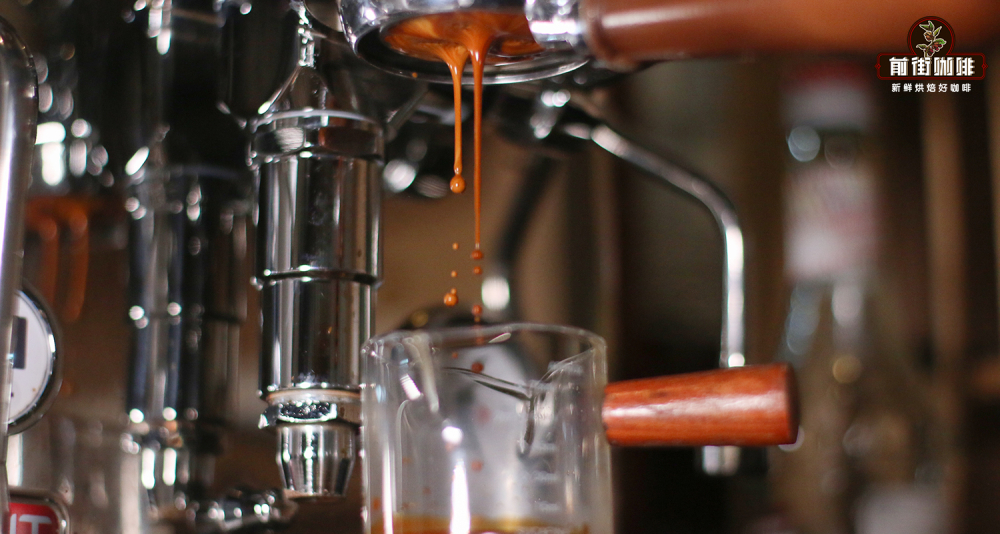
And just like that, a shot of espresso is complete. For those accustomed to iced Americano, prepare a 300ml coffee cup, add 90g of ice cubes and 100g of drinking water, and finally pour in the espresso to finish the drink.
Making other coffee beverages is not difficult either; you simply add sugar and milk. Iced coffee is relatively simple, essentially hot espresso added to cold milk.

For hot milk coffee, you will need the steam wand. FrontStreet Coffee has also written dedicated articles on how to froth milk if you would like to look those up. It is worth mentioning that many coffee chain brands now use fully automatic machines, making operation even simpler: just press a button.
FrontStreet Coffee Recommendation
Once you have a semi-automatic machine, the bean is the single biggest variable in the cup, and FrontStreet Coffee's espresso blends are designed to take the guesswork out of that choice. Newcomers can start with the FrontStreet Classic Blend, a traditional Italian-style recipe of Indonesian Mandheling, Brazilian Red Bourbon and Vietnamese washed coffee, which delivers butter, nut, spice and dark chocolate with a full body and plenty of crema; it works for both an Americano and a latte.
For a value-driven everyday bean, the FrontStreet Black Cocoa Basic Blend pairs Yunnan small-grain coffee with Brazil Cerrado, producing an Americano with nut, chocolate and cream notes, a ripe plum acidity and a soft body at a very approachable price, which also makes it a sensible choice if you are opening a café. If you prefer something sweeter, the medium-roasted FrontStreet Strawberry Candy Espresso Blend gathers single-origin Arabicas from Colombia, Costa Rica and Ethiopia and uses washed, natural and honey processing; beyond its rose aroma it is low in bitterness and lightly sour, with grape, dried blueberry, sweet orange and fruit-candy notes and a distinctive almond finish in an Americano or latte.
If you would rather let a single origin do the talking, FrontStreet Coffee also offers two SOE options for the machine. The FrontStreet Ethiopia Huakui SOE is made from a natural-processed lot of the Hambela area in Sidamo and shows cream strawberry, guava, dried mango, black tea and citrus; pulled as espresso it is clean, sweet-and-sour and full of tropical fruit, so an Americano made from it has no bitterness at all. The FrontStreet Grana Geisha SOE, a single-variety Ethiopian estate coffee, leads with yellow florals and bergamot and finishes on fresh strawberry, and as an espresso it brings fresh lime and a fermented black-grape sweetness over a medium body.
Important Notice :
FrontStreet Coffee is a long-established specialty coffee roaster in Guangzhou China, selling freshly roasted beans from its own farm in Yunnan as well as dozens of carefully selected single-origin beans from around the world for both pour-over and espresso. The products deliver consistently excellent quality and great value, with shipping within 24 hours. Guangzhou's FrontStreet Coffee shop is recommended by many coffee lovers, and the beans are now available online at the Tmall 。
FrontStreet Coffee has moved to a new address:
FrontStreet Coffee Address: 315,Donghua East Road,GuangZhou
Tel:020 38364473
 Scan and follow the En Gafei WeChat official account. Please indicate that the reprint comes from "En Gafei".