Taste Differences Between Americano, Long Black, and Lungo: The Definition of Espresso Coffee
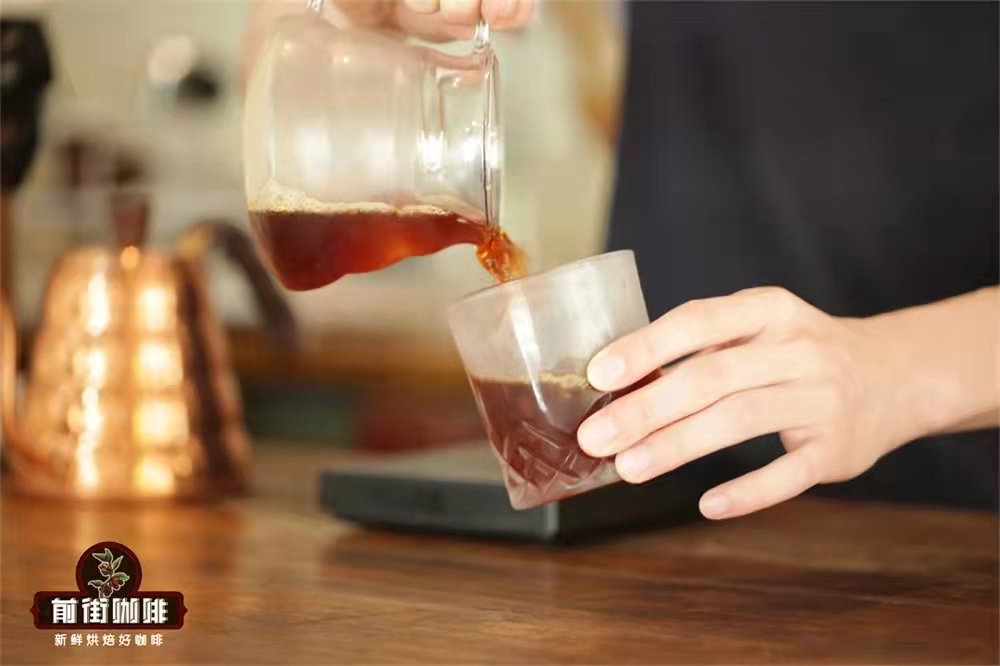
There are countless ways to brew coffee - French press, siphon, pour-over, espresso, cold brew, Americano, and more - and each comes with its own name, with some regional variation in the terminology. In this piece, FrontStreet Coffee will walk through the differences between a few of these, the ones coffee lovers run into most often.
Take Americano, Long Black, Lungo, and espresso. Here is how they differ.
Americano
Americano and espresso are the two coffees we meet most often. "Americano" is a name familiar to both English speakers and coffee drinkers, and it originated during World War II, when American soldiers stationed in Europe found the extremely strong espresso hard to drink - drip black coffee was what they were used to back home - so they added water to dilute it. Americano, then, was essentially a way of bringing coffee concentration down to a level that suited American palates at the time. Later, as Italians emigrated to America and espresso bars took off, they promoted an Americano built on an espresso base, establishing the order of pouring the coffee first and adding water afterward to express the idea of diluting a concentrated coffee. Even today there is no strict rule about the order in which an Americano is made - it comes down to whether you want to preserve the crema or disperse it.

There are also two drinks that are frequently confused with Americano and are hard to tell apart: Long Black and Lungo.
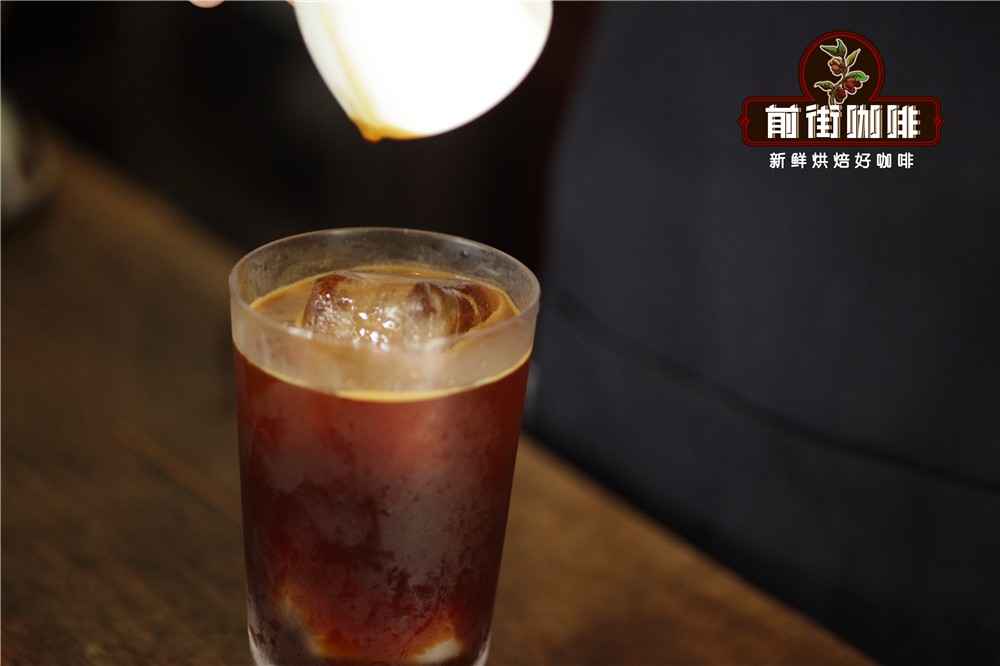
Long Black Coffee = Water + Espresso
Americano is espresso plus water, while in Australia a style of black coffee known as "Long Black" is popular. As the name suggests, it is a cup without milk. Black coffee in general contains no milk, which makes it suitable for people who are lactose intolerant or simply do not like milk.

To make a Long Black, you first pour hot water into the cup and then add the espresso. Long Black is a coffee native to Australia, also composed of espresso and water. After the Australian-style latte, Flat White, became hugely popular in this country, some cafes simply imported Australia's entire espresso menu and folded it into what they already offered.
Long Black is translated as Australian black coffee, and it also carries another nickname, "short black," which is how Australians refer to black coffee made by diluting espresso with water. Long Black originated in Australia, where people prefer relatively strong coffee and Americano could not satisfy them. In Australia, espresso is also called Short Black, so Long Black is a slightly diluted espresso that keeps the crema thick while lowering the concentration. A Long Black is served in a smaller cup than an Americano, about 150ml, and because the water goes in first and the espresso second, the crema is preserved. With less diluting water than an Americano, the taste and richness come through a little better.

When espresso was introduced to countries like Australia and New Zealand, Australians took a strong liking to this concentrated coffee and created a range of Australian-style drinks to suit their own tastes. Starbucks' Flat White, for instance, comes from Australia's Flat White. Australians make a Long Black by extracting two shots of espresso (40g) and pouring them into a cup holding 100-120ml of hot water, keeping a rich layer of crema on the surface. Made this way, a Long Black lets you experience intense coffee flavor and feel the texture of the crema directly.
FrontStreet also uses a double espresso when making Long Black, preparing it at a 1:3 ratio. First prepare 120g of hot water, then pour the extracted double espresso into it.

The most obvious difference between an Americano and a Long Black is how much water goes in. An Americano usually takes more water, with a coffee-to-water ratio typically between 1:5 and 1:8. That is because Americans were used to drip coffee, which is very low in concentration - just a hint of coffee flavor is enough. Australians, by contrast, chase richer coffee flavor, serve it in smaller cups, and use proportionally less water, so the concentration is naturally higher. After espresso took off, Americano made on an espresso base also used plenty of water to recreate that lighter coffee taste.
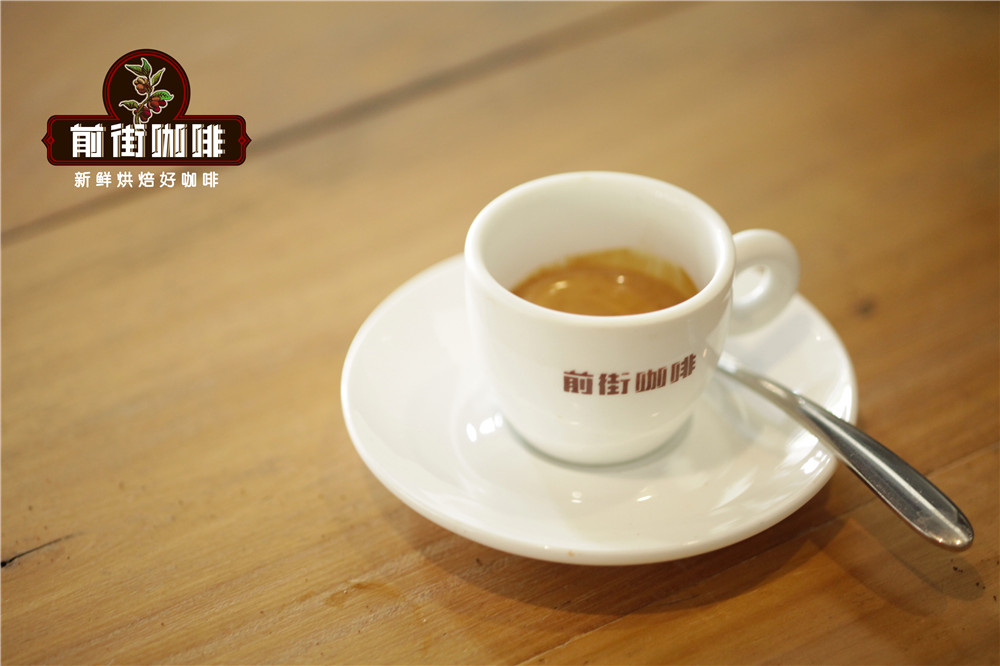
FrontStreet believes there is no fixed ratio for how much water a Long Black should take. It comes down to the barista's understanding of the beans' flavor profile, and how much water to add depends on the expression you are after. The Americano served in FrontStreet shops, for example, uses FrontStreet's own house-roasted Sunflower Warm Sun Blend, which under ideal extraction should show flavors of wine, vanilla, cream, chocolate, and berries. To bring those aromas forward, FrontStreet ran multiple comparisons and settled on a 1:3 ratio.
LUNGO Coffee
In recent years, Lungo has also picked up a loyal following. Lungo extends the extraction time of an espresso to about one minute, drawing roughly 50-60 milliliters of coffee liquid - that drink is what we call "Lungo." Some baristas even pull it all the way to a full cup, say 200ml.
"Lungo" means "long, extended" in Italian, and it is clearly defined as an extended version of espresso. Discussing flavors in espresso is, in fact, a fairly recent habit. Coffee beans used to be roasted so dark that hunting for flavors in them was like looking for vivid colors in the dark. A good espresso was about satisfying texture, a stimulating concentration, no bitter aftertaste, and a lingering roasted aroma - that was all.
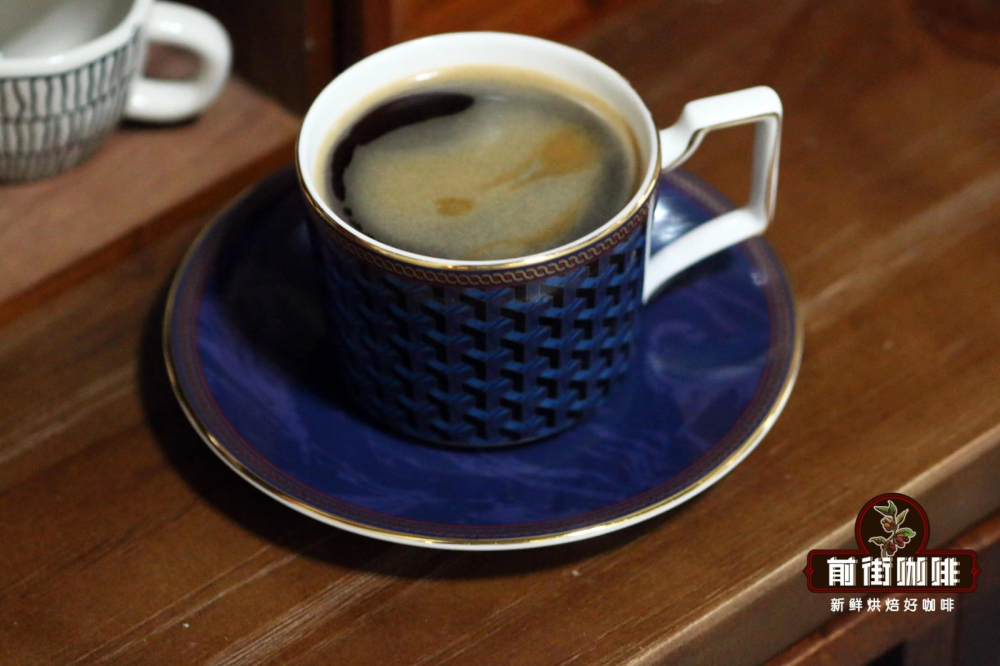
There are no precise measurements for making Lungo - every cafe's espresso parameters differ slightly - and abroad Lungo has no clearly defined ratio either; it simply refers to an extended-extraction espresso. How far to extend it is a matter of opinion from cafe to cafe. FrontStreet uses 20 grams of coffee grounds when making Lungo, for example extracting 100 grams of coffee liquid in 56-60 seconds (roughly twice as long as an espresso), a 1:5 ratio.
Making Lungo this way amounts to directly stretching out the extraction time of an espresso, thereby diluting it. Because the extraction runs long, after the flavor molecules are drawn out the water begins to pull the woody, fibrous flavors from the coffee, so it tastes quite bitter with a distinct wine-like aroma, though other flavors may be somewhat lacking. We know that when pulling an espresso, the first segment is usually the most concentrated and the liquid gets lighter as it goes. Lungo therefore has more volume than an espresso but a lower concentration.
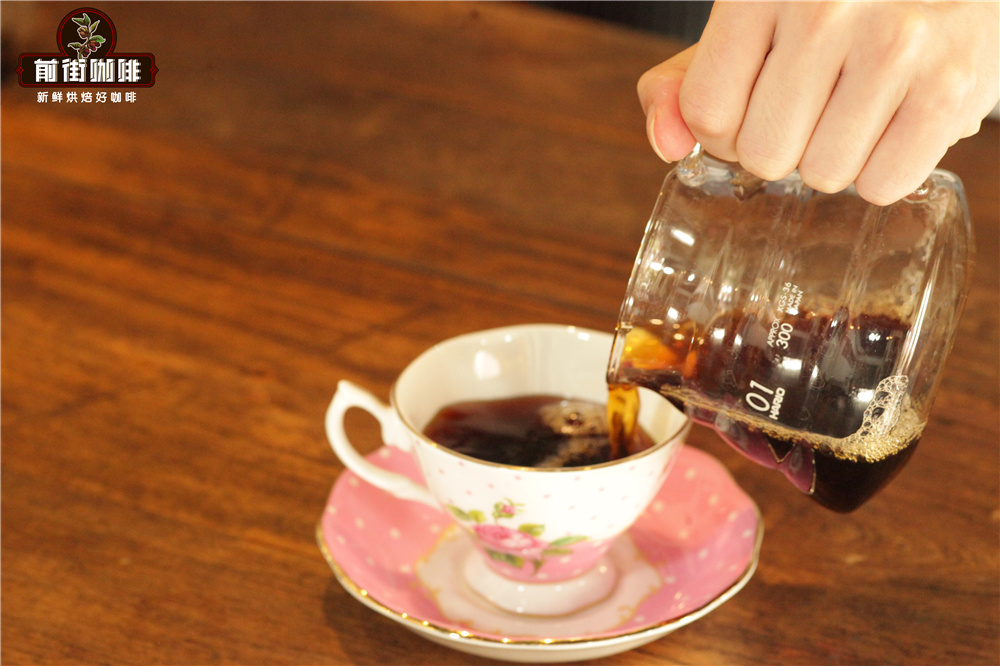
Australians are more particular about coffee flavor. As FrontStreet has shared before, the difference between a Flat White and a latte is that a Flat White has a more intense, richer coffee flavor. A Long Black likewise has a more intense coffee flavor than an Americano, in a smaller cup. A Long Black is typically made by extracting two shots of espresso (40g) into a cup holding 100-120ml of water, keeping a rich layer of crema on the surface.
Espresso
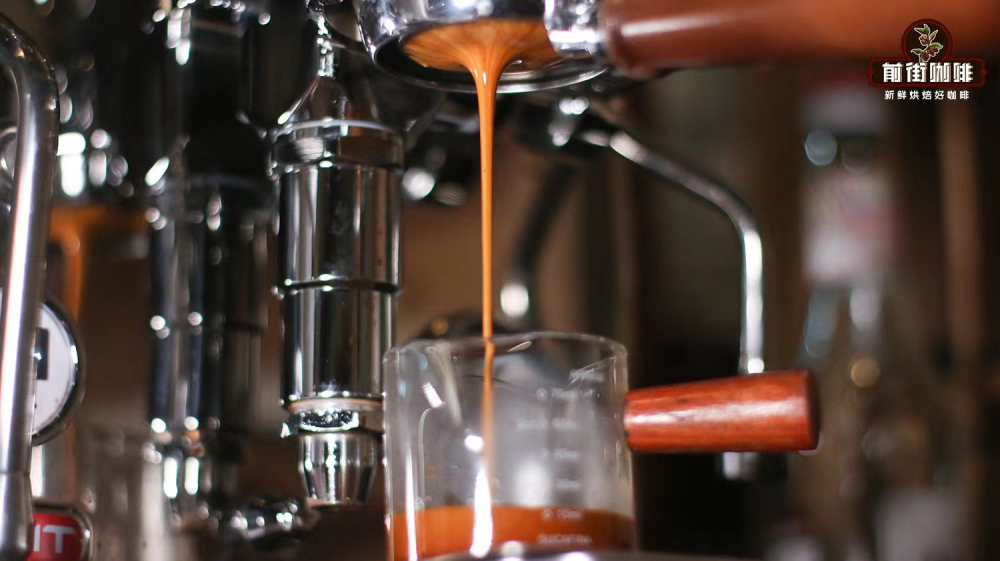
Espresso is a beverage made by forcing near-boiling, high-pressure water through finely ground coffee. It is generally richer than coffee made by other methods, containing higher concentrations of suspended matter and dissolved solids, such as the surface crema, a cream-textured foam. Thanks to the pressurized process, espresso has a strong taste with an extremely high concentration of chemical compounds.
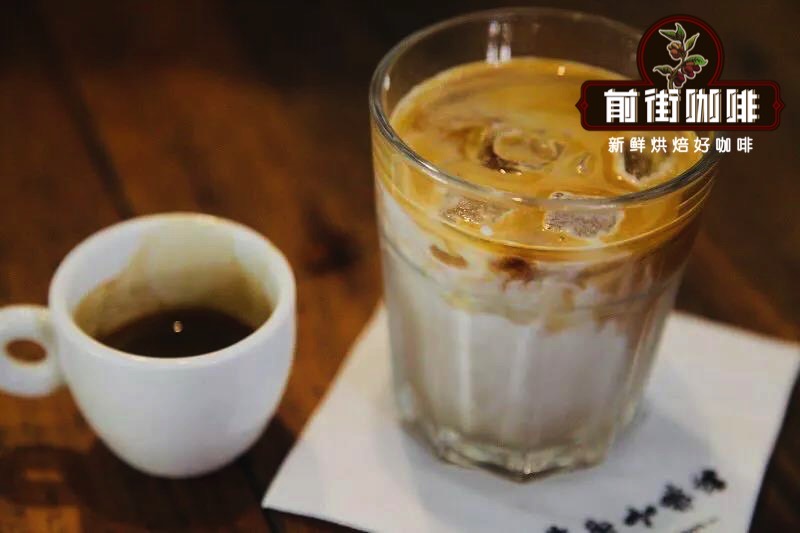
It is often used as the base for other drinks, such as latte, cappuccino, macchiato, mocha, and Americano. Espresso contains more caffeine per unit volume than other coffee drinks, but because each serving is smaller and the contact time between hot water and grounds is very short - generally only about 20 to 30 seconds - the total caffeine content is actually lower. Although the actual caffeine content of a coffee drink is affected by volume, bean origin, roasting method, and other factors, a "typical" espresso contains about 80 milligrams of caffeine, while a drip coffee contains 95 to 200 milligrams, depending on the variety of beans, especially those containing Robusta.
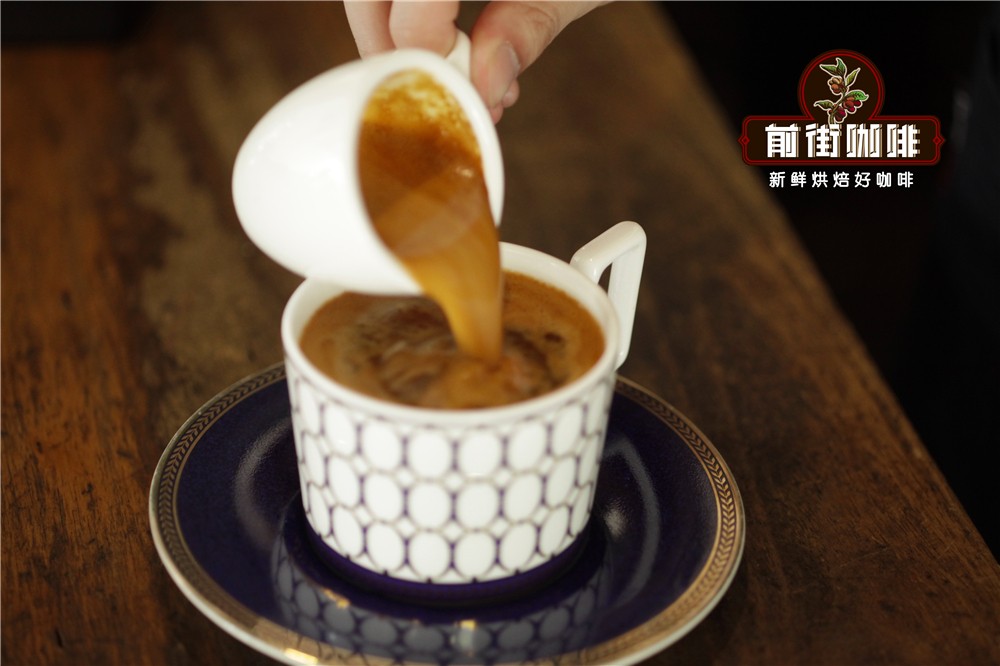
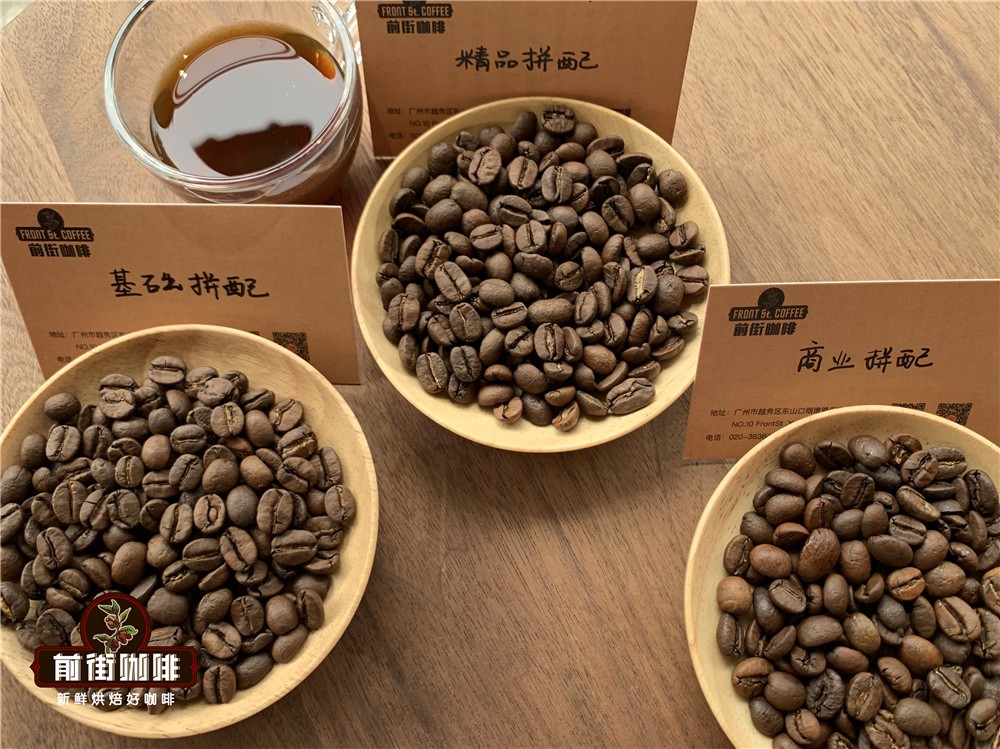
Making an Americano, Long Black, or Lungo all requires espresso beans, and espresso beans are generally based on blends. Why blend? There are three reasons: price, stability, and flavor. These three form an "impossible triangle" - you cannot have all three at once; pursuing any two means giving up the third.
Take FrontStreet's four types of espresso beans as an example. Blended coffee beans were originally created to stabilize and balance coffee flavor. FrontStreet's specialty blend, for instance, combines Colombian and Brazilian beans. Both Brazil and Colombia are major coffee-producing countries with very stable quality from year to year. The balance of Brazilian coffee paired with the richness of Colombian coffee gives this blend excellent performance, prioritizing both stability and flavor. It has a rich mouthfeel with nutty undertones and a slight fruit aroma, suitable for specialty coffee shops.
FrontStreet's basic blend is a product developed with cost-effectiveness as the primary focus, using a blend of Yunnan and Brazilian beans to safeguard the flavor and stability of the extracted espresso while keeping a price advantage.
FrontStreet's commercial blend uses beans from Colombia, Brazil, and Vietnam, with Vietnamese Robusta accounting for 10%. Italian cafes like to add Robusta to their blends because Robusta delivers richer coffee oils and higher caffeine. A small amount of Robusta can therefore make an espresso taste richer. Paired with milk, the extracted espresso shows more intense caramel and chocolate flavors. This espresso bean suits those who love richness, or businesses that specialize in espresso drinks.
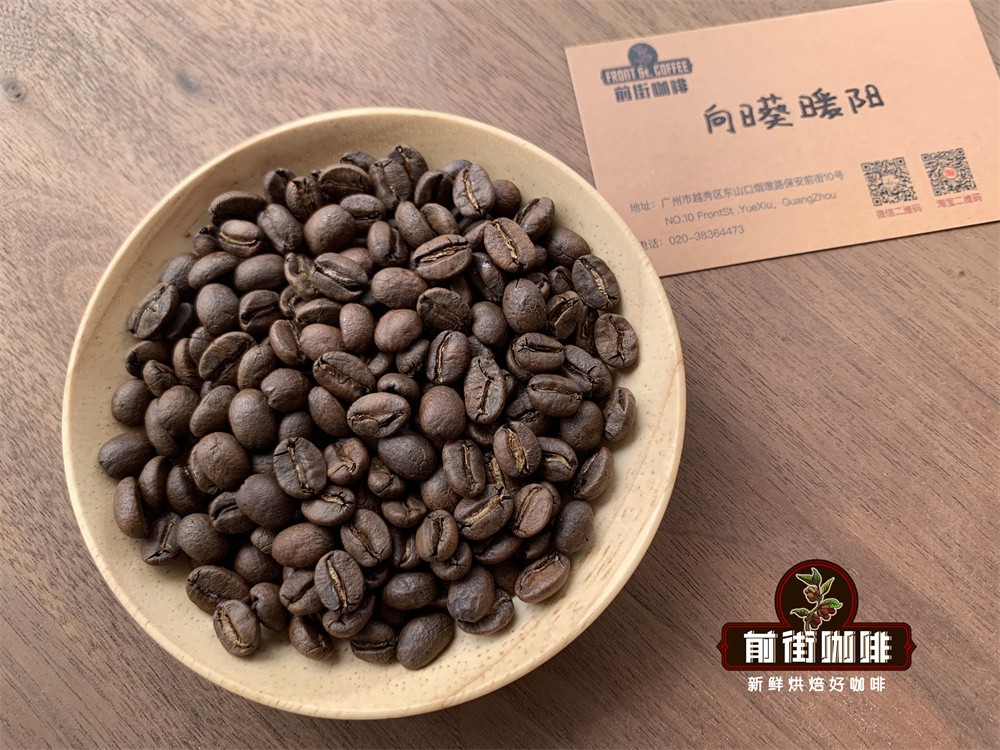
The last type is developed with flavor as the primary focus, and it is also the bean used in FrontStreet shops - the Sunflower Warm Sun Blend. It is made from a proportion of Yirgacheffe Red Cherry and Honduras Sherry Cask beans. It carries sherry wine aroma, with flavors of chocolate, vanilla cream, and sherry. It performs beautifully whether pulled as straight espresso or made into an Americano or a milk coffee, and it suits anyone who chases flavor.
FrontStreet believes that every brewing method produces delicious coffee, especially for people who love it. As for which one tastes better, that really depends on personal preference, since everyone's ideal cup is different. FrontStreet carries beans from a range of producing countries, including 9 types of daily beans from major origins, all of them among the most representative coffees with excellent value for money. You can choose the flavor you prefer from these daily beans.
FrontStreet Coffee's Coffee Brewing Suggestions:
On brewing, FrontStreet has always held that the freshness of coffee beans has a major influence on the flavor of the cup. Beans shipped by FrontStreet are therefore all roasted within 5 days. FrontStreet's roasting philosophy is "Freshly Roasted Good Coffee," ensuring that every customer who places an order gets the freshest coffee on receipt. The resting period is about 4-7 days, so by the time customers receive their coffee it is at peak flavor.
For those who need ground coffee, a gentle reminder: if beans are ground in advance, there is no need for further resting, because during transport the pressure of carbon dioxide inside the packaging also helps smooth out the flavor. You can brew a cup the moment you receive ground coffee. That said, ground coffee needs to be brewed promptly, because it oxidizes relatively quickly in air, meaning the flavor dissipates faster and the coffee will not taste as good. FrontStreet therefore recommends buying whole beans and grinding fresh before brewing, so you can better appreciate the flavor.
FrontStreet Coffee Recommendation
If you like your black coffee bright and fruit-forward rather than heavy, the bean you choose matters as much as the water you add. FrontStreet's Colombia Sidra is a good example of what a lighter roast can do in a watered-down cup. Grown at 1,650-1,800 meters and processed as a double anaerobic natural, then roasted light-to-medium, it keeps its vivid fruit intact. The dry aroma carries jasmine and citrus, and the cup opens into passion fruit, blueberry, grape, and apricot. The bright acidity is clean and gentle, with a light spice in the middle and a lingering cocoa sweetness at the end. Because it works as pour-over, as an espresso SOE, and for iced drip, it shines both in a Long Black and as an iced Americano.
For an even brighter, juicier black cup, look to FrontStreet's Kenya Cherry Tomato. From Kenya's Thika region, planted at 1,550-1,750 meters and grown from the classic SL28 and SL34 varieties, it goes through the Kenyan signature 72-hour double washed fermentation and is then lightly roasted to preserve its lively acidity and layered fruit. The dry aroma already shows concentrated dried cherry tomato and florals, while the cup brings clear cherry tomato and smoked plum, a bright and solid acidity as full as freshly squeezed juice, a pronounced mid-palate sweetness with pear and black plum, and a clean, long finish of brown sugar sweetness and a faint green tea note. Served over ice, it is especially refreshing - a natural fit for an iced Americano.
Important Notice :
FrontStreet Coffee is a long-established specialty coffee roaster in Guangzhou China, selling freshly roasted beans from its own farm in Yunnan as well as dozens of carefully selected single-origin beans from around the world for both pour-over and espresso. The products deliver consistently excellent quality and great value, with shipping within 24 hours. Guangzhou's FrontStreet Coffee shop is recommended by many coffee lovers, and the beans are now available online at the Tmall 。
FrontStreet Coffee has moved to a new address:
FrontStreet Coffee Address: 315,Donghua East Road,GuangZhou
Tel:020 38364473
 Scan and follow the En Gafei WeChat official account. Please indicate that the reprint comes from "En Gafei".