
How to Adjust Parameters for Pour-Over Coffee and Make It Sweeter
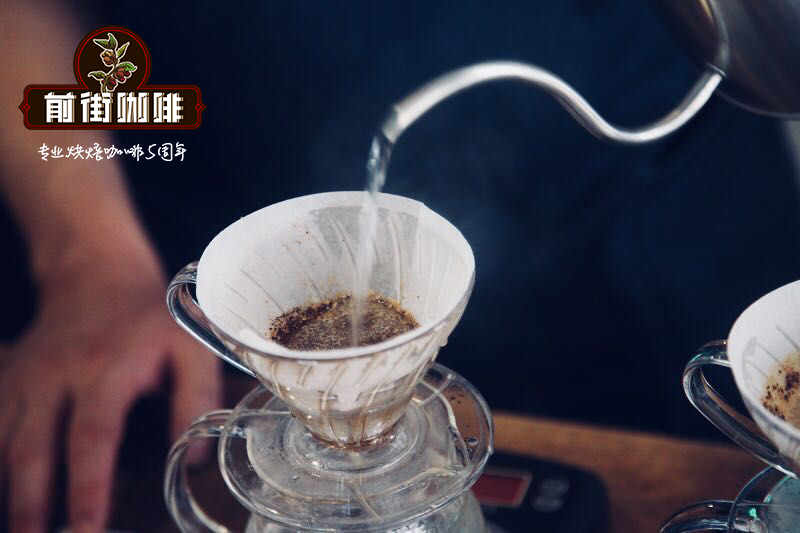
Many enthusiasts brew pour-over coffee at home, yet often wonder why the result does not quite match what they get in a cafe, and end up stuck in a frustrating loop of trial and error. This article breaks down the key parameters that shape the quality of a cup.
1. Coffee Beans
High-quality beans are the foundation of a great cup. For pour-over, single-origin beans are typically used, since they showcase the unique flavors of their growing region more clearly. Bean quality shows up directly in the flavor profile, the defect rate and roast freshness. Defective beans drag down the overall flavor, so it is best to choose freshly roasted coffee. As a general guide, the optimal flavor window for coffee beans falls between 4-30 days after roasting.
Freshly roasted coffee usually needs a 4-7 day degassing period. After that, the flavors reach their peak, and from there they gradually fade.
2. Grind Size
Good coffee needs the right grind size to express its potential. The most common reference point is a comparison to sugar granules, and it is a genuinely useful one. Pour-over grind size generally falls between 600-800 microns, close to the coarseness of sugar. The finer the grind, the greater the surface area of coffee exposed to water and the higher the extraction efficiency; conversely, coarser grinds expose less surface area and extract less efficiently.
We suggest starting with a sugar-sized grind as a baseline, then making small adjustments after brewing and tasting. If the coffee tastes too weak, for instance, nudge the grind slightly finer.
3. Water Quality
More than 98% of a cup of pour-over coffee is water, so water quality directly affects the final brew. The basic requirements are: TDS (Total Dissolved Solids) around 150 mg/L, no chlorine, and a pH between 7-8. We recommend filtered purified water or mineral water, and you can check the label on bottled water. In general, water with a lower TDS will dissolve more from the coffee.
4. Water Temperature
Water temperature directly affects extraction efficiency. Higher temperatures extract more, and lower temperatures extract less. From our observations, brewers commonly work in the 80°C to 96°C range. Understanding the principle behind extraction is more useful than memorizing numbers, because different roast levels call for different temperatures.
Light to medium roast beans have denser structures that resist extraction, so a higher temperature (90°C-93°C) works well; medium to dark roast beans are more porous and prone to over-extraction, so a lower temperature (86°C-89°C) is better.
5. Water-to-Coffee Ratio
The ratio of water to coffee grounds directly affects concentration. The most commonly used ratio today is 1:15. This is not an absolute rule, only a reference point, since personal preference varies widely. Adjust the ratio to suit your own taste. Those who prefer a richer cup can choose 1:13, while those who prefer a lighter one can move to 1:16.
6. Pouring Technique (Brewing Method)
There are many schools of pouring technique. Take FrontStreet Coffee's standard method as an example: FrontStreet Coffee pours in three stages. The first stage pours twice the amount of water used for blooming, the second stage pours six times the weight of the coffee grounds in water, and the final stage pours seven times the weight of the grounds in water.
Whatever the method, the essence is the same: pouring water over the layer of coffee grounds. As for how to pour, we believe that mastering a stable water stream will make your brewing efforts twice as effective.
7. Time
Brewing time depends on many factors, among them grind size, amount of grounds, water-to-coffee ratio, filter characteristics and pouring technique. That makes an exact time impossible to give, but typically a pour-over of 15-20g of grounds takes roughly 1 minute 30 seconds to 3 minutes, excluding special methods such as Japanese-style brewing.
Conclusion
All of the parameters above are intricately connected and complementary. Bean quality and water quality are the most important factors affecting the quality of a cup.
At the same time, grind size, water temperature, water-to-coffee ratio, time and pouring technique work in harmony, and finding a balance among them that suits you is the key. This is a cumulative process, and gradually you will develop your own unique brewing method.
FrontStreet Coffee Recommendation
Adjusting parameters works best when the bean itself cooperates, and FrontStreet Coffee's floral, fruit-forward lots reward careful brewing. The FrontStreet Gedeb cooperative coffee from Yirgacheffe is a good place to start: citrus, lemon acidity and jasmine, with a clean, tea-like finish that makes it easy to judge whether your grind and temperature are on target. If you want a bean that responds strongly to a few degrees of change, the FrontStreet Huakui brings strawberry, passion fruit, jackfruit and lychee, with plenty of sweetness and almost no bitterness.
For these coffees, a Hario V60 is a natural fit. Hario, founded in Tokyo in 1921, redesigned the V60 in 2004, and its 60-degree cone and single large hole send water toward the center before it drips through, extending contact with the grounds. That makes the pour itself a variable, which is exactly why a stable water stream matters. If you would rather start with something sweeter and lower in acidity, the FrontStreet Mozart brings a raisin note, and the FrontStreet Strawberry Candy, a Geisha-style blend, layers delicate florals over sweet fruit and works as pour-over, in a moka pot, in a home machine or as cold brew. Choose a bean with clear character, hold every other variable steady, and the adjustments above become far easier to read.
Important Notice :
FrontStreet Coffee is a long-established specialty coffee roaster in Guangzhou China, selling freshly roasted beans from its own farm in Yunnan as well as dozens of carefully selected single-origin beans from around the world for both pour-over and espresso. The products deliver consistently excellent quality and great value, with shipping within 24 hours. Guangzhou's FrontStreet Coffee shop is recommended by many coffee lovers, and the beans are now available online at the Tmall 。
FrontStreet Coffee has moved to a new address:
FrontStreet Coffee Address: 315,Donghua East Road,GuangZhou
Tel:020 38364473
 Scan and follow the En Gafei WeChat official account. Please indicate that the reprint comes from "En Gafei".

