Introduction to the Flavor Characteristics of Guatemala Arabica Coffee Beans
Guatemala is one of the best-known coffee origins in Latin America, and its beans live up to the reputation. Drinkers who have tasted Guatemalan coffee know that it offers generous acidity while still keeping the character typical of Latin American coffee. That has as much to do with the varieties grown there as with the land. In this article FrontStreet Coffee takes a broad look at the flavour and taste characteristics of Guatemalan coffee varieties.
Characteristics of Guatemalan Coffee Growing Regions
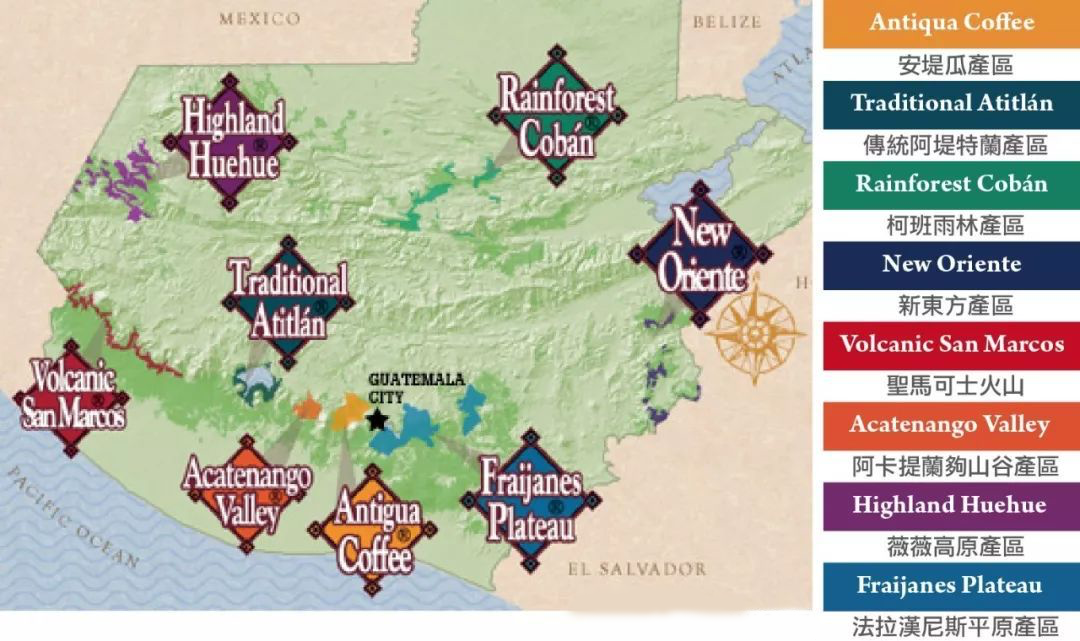
Guatemala sits on the Central American isthmus. The country is a patchwork of volcanic mountains and high plateaus, and it produces high-quality, high-altitude strictly hard beans from the Central American region. Its main coffee areas are Antigua, Huehuetenango, Atitlan, Coban, Fraijanes, San Marcos and Acatenango. Every Guatemalan coffee bean from these regions is Arabica.
What are Arabica Coffee Bean Varieties?
There are three major coffee species in the world: Arabica, Robusta and Liberica. Arabica gives the best flavour performance and is therefore the backbone of specialty coffee. Its caffeine content is only 0.8%-1.5%. It is also the most widely cultivated coffee species, grown across Central and South America, Africa and Asia.
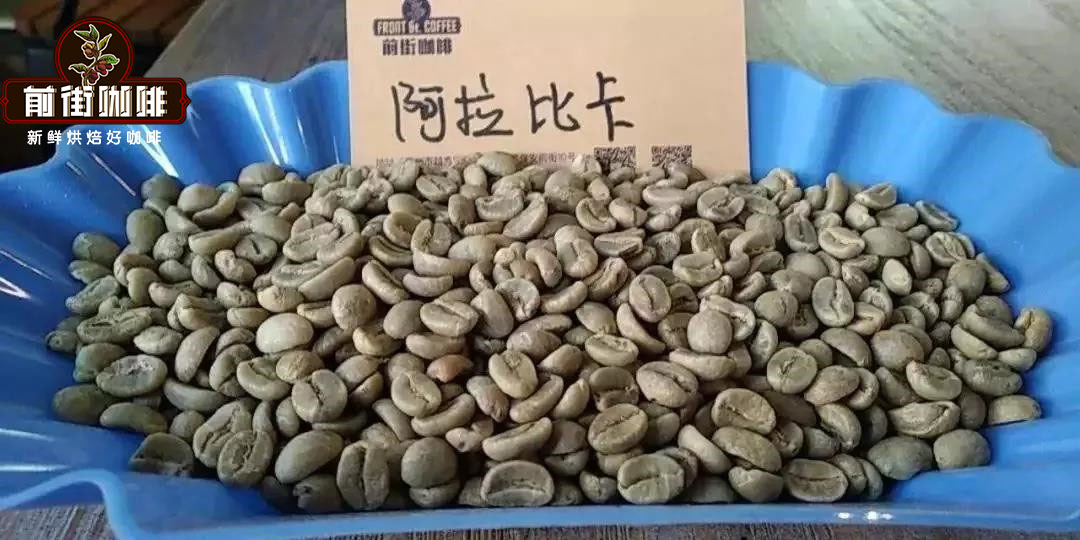
Because Arabica performs so well in the cup, it accounts for 75% of world coffee production, while Robusta makes up roughly 20% and Liberica only 2%.
Arabica may sound like an unbroken string of advantages, but the plant is delicate and needs altitude. It tolerates cool conditions but not frost, resists drought poorly, and is vulnerable to pests and disease. Coffee leaf rust in particular has caused enormous damage for growers, which is what later drove the development of Arabica–Robusta hybrids.
Arabica is also only a broad category. The familiar coffees on FrontStreet Coffee's shelves are sub-varieties derived from Arabica — Typica, Bourbon, Caturra and others — all of them pure Arabica lines.
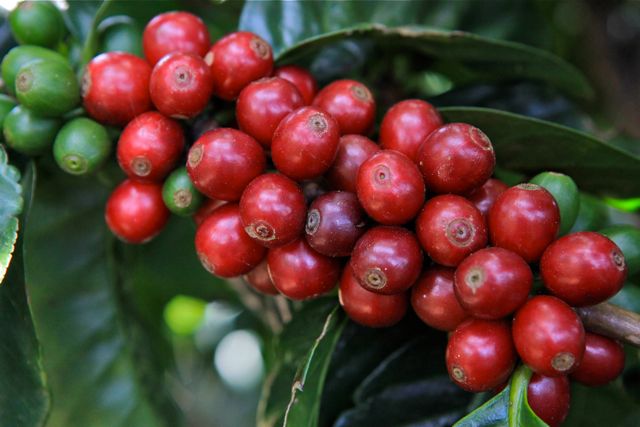
The main varieties grown in Guatemala are Bourbon, Caturra, Catuai and Typica, all derived from Arabica. Diversity is rich, but the first three dominate. Below, FrontStreet Coffee introduces the flavour characteristics of each.
Flavor Characteristics of Guatemalan Antigua Flora de la Rosa Coffee Bean Varieties
Bourbon
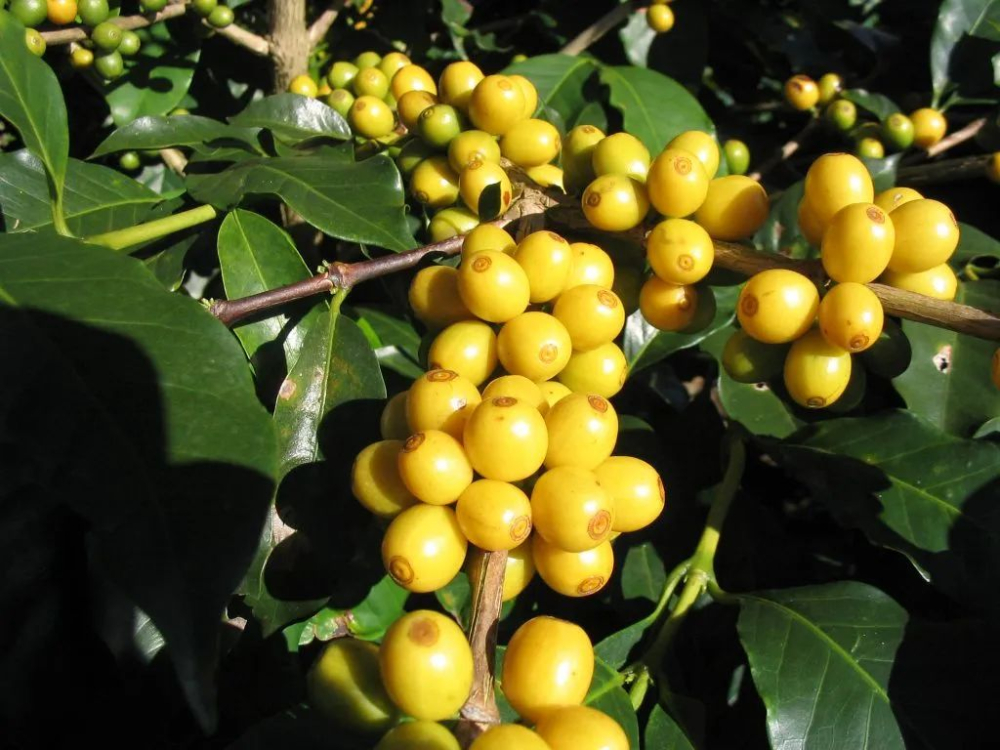
Bourbon coffee was first cultivated on Réunion Island, known as Bourbon Island before 1789. It comes from a natural mutation of the Typica variety, itself derived from Arabica, making Bourbon one of the oldest surviving coffee varieties.
Classic Bourbon begins as green fruit that ripens to bright red — the familiar "Red Bourbon." The cherries are relatively short and round, which is why the variety is also called round Bourbon; the pulp and seeds are dense, sweetness is high and acidity is bright. Beyond Red Bourbon there are also Yellow Bourbon, the rarer Orange Bourbon, and the extremely rare Pink Bourbon.
Caturra
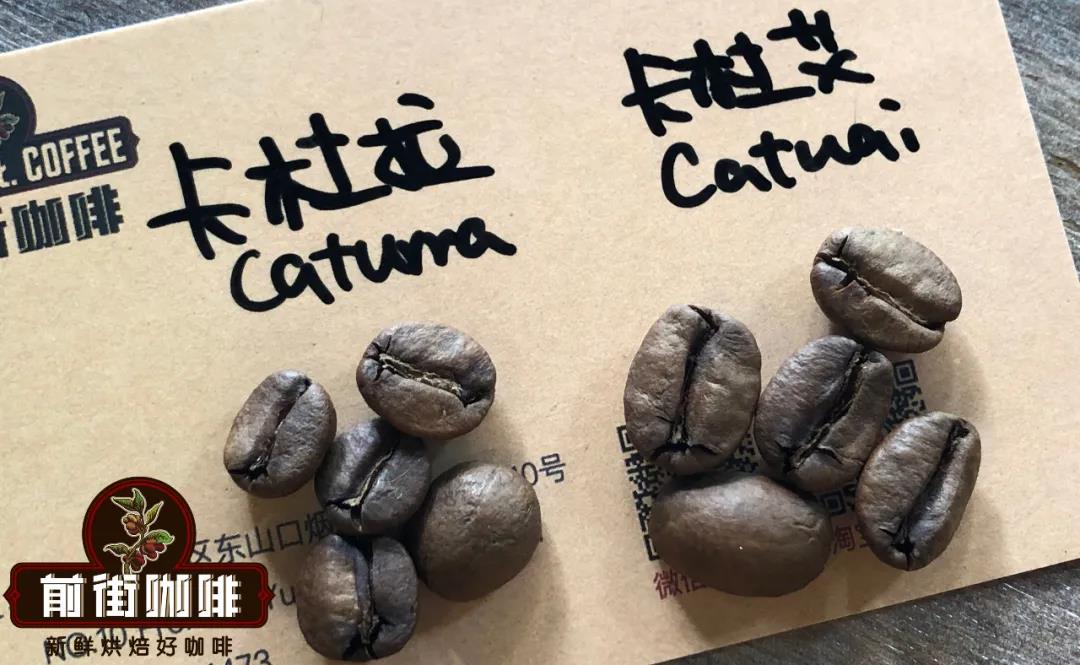
Caturra is a single-gene mutation of Bourbon, discovered in Brazil in 1937. It yields better than Bourbon and resists disease better as well, and the plant is shorter, which makes picking easier. Unfortunately it shares Bourbon's biennial cropping cycle. Its flavour is comparable to Bourbon, or marginally below it, but its real strength is adaptability: it thrives in direct sunlight with no shade trees — the so-called full-sun coffee — and it copes with high-density planting, though it then needs more fertiliser, which raises costs and explains why growers were slow to accept it at first.
Catuai

Catuai is an Arabica hybrid, a cross between Mundo Novo and Caturra, and it stands up better to natural disasters, wind and rain in particular. It inherits Caturra's short stature, which corrects Mundo Novo's weakness, and its fruit holds firmly to the branch in strong wind, offsetting Arabica's fragile fruit. The trade-off is a more monotonous flavour than either parent, with less body — its biggest drawback. Its productive life is also only about ten years, which is another limitation.
That covers FrontStreet Coffee's notes on the flavour characteristics of Guatemalan Arabica varieties. FrontStreet Coffee also carries beans from Guatemala's two most famous regions, and below we look at the coffees from Huehuetenango and Antigua.
FrontStreet Coffee's Guatemala Huehuetenango Coffee Beans
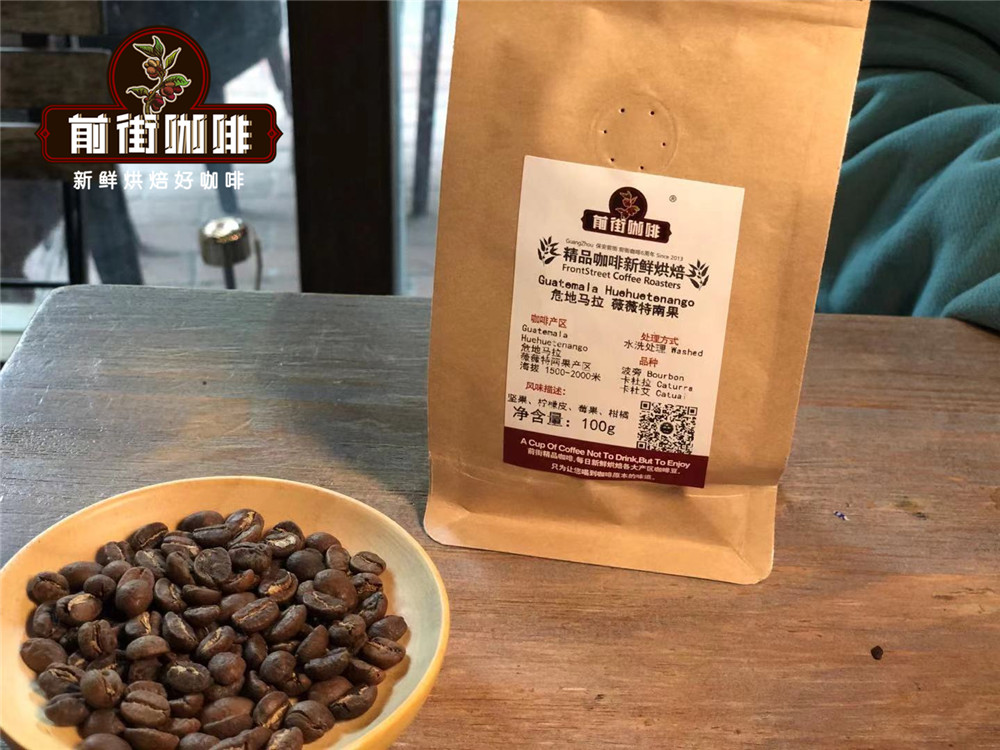
Country: Guatemala
Region: Huehuetenango
Altitude: 1500-2000 meters
Varieties: Bourbon, Caturra, Catuai
Processing: Washed
Flavor: Nuts, lemon peel, berries, citrus
FrontStreet Coffee's Guatemala Antigua Flora de la Rosa Coffee Beans
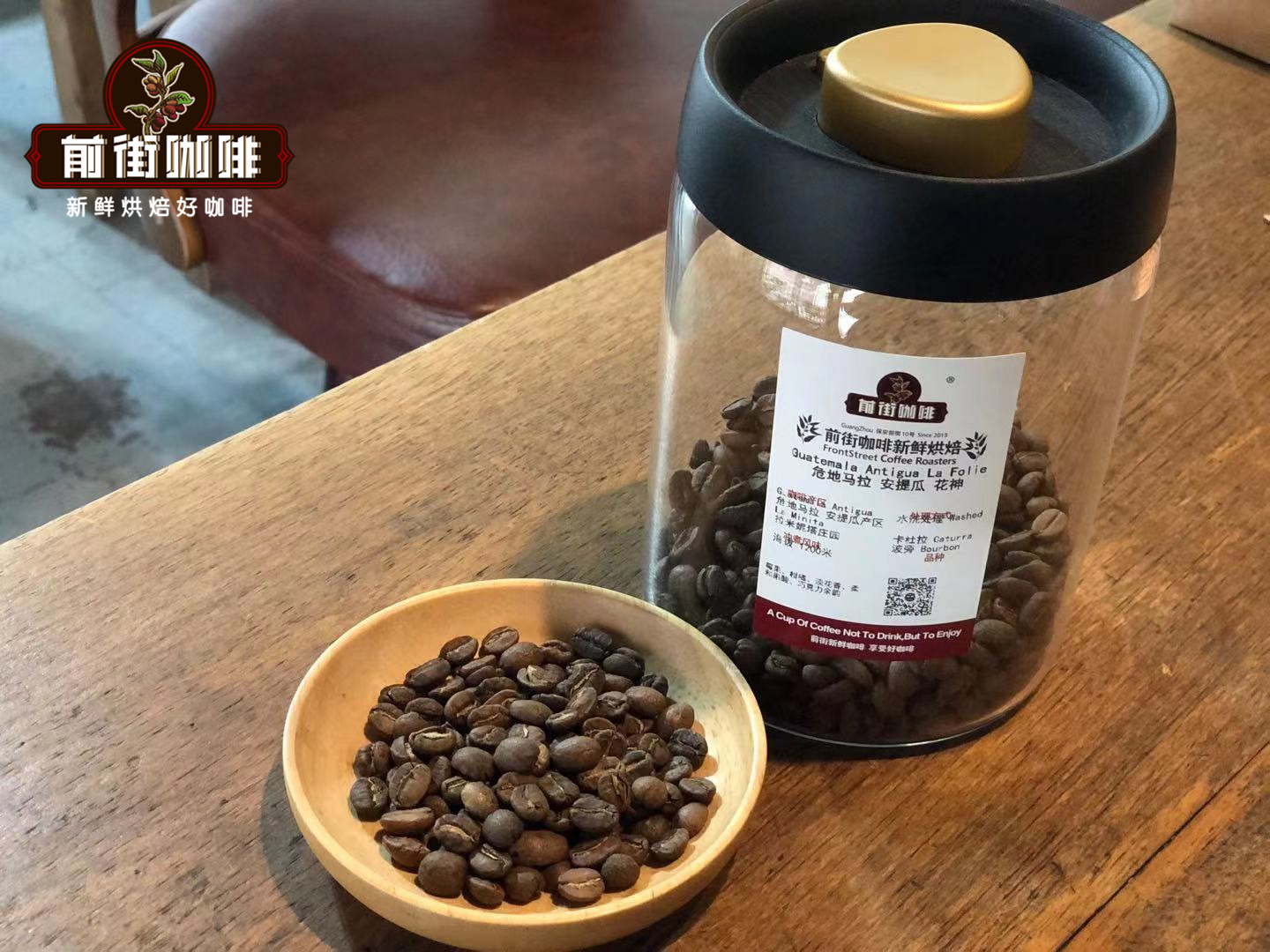
Country: Guatemala
Region: Antigua (La Minita Estate)
Altitude: 1200-1600m
Varieties: Bourbon, Caturra, Catuai
Processing: Washed
Flavor: Citrus acidity, bright fruit acidity, caramel aroma, slight smoky sensation
Both coffees share the same varieties and the same processing method, yet different altitudes and regions give them different flavours. Coffee is an agricultural product after all, and its flavour shifts with geography, soil and microclimate — which is part of the appeal. Below, FrontStreet Coffee shares brewing parameters for the two.
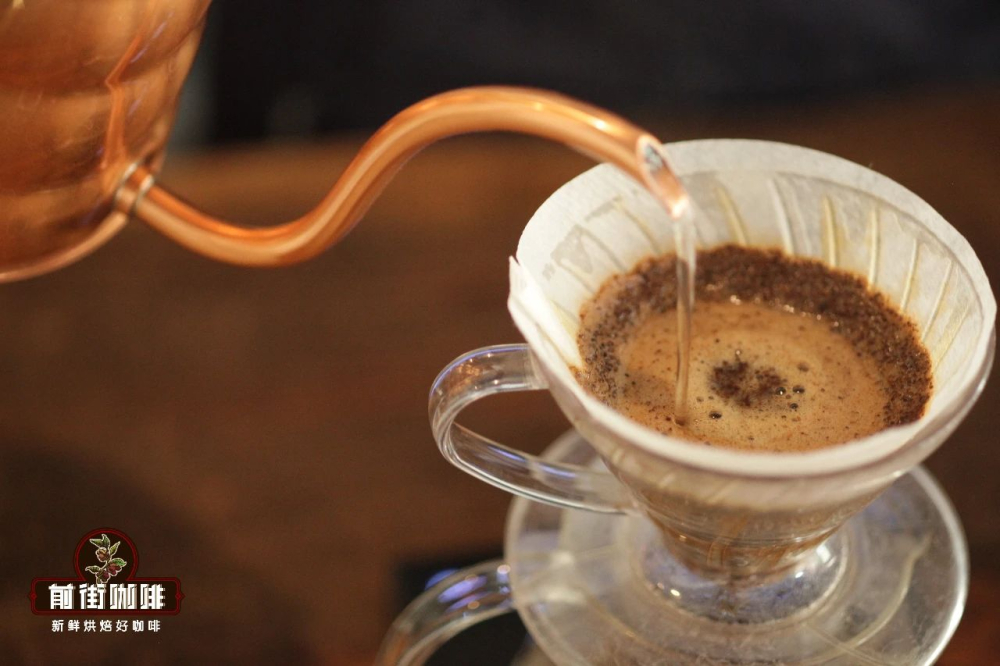
Both beans are medium roasted, so FrontStreet Coffee uses identical parameters to compare what each one gives up.
FrontStreet Coffee's Brewing Data Sharing
Dripper: V60 #01
Water Temperature: 90-91°C
Coffee Dose: 15g
Coffee-to-Water Ratio: 1:15
Grind Size: BG6m/Medium-fine grind (80% retention through #20 sieve)
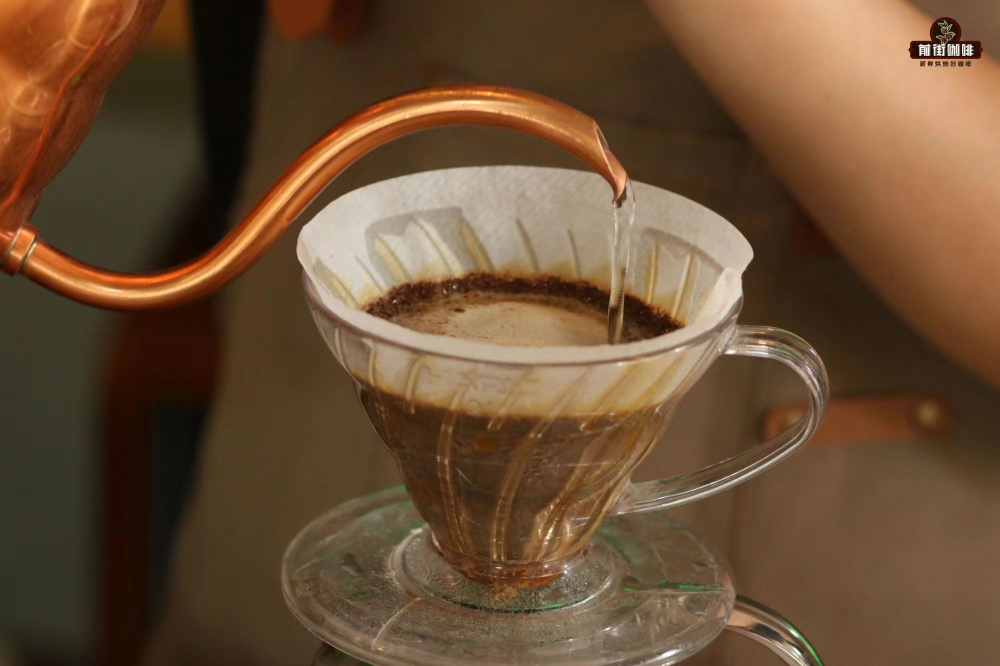
Brewing Method: Three-stage extraction
First stage: pour 30g of water for a 30-second bloom. Then pour 95g (the scale reads approximately 125g), finishing in about 1 minute. When the water level drops to two-thirds of the coffee bed, pour the remaining 100g (the scale reads approximately 225g), finishing in about 1 minute 35 seconds. Extraction completes between 2'00" and 2'10". Remove the dripper to finish.

Guatemala Huehuetenango Coffee Flavor Description: citrus and berry acidity, lemon peel, a nutty mid-palate, and a tea-like aftertaste.
Guatemala Flora de la Rosa Coffee Flavor Description: pronounced citrus acidity with a juicy quality, rich florals, pleasant sweetness and a medium body, with faint caramel and smoky notes in the finish. Overall it is pure and gentle, with a smooth texture and a balanced, lively, layered profile.
FrontStreet Coffee Recommendation
Guatemala's varieties all belong to the Arabica family, and if you want to compare how the same species behaves elsewhere, FrontStreet Huakui is a good start. Its variety is a local Ethiopian landrace — a mix of several unidentified trees, which is why the beans vary in size. It shows delicate floral notes and especially vivid fruit, and the classic natural process brings out cream strawberry, mango, jackfruit, citrus and blueberry, with the ripe tropical-fruit character typical of FrontStreet's Sidamo natural lots. It combines great drinking with a reasonable price.
FrontStreet Yirgacheffe Gotitty Cooperative is the washed counterpart to Huakui. Yirgacheffe is known for clean, transparent lemon and citrus notes, and Gotitty's own washing station sits in the village of the same name. Graded G1, the highest Ethiopian grade, it is washed in the classic manner and shows elegant white florals, citrus, orange and green tea.
FrontStreet Brazil Queen's Estate shows what a different Arabica variety does in a different climate. Bourbon is as old as Typica and takes its name from Bourbon Island, where it was first planted. Bourbon trees have broader leaves and grow densely, out-yielding Typica by 30%, with short, round beans that are easy to identify. Normal Bourbon ripens red, but as cultivation spread, mutations appeared — including fruit that ripens orange-yellow, the yellow Bourbon. FrontStreet's Queen's Estate lot was among the first yellow Bourbons discovered, with aromas of cream, peanut, toast and sugarcane: rich and clean-sweet, and suited to pour-over, moka pot and home espresso machine alike.
Important Notice :
FrontStreet Coffee is a long-established specialty coffee roaster in Guangzhou China, selling freshly roasted beans from its own farm in Yunnan as well as dozens of carefully selected single-origin beans from around the world for both pour-over and espresso. The products deliver consistently excellent quality and great value, with shipping within 24 hours. Guangzhou's FrontStreet Coffee shop is recommended by many coffee lovers, and the beans are now available online at the Tmall 。
FrontStreet Coffee has moved to a new address:
FrontStreet Coffee Address: 315,Donghua East Road,GuangZhou
Tel:020 38364473
 Scan and follow the En Gafei WeChat official account. Please indicate that the reprint comes from "En Gafei".