What Variety is Mandheling Coffee Bean? The Historical Story of Arabica Coffee Introduction to Indonesia
There is a type of coffee bean you can't quite pinpoint as special, yet it remains irreplaceable. Its size is significantly larger than ordinary beans, which makes it destined never to be the most eye-catching variety in any coffee shop. It doesn't possess the extraordinary fragrant charm that captivates everyone like the Guji varietal, and its roast level is often so dark that it becomes almost unrecognizable.
Despite its high frequency of appearance, its presence is inversely proportional to its impact. Even when smelling its dry aroma, it's difficult to associate it with the word "outstanding." With a legendary history of being overlooked and misunderstood, its unique processing method hides wisdom adapted to local conditions, yet it cannot escape the cycle of mixed advantages and disadvantages.
This is the renowned yet often misunderstood Mandheling coffee bean from the Sumatra region of Indonesia. FrontStreet Coffee has always been a fan of Mandheling. Its low-acidity, rich coffee flavor brings everyone a sense of stability and groundedness, while the sweetness of its aftertaste leaves a lasting impression.
Where does Mandheling coffee come from?
Mandheling coffee comes from Indonesia, the world's largest archipelagic country. However, not all coffee beans grown in Indonesia are Mandheling - only Arabica coffee beans grown on the island of Sumatra can be called Mandheling.
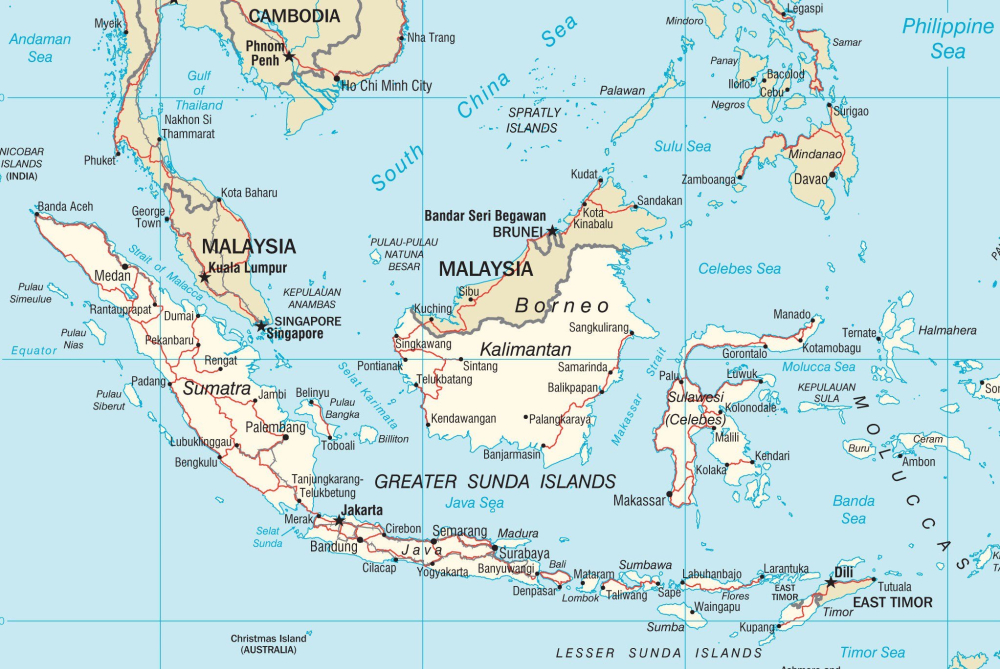
Indonesia's climate is typically tropical rainforest, with average annual temperatures between 25-27°C and no significant seasonal changes. It receives abundant precipitation, with annual rainfall between 1600-2200mm. Sumatra Island offers the advantages of high altitude, abundant rainfall, and fertile volcanic soil, combined with a mild, humid climate, making it extremely suitable for Arabica coffee varieties.
The historical story of Arabica coffee beans in Indonesia
At the end of the 17th century, the Dutch East India Company transplanted Indian Arabica to Jakarta in Java. Because of suitable climate and soil conditions, Arabica quickly spread to Sumatra in northwest Java and Sulawesi in northeast Java. In 1880, a severe leaf rust outbreak in Java caused large-scale death of Arabica plants. The Dutch therefore switched to cultivating disease-resistant Robusta, stabilizing Indonesia's coffee industry.

To this day, Robusta remains the mainstay of Indonesian coffee, accounting for 90% of the country's coffee production and distributed in low-altitude areas such as Java. Meanwhile, the elegant-flavored Arabica beans are grown in northern Sumatra, Sulawesi, and high-altitude areas of Java. Although these specialty coffees account for only 10% of Indonesia's coffee production, the reputation of high-quality Arabica beans such as Mandheling and Golden Mandheling has made Indonesian coffee famous in the specialty world for decades.
Mandheling coffee varieties
Mandheling coffee is an Arabica variety, originally from the Mandailing region near the Bukit Barisan mountains in North Sumatra. What we call Mandheling today refers to Typica or other varietal coffee beans grown in the mountainous areas surrounding Lake Toba.
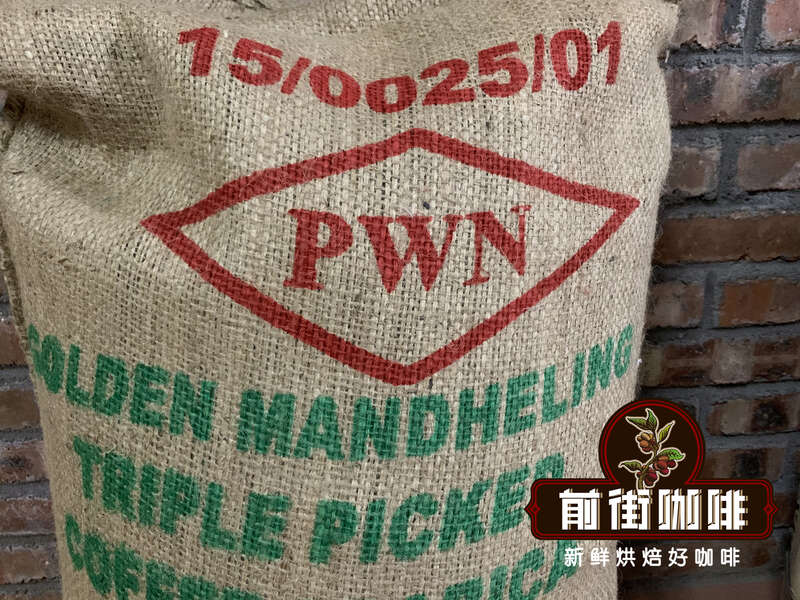
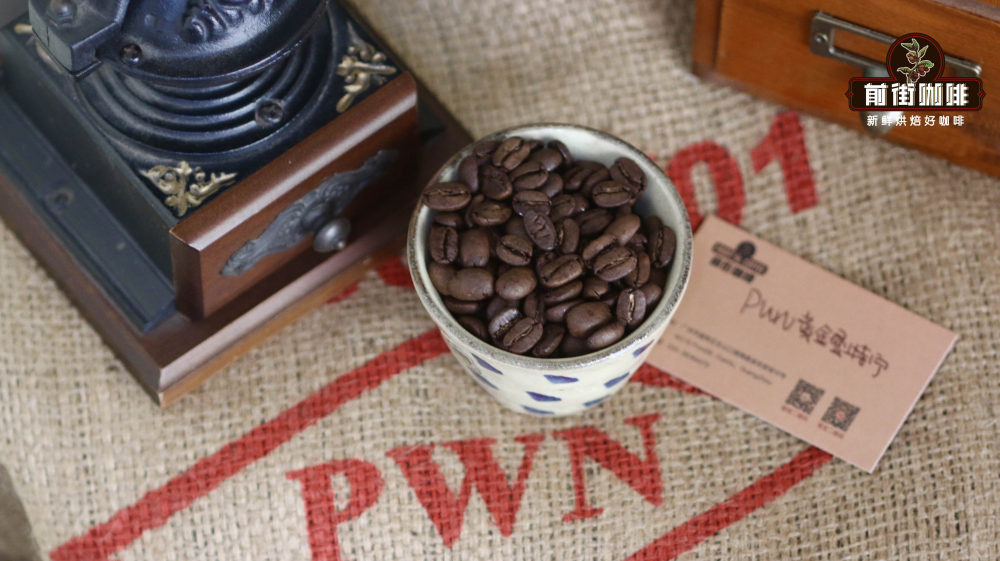
FrontStreet Coffee currently offers two types of Mandheling: one is Timtim variety Mandheling from the Lindong region of Sumatra, and the other is Ateng variety PWN Golden Mandheling from the Aceh Gayo Mountain region of Sumatra.
Tim Tim (also known as Timor) is a variety naturally hybridized from Arabica and Robusta. It was discovered on Timor Island in the 1940s and cultivated for its natural disease resistance. In the Americas, this variety is called Hybrido de Timor, abbreviated as Tim Tim, while in Indonesia it is also called Bor Bor.
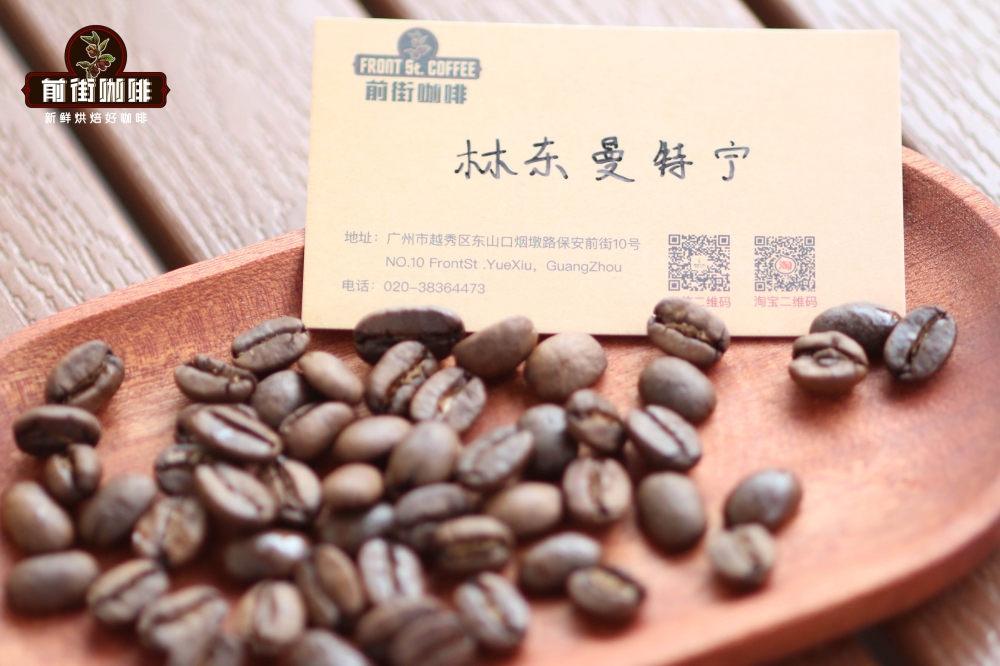
Ateng (also known as Catimor) is a variety naturally hybridized from Timor and Caturra, named after the Aceh Tenggah region. It was introduced to Java in 1928 and then reached Sumatra. Because it was widely cultivated in the Aceh Tenggah region, locals called it Ateng.
The difference between Lindong Mandheling and PWN Golden Mandheling coffee
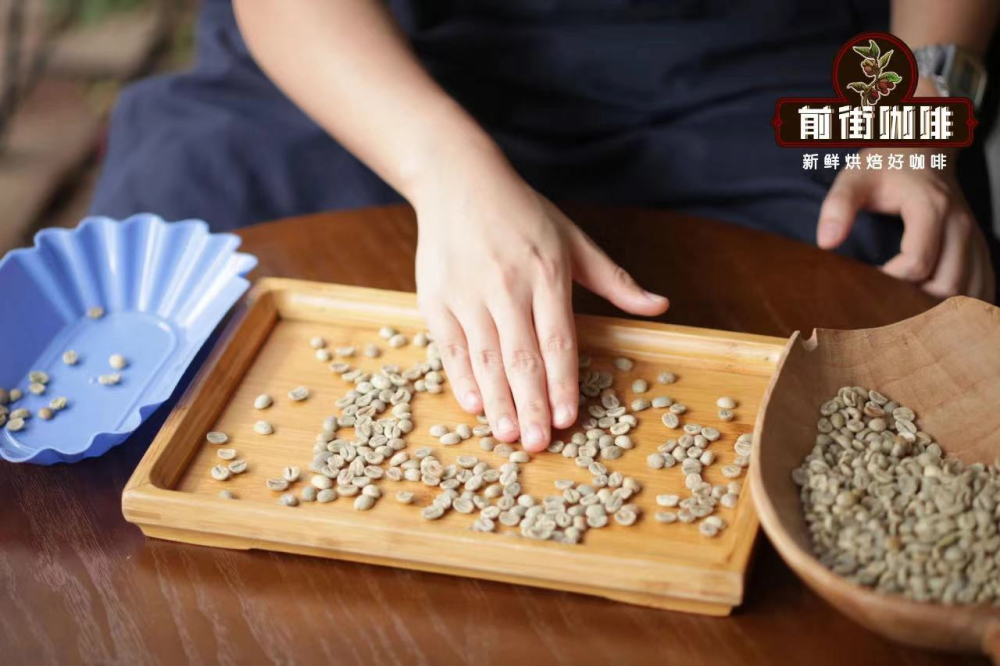
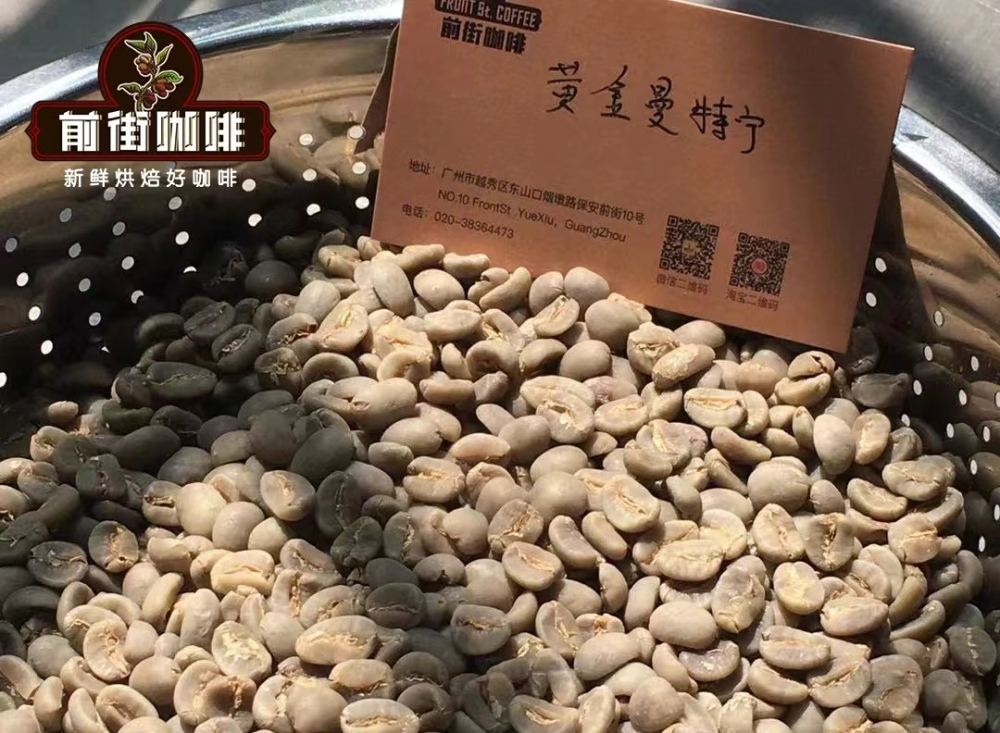
The biggest difference between the two lies in the selection of raw beans. PWN Golden Mandheling beans undergo at least three rounds of purely manual selection after harvesting and drying, ensuring the beans reach a size specification of 18 screen or above. Defective beans number fewer than 3 (in a 300g raw bean sample), placing them in the highest G1 grade. PWN beans are darker green in color and have a uniform flat bean shape. Through cupping comparison, FrontStreet Coffee found that Golden Mandheling beans that have undergone several rounds of manual selection taste cleaner and more transparent, with more intense sweetness.
Although the screening process for Lindong region Mandheling is not as rigorous and detailed as PWN's, its flavor is enough to represent the Sumatra region of Indonesia. FrontStreet Coffee has therefore included Lindong Mandheling in the "FrontStreet Coffee Daily Bean Series." The daily series aims to let all consumers taste the flavor characteristics of a coffee-producing region at the highest cost-performance ratio.
Mandheling coffee brewing suggestions
For brewing, FrontStreet Coffee recommends using freshly roasted beans, which lets you appreciate the coffee's rich flavors to the fullest. FrontStreet Coffee ships beans roasted within 5 days because it understands how greatly freshness affects flavor, and hopes every customer who places an order receives the freshest coffee.
Since FrontStreet Coffee's Mandheling beans are roasted to a darker degree, flavor compounds in the coffee are easily extracted during brewing. FrontStreet Coffee therefore recommends a coarser grind and lower water temperature.
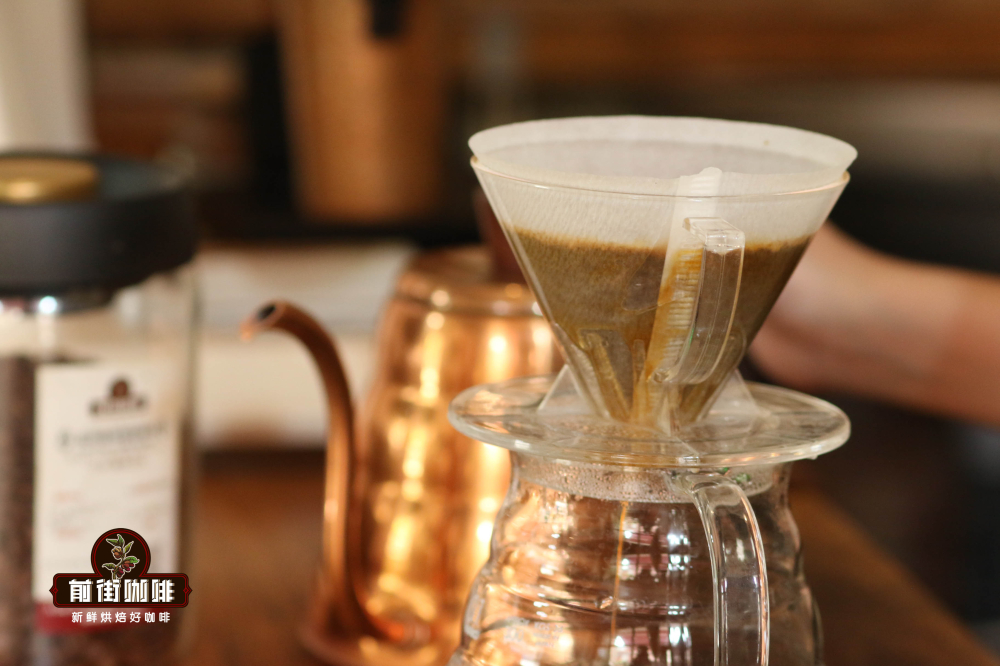
Additionally, to achieve a rich, full-bodied texture, FrontStreet Coffee recommends a dripper with immersion capabilities, such as the KONO dripper. Pair it with a medium-coarse grind (coarse sugar size, 70% passing through China's No. 20 standard sieve), a water temperature of 88°C, and a 1:15 coffee-to-water ratio.
Specific brewing technique: First pour 30g of water for a 30-second bloom; second, pour in a small circular motion to 125g, wait until the water level in the coffee bed drops to halfway before pouring again, then continue pouring in small circular motions to 225g. When all dripping is complete, the total extraction time should be around 2 minutes and 10 seconds.
FrontStreet Coffee Recommendation
Mandheling is a single-origin coffee from Sumatra, Indonesia, usually brewed as pour-over, with a rich aroma and full body; it also works for espresso, where a machine pulls a concentrated shot with abundant crema, intense mouthfeel, and prominent caramel aroma. The Mandheling we usually drink is roasted dark, which weakens the coffee's acidity and highlights its mellow, aromatic character. FrontStreet Coffee's Lintong Mandheling daily bean and FrontStreet Coffee's PWN Golden Mandheling come from Sumatra's Lintong and Aceh regions respectively, both medium-dark roasted to present dark chocolate and caramel while keeping Mandheling's wild herbal note - a distinctive fragrance rooted in its growing environment and processing.
Mandheling grows on the mysterious island of Sumatra, which is divided into eight provinces, but only the high-altitude Aceh and North Sumatra provinces cultivate Arabica on a large scale. Sumatra lies in the tropical rainforest zone, where mist and rain often drift among the hills, adding a veil of mystery, and from September to April the following year the coffee cherries ripen, with farmers busy picking in the mountains. What sets Indonesia apart from many origins is its humid weather: humidity runs 70-90% year-round, typhoons are frequent, and annual rainfall can reach over 2000mm. Such harsh weather makes the 2-3 week sun-drying used in Africa impossible, while washing is time-consuming and heavy on labor and water that ordinary farmers cannot afford. From this came the unique semi-washed Wet-Hulled method: while the bean is half-dry, the parchment shell is machine-stripped so the bean is exposed, speeding drying but also absorbing airborne microbes, which gives rise to its one-of-a-kind wild flavor.
To taste the Wet-Hulled specialty profile, FrontStreet Coffee's first recommendation is the highest grade, FrontStreet Coffee's PWN Golden Mandheling. PWN Company buys mainly high-quality Mandheling green beans, then machine-sorts once and hand-sorts to pick out plump, defect-free beans, so its output is all specialty grade; Golden Mandheling is its flagship. The beans are uniform, plump, large, and translucent, with a low defect rate, and after a medium-dark roast they carry a rich roasted aroma; the brewed black coffee has a clean texture and full body, ideal for anyone who dislikes acidic coffee. For pour-over, FrontStreet Coffee's PWN Golden Mandheling shows its charm best at 87-88°C with 15 grams of coffee, a 1:15 ratio, a coarse-sugar grind, and a three-stage pour: a 30ml bloom to wet the grounds and degas, then 100ml to bring out the golden foam and raise the bed, and finally a gentle 95ml center pour that lifts the sweetness - together delivering a full, rich body with caramel sweetness and chocolate and nut flavors.
Important Notice :
FrontStreet Coffee is a long-established specialty coffee roaster in Guangzhou China, selling freshly roasted beans from its own farm in Yunnan as well as dozens of carefully selected single-origin beans from around the world for both pour-over and espresso. The products deliver consistently excellent quality and great value, with shipping within 24 hours. Guangzhou's FrontStreet Coffee shop is recommended by many coffee lovers, and the beans are now available online at the Tmall 。
FrontStreet Coffee has moved to a new address:
FrontStreet Coffee Address: 315,Donghua East Road,GuangZhou
Tel:020 38364473
 Scan and follow the En Gafei WeChat official account. Please indicate that the reprint comes from "En Gafei".