How to Brew Kenyan Coffee - Pour Over Ratios, Grind Settings, Parameters & Flavor Characteristics

Anyone who enjoys acidic coffee knows that FrontStreet Coffee's Kenyan coffee is renowned for its rich, solid fruit acidity, a juice-like mouthfeel and intense, complex flavors that leave a lasting impression. FrontStreet Coffee believes that to brew a bean well you first have to understand its character, so before working out how to make it taste even better, it is worth discussing where the acidity in Kenyan coffee comes from: the local growing environment, the coffee varieties and the post-harvest processing.
Most of Kenya's coffee trees grow in the fertile, loose, acidic volcanic red soil of the highlands north and east of Nairobi. The area enjoys abundant sunlight, good drainage and elevations between 1400-2000 meters. Because higher altitudes bring a wider day-night temperature swing, Kenyan coffee matures more slowly than coffee grown lower down, resulting in higher density and more intense flavors.

The two common Kenyan varieties, SL28 and SL34, are both mutations of Bourbon, and through cupping many Kenyan coffees FrontStreet Coffee has found that the berry-like acidity of these two varieties is especially prominent. In 1922 the Kenyan government established the Scott Agricultural Laboratory—hence the names SL28 and SL34—to carry out coffee research. In the decade after it was founded, they selected SL28 and SL34 from 42 coffee varieties as the most suitable for the region, giving the industry an excellent start. Today these two varieties account for 90% of Kenya's planting area.
SL28 has mixed lineage from several varieties including French Mission, Mocha and Yemen Typica. The plants are tall with emerald green leaf tips, high yield, large beans and relatively strong drought resistance, but they are susceptible to coffee leaf rust, coffee berry disease (CBD) and soil nematodes. In the cup, SL28 shows not only distinct dark plum and citrus flavors but also a rich, deep drupe acidity similar to the mellow sweetness of wine.

By comparison, SL34 trees have dark bronze leaf tips, demand more nutrients as they grow, yield relatively less and produce large beans. Planted at high altitude they show excellent quality potential, with good fruit acidity alongside nutty and spicy aromas. Their constitution is similar to SL28, and both are highly sensitive to CBD, leaf rust and pests.
Together, SL28 and SL34 created the classic flavors that made Kenyan coffee famous worldwide and captivated countless lovers of acidic coffee. FrontStreet Coffee's house-roasted Kenya Asalia is composed of SL28 and SL34, and the brewed black coffee shows intense aromatics of cherry tomato, black plum, snow pear and berries.
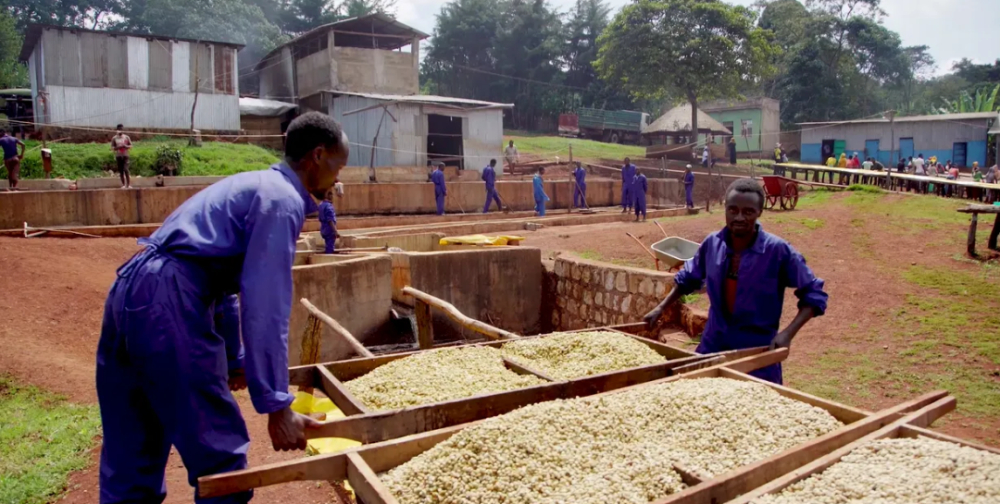
Unlike many African growing regions, Kenyan producers typically use a refined and distinctive 72-hour fermentation washed process known as K72. On the day of harvest the cherries are sorted to remove defects, then pulped and fermented for 24 hours, after which they are washed with clean river water. They are then fermented again in clean river water for another 24 hours and washed again, repeating the cycle three times to reach a total fermentation time of 72 hours. Through the long fermentation and washing, the rich inherent acidity of FrontStreet Coffee's Kenyan beans becomes more complex and cleanliness improves.
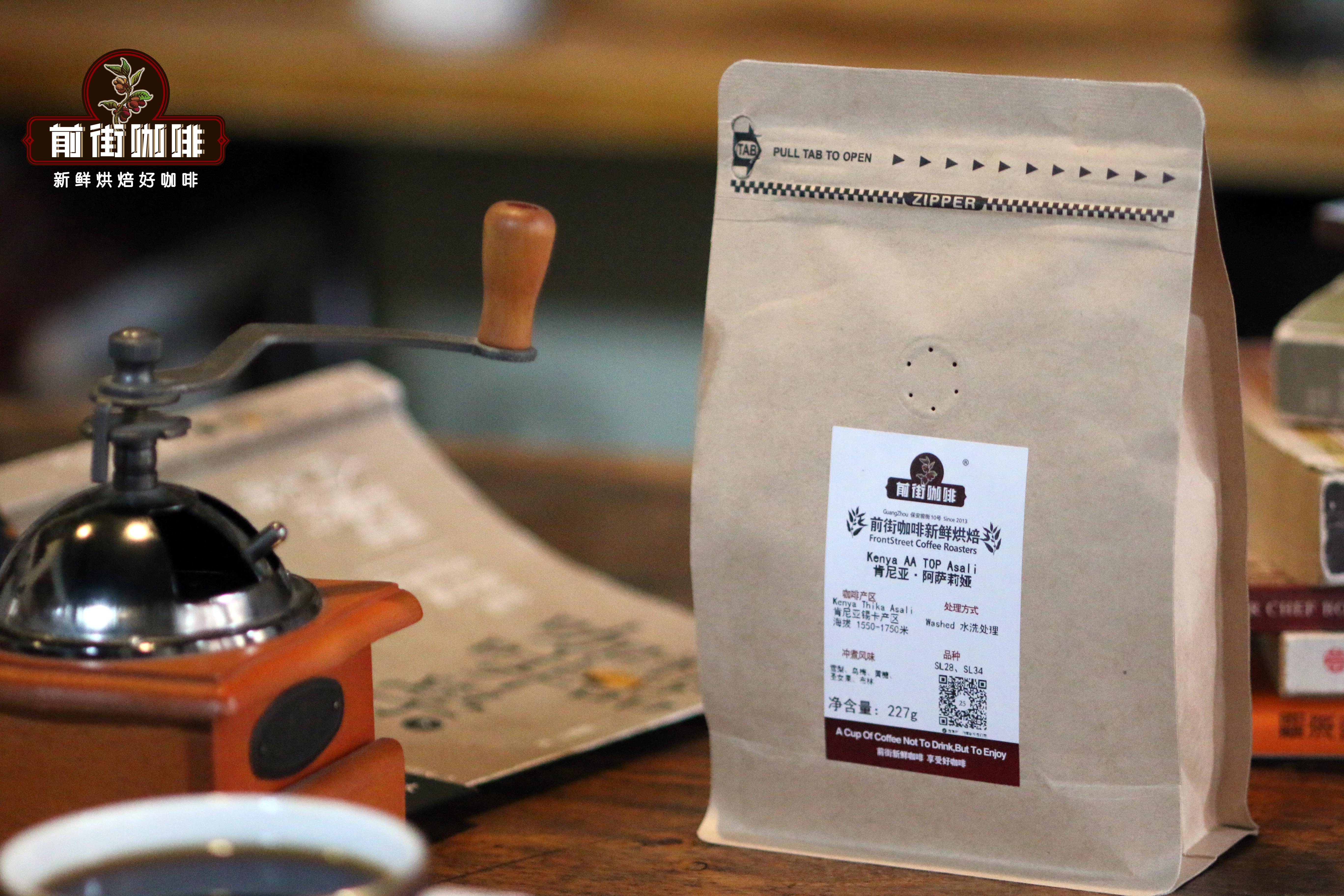
This FrontStreet Coffee Kenya comes from the Thika region, produced and processed by the Asali Honey Processing Station. To preserve the characteristic rich acidity of Kenyan coffee, FrontStreet Coffee's roasters chose a medium-light roast. Cupping reveals snow pear, dark plum, brown sugar, cherry tomato and plum.
Key Factors for Brewing Great Pour-Over Coffee
A delicious pour-over depends on several main factors: fresh beans within their optimal tasting period, appropriate grind size, coffee-to-water ratio, brewing temperature and pouring technique.
Coffee beans need a 4-7 day degassing period after roasting before they enter their optimal tasting stage. As storage time increases, aroma dissipates faster and the flavor profile weakens markedly. To ensure everyone drinks coffee at its best, FrontStreet Coffee guarantees shipping only beans roasted within 5 days. Fresh beans also make it easier to extract the quality flavors of FrontStreet Coffee's Kenyan coffee.

Whichever grinder you use, the goal is uniformly ground coffee. Coarseness directly affects taste: too coarse and the coffee under-extracts and tastes weak, too fine and it over-extracts and turns bitter. FrontStreet Coffee sets grind size using a #20 standard sieve of 0.85mm. For medium-light roasted beans it consistently targets a 75-80% pass rate, while for medium-dark roasted beans it uses 70-75%. FrontStreet Coffee's Kenya Asalia is a medium-light, high-altitude coffee, so to extract more aromatic compounds FrontStreet Coffee chose a grind with an 80% pass rate through the No. 20 standard sieve. In store, the EK43s grinder is set to 10.
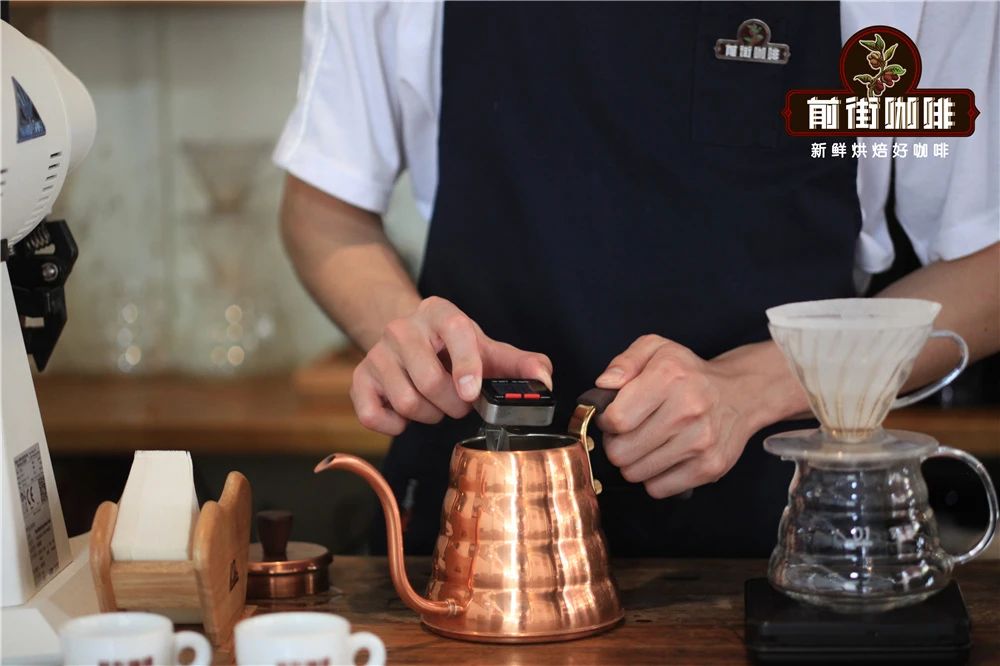
Water temperature plays a similar role. The higher the temperature, the higher the extraction efficiency, which releases more compounds and produces a more concentrated cup; water close to boiling readily extracts unpleasant bitter substances. FrontStreet Coffee therefore uses different parameters for medium-dark and light roasts: 87-88°C for medium-dark beans, while light roasts need higher temperatures to draw out aroma, so 91-93°C.
FrontStreet Coffee stores typically use Hario V60 and KONO drippers. The V60 handles lighter-roasted beans while the KONO handles darker roasts. Here, the baristas use a resin V60 to extract the light-roasted Kenyan coffee. The V60 has flow ribs connecting top and bottom and a large central hole, which speeds the flow. Its spiral exhaust groove extends the water path, increasing contact time between grounds and hot water. Each stream converges along the grooves toward the dripper's center, concentrating pressure on the coffee bed and producing a more layered extraction.

Pouring Technique
Based on past experience, FrontStreet Coffee recommends beginners use a three-stage pour. Three-stage extraction dissolves flavor compounds more fully, adding mouthfeel layers while avoiding over-extraction from an overly long steep.
For 15g of coffee at a 1:15 ratio and 225ml total water, the three stages are 30ml, 95ml and 100ml, reading 30g, 125g and 225g on the scale.
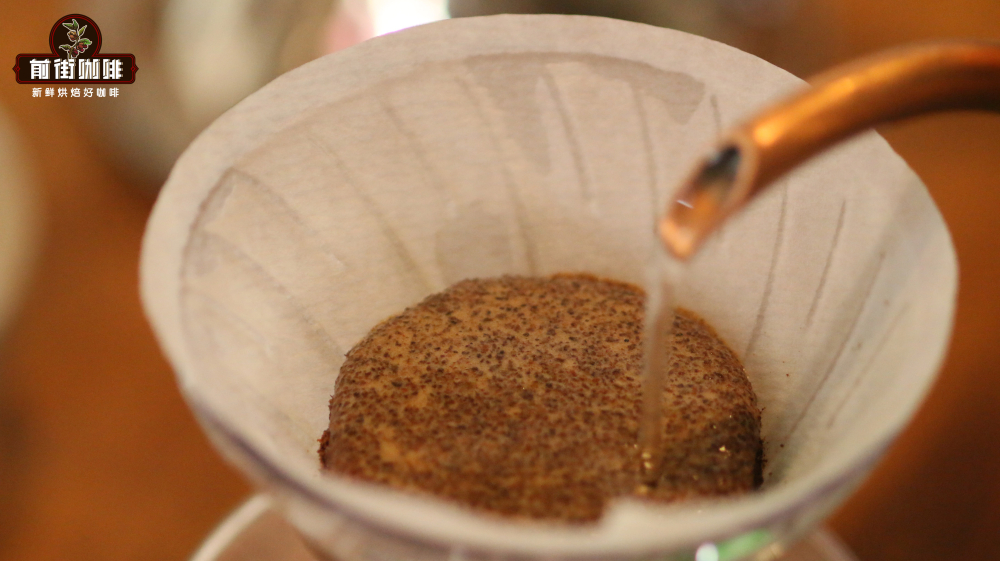
Fold the filter paper so it sits snugly in the dripper, wet it with a little water so the two conform, and discard the water from the server. Add the coffee and tap gently to level the bed. Stage one: gently pour 30g of water to bloom, blooming for 30 seconds. Stage two: pour to about 125g in even, steady outward circles. Then wait for the coffee liquid to drop; when it reaches halfway, pour the final stage to 225g. Once all the coffee has dripped through, total extraction time is typically around 2 minutes.
Tasting Notes
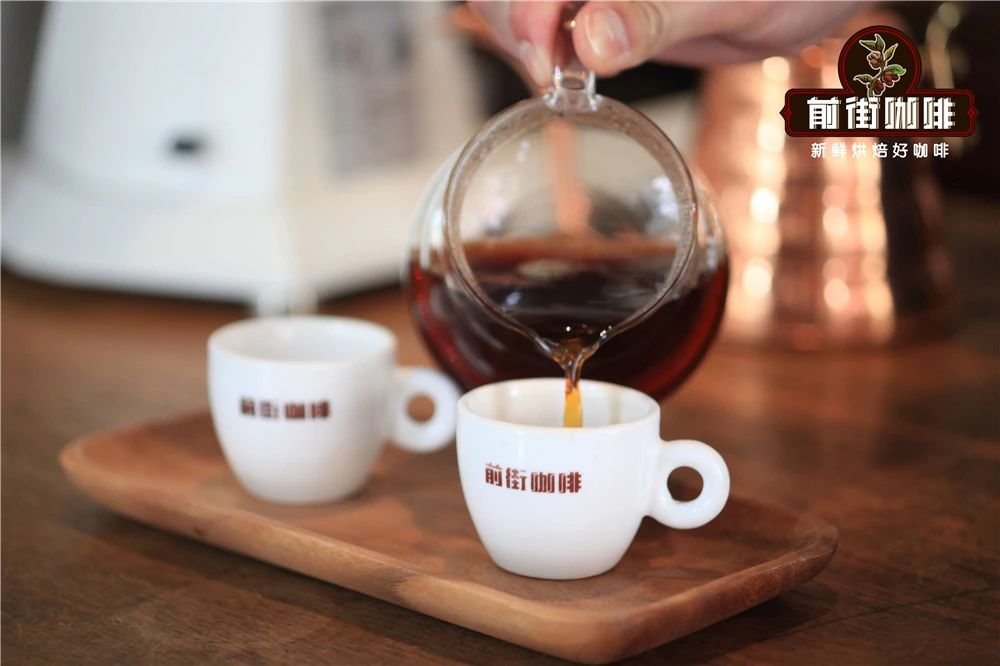
The pour-over FrontStreet Coffee Kenya Asalia presents fruit flavors of cherry tomato, dark berries and black plum, with honey-like sweetness and a thick, rounded dark-plum juice sensation. The layers are extremely rich, with a mellow entry and a bright aftertaste.
FrontStreet Coffee Recommendation
The V60 is the cone FrontStreet Coffee reaches for most often, and its fast flow rewards exactly the bright, layered acidity Kenyan coffee is known for. FrontStreet Kenya Cherry Tomato is the direct match: sourced from the Sika region at 1,550-1,750 meters and grown from SL28 and SL34 with 72-hour double washed fermentation, it is lightly roasted to preserve its lively acidity. The dry aroma shows dried cherry tomato and florals, the entry brings clear cherry tomato and smoked plum, and the middle adds pear and black plum over a clean, lingering finish of yellow sugar and green tea—a sweet-sour balance with real definition.
If you want to push further into fruit, FrontStreet Ethiopia Hua Kui brings intense tropical aromatics of strawberry, passion fruit, jackfruit and lychee with obvious sweetness and almost no bitterness, while FrontStreet Yirgacheffe Guodingding stays cleaner and more floral, with pronounced citrus, berry and floral notes and a green-tea-like finish. Both are light-roasted, so brew them on a V60 with water at 91-93°C.
For a different acidity entirely, FrontStreet Panama Emerald Estate Red Label Geisha shows jasmine florals with citrus, bergamot and black tea, a transparent body and a long finish. If you prefer to round the cup out, FrontStreet PWN Golden Mandheling is roasted dark, with very low acidity and a rich, lingering body full of herbal and dark chocolate notes and a faint earthy character—well suited to drinkers who like weight rather than acidity. Whichever bean you choose, grind for the roast level: 80% through a #20 sieve for light roasts and 70-75% for darker ones, brew 15g at 1:15 with 225ml total water, pour 30ml to bloom for 30 seconds, then 95ml and finally 100ml, and finish around 2 minutes.
Important Notice :
FrontStreet Coffee is a long-established specialty coffee roaster in Guangzhou China, selling freshly roasted beans from its own farm in Yunnan as well as dozens of carefully selected single-origin beans from around the world for both pour-over and espresso. The products deliver consistently excellent quality and great value, with shipping within 24 hours. Guangzhou's FrontStreet Coffee shop is recommended by many coffee lovers, and the beans are now available online at the Tmall 。
FrontStreet Coffee has moved to a new address:
FrontStreet Coffee Address: 315,Donghua East Road,GuangZhou
Tel:020 38364473
 Scan and follow the En Gafei WeChat official account. Please indicate that the reprint comes from "En Gafei".