How to Brew Blue Mountain Coffee Beans - Pour-Over Grind Size & Brewing Parameters
Understanding Jamaica Blue Mountain Coffee: Origins and Characteristics
The highest elevation in the middle section of Jamaica's Blue Mountains reaches 2,256 meters. Areas above 1,700 meters are designated as natural ecological reserves where coffee cultivation is prohibited.
Before diving deeper into Blue Mountain coffee beans, FrontStreet Coffee would like to highlight a few important points:
Coffee grown between 910 and 1,700 meters is classified as Jamaica Blue Mountain coffee beans;
Coffee grown between 460 and 910 meters is classified as Jamaica High Mountain coffee beans;
Coffee grown below 460 meters is classified as Jamaica Prime coffee beans.
Surrounded by the Caribbean Sea, the Blue Mountains take their name from the brilliant blue light reflected off the water when the sun shines directly on the azure sea on clear days. This geographic isolation has allowed Blue Mountain coffee to maintain a single, superior variety, preserving its clean and delicious flavor.
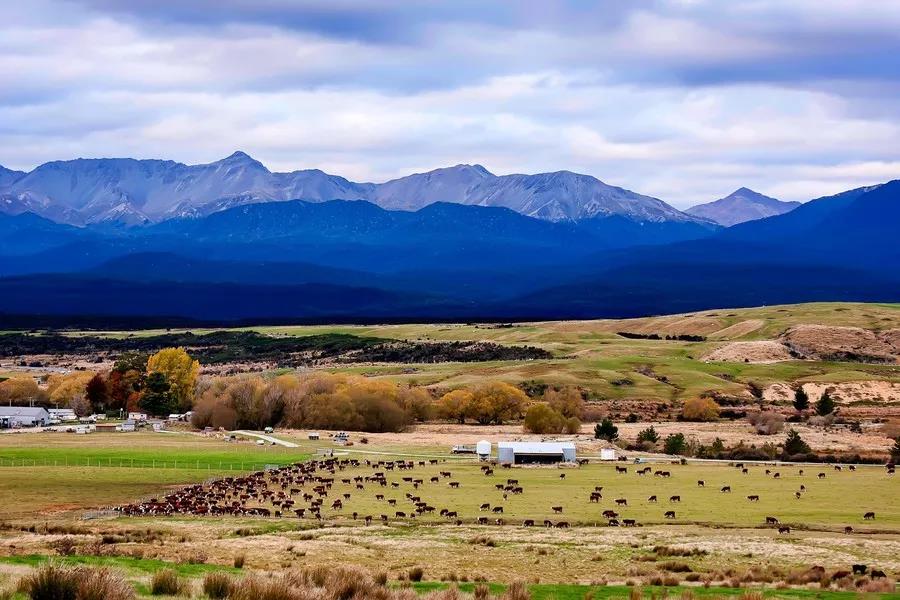
The highest peak of the Blue Mountains reaches 2,256 meters, making it the tallest peak in the Caribbean and a famous tourist destination. Situated in the coffee belt, the area enjoys fertile volcanic soil, fresh, unpolluted air, and a humid climate with year-round fog and rain (average precipitation of 1,980mm and a temperature around 27°C), creating ideal conditions for growing Typica coffee.
True Jamaica Blue Mountain coffee beans can only be grown within the designated Blue Mountain regions. East of Kingston in the north of Jamaica, the mountain ridge extends to the eastern part of the island, with the Blue Mountain range reaching elevations above 2,100 meters.
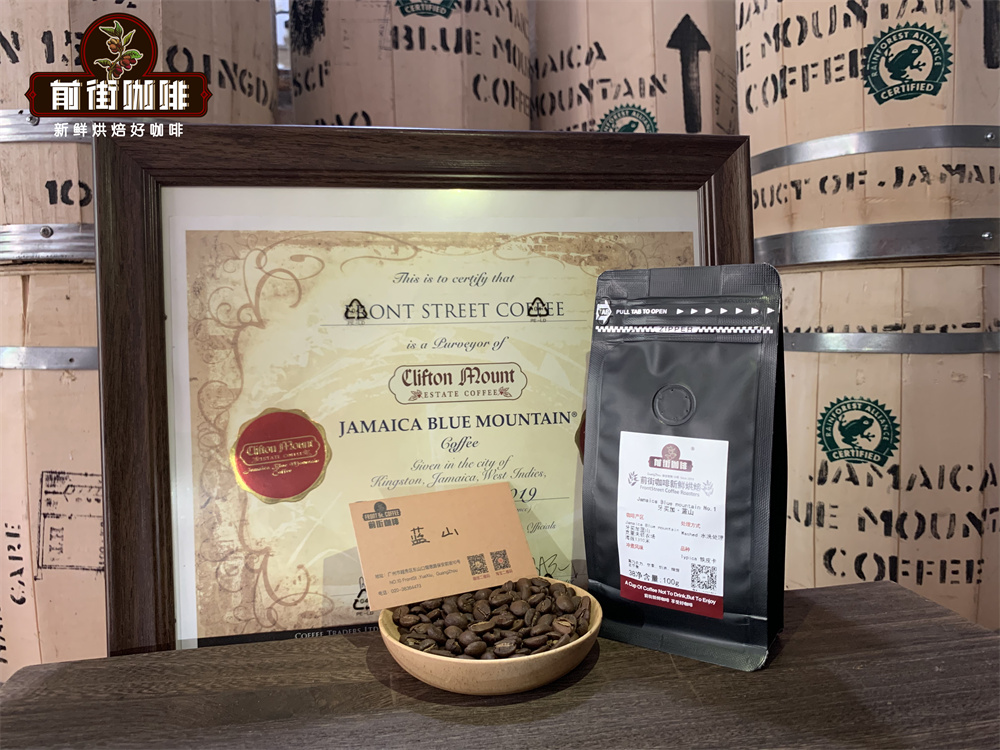
FrontStreet Coffee · Jamaica Blue Mountain No. 1
Region: Jamaica Blue Mountain Region
Estate: Clifton
Elevation: 1,310 meters
Variety: Typica
Processing Method: Washed
You may also find "Blue Mountain" beans grown in other coffee-producing countries. Not to worry: they, too, grow Blue Mountain varieties, specifically Typica introduced from Jamaica's Blue Mountain region. Over time, coffee trees adapt and change to suit their environment, so Typica from Sumatra and Blue Mountain Typica may show slight morphological differences despite being the same variety.
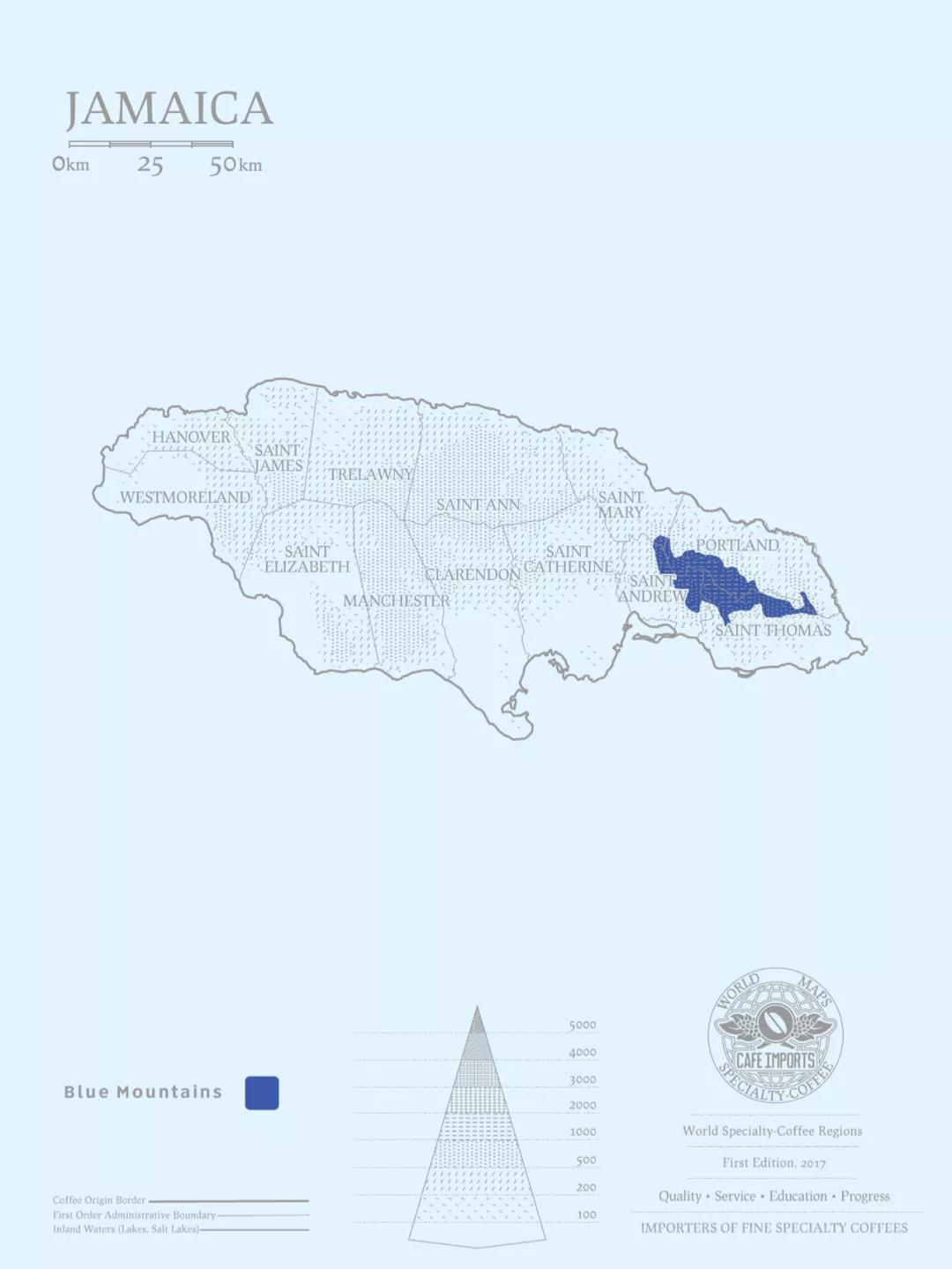
Located in eastern Jamaica, the Blue Mountains' island geography, surrounded by sea, has meant that the Typica variety here has been minimally influenced by other coffee varieties. That isolation has helped preserve the ancient Typica flavor profile. Combined with the prestige of the "Blue Mountain coffee" name, when other countries import Blue Mountain Typica they simply refer to it as the "Blue Mountain variety."
FrontStreet Coffee · Jamaica Blue Mountain Clifton Estate Introduction
FrontStreet Coffee's Jamaica Blue Mountain beans come from Clifton Estate.
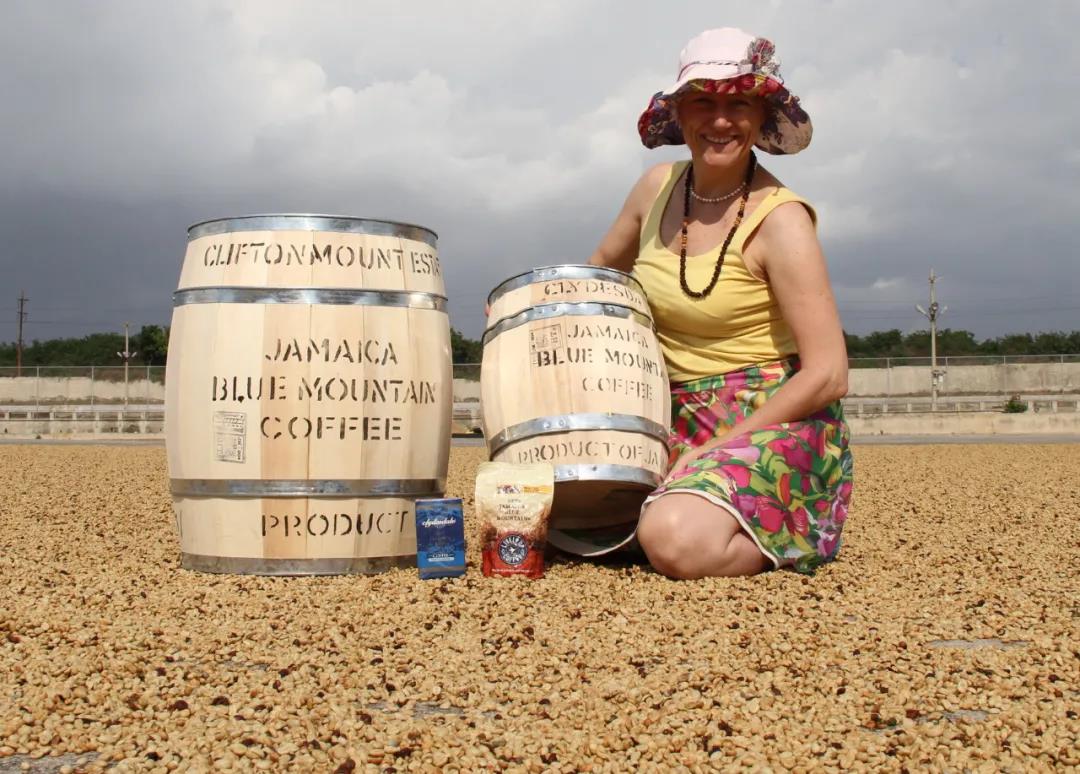
Clifton is Jamaica's oldest coffee-producing estate still in normal operation, and the only estate in Jamaica with Rainforest Alliance certification.
As early as the mid-18th century, around 1750, Clifton Farm began cultivating and producing coffee. Today's Clifton Farm is the largest estate in the region, though by international standards it counts as small-scale cultivation.
FrontStreet Coffee would like to highlight another important point:
According to CIB standards, the basic requirements for No. 1 Blue Mountain coffee green beans include: beans of 17 screen or larger, a defect rate below 3%, moisture content around 13%, and other quality criteria.
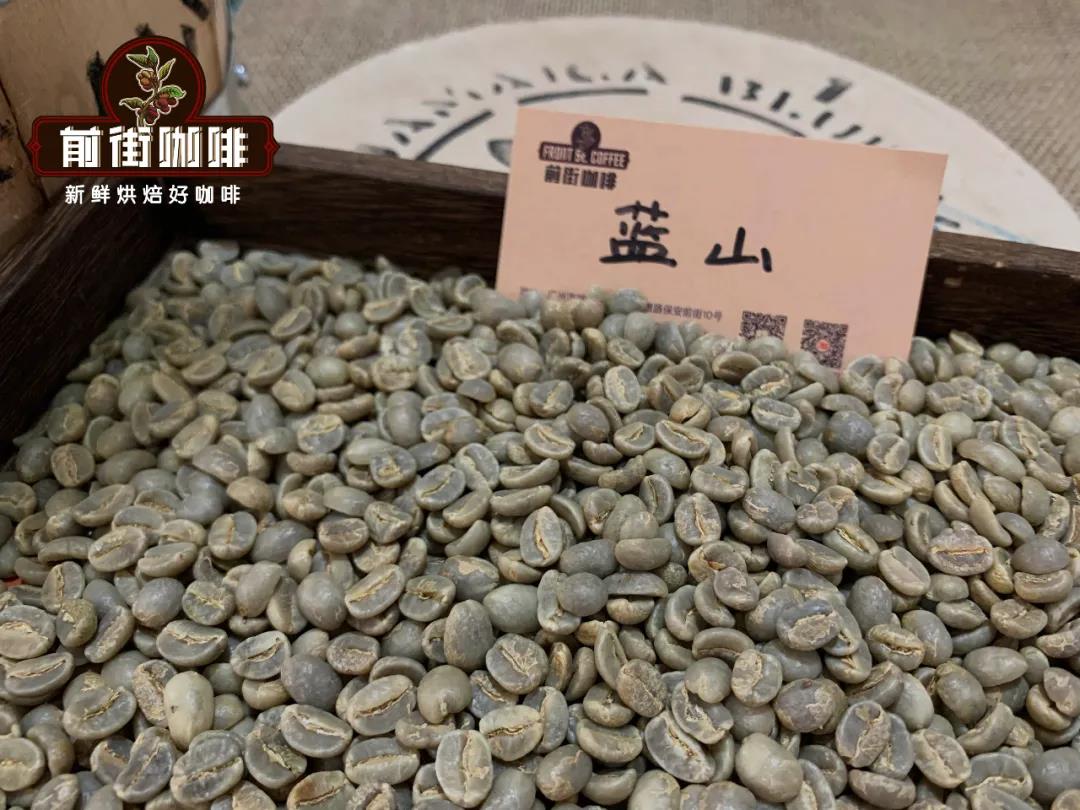
FrontStreet Coffee · How to Identify Authentic Blue Mountain Coffee Beans
1. Exported by companies designated by the Jamaica Coffee Industry Board
Some authentic Blue Mountain No. 1 beans reach the Chinese market mainly through direct branches of Japanese, Australian, and European exporters. According to 2013 statistics from the International Coffee Organization (ICO), Japan accounts for 85% of the allocation, while the United States, Europe, and other countries each account for 5%. ICO statistics show that China accounts for 15% of Blue Mountain coffee consumption. Notably, limited Blue Mountain No. 1 beans are mostly allocated to Japan, the United States, and Europe. Because of Japanese investment in Jamaica's coffee industry, most Blue Mountain coffee is purchased by Japan. In 1992, Jamaica sold 688 tons of Blue Mountain coffee beans to Japan, 75 tons to the United States, and only 59 tons to the United Kingdom.
In addition, the officially registered logo of the Jamaica Coffee Board is used only for certifying and inspecting exported Jamaican Blue Mountain beans. The BLUEMOUNTAINCOFFEE® trademark is the identifying mark on authentic Jamaican Blue Mountain packaging.
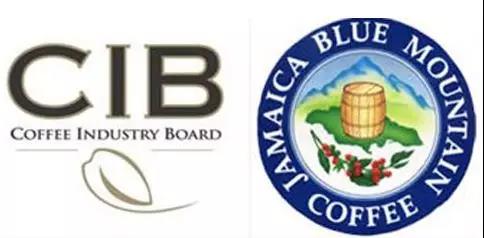
Coffee Industry Board (CIB)
2. The only coffee region that uses wooden barrels for green beans
Blue Mountain beans remain the only coffee region packaged in wooden barrels for green beans; every other coffee region uses burlap bags.
3. The frog on Clifton Estate's barrel lids
Clifton Estate is Jamaica's oldest coffee estate, and only Clifton Farm in Jamaica holds the (RFA) Rainforest Alliance Tree Frog certification.
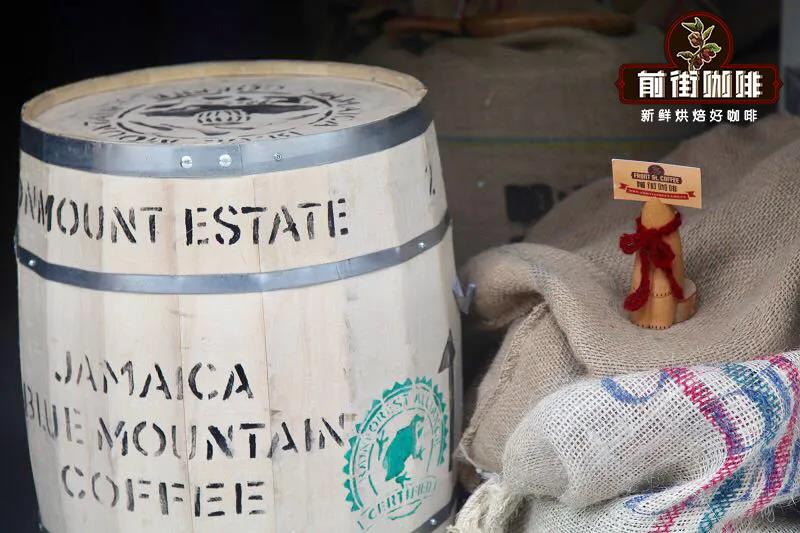
Only those meeting the Sustainable Agriculture System Standards can receive the certification, with rainforest certification marks on their wooden barrels.
Jamaica Blue Mountain Coffee Bean Processing Methods
Before 2019, Clifton Farm's Blue Mountain beans were always processed using the washed method.
Before processing, workers first remove the coffee cherry's skin and pulp, allowing natural fermentation for 12-18 hours. The fermented beans are then placed in pools and moved back and forth, using the friction between beans and flowing water to wash them until smooth and clean.
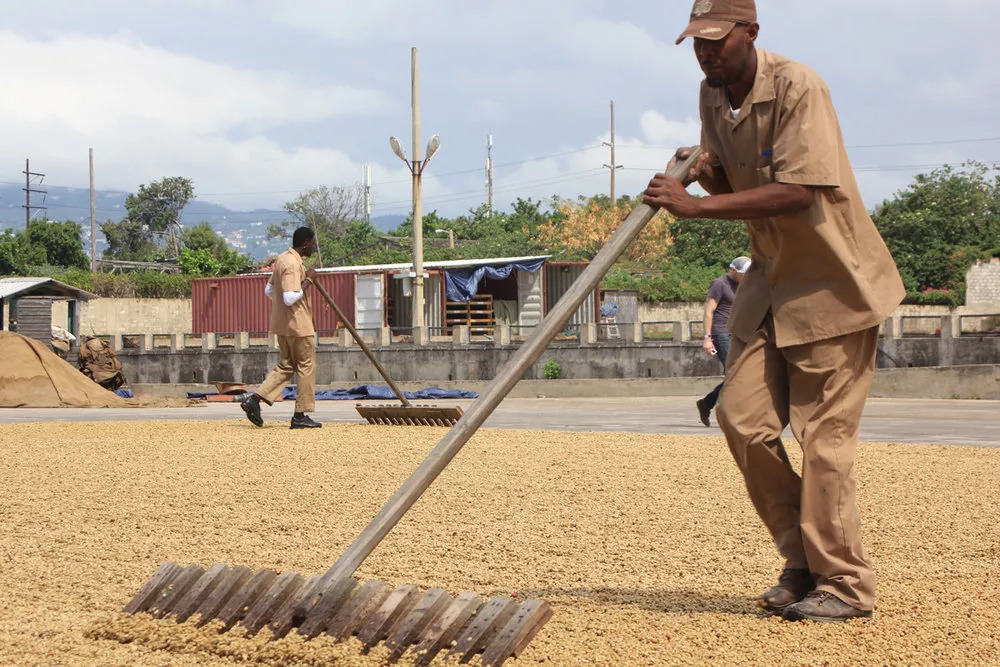
After washing, the beans still carry their parchment layer and contain 50% moisture. At this point they must be dried down to a moisture content of 12-14%, otherwise they would keep fermenting, becoming moldy and spoiled. After that, the beans are screened and stored in dedicated warehouses. The washed method ensures Blue Mountain coffee has a rich aroma, a balanced flavor, and its essential character, without any single flavor overpowering the rest or going missing.
The adoption of natural processing for Blue Mountain beans primarily followed market developments.
In 2019, Clifton Estate broke from its traditional model and used natural processing for the first time. Blue Mountain beans underwent natural-processing trials in 2019, and in 2020 the estate began exporting small batches of natural-processed Blue Mountain beans for the first time.
For FrontStreet Coffee, however, natural-processed Blue Mountain changes the processing method, which alters the "inherent flavor structure" of Blue Mountain beans. When FrontStreet Coffee introduces regional coffees to customers, we always recommend washed beans first, because the washed method best represents the flavor profile of a coffee region.
FrontStreet Coffee · Jamaica Blue Mountain No. 1 Coffee Bean Brewing Approach
For the coffee-to-water ratio, FrontStreet Coffee uses 1:15, with a grind size that achieves a 75% pass-through rate on a #20 standard sieve.
When brewing this Jamaica Blue Mountain No. 1, FrontStreet Coffee aims to highlight the beans' rich body and gentle fruit acidity. We use water at 88°C. For the dripper, we first consider slower-flow equipment such as a KONO cone, a Kalita trapezoidal cone, or a flannel filter.
FrontStreet Coffee · About Filter Cones
When brewing washed Jamaica Blue Mountain No. 1, FrontStreet Coffee uses a KONO cone.
Consider the KONO cone's design. Its ribs stop halfway up the cone's height. This ensures that when the filter paper is wetted in the cone it clings closely to the wall, restricting airflow. That increases the water contact time of the coffee particles, resulting in more uniform extraction overall and effectively enhancing the rich body. The grooved frame at the bottom of the cone is also a key design that creates a siphon effect.
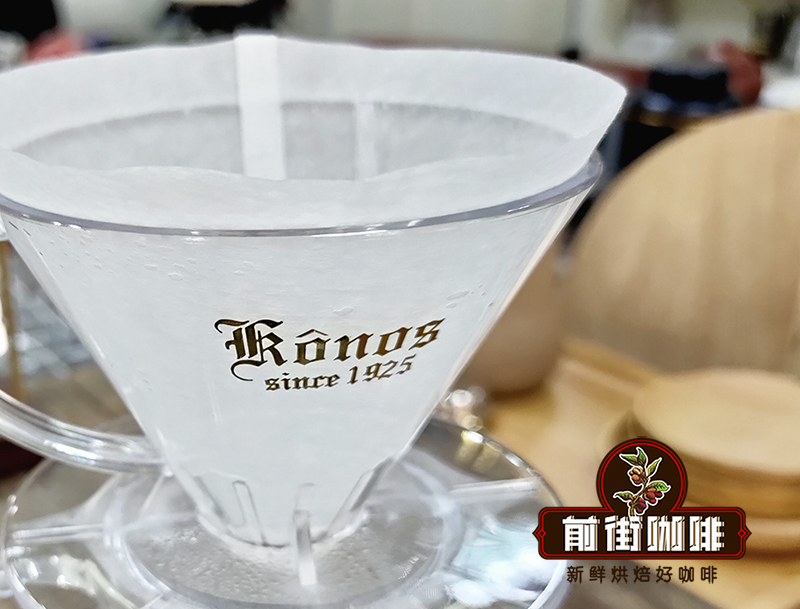
When brewing Jamaica Blue Mountain beans, FrontStreet Coffee uses a three-stage pour. It is a simple technique that anyone can learn at home to brew an easy, delicious cup.
FrontStreet Coffee chooses KONO cones in its stores for their ribs. The rib channels extend to the bottom of the cone, with ribbing positioned very close to the base, creating high adherence with the filter paper, so KONO's flow rate is slower than a V60's.
The ribs create small gaps between the conical dripper and the filter paper, allowing coffee liquid to seep through the paper, while the parts adhering to the cone surface prevent coffee from seeping out.
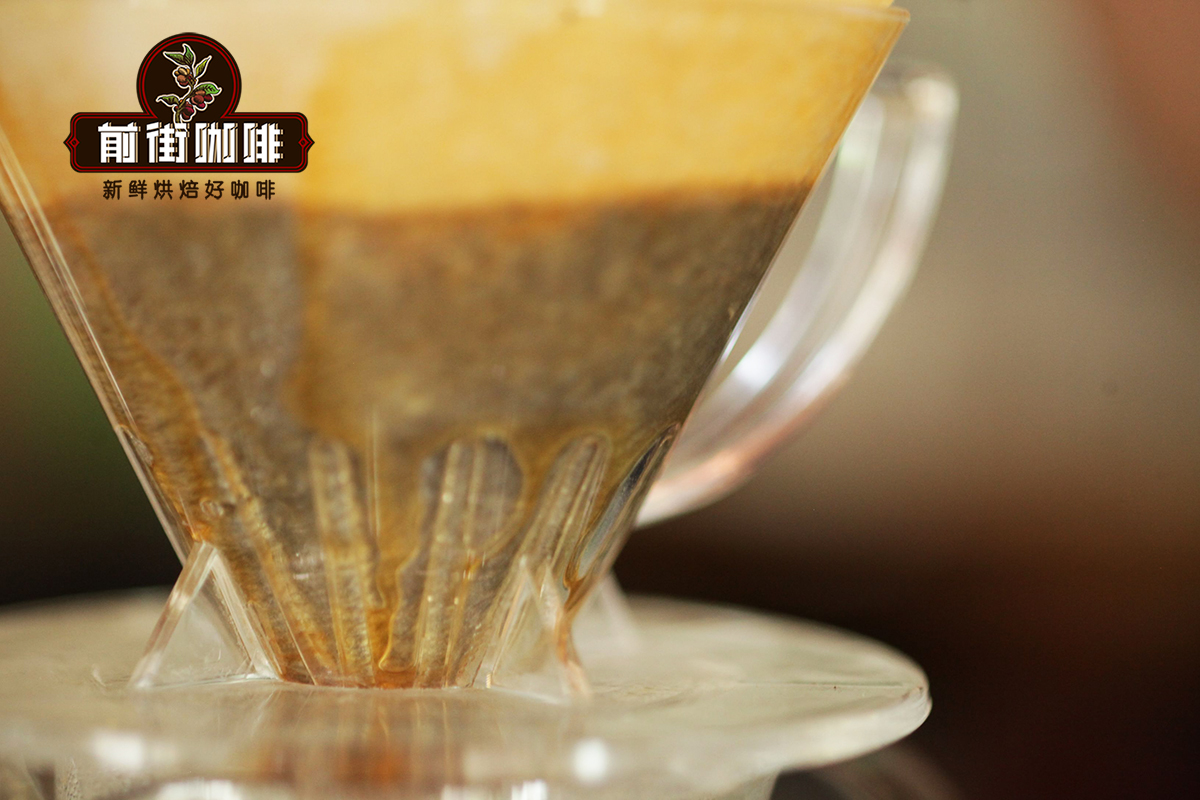
The KONO cone FrontStreet Coffee uses has 12 ribs, and the rib design sits much lower than a Hario V60, not reaching halfway up the cone's height.
Notably, if the ribs are too short or too shallow, the area through which coffee can seep becomes too small and extraction time lengthens. If the ribs are too long, contact time between hot water and grounds becomes too brief, coffee seeps out quickly, and impurities floating on the surface readily mix into the cup. The KONO cone's divergent rib design and small-diameter filter holes create a slower filtration speed, reducing heat loss and ensuring more even extraction. Combining these characteristics, when FrontStreet Coffee brews beans such as Golden Mandheling, we use a coarser grind to achieve a full, rich flavor without over-extraction from the slow filtration.
FrontStreet Coffee · Brewing Recommendations
Blue Mountain coffee has excellent clean flavor and is very suitable for pour-over brewing.
Dose: 15 grams
Coffee-to-water ratio: 1:15
Water temperature: 88°C
Grind size: 75% pass-through on a #20 standard sieve
Filter cone: KONO filter cone
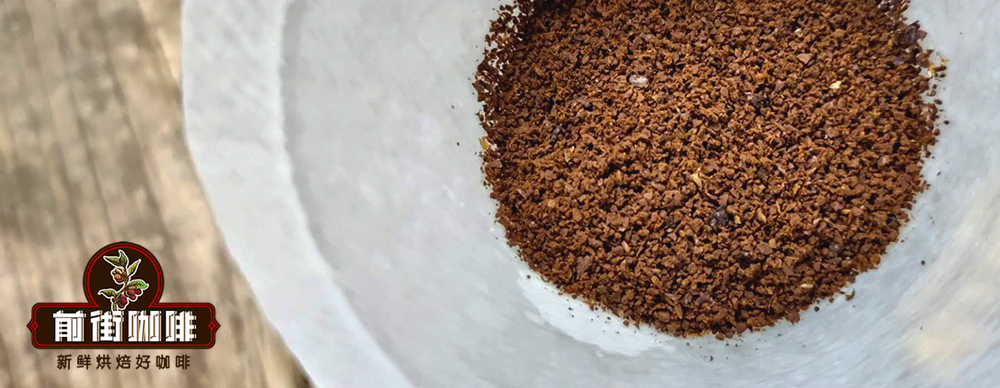
FrontStreet Coffee · Brewing Technique
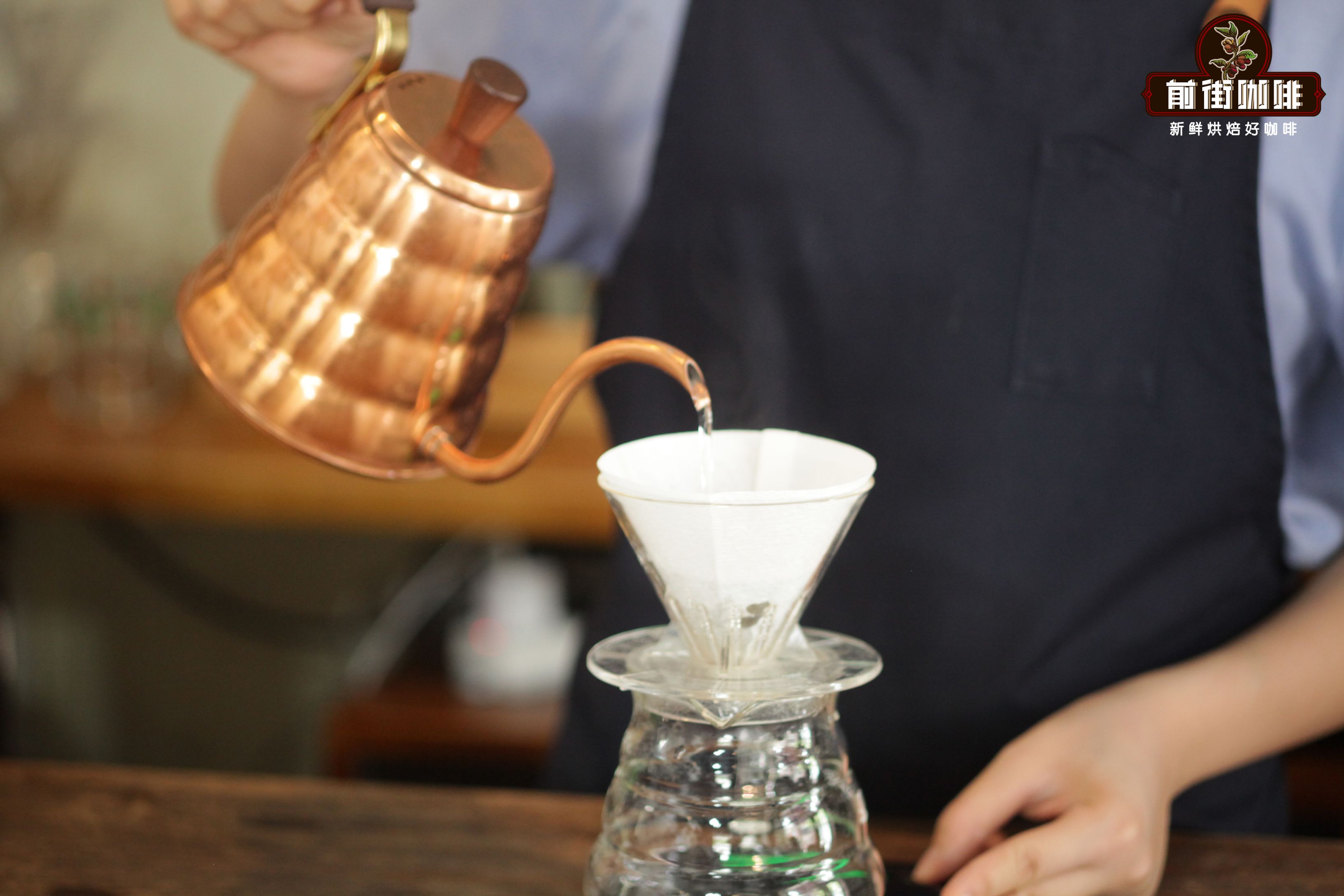
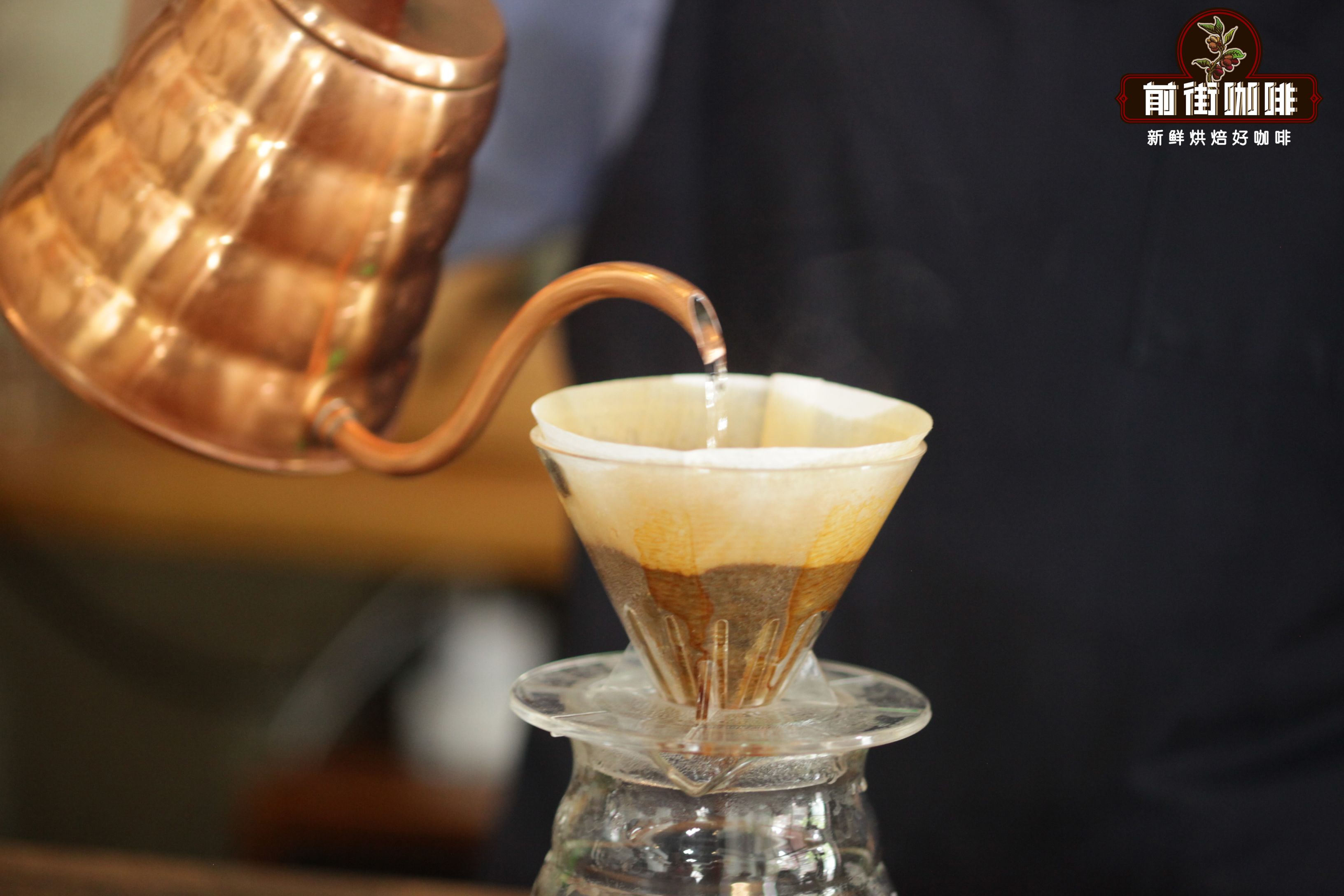
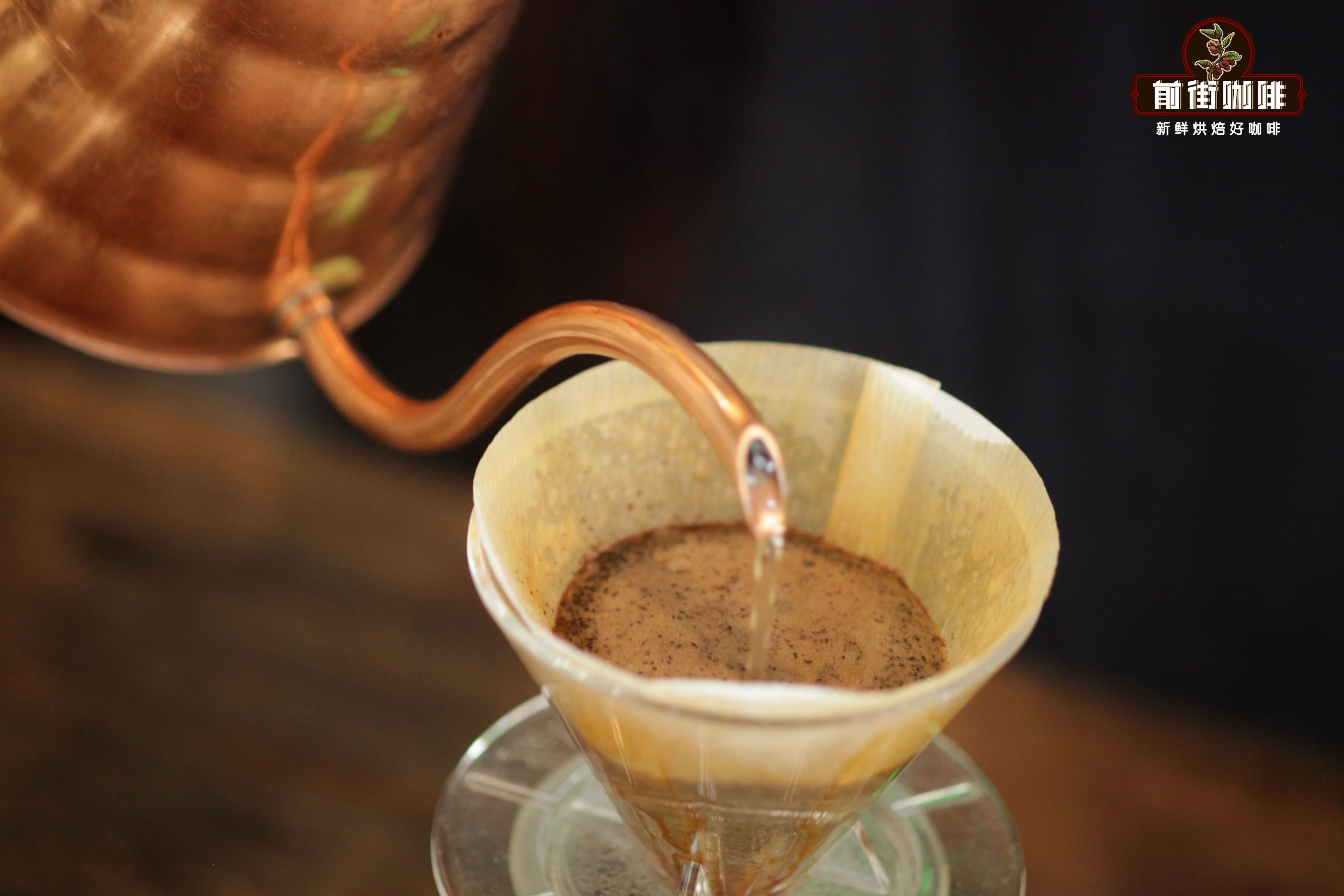
Use 30g of water for a 30-second bloom, then slowly pour in a circular motion from the center outward with a small stream to 100g (the scale reads 130g). Wait until the coffee bed drops to 1/2, then pour 65g of water with a larger stream, reaching a total water volume of 195g. Remove the cone after all the coffee liquid has flowed into the server to finish extraction. Total brewing time is 1 minute 52 seconds.
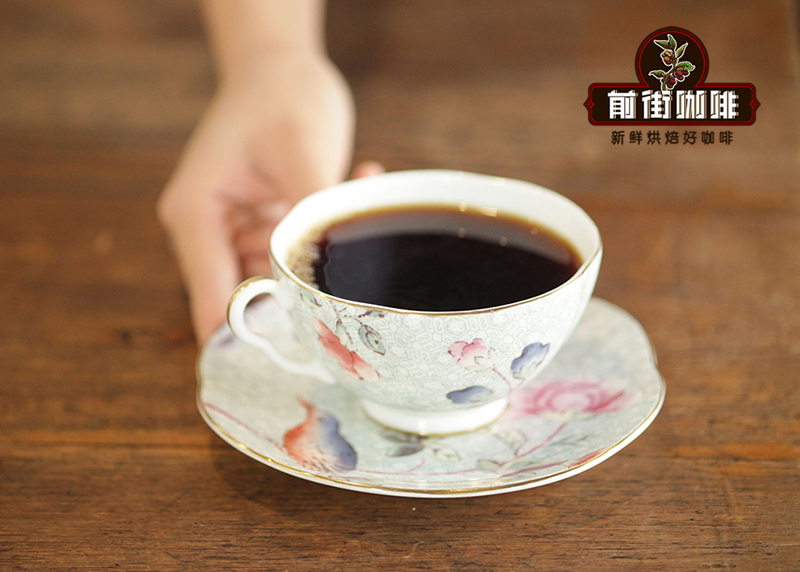
Flavor: This brewing method showcases Blue Mountain's clean taste with chocolate and nutty flavors, achieving a perfect balance between acidity, sweetness, and bitterness.
FrontStreet Coffee Recommendation
To brew Blue Mountain well, it helps to start with beans you can trust. FrontStreet Jamaica Blue Mountain No. 1 comes from the historic Clifton Estate, where coffee has been grown and processed since around 1750. The plots sit at an average of 4,300 feet (1,310.64 meters), where ample altitude, gentle afternoon cloud cover shading the hillside, plenty of sunshine, and mineral-rich soil give the trees ideal growing conditions and lengthen the ripening of the cherries. FrontStreet roasts it to a medium-dark level to draw out a rich body and the classic bittersweet-then-sweet character of traditional coffee.
For brewing, FrontStreet suggests a KONO dripper, which better lifts the coffee's full body. Use a standard single serving of 15g and let the beans rest 4-7 days from the roast date, counting the roast date as day one, for the best flavor. Grind a little coarser than you would for a light roast, roughly the texture of granulated sugar, and brew with water at 87-88°C; many bitter, scorched cups come from water that is too hot, while water that is too cool leaves the coffee flat and dull. A 1:15 ratio is ideal here, balancing clarity and richness. Pour in three stages: 30g of water to bloom for 30 seconds, then water to 120g with a slow, small, vertical circular stream, then water to 225g with a slightly faster stream and circling to keep the bed from clogging and over-extracting. The result is a very clean, complex, gentle cup with chocolate sweetness, a strong body, a perfect balance of sweet, acidic, and bitter notes, almost no bitterness, a measured, pleasing acidity, and a lingering fruity finish.
Important Notice :
FrontStreet Coffee is a long-established specialty coffee roaster in Guangzhou China, selling freshly roasted beans from its own farm in Yunnan as well as dozens of carefully selected single-origin beans from around the world for both pour-over and espresso. The products deliver consistently excellent quality and great value, with shipping within 24 hours. Guangzhou's FrontStreet Coffee shop is recommended by many coffee lovers, and the beans are now available online at the Tmall 。
FrontStreet Coffee has moved to a new address:
FrontStreet Coffee Address: 315,Donghua East Road,GuangZhou
Tel:020 38364473
 Scan and follow the En Gafei WeChat official account. Please indicate that the reprint comes from "En Gafei".