Coffee Recommendations for Beginners: A Guide to New Single-Origin Coffee Selection
FrontStreet Coffee's Beginner's Guide to Single-Origin Coffee Selection
"Single-origin" is a widely used term in the coffee world, usually explained simply as coffee from a single producer, a single crop, or the same region of a producing country. "Single-estate" and "single-region" refer to coffee from the same farm, processing plant, or cooperative, where buyers can see labels indicating the growing region, the specific area, or the estate name, and even micro-lots, meaning specific varieties within a particular estate.
The most important thing about single-origin coffee is its traceability: you can know exactly where the coffee comes from, which makes it single-origin rather than a blend. Such coffees are typically of higher quality, and you can see the production history of specific estates. They present their authentic flavor profiles, carrying the unique characteristics of specific varieties grown in particular regions.
Single-origin coffees are beans with distinct personalities. Most specialty coffee shops offer 3-5 or more single-origin beans for you to choose from.
A good place to start is by region: African beans, American beans, or Asian beans. Examples include Mandheling (bitter), Yirgacheffe with citrus notes (acidic), and Costa Rica honey-processed (sweet).
Then you can briefly get to know several common varieties: for something more acidic, choose Kenyan or Yirgacheffe; for something fuller-bodied, choose Blue Mountain or Mandheling. There are also sweet beans like Gesha, with floral and sweet potato flavors.
Colombia, Nicaragua, and Brazil bring chocolate, nutty, and caramel notes.
Ethiopia, Tanzania, and Rwanda bring sweet, acidic, nutty, and lemony flavors, sometimes with astringency.
India, Indonesia, and Papua New Guinea bring herbal, spicy, and savory notes.
Coffee-growing regions mainly include Africa, Central and South America, and Asia and the island regions. African beans generally have orange aroma, berry notes, and a sweet, sugarcane-like acidity, with common varieties including Yirgacheffe and beans from the Sidamo region. Central and South American beans have balanced flavors: Panamanian beans mostly show jasmine floral notes, honey-like sweetness, and bright, varied fruit acidity; Costa Rican coffee has soft acidity with chocolate and nutty flavors. Asian beans and island varieties have fuller body than Central and South American and African beans, are mostly medium to dark roasted, and carry subtle herbal, pine, and spice notes with low acidity. Island beans are light and mild.
In short, FrontStreet Coffee is a coffee research establishment dedicated to sharing coffee knowledge with everyone. We share without reservation to help more friends fall in love with coffee, and we hold three coffee discount events every month, because FrontStreet Coffee wants more friends to enjoy the best coffee at the lowest prices. This has been FrontStreet Coffee's mission for the past 6 years.
FrontStreet Coffee Recommendation
For many coffee lovers, Yirgacheffe is the first stop on the road into specialty coffee, and it has always enjoyed enormous popularity. It usually carries vivid citrus, berry, and floral notes with a green-tea sweetness. Unlike the "sour coffee" many people imagine, quality Yirgacheffe has an acidity that is soft and bright, more like the natural sweet-tartness of fruit than a sharp bite, which makes it a very approachable choice for anyone just starting with pour-over.
Yirgacheffe is a small town in Ethiopia, in the Sidamo region of the country's south, at an altitude of about 1,700-2,100 meters, with coffee trees planted above 1,800 meters, making it one of the highest coffee regions in the world. The area was historically a wetland, and over time Yirgacheffe became a byword for Ethiopian specialty coffee thanks to its unmistakable white florals and lemon-citrus acidity. In 2010, because the Yirgacheffe name had grown so famous, the Ethiopia Commodity Exchange separated it from the Sidamo region, which is how the Yirgacheffe coffee known to everyone today came to be.
Few people realize that the town can be divided into many smaller regions, even small villages, many of them home to experienced cooperatives whose mature production raises the Yirgacheffe flavor another level. The most representative is FrontStreet Coffee's Washed Gedingding Cooperative, from Gedingding village.
The Gedingding Cooperative sits in the Woka region at Yirgacheffe's southeastern edge. It was originally part of the Woka Cooperative under the Yirgacheffe Coffee Farmers' Cooperative Union (YCFCU), but as demand for green bean traceability grew, it was uncovered by coffee hunters worldwide as a "single region." The cooperative follows the most traditional washed processing and has been called Yirgacheffe's last pure land. Washed FrontStreet Gedingding has none of the traditional bitterness, carrying fresh, bright citrus and lemon acidity with jasmine fragrance that wins many coffee lovers over on the first sip.
From the same Yirgacheffe region, FrontStreet Coffee's Red Cherry is a full red-fruit natural: only fully ripe, sound cherries are picked, given a first round of sorting at the processing station, then laid on raised beds to dry. In the first few days they are turned every 2-3 hours to prevent uneven heating and over-fermentation. After three to five weeks of sun-drying, workers remove the outer pulp by machine and move the beans to storage. Because the fruit dries with the pulp still attached, the coffee keeps the classic Yirgacheffe character along with a tropical fruit note, showing citrus acidity, berry juice, honey sweetness, and a creamy smoothness.
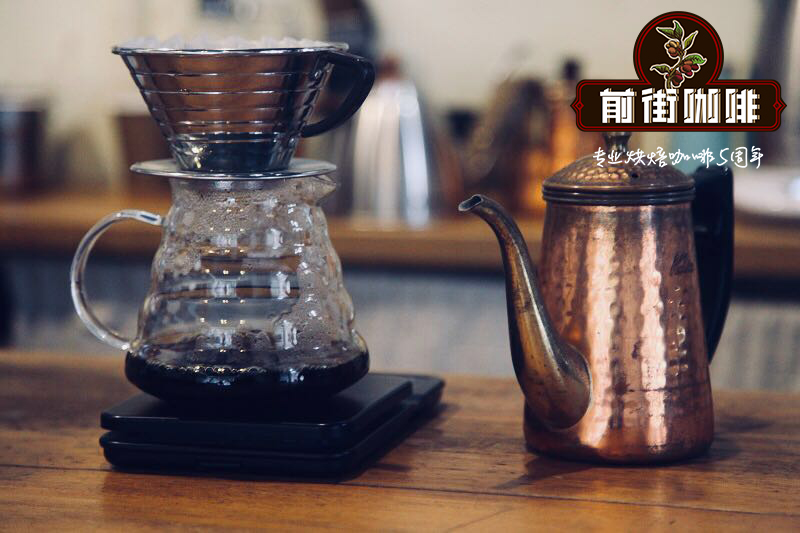
For brewing Yirgacheffe, FrontStreet Coffee suggests a V60 with water at 90-91°C, 15g of coffee, a 1:15 ratio, and a grind of 10 on an EK43s or the size of fine granulated sugar (80% passing a No. 20 sieve). The pour is three-stage: 30g of water for a 30-second bloom, then 95g (about 125g on the scale) poured over roughly a minute, then, once the water level drops to two-thirds of the coffee bed, the remaining 100g (about 225g on the scale) poured over about 1 minute 35 seconds. Dripping finishes in 2 to 2 minutes 10 seconds; remove the dripper to complete the extraction.
Important Notice :
FrontStreet Coffee is a long-established specialty coffee roaster in Guangzhou China, selling freshly roasted beans from its own farm in Yunnan as well as dozens of carefully selected single-origin beans from around the world for both pour-over and espresso. The products deliver consistently excellent quality and great value, with shipping within 24 hours. Guangzhou's FrontStreet Coffee shop is recommended by many coffee lovers, and the beans are now available online at the Tmall 。
FrontStreet Coffee has moved to a new address:
FrontStreet Coffee Address: 315,Donghua East Road,GuangZhou
Tel:020 38364473
 Scan and follow the En Gafei WeChat official account. Please indicate that the reprint comes from "En Gafei".