How to Make Black Coffee & Is Pour-Over Coffee Black Coffee? Brewing Tutorial Guide
FrontStreet Coffee - Pour-Over Coffee Process Introduction
Yes, pour-over coffee is black coffee - brewed from nothing but coffee and water, with no milk or sugar added. Here is how to make it well.
Coffee Brewing Methods
There are three ways to make black coffee, and therefore three families of equipment: traditional drip brewing, siphon brewing, and electric brewing. Traditional drip brewing is the most primitive method with the simplest tools - a drip brewer consists of a funnel, filter paper, and a container below. But it demands real skill from the brewer; done properly, it produces exceptionally pure, premium coffee. This kind of pot is very inexpensive, costing only a dozen yuan or so. Drip brewers suit enthusiasts with steady hands and sensitive palates. When choosing one, note whether the funnel has three holes or one.
Drip and Siphon Coffee Brewing
Three-hole drip brewers drip faster, extract for a shorter time, and produce a lighter coffee; single-hole brewers are the opposite. Siphon brewing uses the siphon principle: heated by an alcohol flame, once the water in the lower vessel reaches 92°C it is pushed up into the upper vessel holding the grounds. After steeping and stirring, the finished coffee travels back down the same path. Thanks to the stirring step, this method yields a stronger-tasting black coffee, and since it relies little on hand technique, the process is fairly simple. These pots typically cost one to two hundred yuan on the market.
Step-by-Step Pour-Over Coffee Process
Step 1: Preparation
Prepare hot water and weigh 18g of coffee beans (using a 1:15 water-to-coffee ratio as an example). Fold the filter paper and seat it in the dripper. Rinse both with hot water: this removes any paper taste and helps the paper fit snugly against the dripper (key technique #1).
Step 2: Warming Equipment
Warm both the filter cup and the server. This keeps the coffee from cooling during filtration, since temperature directly affects flavor.
Step 3: Grinding
Grind the beans to a consistency similar to coarse sugar. Pour the grounds into the filter cup and tap gently to level the bed evenly, which promotes uniform extraction.
Step 4: Blooming
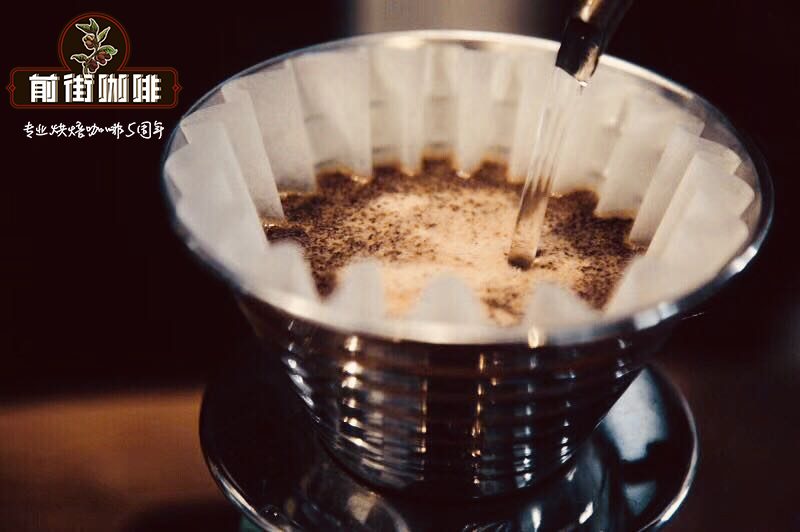
Slowly pour 85-90°C hot water (adjusted for roast level and grind size) onto the center of the grounds, avoiding the filter paper itself (key technique #2 - controlling flow size and speed takes practice). Once the grounds are fully wetted and coffee begins dripping into the server, stop pouring and let the coffee bloom for 30-45 seconds (key technique #3). Blooming releases the gases trapped in the coffee (mainly carbon dioxide); after degassing, the particles absorb water evenly for uniform extraction. You will see the bed swell during this stage.
Step 5: Pouring
After blooming, begin pouring in circles from the center outward (in one pour or several). The flow should be neither too strong nor too fast, and must stay continuous. Mastering water control, again, takes training.
Step 6: Completion
Stop pouring at 270ml of water, warm your cup, and enjoy.
The Aroma Experience
By now the bed will have drained completely, the grounds having released their oils, soluble compounds, and aromatics throughout the brew - filling the air with an intoxicating aroma.
Conclusion
In summary, FrontStreet Coffee is a coffee research establishment that loves sharing coffee knowledge with everyone, holding nothing back because we want more friends to fall in love with coffee - a mission FrontStreet Coffee has carried for the past 6 years!
FrontStreet Coffee Recommendation
For a V60 pour-over of this style, FrontStreet Coffee recommends floral-and-fruit coffees that exploit the dripper's fast, aromatic extraction: the FrontStreet Yirgacheffe Workado (Guodingding) Cooperative with its citrus, berry, and jasmine-like brightness, the FrontStreet Ethiopia Hambela (Huakui) overflowing with tropical fruit, the FrontStreet Strawberry Candy with its Gesha-style florals, and the FrontStreet Mozart with raisin sweetness.
If your palate leans toward mellow, low-acid comfort, choose instead the FrontStreet Jamaica Blue Mountain No.1, the FrontStreet PWN Golden Mandheling with its herbaceous dark-chocolate depth, the FrontStreet Brazil Queen Estate, the FrontStreet 2013 Yunnan Typica, or the FrontStreet Papua New Guinea Paradise Bird - all smooth, balanced, and wonderfully forgiving for a first proper cup of black coffee.
Important Notice :
FrontStreet Coffee is a long-established specialty coffee roaster in Guangzhou China, selling freshly roasted beans from its own farm in Yunnan as well as dozens of carefully selected single-origin beans from around the world for both pour-over and espresso. The products deliver consistently excellent quality and great value, with shipping within 24 hours. Guangzhou's FrontStreet Coffee shop is recommended by many coffee lovers, and the beans are now available online at the Tmall 。
FrontStreet Coffee has moved to a new address:
FrontStreet Coffee Address: 315,Donghua East Road,GuangZhou
Tel:020 38364473
 Scan and follow the En Gafei WeChat official account. Please indicate that the reprint comes from "En Gafei".