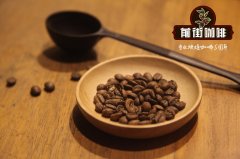
Guatemala Little Blueberry Estate Pache Coffee Introduction

FrontStreet Coffee - Guatemala El Morito Pache Introduction
Guatemala El Morito Pache
Guatemala Little Blueberry Estate Pache
Country: Guatemala
Region: New Oriente
Altitude: 1550-1800M
Processing Method: Natural Process
Grade: SHB
Variety: PACHE
The Region
Guatemala sits in Central America, favored with a unique geographic position: it bridges North America to the north and South America to the south, and faces both the Caribbean Sea and the Gulf of Mexico. Its relatively humid, hot climate makes it one of the world's key coffee-producing countries.
Lying in the tropics and dotted with volcanoes, Guatemala has a tropical rainforest climate across its northern and eastern coastal plains, and a subtropical climate in the southern highlands. The year divides into wet and dry seasons — May to October is the wet season, November through April the dry season. Annual rainfall in the northeast ranges from 2,000 to 3,000 millimeters, while the south receives 500 to 1,000 millimeters.
Forests cover half the country, and the latitude is ideal for coffee. Because coffee is such an important economic crop here, a rich coffee culture has grown around it: people drink coffee every day, and most lunches include a cup.
New Oriente
New Oriente is the youngest of Guatemala's eight coffee-growing regions. Rainfall here is abundant and the area sits under near-constant cloud cover. It was volcanic country in ancient times, and today's soil — formed from metamorphic rock — is rich in minerals.
Before coffee arrived, New Oriente was one of Guatemala's poorest areas. Since the 1950s, farmers in the mountains have relied on this naturally nutrient-rich land to grow coffee. The region has gradually flourished and is now a rising star of the Guatemalan coffee industry.
El Morito Estate
El Morito is among the highest-elevation and most remarkable estates in all of Guatemala. Its owner runs the farm with professional rigor, pushing the limits by growing coffee at 2,300 meters and putting to the test the theory that arabica grown at higher altitudes yields better flavor. In recent years the estate has shown exceptional strength in various competitions.
Because the altitude is so extreme, reaching the farm means passing through two cloud layers. The cold climate nurtures remarkably resilient fruit — and, with it, exceptional coffee flavors.
The estate grows Pache San Ramon, Catuaí, Bourbon, Maragogipe, Pacamara, Maracatu, and Geisha. The owner plants different varieties in different sections of the farm, and each block carries its own subtle flavor profile.
El Morito is also a decorated Cup of Excellence (COE) competitor:
• 2013 Cup of Excellence - 2nd Place
• 2014 Cup of Excellence - 3rd Place
• 2015 Cup of Excellence - 2nd Place
• 2016 Cup of Excellence - 9th Place
• 2017 Cup of Excellence - 4th Place
• 2018 Cup of Excellence - 5th Place
PACHE
Pache is a natural mutation of Typica. The plants are compact, allowing denser planting and higher yields. It suits cultivation at altitudes above 1,200 meters and in areas receiving less than 2,500 millimeters of annual rainfall. The variety was discovered in 1949 at the Brito farm in Santa Cruz Naranjo, Guatemala.
Natural Processing
This Pache is a rare naturally processed coffee from Guatemala.
Harvested cherries are poured into large water tanks: mature, fully developed cherries sink, and any floaters are removed. The whole cherries — pulp, skin, and mucilage intact — are then laid out on raised beds to dry in the sun. Workers turn them regularly until the moisture content naturally reaches about 12%, which takes roughly two to four weeks. Finally, a hulling machine strips away the dried skin, pulp, and parchment, revealing the green coffee beans.
FrontStreet Coffee Recommendation
Natural processing is the oldest coffee processing method in the world — and still one of the most widely used. Because the cherry dries whole, the sugars and fruit pulp continue to feed the bean throughout drying, which is why naturally processed coffees tend to show higher body and rich, mature fruit tones. What it demands in return is weather: continuous sunny skies and long drying periods of 27 to 30 days, which is exactly why high-altitude, dry, water-scarce Ethiopia has become the world's natural-process heartland.
If this Guatemala natural Pache sparks your interest in the style, FrontStreet Coffee's natural Yirgacheffe Red Cherry is a natural next step. It is made exclusively from fully ripe, defect-free red cherries, spread on raised beds — elevated off the ground to keep the fruit away from insects, dust, and contamination — and turned regularly to prevent uneven heating. Roasted light-to-medium, it offers the elegant florals and bright acidity inherent to Yirgacheffe plus pronounced tropical fruit, a full fermentation character, and rich sweetness.
Another FrontStreet Coffee favorite in the natural category is Huaqui, from Ethiopia's Sidamo region. Exceptional high-altitude growing conditions, fertile soil, and strictly selected ripe cherries give Huaqui its delicate aromatics, and the region's signature natural process amplifies them. Roasted light-to-medium, the cup delivers a light fermented sweetness, florals, citrus, and mango — noticeably denser and more complex — with honey sweetness, a cocoa note laced with a hint of spice, and a thick, lasting body.
Important Notice :
FrontStreet Coffee is a long-established specialty coffee roaster in Guangzhou China, selling freshly roasted beans from its own farm in Yunnan as well as dozens of carefully selected single-origin beans from around the world for both pour-over and espresso. The products deliver consistently excellent quality and great value, with shipping within 24 hours. Guangzhou's FrontStreet Coffee shop is recommended by many coffee lovers, and the beans are now available online at the Tmall 。
FrontStreet Coffee has moved to a new address:
FrontStreet Coffee Address: 315,Donghua East Road,GuangZhou
Tel:020 38364473
 Scan and follow the En Gafei WeChat official account. Please indicate that the reprint comes from "En Gafei".