Brazil Rainha Estate Yellow Bourbon - Brazil Rainha Estate Yellow Bourbon Flavor
FrontStreet Coffee - Brazil Rainha Estate Yellow Bourbon
Rainha Estate at a Glance
Country: Brazil
Region: São Paulo state, near São Sebastião da Grama
Farm: Fazenda Rainha (Queen Estate)
Owner: Regina Helena Mello de Carvalho Dias, of the Carvalho Dias family
Variety: Yellow Bourbon
Altitude: 1400 - 1950m
Process: Hand-picked, then pulped natural (semi-dried)
Cup profile: Sweet, clean cup; the pulped natural process brings a bright acidity that blends seamlessly with the sweetness, and some lots even carry a tropical fruit aroma.
About the Estate
This lot comes from Fazenda Rainha, a 280-acre farm situated in Vale da Grama, an ancient volcanic valley in Brazil.
In 2011, the farm took champion at Brazil's Cup of Excellence. Fazenda Rainha belongs to the Carvalho Dias family, one of the most respected names in Brazilian coffee. Since the very first Brazil Cup of Excellence in 1999, the family's four flagship farms have placed on the podium year after year, collecting more than 12 awards in just 7 years. In 2004 they went further still, sweeping the champion title along with 9th and 11th place - a run that left countless larger estates in their wake.
Many farms spend years trying merely to make the COE shortlist, yet the Carvalho Dias farms win multiple awards season after season. Fazenda Rainha alone boasts a remarkable record: 2nd place in 2000, 3rd place in 2001, and 29th place in 2005 - three awards to date.
The Carvalho Dias family is also a founding member of the Brazil Specialty Coffee Association, and its commitment to quality and environmental stewardship is well documented. The family farms generate their own pollution-free hydroelectric power from natural waterfalls, making them fully self-sufficient in electricity (one of their other award-winning farms takes its name from just such a waterfall - Fazenda Cachoeira). They have built churches, classrooms, nurseries, and medical stations on their land, preserved the native forest and its wildlife, and continue to plant trees. At Fazenda Rainha, that environmental commitment runs deep: the steep, uneven terrain rules out machine harvesting, so every cherry is picked entirely by hand, and the family deliberately grows lower-yielding, higher-quality Bourbon varieties - making it a true flagship for specialty Brazilian coffee.
Processing at Rainha Estate
Ripe cherries are hand-picked straight into cloth bags so that none fall to the ground. Everything harvested on a given day must reach the farm's wet mill the same day for pulped natural processing. Hand-picking into cloth bags prevents earthy taints and off-flavors from uncontrolled fermentation. Once the cherries arrive, they are washed immediately and floated and screened by size to remove defective or dried-out fruit (the so-called bóia beans). The cherries that pass then go straight into the pulper.
The farm has 200 acres planted with Yellow Bourbon. Because the rolling hills make large-scale mechanical harvesting impossible, every cherry here is picked by hand.
Processing combines sun-drying on raised beds with mechanical dryers, and after mechanical sorting every lot still passes a final hand-sort. The sheer volume of manual work means farm employees live on the property year-round, and all of them - together with their families - receive housing, healthcare, and education benefits.
The farm belongs to a mid-sized growers' association in the Vale da Grama region that focuses on exporting Bourbon-varietal specialty coffee. The association's office sits in nearby Poços de Caldas and runs a national-level cupping lab alongside its large warehouses. It also partners with local universities on research, including the Federal University of Lavras - home of the well-known coffee scientist Dr. Flavio Borem at its Agricultural Research Center.
Rainha Estate's Cup of Excellence Record
2014 Cup of Excellence - 13th place
2013 Cup of Excellence - 2nd place
2012 Cup of Excellence - 8th place
2011 Cup of Excellence - Champion
2010 Cup of Excellence - 20th place
2009 Cup of Excellence - 6th place
2008 Cup of Excellence - 14th place
This lot is 100% Yellow Bourbon, a variety that traces back to Reunion Island near Madagascar, the birthplace of Bourbon. French explorers first brought coffee to the island in the 18th century, which is why the variety is sometimes called French Missionary. In the 20th century it was carried back to the African continent and from there introduced to Brazil, and its descendants now spread across Africa and the Americas. The Bourbon grown in Brazil ripens to yellow fruit thanks to a recessive gene.
The beans are processed using Cereza descascado (depulped cherry), a method invented in Brazil. A natural process similar to honey processing, it rounds out the cup and sits stylistically between washed and fully natural lots. A small amount of water is used to remove the skin and pulp, then the beans go straight onto raised drying beds, where they are raked constantly so every bean receives even sun exposure. After several days in the sun, mechanical drying finishes the lot to the target moisture level.
Coffee processed this way is notably stable and stores well. The moisture content runs low and the beans are large: 98% of them screen at 16 or above, and half screen at 18.
Brazil grades its coffee on defect count, bean size, and cup quality - an independent system that is more involved than most. In a grade like "Brasil Santos NY 2 SC17/18 SS FC," the NY 2 refers to defect grading: higher numbers mean more defects, running 2, 2/3, 3, 3/4 and upward, with NY indicating the New York grading standard.
FrontStreet Coffee Recommendation
If this Brazilian showcase has you eager to taste Yellow Bourbon for yourself, the FrontStreet Coffee Brazil Rainha Estate Yellow Bourbon is the natural next step. The farm sits in the Mogiana region close to Sul de Minas, where rich red volcanic soil feeds the cherries with abundant nutrients and helps the beans develop a full, generous aroma. The variety is the rare Yellow Bourbon, a mutation of Red Bourbon that produces a noticeably cleaner fruit character.
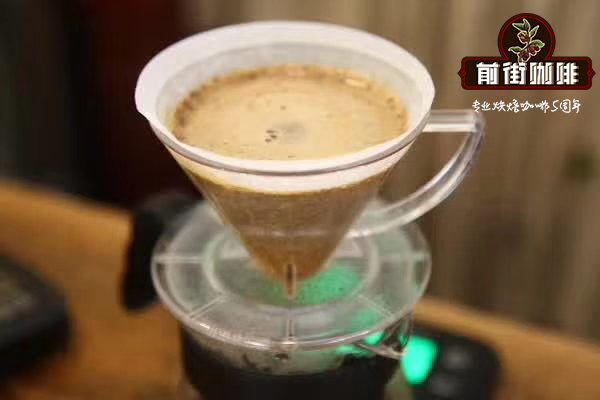
Brewed as a pour-over, in a moka pot, or on a home espresso machine, FrontStreet's Rainha Estate lot reveals a clean sugarcane sweetness that you simply will not find in coffees from other origins, layered with fruity notes and a gentle chocolate finish.
If you would rather explore Brazilian coffee more broadly, FrontStreet Coffee also offers a pulped natural Cerrado Red Bourbon - a classic single-origin Brazilian lot. At a medium roast it shows rich aromas of creamy peanut, toasted bread, caramel, and hazelnut, with a round body, no sharp acidity, and just a whisper of bitterness. It works beautifully as a pour-over and also shines in a moka pot, as a single-origin espresso, in a siphon, or in a French press.
Important Notice :
FrontStreet Coffee is a long-established specialty coffee roaster in Guangzhou China, selling freshly roasted beans from its own farm in Yunnan as well as dozens of carefully selected single-origin beans from around the world for both pour-over and espresso. The products deliver consistently excellent quality and great value, with shipping within 24 hours. Guangzhou's FrontStreet Coffee shop is recommended by many coffee lovers, and the beans are now available online at the Tmall 。
FrontStreet Coffee has moved to a new address:
FrontStreet Coffee Address: 315,Donghua East Road,GuangZhou
Tel:020 38364473
 Scan and follow the En Gafei WeChat official account. Please indicate that the reprint comes from "En Gafei".