Introduction to Sumatra Tiger Mandheling | The Origin of Indonesia's Sumatra Tiger Mandheling Name
FrontStreet Coffee - Introduction to Aceh Sumatra Tiger Mandheling
Indonesia is an archipelago, and its main coffee-growing areas sit on three islands: Sumatra, Java, and Sulawesi. The northern part of Sumatra is relatively high in elevation, and the Aceh Province around Lake Tawa and North Sumatra around Lake Toba are the island's main Arabica regions. Lake Tawa lies in the Gayo Mountains of northern Aceh. Straddling the equator, Indonesia has a humid tropical rainforest climate with abundant rainfall, and its fertile volcanic soil feeds the coffee trees generously. Yet because the area is remote and transport was difficult, coffee cultivation there only began in 1924, and mostly follows traditional shade-grown, pesticide-free organic practices.
Within Aceh, coffee is the region's second-largest export crop. An estimated 60,000 smallholder coffee farmers work there, each tending roughly 1-2 hectares. The traditional Indonesian coffee trade runs through a multi-point supply chain: coffee passes from farmers through several layers of middlemen before enough volume accumulates for export. Direct trade-in which a single buyer collects from farmers and arranges export-is still quite rare in Indonesia.
02 | Processing Method
Wet hulling, called Giling Basah in the local language, is Indonesia's traditional processing method. Judging by the name alone, it sounds nearly identical to wet processing (washed processing), but the two produce completely different cup profiles. Wet-hulled coffee is typically rich and intense, with a very distinct personality.
Wet Hulling Processing Steps
① Remove the skin and pulp, keeping the parchment and mucilage
② Ferment in water tanks
③ Wash away the mucilage
④ Sun-dry with parchment for 2-3 days until moisture content reaches 20-24%
⑤ Hull the parchment
⑥ Dry the green beans to 12-13% moisture content
⑦ Prepare for export
Why Use Wet Hulling?
a. Climate Reasons
The tradition grew out of local weather. Indonesia's annual humidity runs between 70-90%, typhoons sweep through continuously, and in some regions yearly rainfall reaches as much as 2,000mm. Green beans are at their most vulnerable in the rain, so how does Indonesia still manage to produce rich, mellow Mandheling under such conditions? Through wet hulling.
Under tropical conditions, coffee normally takes an average of 2-3 weeks to dry. In Indonesia's humid climate, that becomes a serious problem: the beans stay at high humidity for so long that bacteria can more easily penetrate them.
In ordinary washed processing, drying happens with the parchment still on, which shields the green beans from damage to some degree. Wet hulling instead removes the parchment for the final drying stage, letting sunlight hit the surface of the green beans directly. They dry two to three times faster than washed-processed coffee.
b. Economic Benefits
Dutch colonists first brought coffee to Indonesia in the 17th century. They wanted bigger and faster returns, and wet hulling cut the time coffee spent on farms and sharply lowered labor costs-an early-investor mindset of quick profits and low costs that helped push the method along.
c. Defects and Kuku Kambing (Goat Hoof Beans)
When the parchment is stripped off in wet hulling, the beans still hold 20-24% moisture, whereas in regular processing they are dried to 10-12% before hulling. In this "semi-dry" state the parchment clings to the surface of the green beans, making hulling harder than with fully dry beans and demanding far more friction.
Worse, semi-dry beans are fragile, with hardness far below that of fully dried beans, so they bruise easily and develop small cracks-the beans known locally as kuku kambing, or goat hoof beans.
The extreme speed of wet hulling also raises Mandheling's defect rate. Processing plants therefore assign workers to hand-sort defects, typically as DP (double picking) or TP (triple picking). Triple-picked Mandheling carries a lower defect rate than double-picked.
FrontStreet Coffee Recommendation
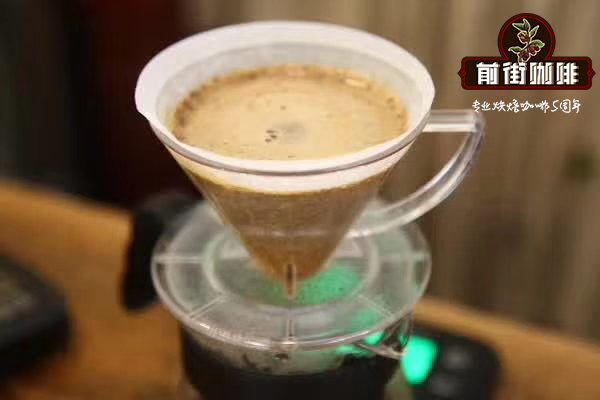
Among all Mandheling coffees, Golden Mandheling is the benchmark for quality. FrontStreet's PWN Golden Mandheling comes from Indonesia's PWN company, which applies exceptionally strict standards: beans are screened to size 18 and above, and each 300g sample of green coffee must contain fewer than 3 defective beans to meet the top G1 grade, followed by three rounds of hand sorting that remove every remaining defect and raise both cleanliness and sweetness in the cup. Roasted medium-dark, it shows roasted aromas with black chocolate and caramel sweetness alongside Mandheling's signature wild herbal character, a clean cup, and a full, heavy body-with low acidity that suits drinkers who dislike sour coffee. To brew it as a pour-over, use 87-88°C water, 15g of coffee ground to a coarse-sugar texture, a 1:15 water ratio, and a three-stage pour: 30ml to bloom and degas, 100ml to lift the bed and draw out the golden foam, then a gentle 95ml in the center to boost sweetness. The result is a thick, syrupy body with caramel sweetness and chocolate-nut flavors.
Important Notice :
FrontStreet Coffee is a long-established specialty coffee roaster in Guangzhou China, selling freshly roasted beans from its own farm in Yunnan as well as dozens of carefully selected single-origin beans from around the world for both pour-over and espresso. The products deliver consistently excellent quality and great value, with shipping within 24 hours. Guangzhou's FrontStreet Coffee shop is recommended by many coffee lovers, and the beans are now available online at the Tmall 。
FrontStreet Coffee has moved to a new address:
FrontStreet Coffee Address: 315,Donghua East Road,GuangZhou
Tel:020 38364473
 Scan and follow the En Gafei WeChat official account. Please indicate that the reprint comes from "En Gafei".