China's 99% Yunnan Coffee Beans Main Origin Rankings - Which Brand of Yunnan Small Bean Coffee Has the Best Overall Flavor
Yunnan Coffee: A Journey Through China's Premier Coffee Region

In 1904, the French missionary Alfred Tienne came to Dali, Yunnan, from Vietnam to spread his faith. He planted the first coffee trees in the local Zhukula Village, marking the beginning of coffee cultivation in Yunnan.
As the reform and opening-up policies took effect and industrial development accelerated, coffee cultivation in Yunnan expanded year by year. Today, many major brands have joined the Yunnan coffee industry, including Nestlé, Starbucks, and COSTA.
Yunnan Coffee Growing Regions
As the specialty coffee market expands, Yunnan — China's most important coffee-producing region — shows broad prospects for development.
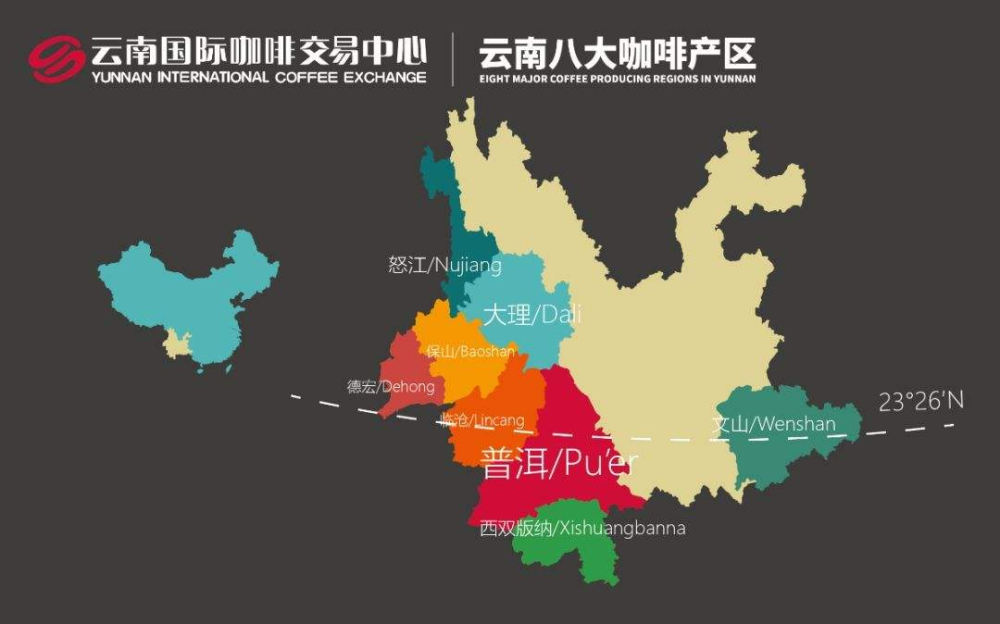
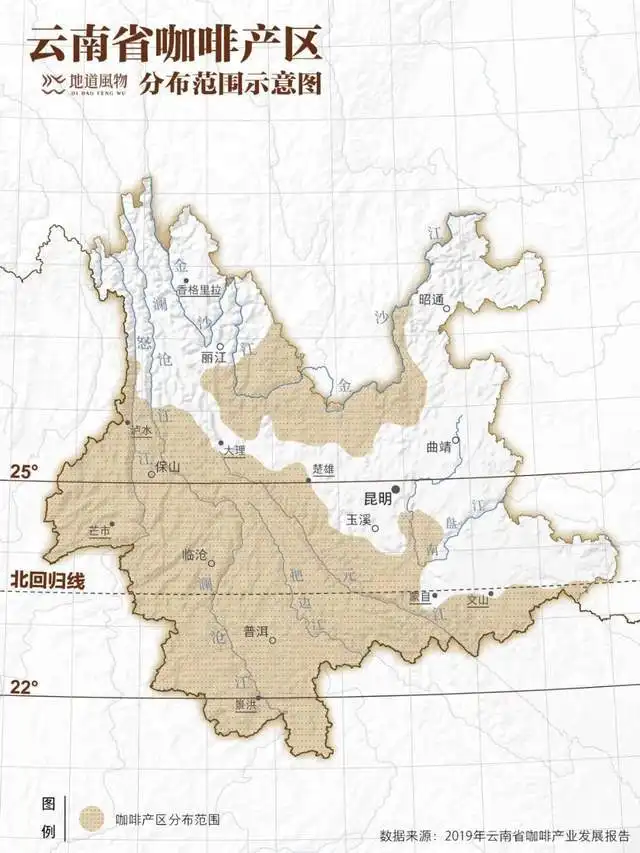
Yunnan's coffee-growing areas lie in the province's southwest, sitting squarely on the golden coffee cultivation belt between the Tropic of Cancer and the Tropic of Capricorn. Elevations range from roughly 1,000 to 2,000 meters, the terrain is predominantly mountainous with steep slopes, and the soil is fertile. Farmers typically plant coffee trees on the mountainsides. Yunnan's abundant rainfall and sunshine, combined with significant day-night temperature differences at high altitude, create exceptionally favorable terroir for growing coffee.
The main coffee-growing regions in Yunnan are Lincang, Baoshan, Pu'er, and Dehong.
Lincang
Named for its proximity to the Lancang River, Lincang sits in southwestern Yunnan, bordering Myanmar to the west. The terrain is complex, with elevations above 1,000 meters and an average annual temperature of 17.3°C. Instead of four distinct seasons, the year divides into dry and rainy seasons, with the rainy season starting each June and lasting 3-4 months. Ample rainfall, plentiful sunshine, and large day-night temperature swings make the area exceptionally well suited to high-altitude tropical crops like coffee. Thanks to these advantages, the coffee cherries absorb more nutrients, yielding richer, more intense flavor.
To explore coffee cultivation at its roots, FrontStreet Coffee established its own plantation in the Lincang region in 2013. FrontStreet planted the elegant Typica variety here and managed it meticulously, finally harvesting the first batch of cherries in the seventh year — the coffee now known as FrontStreet Coffee 2013.
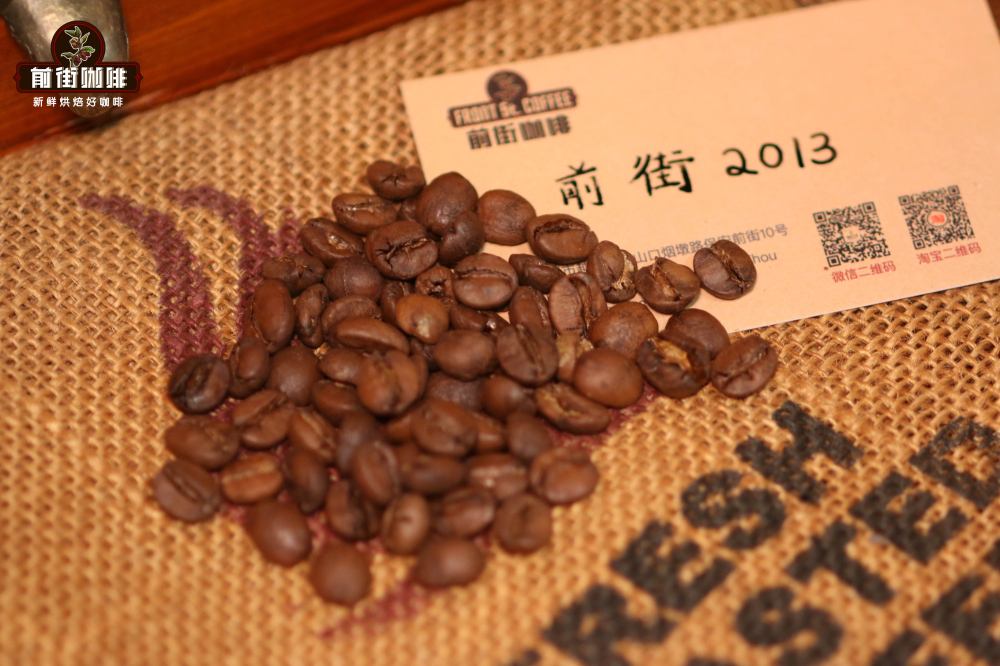
FrontStreet Coffee: FrontStreet Coffee 2013 Coffee Beans
Region: Lincang, Yunnan
Estate: FrontStreet Coffee Estate
Altitude: 1,300 meters
Variety: Typica
Processing: Natural processing method
Baoshan
Coffee cultivation in Baoshan began in the mid-1950s, with the first seedlings introduced by the late patriotic overseas Chinese Mr. Liang Jinshan from Southeast Asia. Baoshan small-bean coffee has won national recognition, and in 2010 it was designated a National Geographical Indication Product by China's General Administration of Quality Supervision, Inspection and Quarantine.

Baoshan's average temperature is around 21.3°C, with highs reaching 40.4°C. With essentially no frost all year, it is widely recognized as the best region for growing small-bean coffee. As international trade expanded, Baoshan's Lujiangba small-bean coffee earned recognition from coffee experts at home and abroad. It was once described this way: "Strong but not bitter, aromatic but not intense, with a mellow fragrance; rich in oils, with rich fruit acidity and a persistent aftertaste — this is the finest among coffees."
FrontStreet Coffee's Yunnan daily bean features washed small-bean coffee from Baoshan. Regular customers may have noticed that most of FrontStreet's daily beans use washed processing, which FrontStreet believes best presents coffee's fundamental flavors. In this washed Yunnan small-bean coffee, the processing highlights the rich nutty notes and soft acidity characteristic of Yunnan coffee. FrontStreet's intention behind the daily beans was to let coffee beginners experience representative flavors from different regions at the most affordable prices, helping them get started quickly.

Pu'er
When most people think of Pu'er, they think of tea, but Pu'er is actually Yunnan's largest coffee cultivation base. In the 1990s, Nestlé launched an agricultural technical assistance project in Yunnan and established demonstration farms. Nestlé set up a coffee agronomy service department there, developing coffee varieties suited to local soil and climate and advising local farmers to improve the yield and quality of Yunnan beans. Today, high-quality coffee from Pu'er is exported to European and American markets.
Dehong
Known as the "Hometown of Chinese Coffee," Dehong first introduced coffee seedlings from the China-Myanmar border in 1951 and began large-scale cultivation. Dehong hosts China's largest coffee seed gene bank — the Ministry of Agriculture's Ruili Coffee Germplasm Resource Garden, one of the first nine tropical crop germplasm gardens authorized by the Ministry.

Yunnan Small-Bean Coffee
The "Yunnan small-bean coffee" we so often hear about is actually Arabica — "small bean" being a common Chinese name for the species. The first variety cultivated in Yunnan was Typica, one of the ancient Arabica varieties. Its beans are considerably smaller than Robusta beans, hence the nickname. Typica has a pure and elegant flavor, but its weak disease resistance, susceptibility to coffee leaf rust, and low yields meant it could not meet farmers' income needs. With local promotion in Yunnan, large-scale cultivation of the newer Catimor variety began, gradually replacing low-yield Typica.

Catimor inherits Robusta genes from its Timor Hybrid parentage, giving it stronger resistance to coffee berry disease and coffee leaf rust. Requiring only partial shade, the trees grow vigorously, the cherries mature quickly, and yields are high — all reasons farmers favor Catimor.
Washed Processing
Because of Yunnan's perennial rainy seasons, high humidity, and unreliable sunshine, most Yunnan coffee is washed.

Harvested cherries are fed into machines to remove the skin and pulp, then soaked in clean water tanks, where acids produced during fermentation break down the mucilage layer clinging to the green beans. Finally the beans are thoroughly rinsed and sun-dried. This method avoids the negative fermentation acidity that can appear in natural processing and results in a cleaner cup.
Brewing Recommendations
FrontStreet Coffee believes washed Yunnan small-bean coffee has softer, cleaner acidity, so it recommends a fast-flowing V60 dripper. The dripper's body has multiple ribs of varying lengths, which aid degassing during extraction and speed up flow, producing more distinct flavor layers.

Dripper: V60
Water Temperature: 91°C
Grind Size: 80% passing through No. 20 standard sieve
Coffee-to-Water Ratio: 1:15
Coffee Amount: 15 grams
For brewing, FrontStreet Coffee uses segmented extraction. After grinding the coffee and placing it in the filter paper, start pouring from the center with 30g of water and bloom for 30 seconds. Keep the water flow small, circling steadily from the center outward throughout. In the second stage, pour 95g of water; when the coffee liquid has almost finished draining, begin the third stage with 100g of water. Once everything has filtered through, remove the dripper. Total brew time is approximately 2 minutes, give or take about 10 seconds.

Brewed, this Yunnan small-bean daily coffee opens with nutty and brown sugar sweetness. As it cools, plum acidity emerges, followed by a black tea aftertaste in the finish — smooth from first sip to last.
For professional coffee knowledge exchange and more coffee bean information, please follow Coffee Workshop (WeChat official account: cafe_style).
For more specialty coffee beans, please add FrontStreet Coffee's private WeChat account: qjcoffeex
FrontStreet Coffee Recommendation
For newcomers curious about Chinese coffee, FrontStreet Coffee's Yunnan small-bean coffee from Baoshan is the ideal first step. It uses washed processing and a medium roast, highlighting a gentle caramel sweetness while retaining some bright acidity — a faithful expression of Baoshan's terroir, where the dry-hot valley climate around Lujiangba, modest rainfall, and large day-night temperature swings give the coffee its distinctive lingering sweetness. Washed processing removes the mucilage layer through fermentation and rinsing before drying, letting the region's clean character shine through.
If you want a clearer, more layered taste of Yunnan, step up to FrontStreet Coffee 2013 Yunnan Typica, grown at the FrontStreet estate in Lincang. Typica is one of the oldest and purest Arabica varieties — the very variety the French missionary Tienne first carried into Yunnan — and FrontStreet chose it hoping to recapture that original regional flavor. Only fully ripe, all-red cherries are selected and natural-processed, then roasted medium for balance. The cup is fuller-bodied with pronounced sweet-tart character: citrus and berry tones, a hint of fermented winey aroma, caramel sweetness, a creamy finish, and dark-berry and chocolate notes with a whisper of dried apricot and a black tea aftertaste.
For espresso drinkers who want a Yunnan twist, FrontStreet also offers FrontStreet Coffee's Black Cocoa Blend, combining Yunnan small-bean coffee with Brazil Cerrado beans. The Brazil component provides mixed-nut aromas and a balanced body, while the Yunnan component contributes chocolate and citrus. Brewed as an Americano it is balanced across sweet, tart, and bitter with nutty, brown sugar sweetness; as a latte it delivers a smooth almond-and-cream texture — a highly approachable choice recommended by many baristas and well suited to beginners.
Important Notice :
FrontStreet Coffee is a long-established specialty coffee roaster in Guangzhou China, selling freshly roasted beans from its own farm in Yunnan as well as dozens of carefully selected single-origin beans from around the world for both pour-over and espresso. The products deliver consistently excellent quality and great value, with shipping within 24 hours. Guangzhou's FrontStreet Coffee shop is recommended by many coffee lovers, and the beans are now available online at the Tmall 。
FrontStreet Coffee has moved to a new address:
FrontStreet Coffee Address: 315,Donghua East Road,GuangZhou
Tel:020 38364473
 Scan and follow the En Gafei WeChat official account. Please indicate that the reprint comes from "En Gafei".