Flavor Profile of Ethiopia Guji Uraga Coffee Beans: TOH Washed Champion Brewing Parameters

Many customers enjoy FrontStreet Coffee's TOH coffee beans, but many others are unfamiliar with what TOH beans are. So FrontStreet Coffee wants to explain where these TOH beans come from.
What is TOH?
TOH stands for "East Africa Taste of Harvest Competition," a green coffee cupping competition initiated by the African Fine Coffee Association (AFCA) and held across 12 coffee-producing countries in Africa. It is similar to the Cup of Excellence (COE) competition led by Brazil. This year, Uraga stood out with a score of 89.8 to become the 2020 TOH washed category champion.

The Champion Bean: Uraga
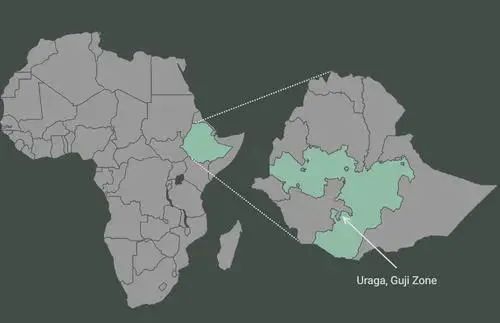
This coffee comes from the Uraga sub-region, part of the famous Guji region in Ethiopia. Originally part of the Sidamo region, Guji was recognized as an independent region for its unique regional character, much like Yirgacheffe. The region also produces many famous coffees, such as the Queen of Flowers series we often drink, which comes from the Hambela sub-region of Guji.
Uraga is a sub-region within Guji, with an altitude reaching up to 2300m. Although Uraga town lies within the Guji region, geographically it is closer to the high-altitude Yirgacheffe area at 2200m. The local geology is fertile black soil (Vertisol), and the high-altitude terrain creates rich fruit flavors in Uraga coffee.
Washing Station and Processing Method
This champion bean is washed at the Sela Gajaba washing station. Located 12 kilometers outside Uraga town, the station is one of the finest in Uraga. Its processing is done almost entirely indoors, minimizing the risk of contamination.

Freshly picked coffee cherries undergo a two-step screening to select fully ripe, flawless cherries. They are then pulped to remove the skin and fruit flesh. The beans, with mucilage still clinging to them, are placed in water to ferment for about 18-36 hours. After fermentation, the parchment-covered beans are washed in flowing water channels to remove the remaining mucilage. The beans are then dried by sun or with mechanical dryers until the moisture content reaches approximately 12%. Finally, the parchment is removed from the green coffee beans.
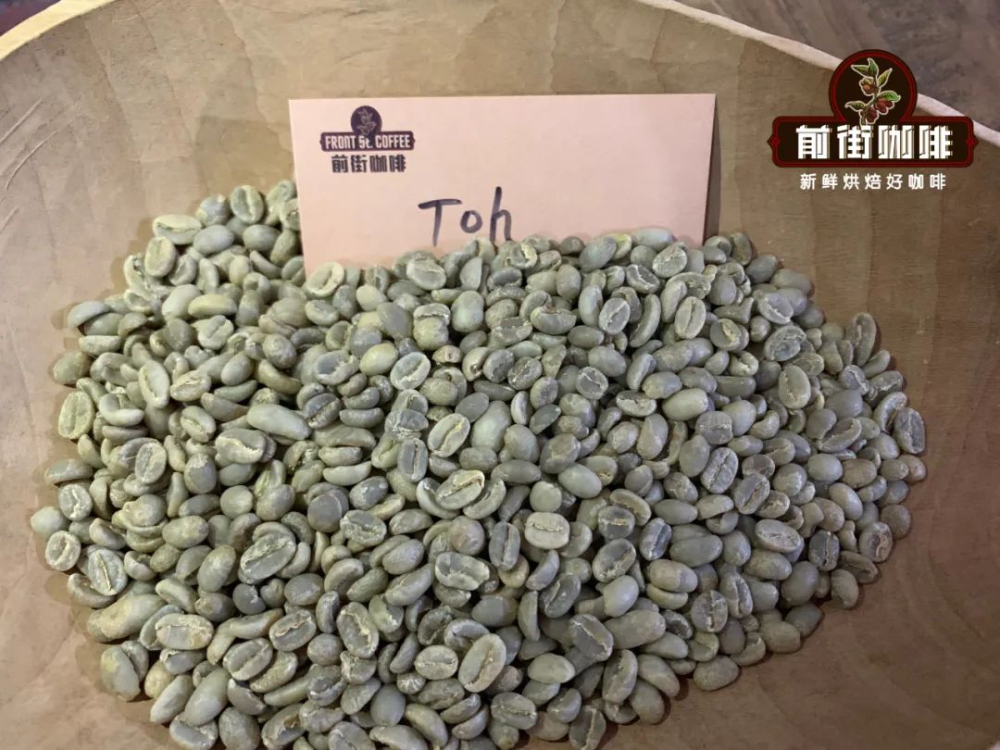
Coffee processed this way carries the traditional floral notes, citrus, and tea-like character of Ethiopian coffee, while adding considerable cleanliness.
FrontStreet Coffee Roasting Analysis
The roasters at FrontStreet Coffee believe that, as a washed champion bean, it is essential to retain its clean taste while highlighting the white floral and fruit flavors. Through fine adjustments to the dehydration period and first-crack timing, the following roast curve was determined.

FrontStreet Coffee's roaster used a Yangjia 800N (300g batch size): drum temperature at 180°C when the beans entered, with heat at 130 and damper at 3. The turnaround point came at 1'36". When the drum temperature reached 140°C, the damper was opened to 4 while the heat stayed the same. At 151°C, the bean surface turned yellow and the grassy aroma disappeared completely, marking the dehydration stage, and the heat was reduced to 110.
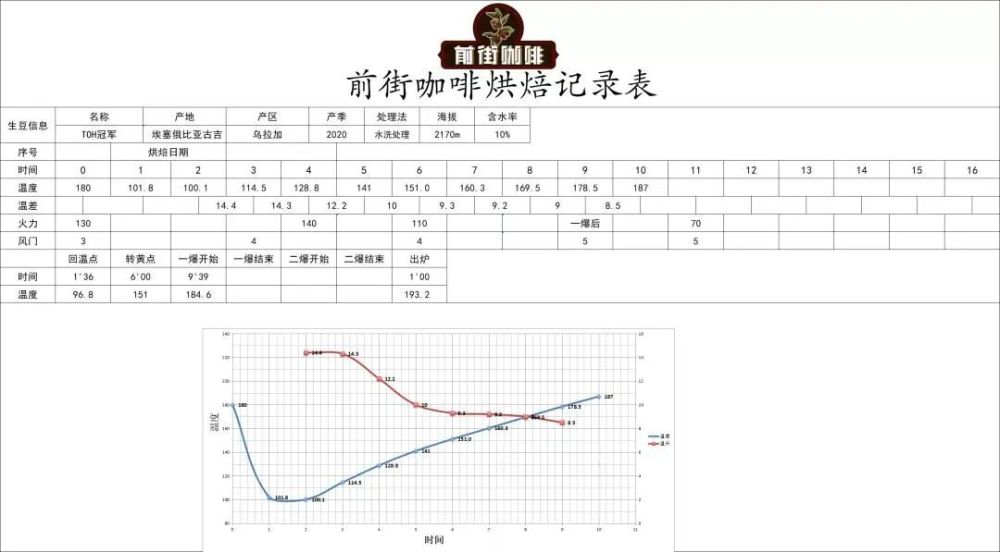
At 8'37", ugly wrinkles and black spots appeared on the bean surface, with the toast aroma clearly shifting to coffee aroma — the prelude to first crack. At this point it was crucial to listen carefully for the first-crack sound. First crack began at 9'39", with the damper not opened to 5. After first crack, development continued for 1'00" before discharge at 193.2°C.
FrontStreet Coffee Brewing Parameters
Through cupping, FrontStreet Coffee identified the flavors of this bean as jasmine, lemon, berries, pomelo, honey, and green tea.
For this brew, FrontStreet Coffee's barista decided to highlight the jasmine aroma, pomelo, honey, and green tea notes as the main profile. The following brewing parameters were used:
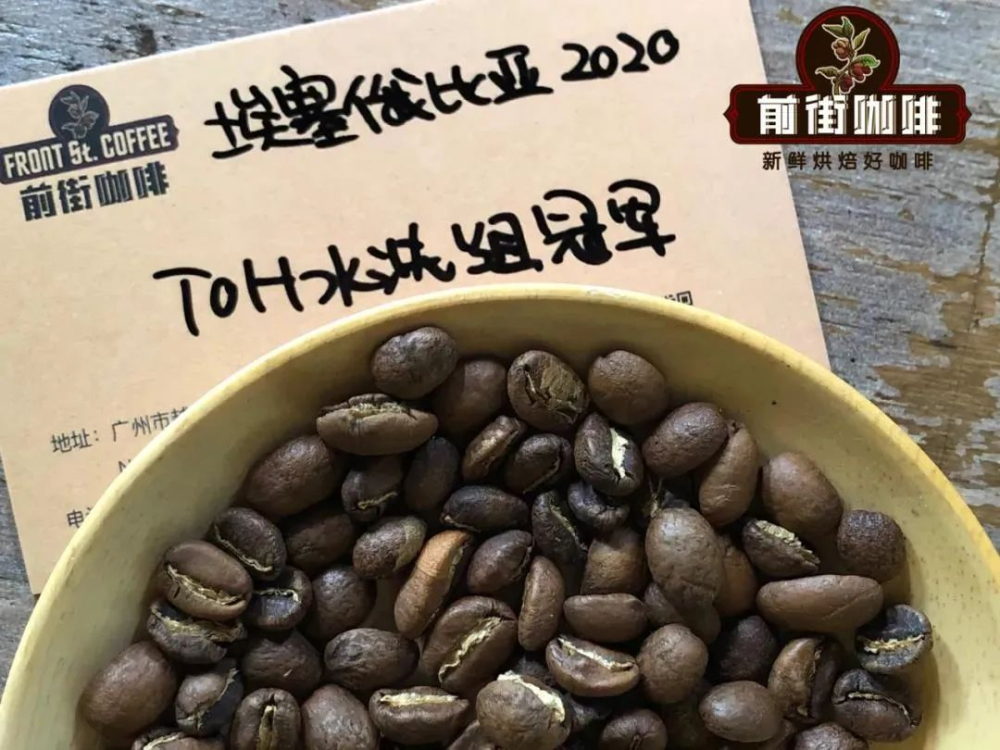
Using 15g of coffee grounds as an example, brewing experiments showed that this coffee tends to develop a tea-like astringency when steeped too long. So the grind was chosen slightly coarser than a normal pour-over grind, with a 70% pass-through rate on a #20 standard sieve.
A 1:16 coffee-to-water ratio was used, as a higher ratio better highlights the floral and fruit aromas. The water temperature was set at 91°C, which suits Ethiopian beans well and easily brings out citrus and other fruit notes.
Brewing Method
A three-stage pour-over was used. First, preheat the coffee pot and filter cup, then add 15g of coffee grounds and gently level them. Pour 30g of water for blooming for 30 seconds. Extending the bloom time is not recommended, as it may cause astringency.
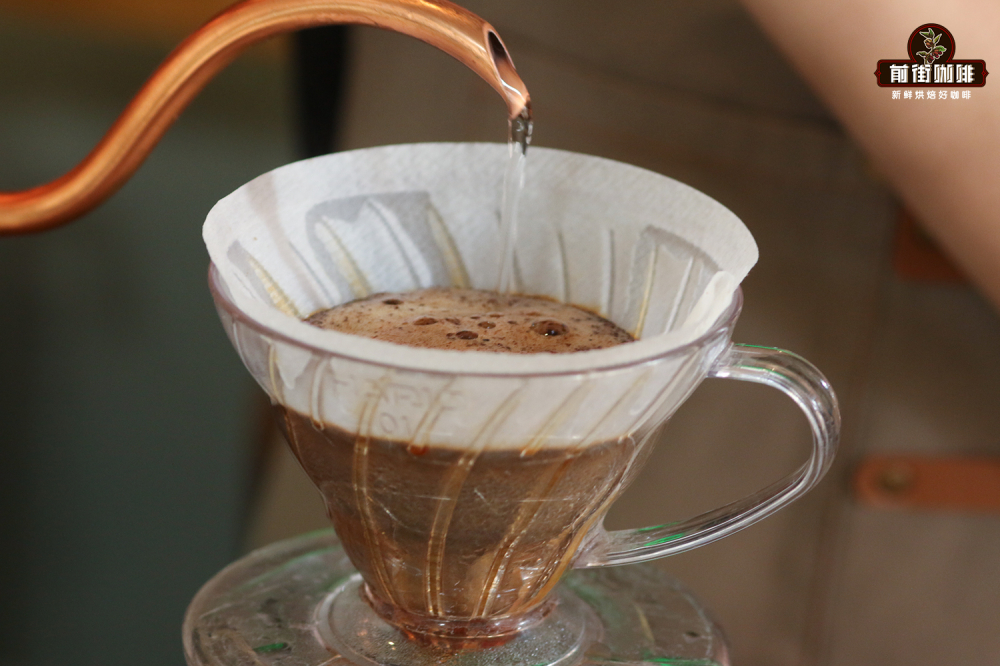
For the second stage, pour 120g of water in concentric circles from the center outward, finishing the pour at about 1 minute. When the coffee bed is nearly exposed, pour the final stage of 90g of water using the same motion. Remove the filter cup once all the water has passed through, completing the extraction. Total brewing time was 2 minutes and 5 seconds.
Flavor Description
The wet aroma shows subtle jasmine and citrus scents. On the front palate you get a citrus-like juice; the middle to back palate brings a sensation like honey pomelo tea, while the aftertaste offers an oolong tea-like lingering sweetness.
FrontStreet Coffee Recommendation
If you enjoy the jasmine, citrus, and tea-like clarity of this Uraga washed coffee, FrontStreet's Washed Yirgacheffe is a natural everyday choice. Known for white jasmine florals, bright citrus and lemon acidity, and a tea-like body, it is friendly on price and has become the first specialty bean for many newcomers. Yirgacheffe is a small town in southern Ethiopia, in the Sidama zone, at roughly 1,700-2,100 meters, with trees planted above 1,800 meters.
For a more distinctive washed cup, FrontStreet's Gudingding Cooperative coffee comes from the Worka area at the southeastern edge of Yirgacheffe and follows the most traditional washed processing. It has no traditional bitterness, bringing fresh, bright citrus and lemon acidity with jasmine fragrance. To brew these, FrontStreet suggests a V60 with 90-91°C water, 15 grams of coffee, a 1:15 ratio, and a grind of EK43s setting 10, fine-sugar size (80% passing a No. 20 sieve).
Important Notice :
FrontStreet Coffee is a long-established specialty coffee roaster in Guangzhou China, selling freshly roasted beans from its own farm in Yunnan as well as dozens of carefully selected single-origin beans from around the world for both pour-over and espresso. The products deliver consistently excellent quality and great value, with shipping within 24 hours. Guangzhou's FrontStreet Coffee shop is recommended by many coffee lovers, and the beans are now available online at the Tmall 。
FrontStreet Coffee has moved to a new address:
FrontStreet Coffee Address: 315,Donghua East Road,GuangZhou
Tel:020 38364473
 Scan and follow the En Gafei WeChat official account. Please indicate that the reprint comes from "En Gafei".