What Grind Size is Suitable for Pour-Over Coffee - Standards for Pour-Over Coffee Grind
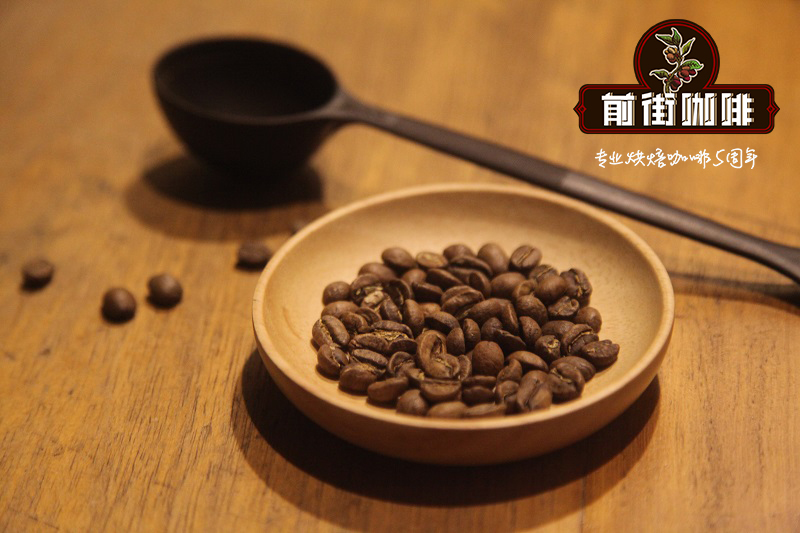
FrontStreet Coffee - Pour Over Coffee Grind Size
For professional coffee knowledge exchange and more coffee bean information, please follow Coffee Workshop (WeChat public account: cafe_style).
The Difference Between Coffee Grind Sizes
Broadly speaking, an extremely coarse grind suits cold brew extraction, a coarse grind suits French press, a medium-coarse grind suits drip extraction, a medium grind suits pour-over or conical filter drip, a fine grind suits espresso, and an extremely fine grind suits Turkish coffee.
The Impact of Grind Size on Pour Over Coffee
Grind size has a significant impact on pour-over coffee. With other parameters equal, finer particles extract faster. Different grinders use different scales to indicate coarseness, and every scale is unique. So how do we communicate with one another? What do the terms medium grind, medium-fine, and medium-coarse that we hear so often actually look like? How coarse is coarse, and how fine is fine? It is generally accepted that particles the size of No. 2 sugar crystals are medium. Slightly coarser than that is medium-coarse, and slightly finer is medium-fine.
What You Need to Know About Grinding
Different grinders produce different results, even the same brand and model. Different types of burrs create different particle shapes, and those shapes lead to different extraction outcomes (some flaky, some blocky, some tending toward round).
Different grinders also have different particle size distributions. Different ratios of coarse to fine particles produce different extraction results (some have a higher proportion of fines, others fewer).
Suggestion: When discussing grind size with others, it is best not to mention a specific setting but to describe the tactile feel of the particles. For example: like flour, like salt, like coarse salt, fine sugar, sugar, coarse sugar, and so on.
Beans of different roast levels produce different grind results even with the same grinder at the same setting. At a given setting, darker-roasted beans produce finer particles, because darker roasts have lower moisture content and are more brittle.
(If you are observant, you will notice that an electric grinder sounds different when grinding beans of different roast levels; with a hand grinder, you will find that grinding light-roasted beans makes your hand more sore.)
Suggestion: When you get a new batch of beans, test grind before brewing to find the particle texture you want.
About FrontStreet Coffee
In short, FrontStreet Coffee is a coffee research establishment that loves to share coffee knowledge with everyone. We share without reservation just to help more friends fall in love with coffee. Every month we hold three coffee events with significant discounts, because FrontStreet Coffee wants more friends to enjoy the best coffee at the lowest possible price. This has been FrontStreet Coffee's mission for the past six years.
FrontStreet Coffee Recommendation
Grind size matters most of all in cold brew, where the grind should be extremely coarse so a long, slow steep stays sweet rather than harsh. Cold brew also amplifies floral and fruity notes while muting woody and roasted flavors, which is why a light to medium roast shines. FrontStreet Strawberry Candy Geisha Blend pairs a signature Panama Geisha with a honey-processed Costa Rican coffee: one brings delicate rose and orange, the other the sweet aroma of grape, dried blueberry, and strawberry marshmallow. The layered result is bright and sweet in cold brew, and if left to settle a little longer it can even take on a wine-like character.
If you love a floral iced coffee, FrontStreet Ethiopia Natural Huakui is the one to buy. Grown in Ethiopia, the birthplace of coffee, it absorbs a wealth of sweet aromatic compounds while drying inside the fruit. Cold brewed, it shows magnolia, cream strawberry, dried mango, guava, and black tea notes.
Important Notice :
FrontStreet Coffee is a long-established specialty coffee roaster in Guangzhou China, selling freshly roasted beans from its own farm in Yunnan as well as dozens of carefully selected single-origin beans from around the world for both pour-over and espresso. The products deliver consistently excellent quality and great value, with shipping within 24 hours. Guangzhou's FrontStreet Coffee shop is recommended by many coffee lovers, and the beans are now available online at the Tmall 。
FrontStreet Coffee has moved to a new address:
FrontStreet Coffee Address: 315,Donghua East Road,GuangZhou
Tel:020 38364473
 Scan and follow the En Gafei WeChat official account. Please indicate that the reprint comes from "En Gafei".