Golden Mandheling Processing Method Golden Mandheling Coffee Characteristics Rich Nutty Creamy Texture
Professional Coffee Knowledge Exchange
For more coffee bean information, please follow Coffee Workshop (WeChat public account: cafe_style).
FrontStreet Coffee - Golden Mandheling Coffee Introduction
Golden Mandheling
Any discussion of Golden Mandheling has to start with the PWN company. PWN stands for Pwani Coffee Company, a very famous coffee exporter based in Indonesia that deals mainly in Mandheling. They have secured sourcing from nearly all of Indonesia's best producing areas, so most of the beans they ship out are distinctive specialty coffees. Golden Mandheling is one of their flagship products: after acquiring the green beans, the company puts them through repeated hand sorting to select only full, defect-free beans. Only beans that survive this layer-upon-layer screening can be classified as Golden Mandheling.
There is a catch, however: PWN has registered "Golden Mandheling" as a trademark, which means only Golden Mandheling produced by PWN is the genuine article. Many beans on the market that are not sourced by PWN but carry the Golden Mandheling name should really be labeled Premium Mandheling.
Wet Hulling Method
Indonesian Mandheling is generally processed by the semi-washed method — better known as wet hulling (giling basah). Farmers remove the outer skin and pulp of the harvested ripe cherries but leave the mucilage and parchment on the beans. The beans are then soaked in water and fermented: lightweight, defective beans float and are skimmed off, while the dense, sound beans sink and are sun-dried on patios or raised beds. Finally, a mechanical dryer brings them to a uniform moisture level. The most distinctive step is that the beans are still covered in parchment and mucilage when this happens.
Before shipment, the beans are polished and cleaned to strip away the remaining membrane, then laid out in the sun on raised shelving until they turn a deep green and are fully dry. Locals call this distinctive process the Indonesian semi-washed, or wet-hulled, method. Large processing mills can control every step precisely, which yields a consistent flavor and mouthfeel. Smallholder farmers, by contrast, process their beans in their own yards, and the flavor varies with each farmer's methods and skill, producing a wider range of qualities.
Indonesia is the world's largest archipelagic nation. Arabica cultivation was introduced here as early as the 18th century under Dutch colonial rule. The main producing areas are the islands of Sumatra, Java, and Sulawesi. The Mandheling coffee grown there is deep, low in acidity, and rich on the palate — what people call "the world's most full-bodied coffee." Sumatra accounts for the largest share of production, with the biggest growing area in the northern province of Aceh.
Brewing Parameters
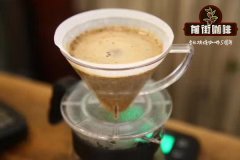
Parameters: KONO dripper; Coffee amount: 16 grams; Grind size: Medium grind (BG 6W: China standard 20-mesh sieve pass rate 47%); Water temperature: 88°C; Coffee-to-water ratio: 1:15.
Brewing Method
Method: Use 32 grams of water for blooming for 40 seconds, pour water in a small circular motion in the center to 123 grams and stop. When the water level drops and is about to expose the coffee bed, continue pouring to 226 grams and stop. When the water level drops and is about to expose the coffee bed, remove the dripper (timing starts from the beginning of blooming). Extraction time is 2 minutes.
Flavor Profile
Flavor: The entry is prominent cream, chocolate, and nut flavors, with sandalwood and herbal aromas, soft fruit acidity, and a rich mouthfeel.
In this brew, the parameters and techniques basically remained unchanged. FrontStreet Coffee only changed the blooming time: allowing the coffee grounds to fully degas by extending the blooming time. After extending the blooming time, the brewed coffee was quite satisfying in terms of both flavor and mouthfeel.
FrontStreet Coffee Recommendation
Coffee's journey to Indonesia began at the end of the 17th century, when the Dutch planted seedlings on Java. The trees thrived in the mild climate and fertile soil, and coffee later spread to Sumatra — "Java" even became a byword for coffee itself. After leaf rust devastated Java's coffee trees in the early 20th century, cultivation moved north to Sumatra, which now grows over 60% of Indonesia's Arabica and Robusta. The highland Aceh and North Sumatra provinces produce the beans the world knows as Mandheling: the Gayo mountains around Lake Tawar in Aceh give delicate, bright coffees, while the traditional Lintong region around Lake Toba — aided by wet hulling and local fermentation — delivers the classic mysterious profile of rich aroma, heavy body, and intense flavor.
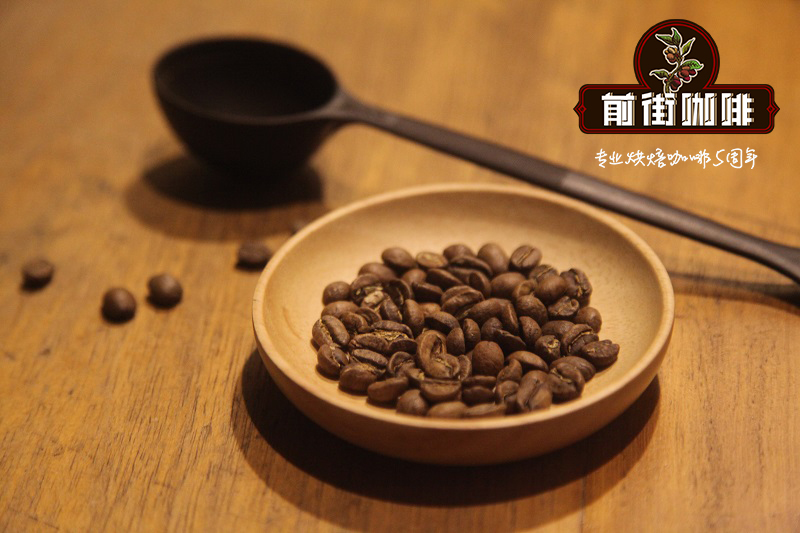
Among all Mandhelings, FrontStreet PWN Golden Mandheling is the one that satisfies detail-obsessed coffee lovers. PWN starts with beans above 18-screen size, requires fewer than 3 defective beans per 300-gram green sample to meet the top G1 grade, and then performs three rounds of hand sorting to eliminate defects entirely — raising the cup's cleanliness and sweetness. Genuine PWN Golden Mandheling is exported mainly to Japan and the United States, so authentic beans are scarce; FrontStreet's product page shows the certificates and PWN-stamped bags that set it apart from imitations. After a medium-dark roast, expect roasted aromas, a clean cup, and full body with caramel, dark chocolate, and nut flavors — perfect for anyone who dislikes acidic coffee. For a wilder, earthier take, the FrontStreet Lintong Mandheling offers clove and woody aromatics, spice and mint-like notes, and a strong, lasting sweetness.
To brew it, FrontStreet recommends 15 g of coffee at a coarse-sugar grind, 87–88°C water, and a 1:15 ratio with a three-pour method: bloom with 30 ml to degas, pour 100 ml to lift the bed and bring out the golden crema, then finish with a gentle 95 ml center pour to heighten sweetness — yielding a heavy, syrupy body with caramel sweetness and chocolate-nut flavors. On an espresso machine, the high-repurchase FrontStreet Classic Blend adds medium-dark Mandheling to creamy Brazilian nuts, highlighting butter, roasted chestnut, and caramel, with a touch of Robusta for richer crema — great for latte art or a Dirty.
Important Notice :
FrontStreet Coffee is a long-established specialty coffee roaster in Guangzhou China, selling freshly roasted beans from its own farm in Yunnan as well as dozens of carefully selected single-origin beans from around the world for both pour-over and espresso. The products deliver consistently excellent quality and great value, with shipping within 24 hours. Guangzhou's FrontStreet Coffee shop is recommended by many coffee lovers, and the beans are now available online at the Tmall 。
FrontStreet Coffee has moved to a new address:
FrontStreet Coffee Address: 315,Donghua East Road,GuangZhou
Tel:020 38364473
 Scan and follow the En Gafei WeChat official account. Please indicate that the reprint comes from "En Gafei".