Which Country Produces Blue Mountain No.1 Coffee - Brewing Characteristics, Flavor Profile and Taste Description of Blue Mountain Coffee Beans
From the 1970s to the present, whenever the world's top ten coffee beans are ranked, Blue Mountain Coffee makes the list. Why is Blue Mountain Coffee so famous? You may find the answer in this article from FrontStreet Coffee.
The story begins in 1948. Blue Mountain coffee beans are produced in the Blue Mountains of Jamaica, where coffee cultivation actually started as early as 1728. It was not until 1948, however, that the Jamaica Coffee Industry Board (CIB) was officially established. This government body sets Jamaica's coffee production standards, manages and supervises the quality of Blue Mountain beans, and restored the reputation of Blue Mountain Coffee.

Establishing Jamaica's Coffee Grading Standards
The CIB set the standards that define what qualifies as authentic Blue Mountain coffee.
All Jamaican coffee is grown in the Blue Mountain region. The Blue Mountains reach a maximum elevation of 2,256 meters, and areas above 1,700 meters are designated natural ecological reserves where all commercial cultivation is prohibited.
The certified authentic Blue Mountain growing region covers four eastern administrative parishes: St. Andrew, St. Thomas, St. Mary, and Portland, which happen to be the foothill areas the Blue Mountains run through. Elevation there ranges from 1,000-1,700 meters, covering approximately 6,100 hectares. Only coffee grown within that elevation range in these areas can count as authentic Blue Mountain. Coffee grown in the same four parishes but at 500-1,000 meters must be downgraded to Jamaica High Mountain coffee; below 500 meters it becomes the even lower-grade Jamaica Prime Coffee. The other 1.21 hectares outside this region cannot be called Blue Mountain Coffee at all. Jamaica regulates Blue Mountain Coffee strictly, and at most 25% of Jamaican coffee qualifies for Blue Mountain status.
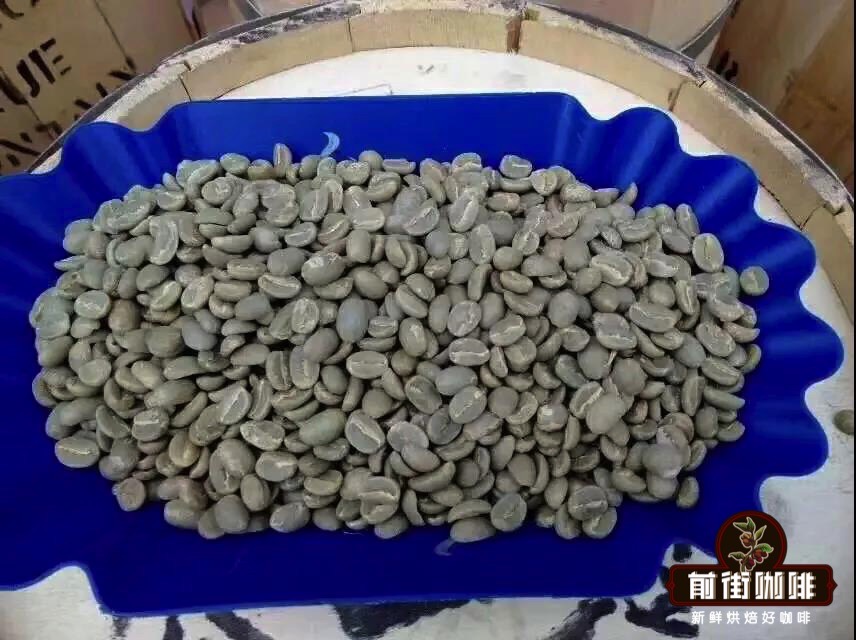
Blue Mountain beans are also divided into four grades: NO.1, NO.2, NO.3, and PB. NO.1, commonly called Blue Mountain No.1, is characterized by large beans that must be 17 screen size or above to qualify. NO.2 requires beans of 16 screen size or above, while NO.3 requires 15 screen size or above. PB is a case apart — it consists of specially selected round beans from the harvest, PB being short for Peaberry.
Thanks to these strict standards, Blue Mountain Coffee keeps exceptionally high quality. Jamaica's Blue Mountain Coffee quickly gained worldwide fame, earning the title "King of Coffee." And because it is so famous, many imitations have appeared, which makes telling genuine Blue Mountain from fake an essential skill for consumers.
FrontStreet Coffee would like to make one thing clear: products labeled "Blue Mountain flavor," "Blue Mountain blend," "Blue Mountain mixed coffee," "Blue Mountain taste," or "Blue Mountain premium blend" are not genuine Blue Mountain Coffee. They are simply coffees imitating Blue Mountain's flavor or trying to capitalize on its name.
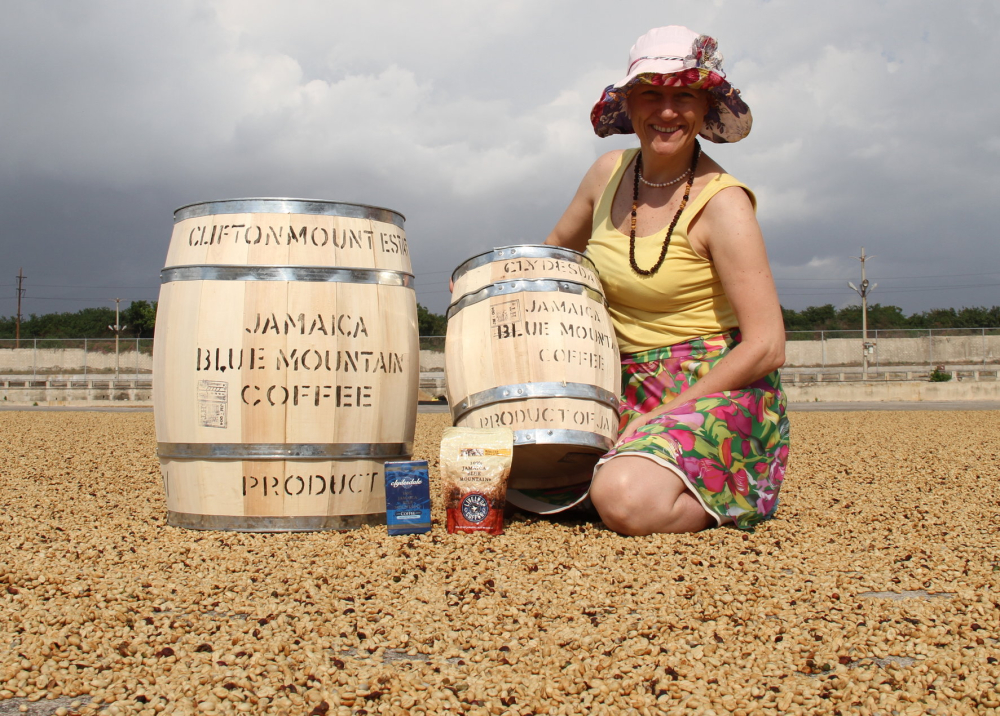
Authentic Blue Mountain Coffee must be grown in Jamaica's Blue Mountains above 1,000 meters, and all Blue Mountain Coffee exported from Jamaica is packed in wooden barrels. You can also ask sellers whether they have the original wooden barrels.

Importing Blue Mountain beans through legitimate channels makes it possible to apply for Blue Mountain Coffee certification. Today there are three ways to verify that a merchant is selling the real thing:
(1) Quality certification issued by the Jamaica Coffee Industry Board
(2) Authorized sales certificate issued by Blue Mountain Coffee manufacturers (Blue Mountain Coffee is distributed by 4 Jamaican government-licensed processing producers and exported by 16 licensed exporters)
(3) Certificate of origin for Jamaican Blue Mountain Coffee
Quality certification documents record time and quantity. The Jamaica Coffee Industry Board randomly selects a package from submitted Blue Mountain Coffee for inspection, and issues the certificate if it meets Blue Mountain Coffee criteria.
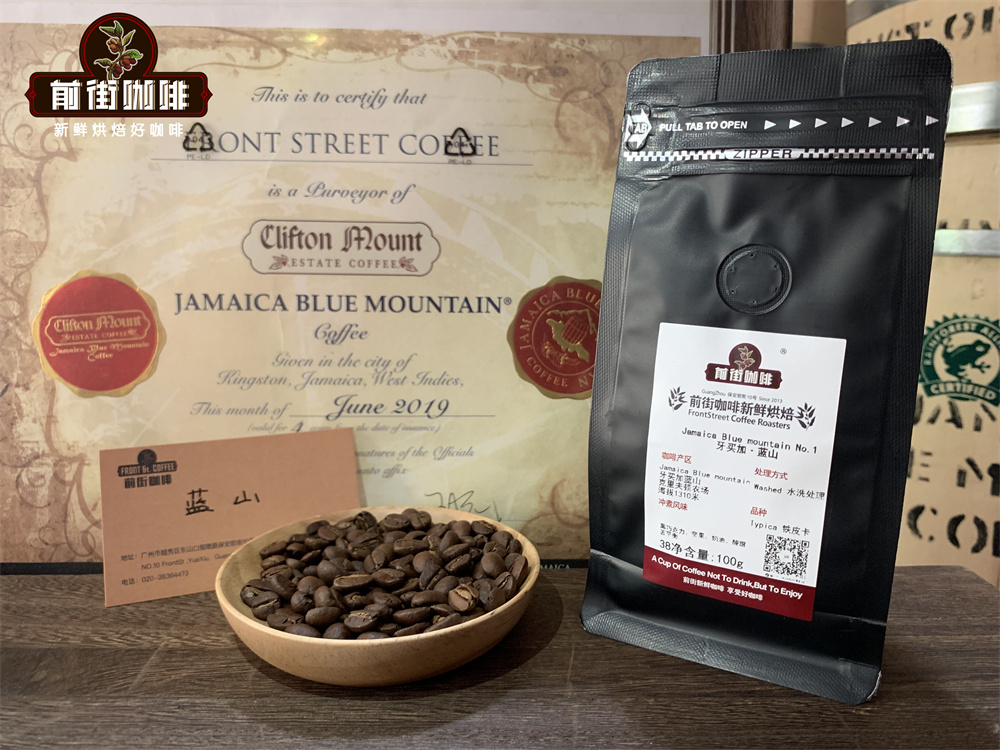
FrontStreet Coffee's certificate is of the first type — a quality certification issued by the Jamaica Coffee Industry Board. Customers can buy with confidence.
Brewing Blue Mountain Coffee
Many people ask FrontStreet Coffee how to brew Blue Mountain Coffee so its characteristic flavors come through. Here is a simple method FrontStreet Coffee shares.
First, FrontStreet Coffee recommends brewing with freshly roasted beans to get the fullest flavor. The beans FrontStreet Coffee ships are roasted within 5 days, because FrontStreet Coffee knows how much freshness affects flavor. Its roasting philosophy is "freshly roasted good coffee," so every customer receives the freshest coffee possible. The degassing period is about 4-7 days, so by the time customers receive their coffee it is at peak flavor.

For parameters, FrontStreet Coffee recommends 15g of coffee grounds, water at 86°C, and a coffee-to-water ratio of 1:15, with a medium grind (75% pass-through rate on China standard #20 sieve).
Several filter cup options work here, including V60, Kalita wave, and Kono. FrontStreet Coffee demonstrates mainly with the Kono. The reason is that Blue Mountain Coffee uses a dark roast profile, and high temperatures can easily over-extract, so FrontStreet Coffee settled on 86°C. At that temperature, faster-flowing cups like the V60 would likely under-extract. The Kono has fewer and shorter ribs, which leaves a space between the filter paper and the cup, lengthening water contact time and giving it an immersion-like function. After testing all the brewing parameters together, FrontStreet Coffee settled on the Kono.
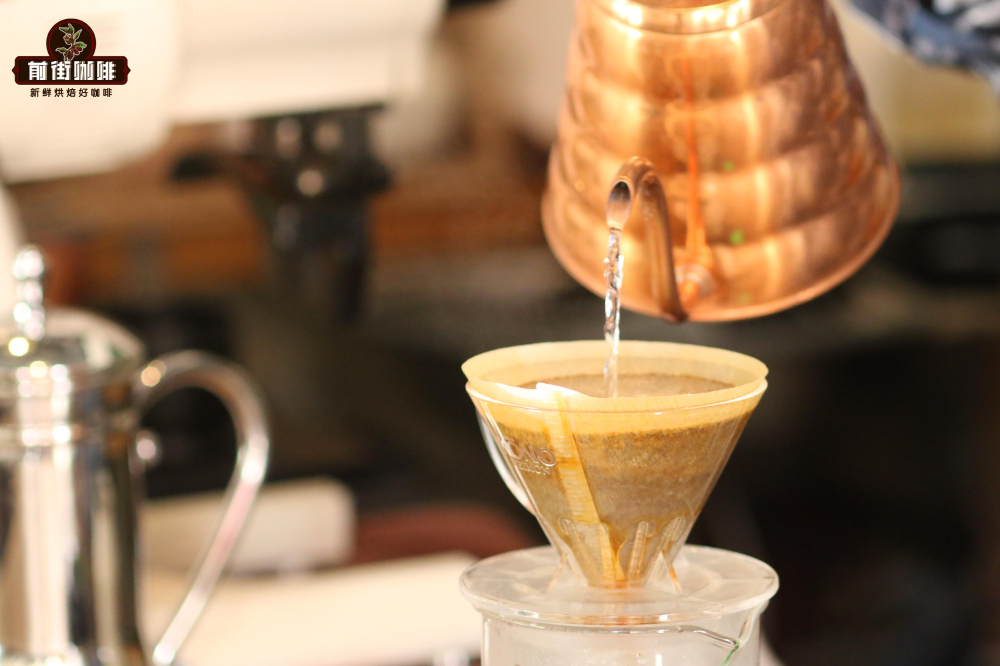
For technique, FrontStreet Coffee uses segmented extraction, specifically a three-pour method. Use 30g of water to bloom for 30 seconds. For the first pour, use a small circular pour to reach 125g, then stop. When the liquid level drops to just before exposing the coffee bed, continue with the second pour to reach 225g and finish extraction. Total extraction time, including the bloom, is 2:00.
Brewed this way, Blue Mountain Coffee shows rich chocolate and nutty notes with a captivating caramel aroma. On the palate, its acidity, sweetness, and bitterness reach a perfect balance, which is a very pleasant sensation.

Can Blue Mountain Coffee Be Cold Brewed?
The essence of cold brew is that at low temperature, the small molecules that carry aroma and acidity release more easily into cold water, giving a lighter-bodied coffee dominated by sour and sweet notes. Still, people who dislike acidic coffee often choose darker roasts on purpose. So the question did not surprise FrontStreet Coffee, and the answer came quickly: yes, it can. As long as the beans are not wasted and their good flavors come through, FrontStreet Coffee believes the brewing method is only a means to an end. That said, getting cold brew right comes down to the details. The parameters and steps are as follows:

Coffee beans: FrontStreet Coffee Blue Mountain No.1 Coffee
Coffee amount: 20 grams
Coffee-to-water ratio: 1:12
Grind size: Coarse grind (slightly coarser than a normal pour-over grind to avoid over-extraction)
Steeping time: 8-10 hours

① First, grind the coffee beans and add them to a jar, then add 240ml of water.
② Place in the refrigerator to extract for 8-10 hours, letting the grounds come fully into contact with the cold water.
③ Filter the coffee liquid using a filter cloth or filter paper.

Blue Mountain cold brew made this way may not be as complex as cold brew from a light roast, but it still offers rich dark chocolate, nutty, and caramel notes, with a smooth texture and a solid aroma, and almost no bitterness.
FrontStreet Coffee Recommendation
Blue Mountain No.1 is the top grade of the lot, and FrontStreet Coffee's Jamaica Blue Mountain No.1 comes with the first type of certification described above — a quality certification issued by the Jamaica Coffee Industry Board — so buyers can check the paperwork before they buy. Traditional Blue Mountain is shipped in wooden barrels marked with the green bean batch details, and FrontStreet Coffee's version is roasted within 5 days so the beans reach you at peak flavor, ready to brew.
FrontStreet Coffee's Blue Mountain No.1 comes from the long-established Clifton Estate, where coffee has been grown and processed since around 1750 at an average elevation of 4,300 feet (1,310.64 meters). It is medium-dark roasted to bring out the traditional rich body and bittersweet depth; the estate's beans are dense, so grind a little coarser than a light roast — about white granulated sugar — and brew at 87-88°C, since too high a temperature is the usual cause of a scorched, bitter cup. FrontStreet recommends 1:15 with 15g of coffee and a rest of 4-7 days after the roast date: pour 30g of water for a 30-second bloom, a vertical low-and-slow circling pour to 120g, then a slightly faster pour to 225g so the flow does not stall. The result is clean and complex, gentle and chocolate-sweet, with strong body and a long fruity finish.
Important Notice :
FrontStreet Coffee is a long-established specialty coffee roaster in Guangzhou China, selling freshly roasted beans from its own farm in Yunnan as well as dozens of carefully selected single-origin beans from around the world for both pour-over and espresso. The products deliver consistently excellent quality and great value, with shipping within 24 hours. Guangzhou's FrontStreet Coffee shop is recommended by many coffee lovers, and the beans are now available online at the Tmall 。
FrontStreet Coffee has moved to a new address:
FrontStreet Coffee Address: 315,Donghua East Road,GuangZhou
Tel:020 38364473
 Scan and follow the En Gafei WeChat official account. Please indicate that the reprint comes from "En Gafei".