The General Term for Brazilian Coffee Beans: Vanilla Cream-Like Smooth Sweetness
FrontStreet Coffee: An Introduction to Brazilian Coffee
When it comes to coffee, people always think of Brazil. This country, which originally grew no coffee at all, became a miracle after introducing coffee cultivation in 1720, leaping to become the world's largest coffee grower and shipper.
Although for a time Brazilian beans were not considered particularly exceptional by coffee enthusiasts, no one can deny Brazil's tremendous contribution to the coffee industry—it is nothing short of pivotal, not just in production volume but also in building regulatory systems. The Cup of Excellence (COE) competition, born in Brazil in 1999, can be described as the benchmark of modern specialty coffee.
Two scoring systems dominate today's specialty field: SCAA scoring and COE scoring. Within the industry, the COE system carries greater weight in the intrinsic evaluation of coffee beans.
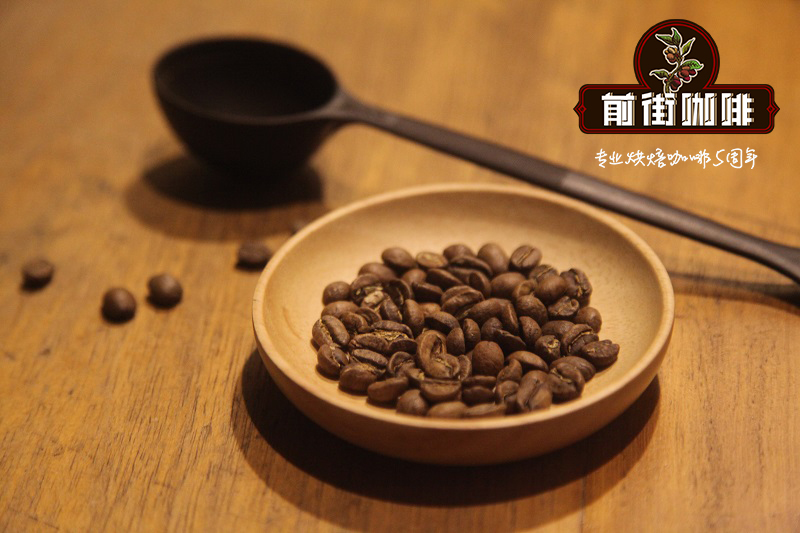
Compared with other American coffee-producing countries, Brazil's altitude is not high—production areas below 1000 meters are commonplace—so Brazilian beans are generally softer in quality. After roasting, most Brazilian coffees cannot express the bright acidity of high-altitude, hard-bean Central American coffees or the complex flavors of African beans. That does not make them ordinary, though: their extremely smooth texture and a sweet aftertaste reminiscent of brown sugar, nuts, chocolate, and even vanilla cream have won over a large following of coffee lovers.
The main Brazilian varieties currently grown include Red Bourbon, Yellow Bourbon, Mundo Novo, and Catuai (common in the Diamond Highlands region).
Before 1990, Brazil relied almost exclusively on natural processing. Times have changed, however: as the country's technical capacity grew and market demands evolved, virtually every processing method—washed, natural, semi-washed, even anaerobic fermentation—can now be found in Brazil. Among them, Brazil's unique semi-washed (pulped natural) processing is the most famous.
FrontStreet Coffee Recommendation
Brazil's moderate acidity and excellent balance of sweet, bitter, and body make it ideal for medium roasts, where toasted nut aromas bloom and the cup stays mellow with just a touch of acidity. For a first taste of the origin, the FrontStreet semi-dried Cerrado Red Bourbon is a classic single origin: at a medium roast it shows creamy peanut, toast, caramel, and hazelnut, round on the palate without sourness and only a light bitter edge. It suits pour-over as well as moka pot, espresso SOE, siphon, and French press.
For something more distinctive, try the FrontStreet Brazil Queen Estate Yellow Bourbon from Mogiana, near southern Minas, where fertile red volcanic soil produces especially aromatic cherries. Yellow Bourbon, a natural mutation of Red Bourbon, gives a cleaner fruit character, and the cup reveals a sugarcane sweetness alongside fruit and chocolate notes. Brazil's balance and gentle acidity are also why so many FrontStreet espresso blends are built on Brazilian beans—their chocolate and cream aromatics plus soft sweet-sour-bitter balance make extraction noticeably more stable.
Important Notice :
FrontStreet Coffee is a long-established specialty coffee roaster in Guangzhou China, selling freshly roasted beans from its own farm in Yunnan as well as dozens of carefully selected single-origin beans from around the world for both pour-over and espresso. The products deliver consistently excellent quality and great value, with shipping within 24 hours. Guangzhou's FrontStreet Coffee shop is recommended by many coffee lovers, and the beans are now available online at the Tmall 。
FrontStreet Coffee has moved to a new address:
FrontStreet Coffee Address: 315,Donghua East Road,GuangZhou
Tel:020 38364473
 Scan and follow the En Gafei WeChat official account. Please indicate that the reprint comes from "En Gafei".