What's Different About Latin American Coffee Cultivation - Rich and Mellow Characteristics of Latin American Coffee
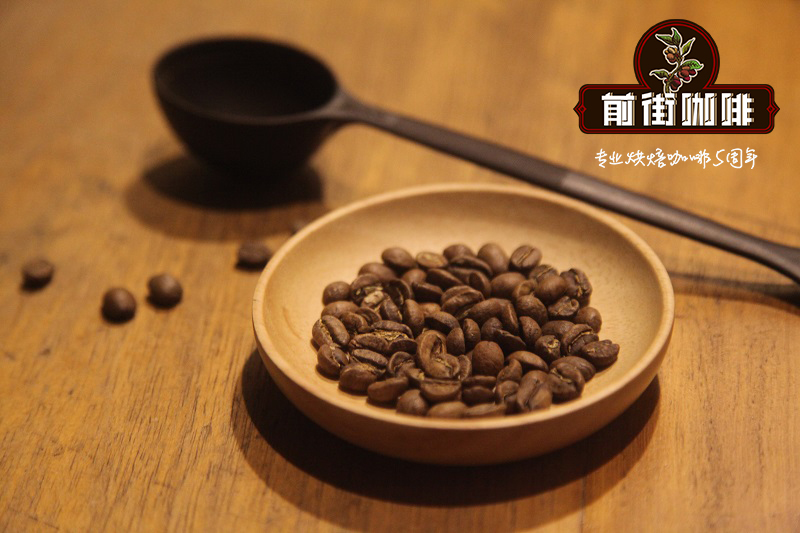
FrontStreet Coffee - Introduction to Latin American Coffee
In the fifteenth century, coffee reached Mecca. Muslim pilgrims visiting Mecca spread it throughout the Islamic world, and from Cairo, Istanbul, and Tehran it made its way to Venice. By the late seventeenth century, coffee had become a common commodity in Europe, and coffeehouse culture gradually took shape. It was also because Europeans planned to produce coffee in their colonies that coffee could become a global beverage and a globalized crop.
There are several versions of how coffee reached Latin America. The most common holds that French naval officer Gabriel Mathieu de Clieu (1687-1774) stole one or perhaps several coffee seedlings from the royal greenhouse in 1720 and brought them to the Caribbean island of Martinique, opening up prosperous opportunities for Latin American coffee. Another theory says the Dutch were the first to transplant coffee to the Latin American colony of Suriname.
The coffee growing belt is distributed between 25 degrees north and south latitude. Countries in this belt include Ethiopia, Yemen, and Kenya, as well as much of Latin America. Arabica is a high-altitude variety and the mainstream coffee species. Latin America has many highlands between 600 and 1,500 meters, plus plenty of sunlight, which suits Arabica. A coffee plant can be harvested four years after planting, then enters its peak production period and can keep producing for decades, making it a high-return economic crop. Coffee, however, is a labor-intensive crop.
During the colonial period, plantation owners were local oligarchs and large landowners, and the labor came from indigenous people or enslaved Africans. By the late nineteenth century, alongside the traditional large plantations, family-run small coffee farmers began to emerge, and well-funded multinational companies competed for the coffee market. Behind the Latin American coffee economy lies a history of cheap labor marked by exploitation, injustice, and monopoly.
Today Latin America is one of the world's important coffee-producing regions, and coffee has become a signature of the region. By some counts, coffee plantations now occupy at least forty-five percent of the arable land in Latin America. Thanks to geography, Latin American beans are mainly sold to the United States, followed by exports to Europe and Asia. Generally speaking, coffee-producing regions are mostly developing countries, while coffee-consuming countries are the so-called first world.
Although Latin America is a producing region, Latin Americans are coffee lovers too. Beyond the usual Americano, mocha, latte, cappuccino, and espresso, different areas have their own drinking methods and terminology, which has given rise to distinctive coffee cultures.
FrontStreet Coffee Recommendation
If Latin America's balanced, mellow profile leaves you curious about the other end of the spectrum, Ethiopia—coffee's birthplace—offers a striking contrast. The FrontStreet washed Yirgacheffe is the classic entry point: clear jasmine florals and a bright citrus acidity, in a light, elegant, tea-like cup that drinks like clean lemon tea.
For a village-level interpretation, the FrontStreet Gedingding Cooperative is processed at a washing station in the Woka area at the southeastern edge of Yirgacheffe. Removing the fruit before drying lets the coffee's own aromas shine through, with citrus and lemon notes and an elegant white-floral lift.
And for the wilder side of Ethiopia, the FrontStreet Kafa Forest comes from the UNESCO-listed Kafa Biosphere Reserve, where coffee grows between 1,400 and 2,100 meters under shaded, misty rainforest. It carries jasmine, citrus, and wild-berry notes with a delicate, layered, lively character.
Important Notice :
FrontStreet Coffee is a long-established specialty coffee roaster in Guangzhou China, selling freshly roasted beans from its own farm in Yunnan as well as dozens of carefully selected single-origin beans from around the world for both pour-over and espresso. The products deliver consistently excellent quality and great value, with shipping within 24 hours. Guangzhou's FrontStreet Coffee shop is recommended by many coffee lovers, and the beans are now available online at the Tmall 。
FrontStreet Coffee has moved to a new address:
FrontStreet Coffee Address: 315,Donghua East Road,GuangZhou
Tel:020 38364473
 Scan and follow the En Gafei WeChat official account. Please indicate that the reprint comes from "En Gafei".