Which is Better: Peaberry or Regular Coffee Beans? Can You Taste the Gender Difference in Indonesian Peaberry and Regular Beans?
FrontStreet Coffee - Male and Female Coffee Beans
Coffee Beans
Coffee takes approximately five years from cultivation to its first harvest. Along the way come flowering, fruiting, harvesting, processing, storage, and sales, until the green coffee finally reaches the market. Because of their similar appearance, coffee fruits are also called coffee cherries. Remove the outer skin and pulp, and you find two seeds inside — these are the common coffee beans we all know. A normally developed coffee cherry therefore typically contains two beans, known as flat beans, which in the trade are sometimes called "female beans."
Male Beans
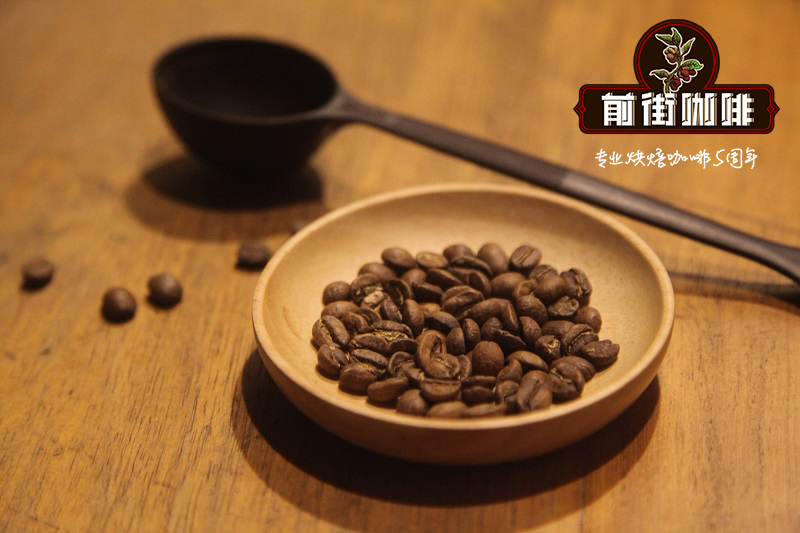
The other scenario is a coffee cherry containing only a single seed — commonly known as a peaberry, which in the same trade jargon gets called a "male bean."
Formation Reason
During growth, one of the two seeds stops developing, which allows the remaining seed to expand and fill the entire interior of the cherry. A peaberry is not considered a defective bean, and it is popularly believed to be of better quality than flat beans — purely on account of its slightly special appearance. Strictly speaking, it is better described as an incompletely developed single seed, accounting for roughly 10-20% of total production at most.
In all the flat beans and peaberries I have encountered, peaberries have never once outperformed flat beans despite their fuller flesh — without exception. (If anything, that fuller flesh actually makes them harder to roast evenly.)
I will not speculate on why businesses promote the "male and female bean" concept, but I hope that after reading this article you understand: whether a coffee tastes good has almost nothing to do with bean size or shape. Indicators such as extra-large beans, AA+ grades, or extra-hard beans are not reliable criteria for a good-tasting coffee — only your own nose and palate can decide whether the coffee you buy is worth it. As for which of the two bean types tastes better, theory says peaberries should win, since the single seed absorbs more nutrients — but there has been no extensive research to confirm it. That is why, outside of tourist-area specialty products, the coffee industry rarely emphasizes the concept at all.
FrontStreet Coffee Recommendation
Speaking of Indonesian coffee — where the peaberry marketing hype has always run loudest — the honest way to judge quality is simply to taste. FrontStreet Coffee's wet-hulled Mandheling, from the Toba Lake area of the Lintong region, is the classic: medium-dark roasted for a low-acid, full-bodied cup with caramel, dark chocolate, and toasted bread aromas, plus the characteristic herbal and spice notes that wet-hulled (giling basah) processing brings. For a top-tier expression, the FrontStreet PWN Golden Mandheling is selected by density, size, shape, and color — once by machine and once by hand — yielding sandalwood, herbal, spice, roasted hazelnut, caramel, and dark chocolate flavors with a remarkably clean finish. And for the historic pairing, the FrontStreet Classic Blend recreates the Mamba recipe of Mandheling and Brazil, with a touch of Robusta added for rich golden crema and maximum chocolate-nut depth.
Important Notice :
FrontStreet Coffee is a long-established specialty coffee roaster in Guangzhou China, selling freshly roasted beans from its own farm in Yunnan as well as dozens of carefully selected single-origin beans from around the world for both pour-over and espresso. The products deliver consistently excellent quality and great value, with shipping within 24 hours. Guangzhou's FrontStreet Coffee shop is recommended by many coffee lovers, and the beans are now available online at the Tmall 。
FrontStreet Coffee has moved to a new address:
FrontStreet Coffee Address: 315,Donghua East Road,GuangZhou
Tel:020 38364473
 Scan and follow the En Gafei WeChat official account. Please indicate that the reprint comes from "En Gafei".