Have You Ever Heard of the Three Main Types of Coffee Beans? Is Arabica a Region Name? Read This Article to Clear Up Your Confusion
Introduction to Coffee Varieties
Coffee is gradually becoming a mainstream beverage and working its way into daily life. Many people, however, are still not familiar with it. So today I'd like to cover the basics, in the hope that it helps everyone understand coffee a little better.
Types of Coffee Beans
Looking at the world's major coffee varieties, there are approximately 25 species. Only about three, however, are used commercially by humans: Arabica, Robusta, and Liberica.
In the beginning, coffee beans were not roasted the way they are today; they were simply boiled, and the taste was rather poor. It was not until the 13th century that Arabs gradually developed the roasting method that gave coffee its unique flavor. Today the most widely used coffee bean is Arabica. Jamaica's Blue Mountain, Sumatra's Mandheling, and Kenya AA are simply special names given for distinctive flavors or specific growing regions.
Arabica is mainly distributed at high altitudes between 1000 and 2500 meters, at temperatures between 15-24°C, with optimal rainfall of 1500-2000mm annually. From flowering to fruiting takes about 9 months. Its caffeine content is only half that of Robusta beans, and the mature fruit falls on its own. No wonder it is the most widely used coffee bean. Of course, truly good coffee beans are still hand-picked, so every cup is worth appreciating, since it does not come easily.
Next is the Robusta coffee bean. It has a strong flavor and is well suited to producing the instant coffee we all know. It mainly grows in low-altitude areas, around 0 to 800 meters, with suitable temperatures around 24-30°C and optimal rainfall between 1500-3000mm annually. The fruit matures in 10 to 11 months. It has the highest caffeine content, and the mature fruit stays on the branches.
Finally there is the least common, Liberica. This coffee bean tastes rather bitter and is troublesome to process, but it is valued for its strong vitality. Although its production accounts for less than 2% of the world's total, it has the strongest vitality and suits subtropical regions with optimal temperatures between 19-27°C. Interestingly, its leaves are quite large, and it can be cultivated through grafting or grown as an ornamental tree.
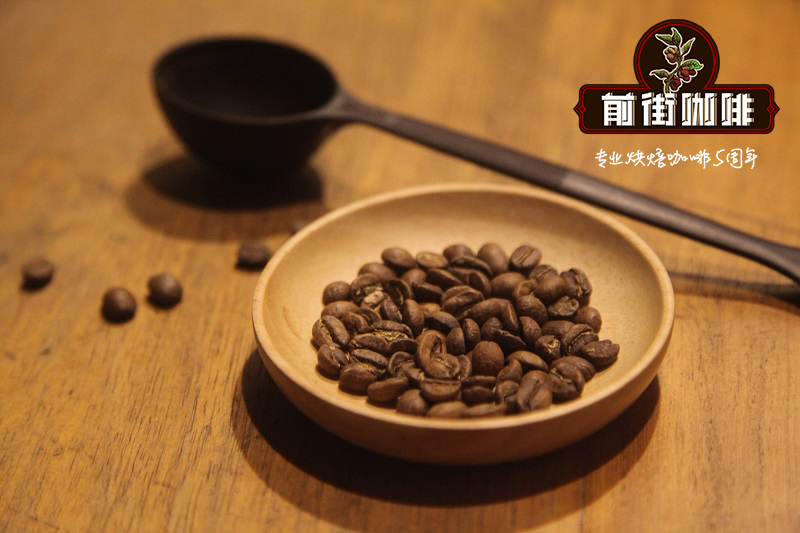
From an appearance perspective, all three coffee beans have their own characteristics. Arabica beans are similar in shape to goose eggs, elongated and full. Robusta beans are smaller and round. The easiest to recognize is Liberica, long and thin, like a small boat.
FrontStreet Coffee Recommendation
Among the three commercial species, Arabica carries the flavors most drinkers chase, and Sumatra's Mandheling is one of its best-known expressions. FrontStreet Coffee's PWN Golden Mandheling is graded G1, screened from beans 18 mesh and above, and hand-sorted three times, so fewer than 3 defects turn up per 300g sample. Roasted medium-dark, it gives dark chocolate, caramel, herbal, earthy, and woody notes with spice, low acidity, and a full body. Brew it as a pour-over with 15g of coffee and a 1:15 ratio at 87-88°C, ground to a coarse-sugar texture, pouring 30ml, then 100ml, then 95ml.
Important Notice :
FrontStreet Coffee is a long-established specialty coffee roaster in Guangzhou China, selling freshly roasted beans from its own farm in Yunnan as well as dozens of carefully selected single-origin beans from around the world for both pour-over and espresso. The products deliver consistently excellent quality and great value, with shipping within 24 hours. Guangzhou's FrontStreet Coffee shop is recommended by many coffee lovers, and the beans are now available online at the Tmall 。
FrontStreet Coffee has moved to a new address:
FrontStreet Coffee Address: 315,Donghua East Road,GuangZhou
Tel:020 38364473
 Scan and follow the En Gafei WeChat official account. Please indicate that the reprint comes from "En Gafei".