Types of Coffee Beans and How to Identify the Appearance Characteristics of Bourbon Coffee Beans
FrontStreet Coffee - Bourbon Coffee
There are hundreds of coffee varieties in the world, and about 70% of coffee belongs to the Arabica species. Arabica is more fragile than Robusta, but its flavor and aroma win consumers over, so it dominates both the specialty and commercial markets.
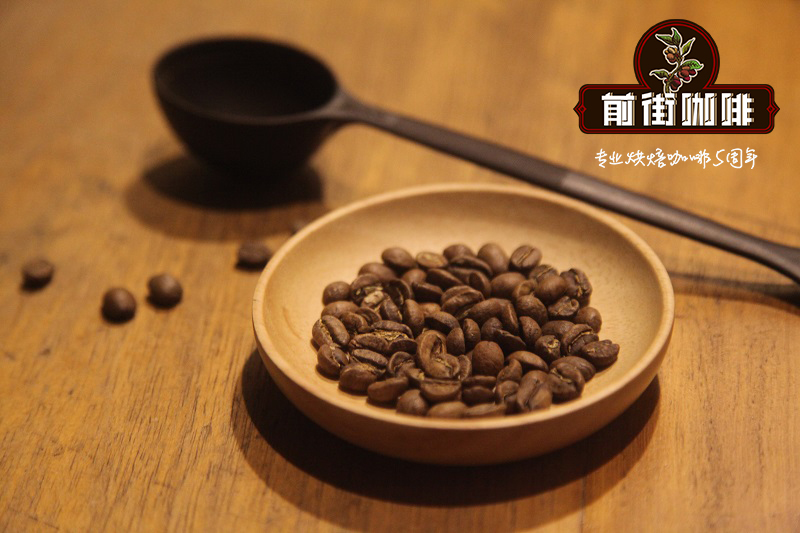
Bourbon coffee (French: Café Bourbon) is produced from the Arabica cultivar Bourbon. It was first cultivated on Réunion Island, which was known as Bourbon Island (Île Bourbon) before 1789. Réunion was a French possession and a natural waypoint linking France with Africa and Latin America, and Bourbon is now one of the two most widely grown Arabica types in the world. Bourbon is typically grown at elevations of 3,500 to 6,500 feet (1,062-1,972 meters).
Bourbon trees are much the same height and shape as Typica, but they are bushier and carry more lateral branches. The trunk and branches are thicker, which makes Bourbon sturdier and more flexible than Typica. Shorter gaps between branches and nodes mean greater density, and that is why Bourbon yields 30% more than Typica.
Bourbon leaves are wider than Typica's, with uneven surfaces and wavy edges. New leaves are usually green but sometimes show copper-colored tips. The fruit is round and ripens red, orange, or yellow — though a single tree never carries more than one color.
Many people assume Bourbon coffee comes from Bourbon Island. It doesn't. In 1711, a native Arabica tree was first found at an elevation of 600m above St. Paul on Bourbon Island. Its skin was brown rather than red when ripe, and it was called brown-fruit coffee at the time. It proved too bitter and found no market, so in 1715 the French brought 60 Mocha round coffee plants from Yemen to replace it.
To set it apart from the "Typica long bean" grown by the Dutch, who were fierce competitors in the coffee trade, it was named "Bourbon round bean," or "Green-top Bourbon," because the tender leaves at the top are green rather than Typica's brown. From there it grew into the Bourbon we know today.
FrontStreet Coffee Recommendation
Coffee splits into three original species — Arabica, Robusta, and Liberica. Arabica is by far the most varied and the most popular for its complex, clean flavor; Robusta is bolder with rich crema and tends to end up in espresso blends and instant coffee; Liberica has little commercial value today and survives mainly in research. Nearly all the specialty coffee you drink is Arabica, and each growing region gives it its own signature. If you want the natural, fruit-forward side of Ethiopia, FrontStreet's Huakui is a great pick: it is the everyday Ethiopian heirloom, a mix of undistinguished varieties, so the beans vary in size, and it brings delicate florals with especially loud fruit — cream strawberry, mango, jackfruit, citrus, and blueberry. Processed as a classic natural, it carries the ripe tropical-fruit character Sidamo naturals are known for, the same rich berry aroma that took first place in that year's TOH green bean competition.
For the washed counterpart, FrontStreet's Yirgacheffe Gutiti comes from the Gutiti cooperative in Yirgacheffe, the highest Ethiopian grade, G1, and washed the traditional way for elegant white florals, citrus, orange, and green tea. Two classics round out the range. FrontStreet's Jamaica Blue Mountain No. 1 is a Typica — one of the archetypal Arabica varieties, the one that spread first from Yemen to India, Indonesia, and Central and South America. Typica tastes beautifully balanced, mild, and smooth, with soft rather than sharp acidity and a full, pure aroma, though it is prone to disease and low-yielding. Blue Mountain Typica traveled from Martinique to Jamaica in the 1720s, and over 200 years it evolved better disease resistance than ordinary Typica, particularly against coffee berry disease — yet step outside Jamaica and its sweet, delicate fragrance cannot be reproduced. In FrontStreet's cupping, no other region comes close to matching its balance.
FrontStreet's Panama Red Label Geisha shows the modern side of Arabica: lush florals, citrus, peach, and plump mixed-fruit acidity in the cup, a creamy body, and an oolong-tea sweetness in the finish — so refined it feels less like coffee than a fragrant fruit tea. Geisha yields little, the plant is fragile, and it is picky about its environment, which is exactly why FrontStreet's Red Label comes from Panama's celebrated Esmeralda estate in the Boquete district of Chiriquí province, where volcanic soil, old forest, year-round mist, and abundant rain create ideal growing conditions. For a softer, sweeter style, FrontStreet's Brazil Queen estate coffee is a Bourbon — the same old Arabica family as Typica, named after the island of Bourbon where it was first grown. Bourbon leaves are broad and densely packed, yields run 30% above Typica, and the beans are round and short. Most ripen red; mutations such as the orange-yellow "Yellow Bourbon" appear as plantings spread, and FrontStreet's Brazil Queen estate was the earliest-discovered Yellow Bourbon, with notes of cream, peanut, toast, and sugarcane. It is rich and gently sweet, and suits pour-over, moka pot, and espresso machine alike.
Finally, FrontStreet's Colombia Sidra began in Pichincha province, Ecuador, where locals call it Sydra. Genetic testing found it closely related to Ethiopian heirloom varieties, so researchers suspect it is a cross between an Ethiopian experimental variety and local Ecuadorian Bourbon. Sidra caught the world's attention after 2022 World Barista Champion Anthony Douglas used a Sidra from Finca El Diviso in competition. FrontStreet roasts it medium-light, and it is loved for florals, tropical fruit, grape, dried fruit, and passion fruit with a juicy body.
Important Notice :
FrontStreet Coffee is a long-established specialty coffee roaster in Guangzhou China, selling freshly roasted beans from its own farm in Yunnan as well as dozens of carefully selected single-origin beans from around the world for both pour-over and espresso. The products deliver consistently excellent quality and great value, with shipping within 24 hours. Guangzhou's FrontStreet Coffee shop is recommended by many coffee lovers, and the beans are now available online at the Tmall 。
FrontStreet Coffee has moved to a new address:
FrontStreet Coffee Address: 315,Donghua East Road,GuangZhou
Tel:020 38364473
 Scan and follow the En Gafei WeChat official account. Please indicate that the reprint comes from "En Gafei".