What's the Genetic Relationship Between Arabica and Mandheling? Exploring Mandheling Coffee and Arabica
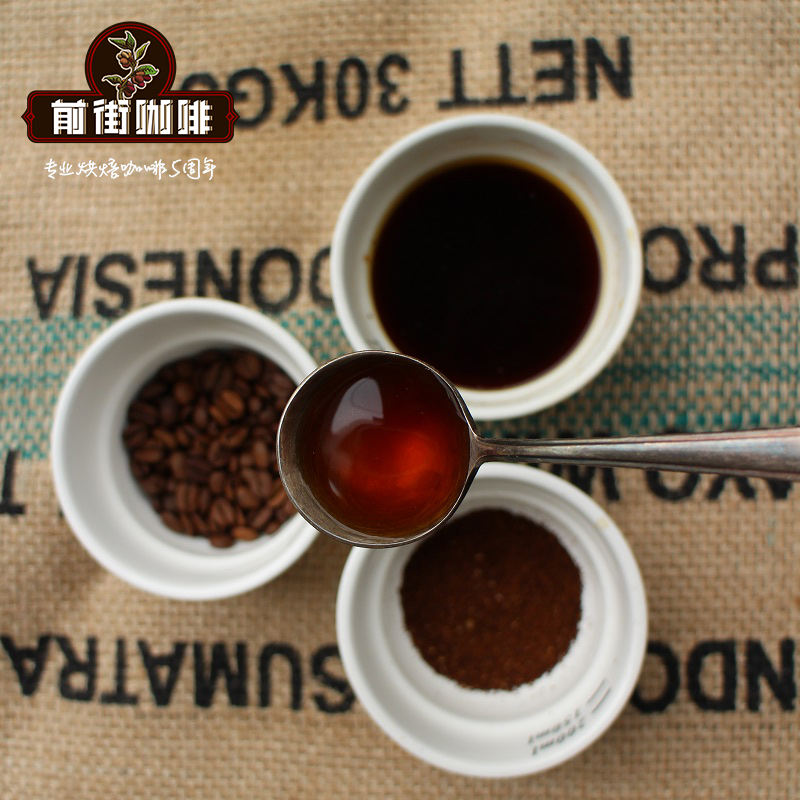
FrontStreet Coffee's Mandheling Coffee Introduction
Mandheling coffee comes from the Indonesian island of Sumatra and is sometimes called "Sumatran coffee." It offers a very rich flavor with a distinctive aroma, deep bitterness, and heavy body, tempered by only subtle acidity. It remains one of the most sought-after coffees in the world.
Curiously, "Mandheling" is not a region, a place, a port, or a variety name — it is a phonetic rendering of the Mandheling people of Indonesia. During the Japanese occupation of Sumatra in World War II, a Japanese soldier asked a café owner what coffee he was drinking that smelled and tasted so mellow. The owner misunderstood, thought he was being asked about his ethnicity, and answered "Mandheling." That is how the now-famous name was born.
Indonesia's coffee history goes back to 1699, when the Dutch first planted Arabica seedlings on Java. In 1908, a devastating leaf rust outbreak destroyed much of Java's coffee and forced a switch to the hardier Robusta. Today Indonesia is a major producer, with Robusta making up 90% of total output. But some regions kept cultivating excellent Arabica — and Sumatra's Mandheling is the prime example.
The trees grow on highland slopes between 750 and 1,500 meters above sea level, and Sumatra's mysterious, singular terroir endows the coffee with its rich aroma, full body, and intense flavor.
Mandheling beans are relatively large and hard but prone to defects during cultivation, so after harvest they typically pass through strict manual selection; without rigorous quality control, quality drifts wildly. The flavor is bold — a rich body and lively character without astringency or sharp acidity, expressing its body and bitterness to the fullest. Mandheling beans look rather unattractive, but enthusiasts will tell you: the uglier the Sumatra bean, the better, richer, and smoother the taste.
Indonesia's rainy season overlaps with cherry ripening, which makes sun-drying nearly impossible — and out of that constraint grew the regionally distinctive "Sumatran method." It is precisely this handling that creates Mandheling's unique profile.
The Sumatran method: normally, fruit processing removes the pulp first and hulling happens only after the beans are fully dried. In Indonesia, with drying time so limited, the parchment is hulled off while the beans are still half-dry — exposing the green beans directly to the air — and the buyer of the raw beans finishes the drying. This is the wet-hulled process, and for decades it has defined Mandheling's flavor.
Mandheling embodies something virile and untamed; drinking it feels unrestrained, free, a little like wandering through life. That character captivates its devotees — a spirit of perseverance and rugged greatness.
Knowledge Point
High-quality coffee fruit usually enjoys good shade cover. Tree shade blocks the harsh midday sun, slows the coffee's metabolism, and helps the development of nutrients, fruit acids, and aromatic compounds.
In Conclusion
FrontStreet Coffee is a coffee research shop dedicated to sharing coffee knowledge. We share everything without reservation to help more people fall in love with coffee — that has been our mission for the past six years.
FrontStreet Coffee Recommendation
If this profile appeals to you, go straight to the top of the category: FrontStreet PWN Golden Mandheling. It is produced by Indonesia's PWN company under exacting standards — beans screened to 18-mesh size or above, fewer than three defects per 300g sample to meet the top G1 grade, followed by three rounds of hand sorting that remove every flawed bean and lift the cup's cleanliness and sweetness. PWN supplies mainly the Japanese and American markets, and FrontStreet's listings include the PWN certificates and the company's stamped jute bags as proof of authenticity.
Roasted medium-dark, it shows a full roast aroma, a clean cup, and a rich, mellow body — ideal for anyone who dislikes sour coffee. FrontStreet brews it by hand pour-over at 87-88°C: 15g of coffee at a 1:15 ratio, ground to the coarseness of granulated sugar, poured in three segments (30ml bloom, 100ml second pour, 95ml gentle center pour) to bring out its thick body, caramel sweetness, and chocolate and nut notes.
Important Notice :
FrontStreet Coffee is a long-established specialty coffee roaster in Guangzhou China, selling freshly roasted beans from its own farm in Yunnan as well as dozens of carefully selected single-origin beans from around the world for both pour-over and espresso. The products deliver consistently excellent quality and great value, with shipping within 24 hours. Guangzhou's FrontStreet Coffee shop is recommended by many coffee lovers, and the beans are now available online at the Tmall 。
FrontStreet Coffee has moved to a new address:
FrontStreet Coffee Address: 315,Donghua East Road,GuangZhou
Tel:020 38364473
 Scan and follow the En Gafei WeChat official account. Please indicate that the reprint comes from "En Gafei".