Is Blue Mountain Coffee Black Coffee? Origin, Flavor, History & Story - Are Blue Mountain Coffee Beans Arabica Beans?
What is Authentic Blue Mountain Coffee?
Blue Mountain Coffee, as the name suggests, is coffee produced in the Blue Mountain region of Jamaica. So any product labeled "Blue Mountain Flavor Coffee" or "Blue Mountain Blend Coffee Beans" is definitely not genuine Blue Mountain Coffee — those use beans from other regions to imitate its taste. For anyone who has actually tasted Blue Mountain, that may not be a problem. But for someone who hasn't, and who buys one of these lookalikes by mistake, FrontStreet Coffee sees two possible outcomes: either they are fooled by the fake, and because they don't know the real taste they assume this non-Blue Mountain flavor is authentic; or they conclude that Blue Mountain Coffee is nothing special, which does real damage to its reputation.
So can all coffee from the Blue Mountain region be called Blue Mountain Coffee?
Actually, no. In 1950, the Jamaican government established the Jamaica Coffee Industry Board. The board sets quality standards for Jamaican coffee and supervises their enforcement to protect that quality. It grants special official seals to both raw and roasted coffee exported from Jamaica. In essence, what qualifies as Blue Mountain Coffee is decided by the Jamaica Coffee Industry Board.
By 1981, Jamaica had opened up about 1,500 hectares of land for coffee cultivation, and then invested in another 6,000 hectares. In fact, under the board's plan, only coffee produced by estates within those 6,000 hectares may be sold under the name Blue Mountain Coffee.
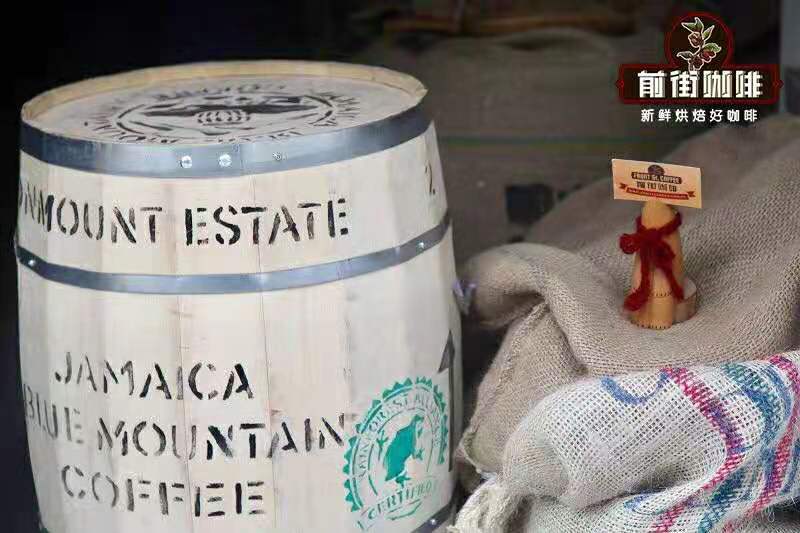
Meanwhile, coffee grown on the remaining 12,000 hectares of land in the Blue Mountain region can only be called High Mountain Supreme Coffee and Jamaica Coffee.
Blue Mountain Coffee itself is graded further. By the size of the raw beans, it is divided into No. 1, No. 2, and No. 3. The best grade, and the one most often found on the market, is Blue Mountain No. 1 Coffee, whose raw beans must be size 17 or above with a defect rate below 3%. No. 2 and No. 3 are rarely seen in the market because their prices are not high and their names carry little weight. So the grade with the genuine reputation is Blue Mountain No. 1.
The High Quality of Blue Mountain Coffee Comes from Excellent Varieties
Blue Mountain No. 1 Coffee is pure Typica, which is among the finest within the Arabica species. It was introduced to Jamaica from the Americas in the 18th century. Because it drew little attention and naturally yields little, it was hard to build into a pillar industry. Only in the mid-20th century did Jamaica refocus on its coffee industry, introducing advanced cultivation techniques, improving management, setting quality standards, and receiving substantial economic aid from Japan — which turned it into one of the most famous coffees in the world by the end of the 20th century. (Japanese marketing, it must be said, is truly sophisticated.)
And all of this rests on the variety. Coffee bean varieties in the Americas have been through three rounds of replacement, while Ethiopia still hasn't fully distinguished its varieties. Jamaica has succeeded in maintaining excellent Arabica coffee varieties.
Authentic Jamaican Blue Mountain Coffee Has Certificate Authentication
The Jamaican government has always insisted that all Blue Mountain Coffee should be roasted in Jamaica to ensure consistent quality. In reality, roasting is a delicate art that requires experience, training, and expensive equipment. From a consumer's perspective, coffee beans should be consumed soon after roasting, and coffee roasted in Jamaica cannot meet that requirement. Today, raw Jamaican coffee beans can be exported.
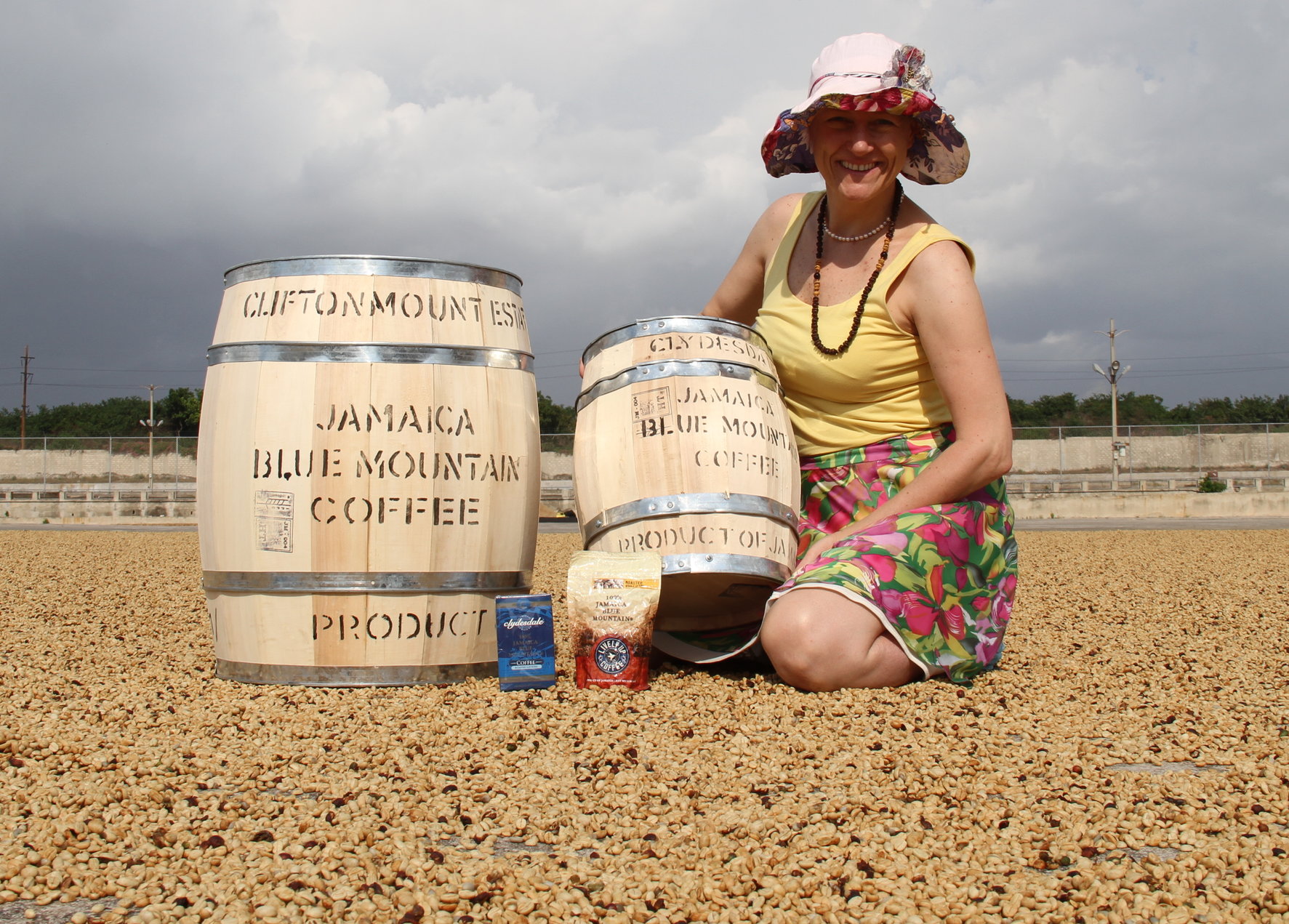
FrontStreet Coffee imports Blue Mountain No. 1 Coffee from the Clifton Mountain Farm, all transported in original barrels. The Jamaica Coffee Industry Board can issue certificates for all exported Blue Mountain Coffee.
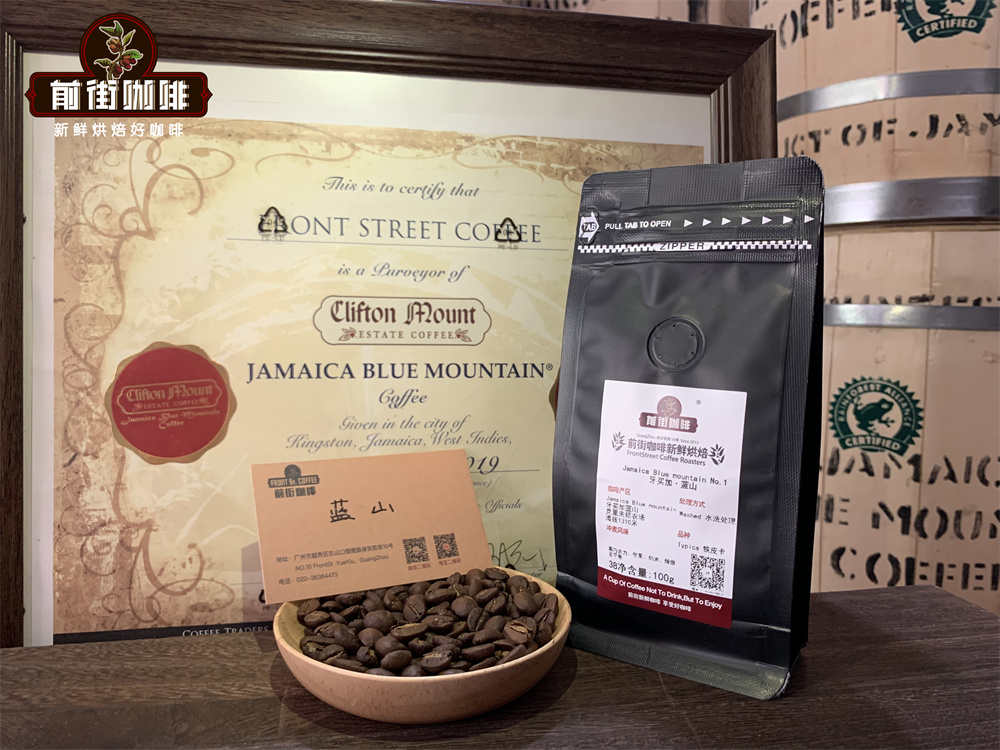
There is, however, a quirk to this certificate: you can only apply for a certificate from the CIB when you order Blue Mountain Coffee beans from the current season, but approval takes 3-6 months, and by the time it reaches us the year has almost turned over. So the certificate carries a year's difference.
FrontStreet Coffee's Brewing Recommendations for Jamaican Blue Mountain No. 1 Coffee Beans
Use 15g of coffee grounds, water at a temperature of 86°C, a water-to-coffee ratio of 1:15, and a medium-coarse grind (Chinese standard 65% passing rate through a No. 20 sieve).
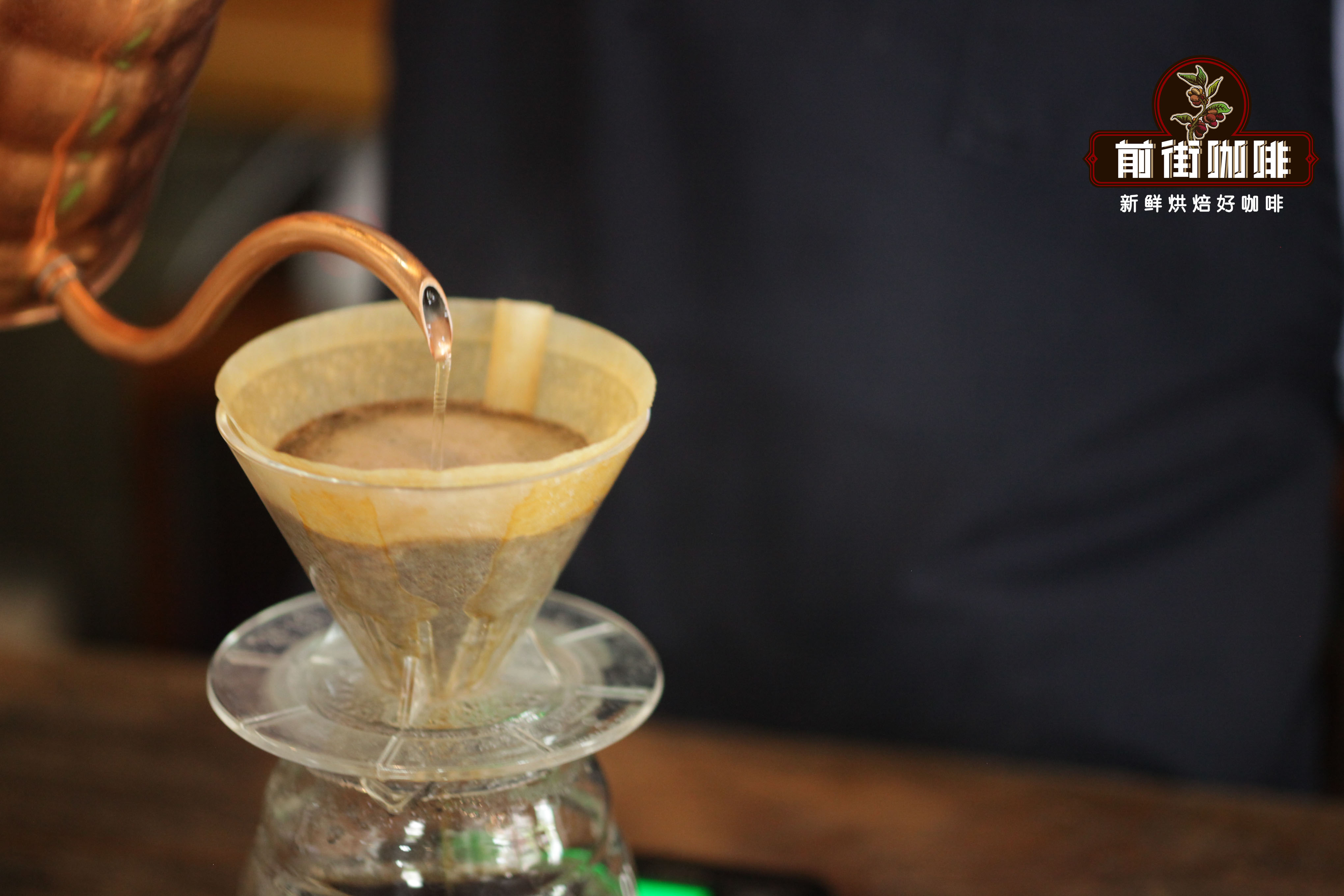
Filter cup choices generally include the V60, Kalita Wave, and Kono. FrontStreet Coffee demonstrates mainly with the Kono. The reason is that Blue Mountain Coffee is dark roasted, and high temperatures can easily lead to over-extraction, so FrontStreet chose a water temperature of 86°C. At that temperature, using a V60 or another fast-flowing filter cup would easily cause under-extraction, whereas the Kono has fewer and shorter ribs that isolate the gap between the filter paper and the cup, increasing the water's residence time and adding an immersion effect. After weighing all the brewing parameter tests, FrontStreet ultimately chose the Kono filter cup.
In terms of technique, FrontStreet Coffee uses segmented extraction, the three-pour method. Use 30g of water to bloom, with a bloom time of 30s. For the first segment, pour with a small circular flow to 125g, then stop. When the liquid level drops to just before the coffee bed is exposed, continue with the second pour and finish extraction at 225g. The total extraction time, including the bloom, is 2'00".
What are the Flavor Characteristics of Blue Mountain Coffee?
Since Blue Mountain Coffee is so famous, what makes its flavor special? The excellent quality of the beans gives it a clean taste. In the era of medium-dark roasting, Blue Mountain Coffee often shows a balance of sweet, sour, and bitter flavors, with subtle nutty and chocolate notes and a very comfortable aftertaste. It represents the highest quality of coffee of its era and is truly the King of Coffee.
FrontStreet Coffee Recommendation
Blue Mountain is the classic reference point for balance — it has almost no weak spot. It won't hit you with the sharp fruit acidity of some African coffees, nor the heavy bitterness of a dark roast; instead it lands in a beautiful equilibrium of acidity, sweetness, bitterness, and aroma, usually showing cream, caramel, chocolate, nuts, honey, and a faint fruit thread, smooth on entry, sweet through the middle, and clean and long at the back. True Blue Mountain comes only from a defined band of Jamaica's Blue Mountains — one of the highest ranges in the Caribbean, with a peak of 2,256 meters — and must be certified before it can use the name. The whole region produces less than 2,500 tons a year, and Japan has historically bought more than seventy percent of it, so very little reaches the rest of the world. FrontStreet's Jamaica Blue Mountain No. 1 comes from the historic Clifton estate, which has grown coffee since around 1750 at an average elevation of 4,300 feet (1,310.64 meters), and it arrives in the traditional original barrels of 15, 45, and 70 kilograms with full origin certification.
Because the brew is what matters most, FrontStreet roasts its Blue Mountain fresh, and the beans reach you still at their peak — ideally within 5 days of roasting, so you can brew straight away. The house style is a medium-dark roast that plays up the rich, classic character, and the result is a cup that is very clean, complex, and gentle, with chocolate sweetness and a strong body; the sweet, sour, and bitter elements balance perfectly, with barely any bitterness and only a moderate, well-judged acidity, closing on a long fruity finish. As for grinding, Blue Mountain wants a coarser setting than a light roast — about the texture of granulated sugar — which keeps the extraction even and avoids the scorched bitterness that comes from grinding too fine.
For pour-over, FrontStreet recommends a Kono dripper to round out the body, with a 15g dose for one cup and a 1:15 ratio; rest the beans 4-7 days from the roast date, counting the roast day as day one. Pour in three stages: bloom with 30g of water for 30s, then a vertical, slow circling pour to 120g and stop; when the bed drains, resume with a slightly quicker circling pour to 225g to avoid clogging the dripper and over-extracting. If you prefer something richer, a moka pot works well too — grind a touch finer than for pour-over, start with hot water, use medium-low heat, and pull it off the flame just as the coffee finishes flowing, which brings out the chocolate, caramel, and nut notes and keeps the signature balance, whether you drink it black or build a latte or flat white on top.
Important Notice :
FrontStreet Coffee is a long-established specialty coffee roaster in Guangzhou China, selling freshly roasted beans from its own farm in Yunnan as well as dozens of carefully selected single-origin beans from around the world for both pour-over and espresso. The products deliver consistently excellent quality and great value, with shipping within 24 hours. Guangzhou's FrontStreet Coffee shop is recommended by many coffee lovers, and the beans are now available online at the Tmall 。
FrontStreet Coffee has moved to a new address:
FrontStreet Coffee Address: 315,Donghua East Road,GuangZhou
Tel:020 38364473
 Scan and follow the En Gafei WeChat official account. Please indicate that the reprint comes from "En Gafei".