What Makes Costa Rican Coffee Unique in Taste? Is Costa Rica Diamond Yellow Honey Better in Flavor?
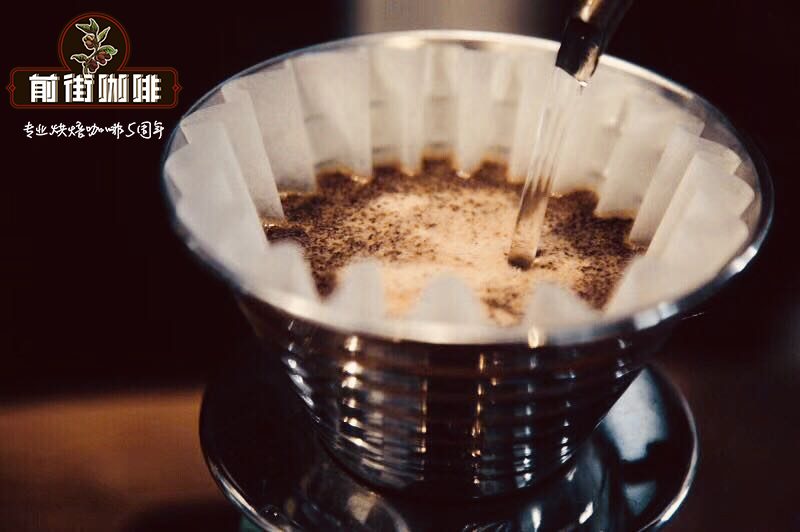
FrontStreet Coffee — Costa Rican Diamond Yellow Honey
Costa Rica has the third-smallest land area in Central America, yet because it pours so much effort into its coffee industry, it holds cultivation and processing skills that the world's major producers cannot match.
What is most admirable is the country's invention of the honey processing method. (For background, see the companion piece on processing methods: semi-dry pulped natural and honey processing.)
(There are three honey processing styles: Yellow Honey, Red Honey, and Black Honey.)
Honey processing removes the fruit skin while leaving the golden mucilage attached to the bean. By continuously managing factors such as fermentation time, the coffee's flavor becomes more distinctive as it develops outstanding sweetness, taking on a honey-like color and taste.
Honey processing was improved from Brazil's semi-dry method and has since become popular among producers across Central and South America. Its hallmark is letting the beans fully absorb the fruit aroma and sugar from the mucilage layer, so the cup tastes as sweet as sugar and honey.
Costa Rica's honey work is quite exquisite and has drawn a lot of attention in recent years. That sent me looking for a specialty bean that could genuinely win me over: it had to have the mild, smooth balance of Costa Rican coffee, jam-like sweet aromatics on entry, and a subtle fermented acidity. The middle had to show the nutty character Costa Rican beans are known for, and to carry good body it should finish with an elegant red tea undertone.
Las Lajas Estate sits in the Central Valley, the longest-established coffee region in Costa Rica. At an altitude of 1,500 meters, close to volcanic soil, it has been in operation for over 80 years and was one of the first estates in the country to study honey processing systematically.
The Diamond Yellow Honey technique is meticulous: after the fruit skin is removed, the parchment beans go onto African raised beds in direct sunlight for 2-3 days, turned every 2 hours. The beans are then moved to cement floors in shaded drying areas and spread to a thickness of 15-20cm. After two hours of drying during the day they are covered with plastic for 2 hours of fermentation, then turned afterward so the beans at the bottom can breathe fresh air, and the cycle repeats; at night they are piled into mounds and covered with thick black plastic. After 10-15 days, when moisture drops to 11%, they are bagged but left unsealed in the warehouse, and once the coffee has cooled they are sealed for storage with GrainPro and plastic bags.
Knowledge Point: in 1989, Costa Rica passed legislation prohibiting domestic cultivation of Robusta and then began to restrict and phase out the Catimor variety as well.
In short: FrontStreet Coffee is a specialty coffee research hall that loves to share coffee knowledge. Our unconditional sharing aims to help more friends fall in love with coffee. We also hold three discounted coffee events each month, because FrontStreet Coffee wants more friends to enjoy the best coffee at the lowest price, and that has been FrontStreet Coffee's mission for the past 6 years.
FrontStreet Coffee Recommendation
Honey processing grew directly out of Brazil's semi-natural method, so if this Diamond Yellow Honey appeals to you, going back to the source is instructive. FrontStreet Cerrado Red Bourbon is a textbook pulped natural from a well-known Brazilian region: medium-roasted, it gives creamy peanut, toast, caramel, and hazelnut, round on the palate with low acidity and a faint bitterness. It is a very versatile bean — pour-over, moka pot, espresso SOE, siphon, and French press all work. FrontStreet Queen's Estate Yellow Bourbon from Mogiana takes the same thread a step further, offering the sugarcane sweetness no other region quite matches alongside fruit and chocolate notes. Both show why the semi-dry idea was worth building on.
Important Notice :
FrontStreet Coffee is a long-established specialty coffee roaster in Guangzhou China, selling freshly roasted beans from its own farm in Yunnan as well as dozens of carefully selected single-origin beans from around the world for both pour-over and espresso. The products deliver consistently excellent quality and great value, with shipping within 24 hours. Guangzhou's FrontStreet Coffee shop is recommended by many coffee lovers, and the beans are now available online at the Tmall 。
FrontStreet Coffee has moved to a new address:
FrontStreet Coffee Address: 315,Donghua East Road,GuangZhou
Tel:020 38364473
 Scan and follow the En Gafei WeChat official account. Please indicate that the reprint comes from "En Gafei".