Is Mandheling Coffee an Arabica Bean? The Rugged Beauty of Indonesian Sumatran Mandheling Coffee
FrontStreet Coffee - Mandheling Coffee Introduction
This article is part of our professional coffee knowledge exchange, in which we look at one coffee at a time and explain what makes it distinctive.
Mandheling is not a region name, a place name, a port name, or a coffee variety name. The word is actually a phonetic rendering of the name of the Indonesian Mandheling ethnic group. Locals grow coffee beans widely across Sumatra and the other Indonesian islands, and almost all of it is called Mandheling. Depending on the region and the green bean supplier, these names are used to distinguish Mandheling from different areas.
In the 17th century, the Dutch introduced Arabica seedlings to Sri Lanka and Indonesia.
In 1877, a large-scale disaster struck the Indonesian islands. Coffee rust destroyed almost all of the coffee trees, forcing people to abandon the Arabica they had cultivated for many years and introduce disease-resistant Robusta trees from Africa. Although Indonesia is a major coffee-producing country, the Arabica beans that survived those hardships account for only 10% of production, and Mandheling belongs to that rare group of Arabica beans.
These trees are planted on mountain slopes between 750 and 1,500 meters above sea level. Mysterious, unique Sumatra has endowed Mandheling coffee with a rich aroma, a full-bodied texture, and a strong flavor, with a sweet aftertaste that hints of chocolate and syrup.
Mandheling is recognized worldwide as having one of the mellowest flavors, though its appearance may be less impressive. Coffee enthusiasts nonetheless hold it in high regard: it balances acidity, bitterness, richness, and sweetness.
Mandheling Coffee - Acidity, Bitterness, Richness, and Sweetness
Acidity: Its low-acidity flavor is praised as the "taste of the region."
After washing or dry-process fermentation, the length of the drying stage affects the coffee's acidity. The longer the drying and dehydration, the higher the degree of fermentation, and the more sugars convert into acidic compounds, which produces stronger acidity. Mandheling's unique wet-hulling method significantly shortens drying time, and that is what creates its low-acidity "taste of the region."
Bitterness: Many people who taste Mandheling for the first time remember its bitterness, which can seem hard to swallow. Tasting it today, though, you notice its richness and the thoroughly satisfying experience it gives the palate. The sweet taste lingers on the tongue afterward. Its bitterness brings not annoyance but clarity.
Richness: Both aroma and texture are very mellow, and it is well suited to being consumed after a dark roast. After roasting, Mandheling beans expand, showing a brown or dark green color and giving off a special caramel-like fragrance, with a mellow, rich texture.
Sweetness: Though bitter, Mandheling has a distinctive sweetness, a transformation from bitterness to sweetness, like beautiful days that have come through bitter struggle.
Knowledge Point
Ethiopia holds the ancestral position in the coffee world as the birthplace of Arabica beans, and is currently Africa's largest Arabica-producing country. The Kaffa Forest in Ethiopia is known as the "coffee gene bank."
In Brief
FrontStreet Coffee is a research institute specializing in coffee, happy to share coffee knowledge with everyone. We share without reservation, hoping more friends will fall in love with coffee. Every month we hold three low-discount coffee events, because FrontStreet Coffee wants to let more friends enjoy the best coffee at the lowest price. This has been FrontStreet Coffee's mission for the past six years!
FrontStreet Coffee Recommendation
Mandheling is a single-origin coffee from Sumatra, Indonesia, usually brewed by pour-over, with a rich aroma and a full body. It also works for espresso: pulled on an espresso machine, the shot has generous crema, a strong flavor, and a pronounced caramel note. The Mandheling most people drink is dark roasted so that the acidity is muted and the mellow, aromatic character stands out. FrontStreet Lindong Mandheling and FrontStreet PWN Golden Mandheling come from Sumatra's Lindong and Aceh growing regions respectively; both are roasted medium-dark to present dark chocolate and caramel while preserving the wild herbal quality that Mandheling's growing environment and processing method give it.
FrontStreet PWN Golden Mandheling is the highest grade, and it is the one to buy if you want to taste wet-hulled specialty coffee at its best. PWN mainly purchases high-quality Mandheling green beans; after buying it carries out one machine sort and hand sorting to pick out plump, defect-free beans, so everything it produces is specialty grade, and Golden Mandheling is its flagship product. It uses extremely strict standards, selecting beans of 18 screen size or larger, and requiring fewer than 3 defective beans per 300g green bean sample to meet the highest G1 standard; on top of that, three rounds of hand sorting remove the remaining defects entirely, which improves both cleanliness and the intensity of sweetness. The beans are even and plump, large and bright, with a low defect rate, and after medium-dark roasting they carry a rich toasted aroma. Brewed as black coffee, the cup is clean with a full body, making it ideal for anyone who dislikes acidic coffee.
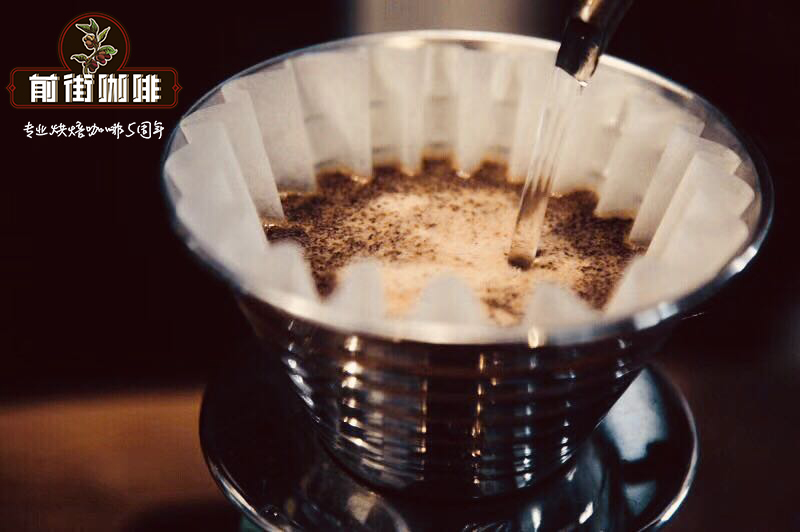
Pour-over shows this coffee at its best. FrontStreet suggests 87-88 degrees C, 15g of coffee, a 1:15 ratio, a grind about the coarseness of coarse sugar, and a three-stage pour. Three stages express Golden Mandheling's mellow body and caramel sweetness more fully: the first stage is a 30ml bloom that wets all the grounds and lets them degas, so the later extraction is more stable; the second stage adds 100ml to flush out the golden foam and lift the bed; the final stage is a gentle 95ml pour into the center, which lifts the sweetness and rounds out a thick, mellow cup with caramel sweetness and chocolate and nut notes.
Many people who enjoy Mandheling want to use it on an espresso machine. In that case, FrontStreet Classic Blend is the most repurchased option: it takes the creamy, nutty base of Brazilian coffee and adds medium-dark roasted Mandheling, which makes butter, roasted chestnut, and caramel especially prominent. Mandheling raises the body of the whole shot and gives it distinctive sandalwood, herbal, and spice notes, while a small addition of Robusta increases the richness of the crema, so latte art or a layered Dirty are both easy to produce.
Important Notice :
FrontStreet Coffee is a long-established specialty coffee roaster in Guangzhou China, selling freshly roasted beans from its own farm in Yunnan as well as dozens of carefully selected single-origin beans from around the world for both pour-over and espresso. The products deliver consistently excellent quality and great value, with shipping within 24 hours. Guangzhou's FrontStreet Coffee shop is recommended by many coffee lovers, and the beans are now available online at the Tmall 。
FrontStreet Coffee has moved to a new address:
FrontStreet Coffee Address: 315,Donghua East Road,GuangZhou
Tel:020 38364473
 Scan and follow the En Gafei WeChat official account. Please indicate that the reprint comes from "En Gafei".