How Beginners Can Appreciate Coffee Flavors - Coffee Tasting and Description Methods
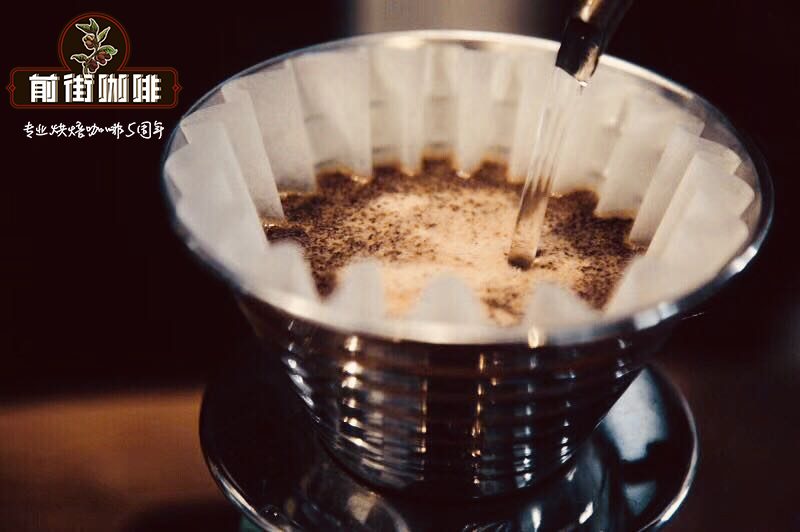
FrontStreet Coffee - A Beginner's Guide to Coffee Tasting
Tasting the full flavor of a coffee can be broken down into six steps.
Step 1: Grind the Beans and Take In the Dry Aroma
Tasting begins the moment you grind the beans. Grinding releases a large burst of volatile aromatic compounds, and this is your chance to appreciate them by moving in and out, alternating the distance between your nose and the coffee grounds.
The first volatiles to escape are the floral and fruity acidic aromas, because those molecules are the smallest. Next come medium-weight notes of caramel, nut, chocolate, and almond, but they disperse over a shorter distance, so you need to lean in a little. Finally comes pine resin, mercaptans, and roast aroma; these usually appear only in medium-dark roasts and require bringing your nose right above the grounds to catch them. By varying the distance, you can perceive each group separately.
Step 2: Brew the Coffee and Take In the Wet Aroma
Some volatile compounds cannot vaporize at room temperature and need hot water to release their fragrance. That is the wet aroma of brewed coffee, and it is the second step in tasting. When you smell the wet aroma, use the same in-and-out approach. Now the floral and fruity acidic aromas, the caramel notes, and other appealing scents are more obvious and easier to detect than they were in the dry grounds.
Step 3: Coffee in the Mouth, Appreciating Taste
Dry and wet aromas are volatile fragrances, but the water-soluble taste of brewed coffee, the third layer of flavor, must be picked up by the taste buds on the tongue. When coffee enters the mouth, receptor cells for sour, sweet, bitter, and salty capture the water-soluble flavor molecules. The tip of the tongue is more sensitive to sweetness, the sides to sourness and saltiness, and the root to bitterness. These four tastes interact and compete, complementing and inhibiting one another, which is part of what makes tasting so interesting.
Step 4: Tongue and Palate, Appreciating Mouthfeel
After the coffee enters the mouth, the first sensations are sour, sweet, bitter, and salty. Beyond those, you need to slide your tongue back and forth across the mouth and upper palate to feel the smoothness and astringency of the liquid.
Smoothness comes from suspended particles such as coffee oils, proteins, and fibers, and this tactile sensation brings pleasure. Astringency is caused by dicaffeoylquinic acid, a potent antioxidant and a bitter degradation product of chlorogenic acid that forms during roasting. Generally, the more pronounced the viscosity of a coffee, the better its smoothness and overall mouthfeel.
Step 5: Close the Mouth and Exhale, Appreciating the Sweet Aroma
After you have experienced the taste and the tactile sensations, you can perform a mouth-closed exhalation: shut your mouth and slowly exhale through the nasal passages, using retronasal olfaction, which is extremely sensitive and able to discern subtle differences down to single atoms within molecules, to appreciate the coffee's sweet aromas. Light roasts bring uplifting acidic and caramel aromas, while dark roasts show pronounced pine resin and mercaptan pungency. When you use retronasal olfaction, the caramel sweet notes are captured more completely than through orthonasal olfaction, and they are even more captivating.
Step 6: Chew and Exhale, Appreciating the Aftertaste
Good coffee still leaves a lingering aromatic aftertaste in the mouth after you swallow, and you can keep experiencing it through chewing and retronasal olfaction. The aftertaste of a good coffee seems endless, leaving fragrance in both mouth and nose.
Knowledge Point
Light roasting focuses on acidity and flavor. If the roast is not handled properly, it can produce astringency and irritation, and at the same time the body and lingering sensations will feel lower.
In short: FrontStreet Coffee is a coffee research establishment, happy to share coffee knowledge with everyone. We share without reservation only to help more friends fall in love with coffee, and we hold three low-discount coffee events every month, because FrontStreet Coffee wants more friends to drink the best coffee at the lowest prices. This has been FrontStreet Coffee's principle for six years.
FrontStreet Coffee Recommendation
Medium roasts are the easiest place to train the six steps above, because they sit right between bright acidity and deep sweetness. FrontStreet Strawberry Candy Gesha Blend, built from a Costa Rican honey-process coffee and a Panamanian washed Gesha and roasted medium, layers orange-blossom honey over a rounded sweetness that makes a great dry-and-wet-aroma exercise. FrontStreet Brazil Queen Estate, a medium-roasted Yellow Bourbon, offers cream, peanut, chocolate, toast, and sugarcane, a gentle profile that is easy to describe and easy to enjoy while you practice. Brew either as a pour-over and taste slowly, step by step.
Important Notice :
FrontStreet Coffee is a long-established specialty coffee roaster in Guangzhou China, selling freshly roasted beans from its own farm in Yunnan as well as dozens of carefully selected single-origin beans from around the world for both pour-over and espresso. The products deliver consistently excellent quality and great value, with shipping within 24 hours. Guangzhou's FrontStreet Coffee shop is recommended by many coffee lovers, and the beans are now available online at the Tmall 。
FrontStreet Coffee has moved to a new address:
FrontStreet Coffee Address: 315,Donghua East Road,GuangZhou
Tel:020 38364473
 Scan and follow the En Gafei WeChat official account. Please indicate that the reprint comes from "En Gafei".