Coffee Grading Systems: From Highest to Lowest - A Guide to Global Coffee Classification Standards
FrontStreet Coffee - Coffee Bean Grading System Introduction
Overview of Grading Standards
Defect Rate
First is defect rate. Evaluators take a random 300-gram sample from the green beans to be graded and sort it by hand, picking out unripe beans, moldy beans, damaged beans, insect-damaged beans, and impurities such as small stones. The lot is then graded by how many defects they find -- the fewer, the higher the grade.
Defect-based grading comes in several versions, of which three are used most commonly worldwide:
US Standard (USP), for US Preparation; European Standard (EP), for Euro Preparation; and Gourmet Standard (GP), for Gourmet Preparation.
These standards are built on defects and sieve size, and sometimes carry additional criteria as well.
As a rule, USP and EP are the most common of the three, and the EP standard sits above the USP.
Bean Size
Second is bean size, sorted and graded with mechanical screens. Generally speaking -- elephant beans and other special giants excepted -- medium and small beans above sieve 17 are the top grade. Jamaica Blue Mountain, for example, grades sieve 17 and above as No.1, sieve 16 and above as No.2, and sieve 15 and above as No.3. Sieve is a worldwide particle-size measure: one sieve equals 1/64 inch, roughly a 0.4mm aperture, so sieve 17 means 17/64 inch, an aperture of approximately 6.75mm.
Altitude
Third is altitude.
Some Central and South American producing countries use SHG -- Strictly High Grown -- to grade coffee by elevation. It usually refers to beans grown at altitudes above 400 meters, as in El Salvador and Honduras in Central America.
Bean Hardness
Fourth is bean hardness. At the same latitude on the same plot, higher altitude means a wider day-night temperature swing, a longer growing period, harder beans, more absorbed nutrients, and more pronounced flavor compounds -- and more "green" character in the cup. That is why many Central and South American producing countries south of Mexico adopt it as a standard, and when they export green beans, those beans carry only one grade: SHB.
Special Grade - Peaberry (PB)
Special Grade Peaberry, or PB, is what we commonly call round beans; in Chinese-speaking regions such as Taiwan, Indonesia, and Malaysia, they are also called male beans. Insisting that green coffee beans have male and female is not entirely baseless: PB beans generally do not germinate and cannot be used as seed, while normal flat beans, correctly processed, generally can.
Key Points
The key point: most producing countries do not grade by a single standard. They weigh defect rates, require a certain bean size, and demand a minimum altitude -- measuring grade with multiple standards at once.
In summary: FrontStreet Coffee is a coffee research establishment, glad to share coffee knowledge without reservation so more people fall in love with coffee. Three discount coffee events each month reflect our wish to let more friends drink the best coffee at the lowest price -- a principle we have kept for the past 6 years!
END
FrontStreet Coffee Recommendation
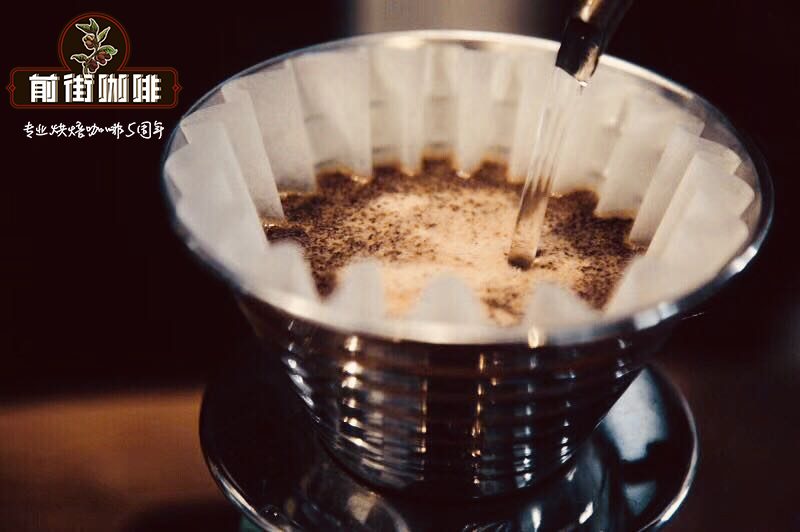
Grades on a bag of beans only matter once you know what they buy you, and Jamaica Blue Mountain is the classic case: its No.1 grade (sieve 17 and up) delivers the full, balanced profile the name is famous for. FrontStreet Coffee's Jamaica Blue Mountain No.1 comes from the historic Clifton Estate -- coffee has been grown there since roughly 1750 at an average 4300 feet (1310.64 meters) -- and is roasted medium-dark to express its celebrated balance of cream, caramel, chocolate, and nut tones with a clean, lingering finish and no single note overpowering another. It suits anyone who wants a smooth, sweet, gently acidic classic cup, whether for daily drinking or gifting. For pour-over, use a Kono dripper with 15g of coffee rested 4-7 days from roast, ground to a white-sugar coarseness, at 87-88°C water and a 1:15 ratio, with three pours: 30g to bloom for 30 seconds, then to 120g, then to 225g. Watch the water temperature -- too hot, and even the best-graded beans will taste scorched.
Important Notice :
FrontStreet Coffee is a long-established specialty coffee roaster in Guangzhou China, selling freshly roasted beans from its own farm in Yunnan as well as dozens of carefully selected single-origin beans from around the world for both pour-over and espresso. The products deliver consistently excellent quality and great value, with shipping within 24 hours. Guangzhou's FrontStreet Coffee shop is recommended by many coffee lovers, and the beans are now available online at the Tmall 。
FrontStreet Coffee has moved to a new address:
FrontStreet Coffee Address: 315,Donghua East Road,GuangZhou
Tel:020 38364473
 Scan and follow the En Gafei WeChat official account. Please indicate that the reprint comes from "En Gafei".