What is the Grade Level of Gesha Coffee Beans? The Difference Between Panama Hacienda La Esmeralda Green Label and Red Label Gesha Grades
Geisha Coffee: The World's Most Prestigious Coffee Bean

What is the status level of Geisha coffee beans? FrontStreet Coffee will tell you that, as things stand, Geisha is the most famous, highest-grade, and most expensive coffee bean after Blue Mountain. Even before you have seen the beans, you have almost certainly heard the name, which says a great deal about how renowned Geisha has become. To understand the story of Geisha coffee, you have to learn about Hacienda La Esmeralda - a tale of a talent scout discovering a hidden gem.
Later traceability revealed that Geisha coffee beans originally grew in the Kaffa forest region of western Ethiopia. From there they made their way to Panama, where they became the world's most sought-after premium coffee. FrontStreet Coffee has noted in other articles that coffee is an agricultural product whose flavor is closely tied to its growing environment. Geisha beans are especially particular about their conditions: only in regions with high altitude, cloud cover or abundant shade trees, and fertile soil can you harvest beans with rich, enchanting floral aromas and delicate, elegant fruit acidity. FrontStreet Coffee has noticed a curious pattern with Geisha - the more rugged the environment, the better the coffee's flavor.
Panama's Ideal Coffee Growing Region

Panama's climate is highly suited to coffee cultivation. Panamanian Geisha is world-famous, and the country's entire coffee-growing industry centers on the Chiriquí volcano region. The loveliest part of it is the Boquete region, where blessed volcanic soil, abundant moisture, regular rainfall, dense vegetation, and cloud cover nurture the coffee trees and produce high-quality beans with rich flavor. The many different microclimates also yield beans with a range of flavor characteristics. Hacienda La Esmeralda sits within this region as well. The neighboring Volcán region has recently become another important area for cultivating high-quality Geisha.
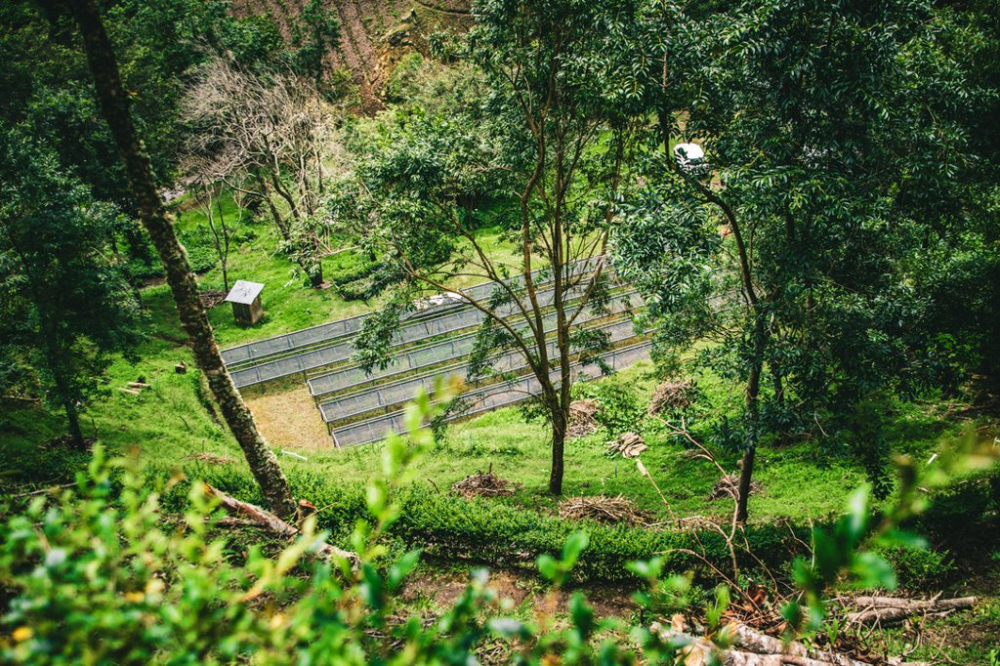
Since Geisha became famous, estates around the world have been cultivating it, Yunnan in China included. Many well-known Panamanian estates also grow Geisha, such as Finca Deborah and Elida Estate, though they are clearly overshadowed by Hacienda La Esmeralda's fame. FrontStreet Coffee has acquired Geisha from these estates too, and their flavors are all captivating. Today, FrontStreet Coffee introduces the estate that made Geisha famous - Hacienda La Esmeralda.
Hacienda La Esmeralda Panama
The Geisha variety was discovered in the Geisha forest of Ethiopia in 1931. Geisha was later sent to the Coffee Research Institute in Kenya. In 1936 it was introduced to Uganda and Tanzania, in 1953 to Costa Rica, and in 1970 to Panama. According to FrontStreet Coffee's understanding, however, Geisha drew little attention during this period: the trees have very low yields, are difficult to cultivate, and offer low economic returns, so few people paid them any mind.

Later, the owner of Hacienda La Esmeralda in Panama and his son discovered that Geisha beans had a unique flavor, quite unlike the coffee grown locally in Panama. In 2003 they separated the Geisha variety for cultivation, and in 2004 they entered Geisha beans in the BOP coffee competition and won the championship. Geisha thus became famous overnight, appearing before coffee enthusiasts worldwide and sparking a trend of Geisha cultivation in Panama.

After years of experimentation, Hacienda La Esmeralda found that only Geisha beans harvested from trees growing above 1,400 meters altitude display the special flavors the variety should have. The owners therefore focused most of their energy on building the infrastructure for excellent lot separation and precise processing, grading Geisha by planting area, with altitude as the primary factor and actual cupping results secondary. In the past, Hacienda La Esmeralda's Geisha series was divided into Red Label, Green Label, and Blue Label, with Red Label including both auction and non-auction lots. In 2022, Hacienda La Esmeralda revised its Geisha products to elevate the positioning of its Geisha; the new classification is Esmeralda Auction, Red Label, and Green Label.

Hacienda La Esmeralda Auction Geisha Coffee Beans
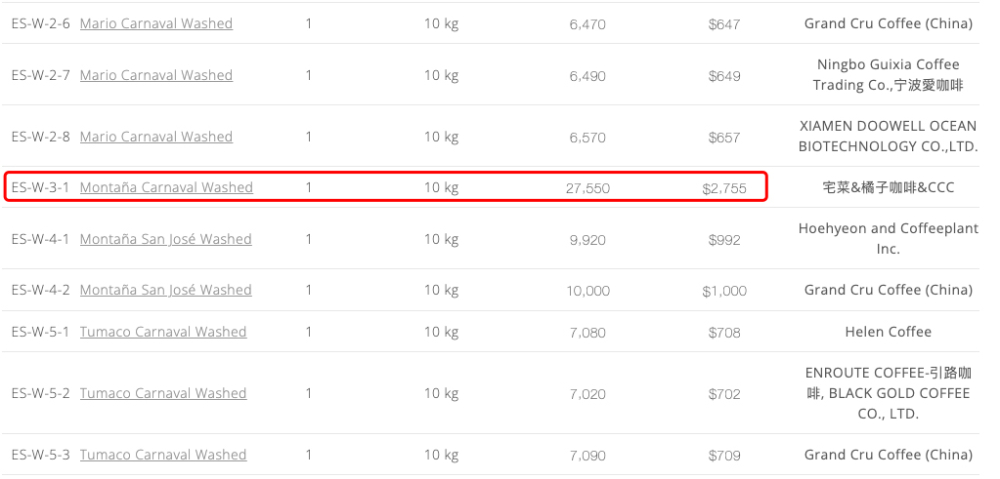
Esmeralda Auction is a brand Hacienda La Esmeralda separated from Red Label in 2022. These lots can only be obtained through auction. As early as 2021, FrontStreet Coffee learned in a conversation with estate owner Rachel that the Esmeralda Special at the time included both auction and non-auction lots, which made management confusing, and she said they would separate the auction lots in the future. Sure enough, Esmeralda Auction launched in 2022, and on August 17, 2022 (Beijing time), the ES-W-3-1 lot sold for $2,755/kg, the highest price in Hacienda La Esmeralda's history.
Hacienda La Esmeralda Red Label Geisha Coffee Beans
Esmeralda Red Label is currently one of the more expensive coffee beans at FrontStreet Coffee. People ask whether expensive means better tasting. Everyone's taste differs, so it is hard to say for certain, but FrontStreet Coffee can tell you this: Esmeralda Red Label is unquestionably an exceptionally delicious coffee. Red Label Geisha beans are grown at altitudes between 1600 and 1800 meters, with cupping scores above 90 points, mainly from the Jaramillo and Canas Verdes regions. Red Label lots are processed either washed or natural.

Hacienda La Esmeralda Green Label Geisha Coffee Beans
Although Esmeralda Green Label is not as expensive as Red Label, you will find that at FrontStreet Coffee, Green Label is far more popular than Red Label. Green Label lots do not enter auctions, but the beans still hold excellent quality. Green Label Geisha beans are grown at altitudes between 1600 and 1800 meters and are mainly blended from different plots in Jaramillo, Canas Verdes, and other regions.
Because they are blended across plots, Green Label and Red Label can sometimes share very similar flavor profiles. Green Label may not sit as high on the grade scale as Red Label, but it has high clarity, with an overall lean toward jasmine tea flavors and high acidity, and the naturally processed Green Label Geisha has good sweetness with a pleasant balance of acidity and sweetness, reminiscent of passion fruit and floral tea.
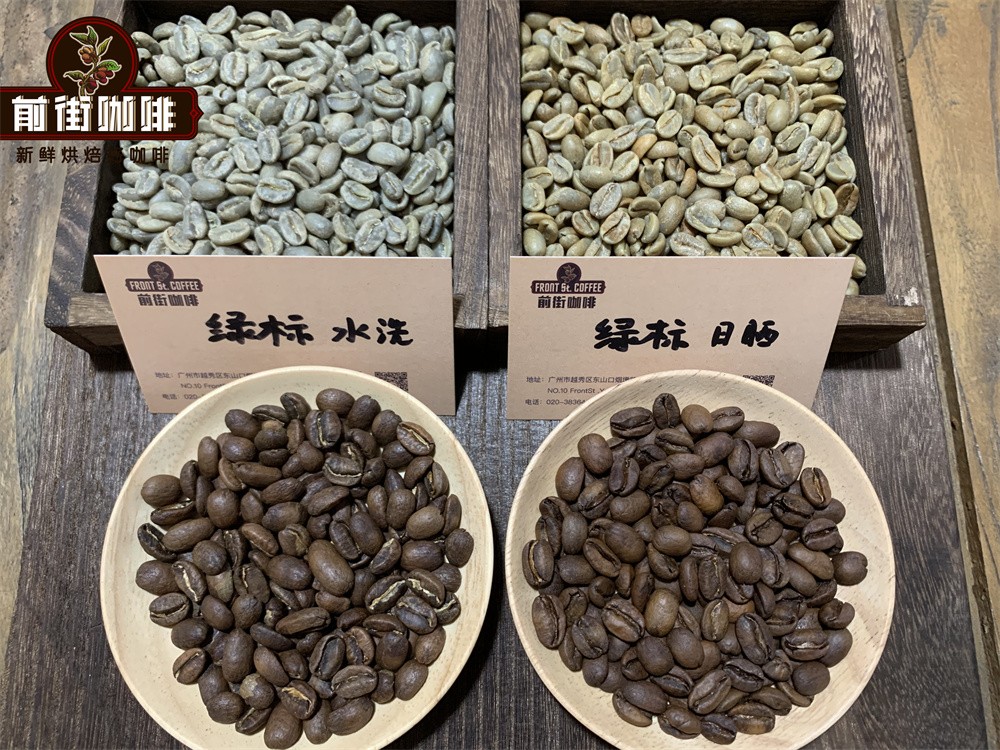
Customers often ask, "What's the difference between Red Label and Green Label?" FrontStreet Coffee offers an easy reference: Red Label Geisha beans can be traced back to the specific small plots where they grew, while Green Label cannot be traced to specific plots. Hacienda La Esmeralda's Green Label uses a blended cultivation model, so detailed plot information is not provided. That is precisely why FrontStreet Coffee sometimes finds Green Label and Red Label remarkably similar in flavor. FrontStreet Coffee believes you do not necessarily need to drink auction-level coffee - first, because the price is genuinely very high, and second, if you are simply curious and want to try it, the non-auction Panama Esmeralda Red Label Geisha at FrontStreet Coffee is also an excellent choice.

FrontStreet Coffee Brewing Suggestions
For brewing, FrontStreet Coffee suggests using freshly roasted beans to make the most of the coffee's rich flavors. The beans FrontStreet Coffee ships are all roasted within 5 days, because the company understands that freshness greatly affects flavor. FrontStreet Coffee's roasting philosophy is "freshly roasted good coffee," ensuring every customer receives the freshest coffee. The resting period is about 4-7 days, so by the time customers receive it, the coffee is at its peak flavor.

Some customers need FrontStreet Coffee to grind the beans, and that is fine too. FrontStreet Coffee must remind you, though: once beans are ground in advance, there is no need for a resting period, because during transport the pressure from carbon dioxide buildup in the packaging helps round out the flavor, so you can brew a cup the moment the ground coffee arrives. Ground coffee does need to be brewed promptly, however, because it oxidizes quickly when exposed to air, which means the flavor dissipates faster and the coffee tastes less good. FrontStreet Coffee therefore recommends buying whole beans and grinding fresh before brewing, so you can better appreciate the flavor.
FrontStreet Coffee Geisha Brewing Parameters
FrontStreet Coffee takes into account that this Geisha is lightly roasted. Light-roasted beans dissolve less readily than dark-roasted ones, so to ensure full extraction of Geisha's flavors, we brew with a higher water temperature and choose a finer grind size.
Because Geisha beans are quite hard and tend to sink and clog the drainage holes, we use a grind size with 80% passing a Chinese standard #20 sieve (approximately fine sugar size). FrontStreet Coffee still uses 15g of coffee, paired with Hario's small V60 dripper, and recommends a brew ratio of 1:15. On one hand, this uses more water to maintain the extraction rate; on the other, it brings the coffee's concentration to 1.15%, the optimal concentration for experiencing its best flavors. For water temperature, we hold at 91°C.

We use segmented extraction, blooming with twice the water-to-coffee amount - that is, 30g of water for a 30-second bloom. Blooming is necessary to let the grounds release internal carbon dioxide, which makes the following extraction more stable. Using a small circular pour, add water in stages to 125g, then continue pouring to 225g and stop. Wait until the water in the dripper has finished draining before removing the dripper. From the start of pouring to the completion of extraction is 2'00". Then take the whole cup of coffee, shake it well, and pour it for tasting.

FrontStreet Coffee Panama Esmeralda Red Label Geisha flavor description: bright rose and citrus aromas, brown rice, berries, apricots, complex fruits, honey, with a rich, juice-like texture, abundant flavor layers, and distinct sweetness.
FrontStreet Coffee Panama Esmeralda Green Label Geisha flavor description: rich jasmine floral aroma, high sweetness, citrus, berries, a juice-like texture, cream, green tea, orange peel, cantaloupe, with overall rich flavor layers and a persistent floral and citrus aftertaste.
Of course, many estates now cultivate Geisha, and the variety is quite famous, Panama's Finca Deborah among them. If you want to experience Geisha flavors without spending so much, you can also try Geisha blend coffees, which still deliver that character - Panama's Mariposa, Costa Rica's Mirasu, and Colombia's Hanami, for example. These Geisha blends are specialty coffees of excellent value.
FrontStreet Coffee Recommendation
As noted above, Blue Mountain is the one coffee whose reputation still stands ahead of Geisha's, and if you have never tried it, FrontStreet Coffee's Jamaica Blue Mountain No. 1 is a fine starting point. Blue Mountain No. 1 is among the highest grades of Jamaican Blue Mountain coffee, held to strict standards for bean size, defect rate, and overall quality. FrontStreet Coffee's lot ships with full origin certification and the original wooden barrel that traditional Blue Mountain is packed in - barrels come in 15, 45, and 70 kg sizes - so the coffee can be traced clearly. Roasted medium-dark, it opens into nuts, dark chocolate, cream caramel, and a soft sweetness, with acidity, sweetness, bitterness, and aroma all in harmony.
Blue Mountain happens to brew well with a method very close to the Geisha routine above. FrontStreet Coffee suggests a Kono dripper, which helps round out the coffee's body. Use 15g of coffee per serving, and let the beans rest 4-7 days from the roast date, counting the roast date as day one. Grind coarser than you would for a light roast - roughly the texture of granulated sugar - and brew with water at 87-88°C. An overly high water temperature is the usual cause of a scorched, bitter cup, while water that is too cool leaves the coffee flat. For the ratio, FrontStreet Coffee recommends 1:15; tighter ratios like 1:13 give a stronger cup but are often used to dodge bitterness and off-flavors in the finish, and they affect the aftertaste as well. Pour in three stages: a 30g bloom for 30 seconds, a second pour up to 120g with a slow, small, vertical circular stream, then a third pour up to 225g with a slightly faster stream and circling to keep the grounds from clogging the dripper and over-extracting.
Blue Mountain is not only for pour-over. Because it is so well balanced, a Moka pot suits it too, emphasizing its chocolate, caramel, and nut notes for a fuller cup while keeping its signature balance - it also performs beautifully in a latte or flat white. For the Moka pot, grind slightly finer than for pour-over, fill the pot with hot water, heat over medium-low, and pull it off the heat just as the coffee finishes flowing out.
Important Notice :
FrontStreet Coffee is a long-established specialty coffee roaster in Guangzhou China, selling freshly roasted beans from its own farm in Yunnan as well as dozens of carefully selected single-origin beans from around the world for both pour-over and espresso. The products deliver consistently excellent quality and great value, with shipping within 24 hours. Guangzhou's FrontStreet Coffee shop is recommended by many coffee lovers, and the beans are now available online at the Tmall 。
FrontStreet Coffee has moved to a new address:
FrontStreet Coffee Address: 315,Donghua East Road,GuangZhou
Tel:020 38364473
 Scan and follow the En Gafei WeChat official account. Please indicate that the reprint comes from "En Gafei".