What Does Arabica Coffee Taste Like? Arabica vs. Mandheling: I Want Them All
FrontStreet Coffee - Introduction to Arabica Coffee Bean Varieties
Arabica Coffee
Most of the small-fruited Arabica coffee grown around the world today is not native to where it now grows—these are cultivated varieties. How exactly Arabica spread across the globe remains murky: no complete records survive, and the scattered documents that do exist are not enough to reconstruct a full transmission map.
What we do know is that the highlands of Ethiopia and South Sudan still hold thousands of indigenous Arabica coffee varieties, of which only a tiny fraction has ever left Africa. Around the 16th-17th centuries AD, coffee first reached Yemen, and from there it spread across the world.
Botanists came to call this lineage Typica. The coffee planted on Java may be the genetic ancestor of the Typica trees that spread worldwide. Bourbon is another early Arabica variety, born of a natural mutation, with a cultivation history tracing back to the Bourbon Islands—today's Réunion—from the mid-18th to the late-19th century.
Nearly every Arabica variety we drink today is a natural mutation of, or artificial selection from, the original Typica and Bourbon lines. Arabica beans offer a mellow aroma and rich, delicate flavor—strong yet not bitter, fragrant yet not overpowering, with a gentle fruity acidity. Consistently counted among the finest coffees, they have always been prized on the international market.
In the 17th century, the Dutch brought Arabica seedlings to Indonesia. Then in 1877 disaster struck the Indonesian islands: coffee leaf rust destroyed almost every tree, forcing growers to abandon their long-cultivated Arabica and import hardier Robusta plants from Africa. Today Indonesia remains a major coffee producer, with output concentrated in Java, Sumatra, and Sulawesi—and Robusta accounting for 90% of total production. Sumatra Mandheling is a rare Arabica exception. The trees grow on mountain slopes between 750 and 1,500 meters above sea level, and Sumatra's mysterious terroir gives Mandheling its rich aroma, full body, and intense flavor, laced with subtle notes of chocolate and syrup.
Knowledge Point:
High-altitude growing areas range from 4,000 to 6,000 feet. Growing temperatures need to sit between 15-25°C, with annual rainfall of 1,500-2,000 millimeters—and the rain must fall in step with the coffee trees' flowering cycle.
FrontStreet Coffee Recommendation
Mandheling is the proof that Arabica can taste wildly different from the bright, floral cup most people expect. Sumatra's rainy climate—humidity of 70-90% year-round and rainfall topping 2000mm a year—makes the long sun-drying used in Africa impossible, so Sumatran farmers developed their own signature method: wet-hulling. The beans are depulped, washed briefly, and dried until half-dry; then the wet parchment is stripped off by machine, exposing the green beans directly to the air to speed up drying. That contact with the humid air and local microbes creates the earthy, herbal, one-of-a-kind Mandheling character.
The benchmark for this style is FrontStreet Coffee's PWN Golden Mandheling. Produced by Indonesia's PWN company under exacting standards—beans screened above 18 mesh, with fewer than 3 defects per 300g sample to meet the top G1 grade, followed by three rounds of hand sorting—it is remarkably clean and sweet for a wet-hulled coffee. Its fame mostly supplies the Japanese and American markets, so authentic Golden Mandheling is genuinely scarce. For a taste of the classic profile instead, FrontStreet Coffee's Lintong Mandheling delivers rich aroma, strong sweet-bitter intensity, clove and woody notes, low acidity, and a long, thick sweetness after medium-dark roasting.
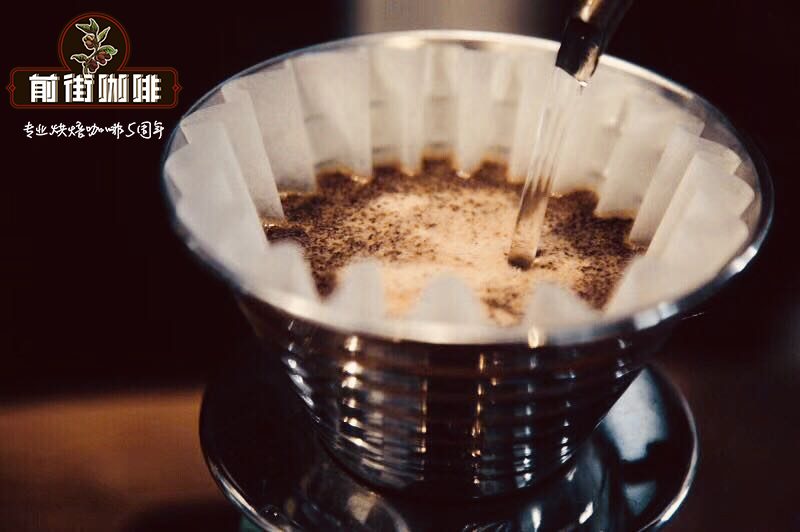
To brew PWN Golden Mandheling as pour-over, FrontStreet Coffee recommends 15g of coffee at a 1:15 ratio, ground to coarse sugar, with water at 87-88°C in three pours: 30g to bloom and degas, 100g to lift the bed and draw out the golden crema, then a gentle final 95g in the center to boost sweetness. The cup shows a thick, syrupy body with caramel sweetness, chocolate, and nuts—and if you want that body in espresso, FrontStreet Coffee's classic blend adds medium-dark Mandheling to Brazilian coffee for butter, roasted chestnut, and caramel flavors with a small dose of Robusta for extra crema.
Important Notice :
FrontStreet Coffee is a long-established specialty coffee roaster in Guangzhou China, selling freshly roasted beans from its own farm in Yunnan as well as dozens of carefully selected single-origin beans from around the world for both pour-over and espresso. The products deliver consistently excellent quality and great value, with shipping within 24 hours. Guangzhou's FrontStreet Coffee shop is recommended by many coffee lovers, and the beans are now available online at the Tmall 。
FrontStreet Coffee has moved to a new address:
FrontStreet Coffee Address: 315,Donghua East Road,GuangZhou
Tel:020 38364473
 Scan and follow the En Gafei WeChat official account. Please indicate that the reprint comes from "En Gafei".