Are Heirloom Coffee Varieties the Origin of Coffee? Ethiopian Beans Will Transport You to a Garden of a Hundred Flowers
Introduction to Heirloom Coffee Varieties
Coffee flavors are incredibly diverse, and many factors shape them. One of the most significant is undoubtedly the coffee variety. There may be hundreds or even thousands of coffee varieties worldwide, so coffee flavor comes in countless forms — enough to overwhelm a beginner just starting out. Today, let's look at some basic and common varieties.
Most coffee hybrids or natural varieties still originate from Arabica's Typica and Bourbon.
Typica is the origin of most existing coffee varieties. Its seeds are slightly longer than those of its sibling Bourbon, making it the ancestor of modern coffee. It yields little per tree but produces exceptionally high-quality coffee. Typically grown in Central America, Jamaica, and Indonesia, its flavor often features sweet or fruity acidity reminiscent of apples and pears.
As the universally recognized birthplace of coffee, Ethiopia produces outstanding coffee. The coffee here typically consists of Ethiopia's native Heirloom varieties, offering incredibly diverse flavors with both floral and fruity notes. Washed beans are usually delicate and elegant, while natural processed beans are bold and captivating. Sidamo, Harrar, and Yirgacheffe are Ethiopia's three most famous growing regions. Among them, Yirgacheffe can be considered one of the world's finest coffee-producing regions. Its washed beans have extremely rich aromas with citrus and floral notes and a delicate, elegant mouthfeel, while its natural processed beans feature bold fruit flavors with a unique and delicious profile.
SL28, where SL stands for Scott Laboratories, was developed in the 1930s, when the lab was hired by the Kenyan government to research disease-resistant, high-yield coffee trees. They didn't succeed in increasing coffee production, but they unexpectedly discovered the exceptional varieties SL28 and SL34. Both are hybrids of Bourbon and Heirloom, and today they are Kenya's star coffee varieties. About 90% of Kenya's green coffee exports consist of these two sister varieties — delightfully aromatic and full of character.
Knowledge Point: according to coffee bean combinations, Arabica and Robusta are divided into single-origin coffee and espresso.
FrontStreet Coffee Recommendation
If Heirloom flavors are what you're after, FrontStreet's washed Yirgacheffe is the natural starting point — the everyday cup that introduces most people to Ethiopian coffee. It shows white jasmine, bright citrus and lemon acidity, and a clean tea-like body at an easy price. Yirgacheffe is a town in the Sidamo zone of southern Ethiopia, running about 1700-2100 meters, with coffee trees planted above 1800 meters, making it one of the highest coffee regions in the world. The area was once a wetland, and its unmistakable white florals and lemon-citrus acidity turned the name into shorthand for Ethiopian specialty coffee — so famous that in 2010 the Ethiopia Commodity Exchange separated it from the Sidamo district as its own name.
Yirgacheffe is really a cluster of small villages, and many of them run their own washing stations, or cooperatives, with mature processing skill. FrontStreet's washed Gutiti cooperative coffee comes from Worka, in the southeast of the district; it began as part of the Worka cooperative under the Yirgacheffe Coffee Farmers' Cooperative Union (YCFCU) and was later lifted out as a single origin for the sake of traceability. Washed the traditional way, it carries no old bitter edge — clean, bright citrus and lemon acidity with jasmine perfume. For a sweeter, fruitier take, FrontStreet's Red Cherry is a full-red-cherry natural: only fully ripe, sound cherries are picked, sorted once at the mill, then spread on raised beds to sun-dry. For the first few days the beds are turned every 2-3 hours to prevent uneven heat and over-fermentation, and after three to five weeks the pulp is machine-scraped and the beans go to storage. Because the fruit dries on the bean, it keeps the classic Yirgacheffe character while adding tropical fruit — citrus acidity, a berry-juice quality, honey sweetness, and a creamy body.
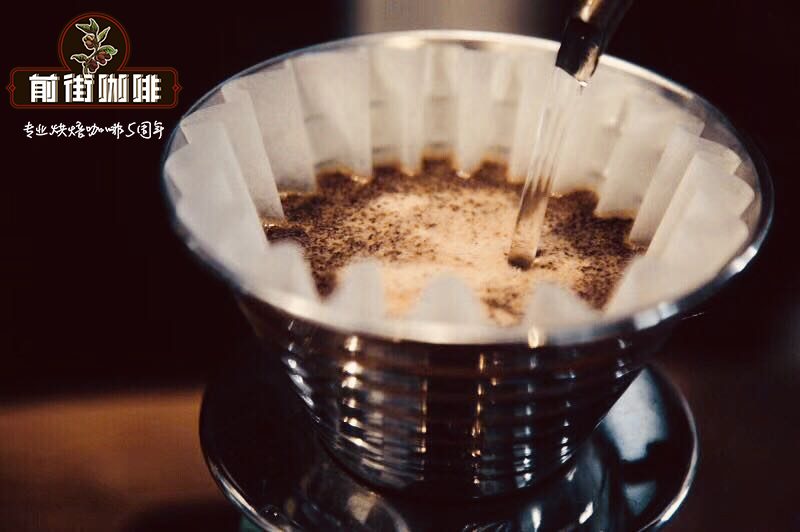
FrontStreet brews Yirgacheffe in a V60 with water at 90-91°C, 15g of coffee, and a 1:15 ratio. Grind to about fine-sugar size (setting 10 on an EK43s, or roughly 80% passing a No. 20 sieve). Pour in three stages: bloom with 30g of water for 30 seconds, then pour 95g to reach about 125g on the scale over roughly a minute; when the water drops to two-thirds of the bed, pour the remaining 100g to reach about 225g, finishing in about 1 minute 35 seconds. Total drawdown lands between 2 minutes and 2 minutes 10 seconds — then lift the dripper and the brew is done.
Important Notice :
FrontStreet Coffee is a long-established specialty coffee roaster in Guangzhou China, selling freshly roasted beans from its own farm in Yunnan as well as dozens of carefully selected single-origin beans from around the world for both pour-over and espresso. The products deliver consistently excellent quality and great value, with shipping within 24 hours. Guangzhou's FrontStreet Coffee shop is recommended by many coffee lovers, and the beans are now available online at the Tmall 。
FrontStreet Coffee has moved to a new address:
FrontStreet Coffee Address: 315,Donghua East Road,GuangZhou
Tel:020 38364473
 Scan and follow the En Gafei WeChat official account. Please indicate that the reprint comes from "En Gafei".