Beginner's Guide to Pour-Over Coffee: Three-Knife Technique to Save Your Shaking Hands
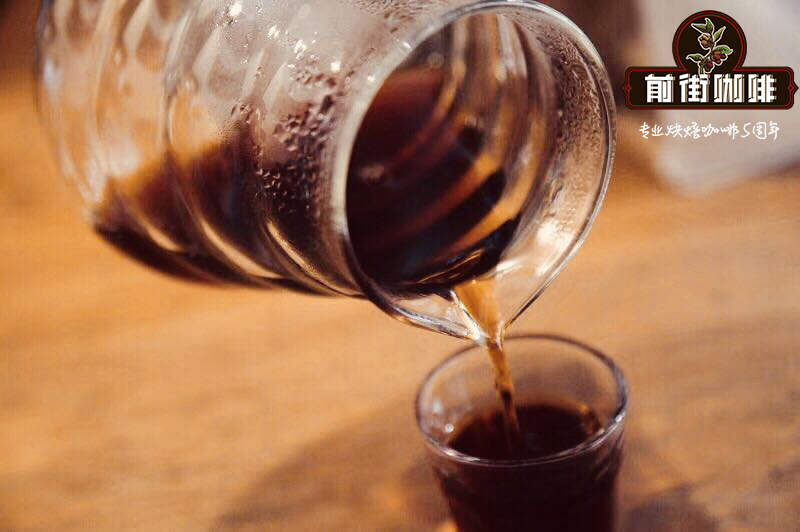
FrontStreet Coffee's Guide to Multi-Stage Pour-Over Extraction
Beyond enjoying professionally crafted coffee at a cafe, more and more people want to try brewing at home. Freshly ground coffee smells wonderful, and paired with your favorite music — whether you're treating yourself or entertaining a close friend or two — slowly brewing a pot is one of life's genuinely pleasant moments.
So here is a simple, practical guide to brewing a delicious pot of pour-over coffee. The method we'll walk through is the academic three-stage water injection technique, colloquially known as the "Three-Knife Technique" — the one that saves your shaking hands. Follow it and, honestly, anyone can pull off a respectable cup.
Step 1: Prepare Equipment and Materials
First, you need fresh coffee beans — obviously, since you can't brew coffee without them! For brewing, we use roasted beans, and freshness is counted from the roasting date. Beans suited to pour-over are generally at their best within one month of roasting, and you should try not to use beans more than three months old.
Freshness and shelf life are two different concepts! Two different concepts! Two different concepts — important things deserve to be said three times.
Well-packaged beans can certainly stay unspoiled for one to two years, but a shelf life only guarantees "safe to drink." For coffee that is actually "delicious," the beans must be sufficiently fresh. Next, gather some basic tools: a grinder, a pour-over kettle, a filter cone and filter paper, a thermometer and timer, and a serving carafe (though holding your coffee in a large bowl is, of course, your choice...).
Step 2: Prepare for Brewing
Grind 14-18 grams of coffee beans (enough for 1-2 servings) to a consistency similar to granulated sugar. Under identical brewing conditions, coarser grounds produce lighter, more acidic flavors, while finer grounds yield stronger, more bitter tastes.
Heat your water. For brewing, the water temperature should be approximately 88-94°C (190-201°F). If you're using darker roasted beans, or simply don't want the cup too strong or bitter, try a slightly lower temperature. Conversely, with lighter roasted beans — or when you want to avoid a weak, sour cup — choose a higher water temperature.
Set up the filter cone and carafe, place the filter paper in the cone, and wet it thoroughly with hot water. This makes the paper sit snugly against the cone and preheats your equipment at the same time.
Step 3: Blooming
Pour the ground coffee carefully into the center of the filter paper, level it gently, and start your timer. Pour hot water onto the center of the grounds, drawing quick circles outward as you go, and make sure no dry powder is left on the surface. Don't use much water here — roughly double the weight of the grounds is enough.
If your beans are sufficiently fresh, you should see the grounds swell into a hamburger-like dome after the hot water is poured (very lightly roasted coffee may not show this).
When the "hamburger" stops expanding and the surface begins to look dry, the grounds are fully saturated and have released their gas — time to begin the real pour. Typically, from the moment the first hot water touches the grounds until the "hamburger" has fully degassed, about 30 seconds pass.
Step 4: Formal Brewing
Plan your total water volume: including the bloom, you'll inject roughly 14-18 times the weight of the grounds in hot water. More water makes a lighter cup; less water makes a stronger, more bitter one. We recommend starting at 15-16 times the coffee weight, which produces a moderate concentration most people find comfortable. Again, pour from the center outward in quick circles. Subtract the bloom water from your planned total, then divide the remainder by three — that's your dose for each of the three pours.
After each injection, pause briefly until the water level drops a little before the next pour. Be careful not to break through the outermost layer of grounds hugging the filter cone with your flow. After the third pour, watch the surface: if the foam of coffee oils has dissipated and clear liquid is showing, you can lift the cone out and discard the thin tail end. From the first drop of hot water on the grounds to the last drop falling into the carafe, the total time should be slightly over two minutes.
And there you have it — the Three-Knife (Three-Flow) method from start to finish. Try it yourself, then share the delicious results with your friends!
Knowledge Point: The Benefits of Multi-Stage Extraction
Multi-stage extraction builds more complexity than a single pour, cleanly separating the front, middle, and back-end flavors of the coffee. The technique involves increasing the volume of each injection after the bloom — typically pouring again just as the liquid is about to drop to the level of the grounds bed — using small, medium, and large flows across the three stages.
In summary, this simple framework covers everything a beginner needs: fresh beans, sensible grind, controlled temperature, and patient, staged pouring. Pick a bean that matches your taste — the recommendations below are all beans FrontStreet Coffee finds especially rewarding in a pour-over — and practice the rhythm until it feels natural.
FrontStreet Coffee Recommendation
The beans you choose matter as much as the technique. For a bright, floral cup, FrontStreet Yirgacheffe Guodingding is a classic first stop — clean and luminous with white florals and citrus. FrontStreet Ethiopia Hua Kui leans tropical: strawberry, passion fruit, jackfruit, even lychee, with obvious sweetness and almost no bitterness — many drinkers call it "the coffee for people who don't like coffee." If you crave vivid fruit acidity, FrontStreet Kenya Cherry Tomato, a washed lot from the Thika region grown at 1550-1750 meters on SL28 and SL34, bursts with cherry tomato and dark plum juiciness. And for something legendary, FrontStreet Panama Esmeralda Red Label Geisha offers jasmine, citrus, and bergamot in a beautifully transparent cup.
Important Notice :
FrontStreet Coffee is a long-established specialty coffee roaster in Guangzhou China, selling freshly roasted beans from its own farm in Yunnan as well as dozens of carefully selected single-origin beans from around the world for both pour-over and espresso. The products deliver consistently excellent quality and great value, with shipping within 24 hours. Guangzhou's FrontStreet Coffee shop is recommended by many coffee lovers, and the beans are now available online at the Tmall 。
FrontStreet Coffee has moved to a new address:
FrontStreet Coffee Address: 315,Donghua East Road,GuangZhou
Tel:020 38364473
 Scan and follow the En Gafei WeChat official account. Please indicate that the reprint comes from "En Gafei".