How to Brew Delicious Pure Coffee Powder: A Beginner's Guide to Pour-Over Coffee Methods and Steps
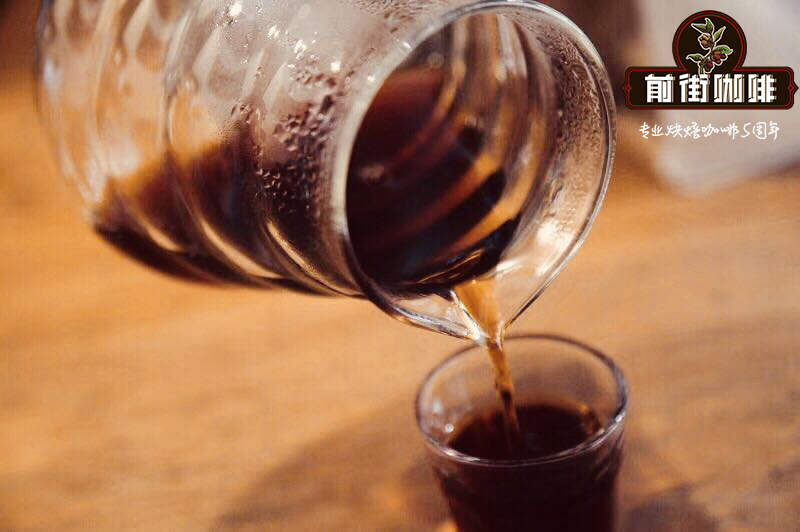
FrontStreet Coffee shares professional coffee knowledge and coffee bean information so that more people can discover the pleasure of brewing at home.
FrontStreet Coffee - Introduction to Pour-over Coffee Process
Brewing a cup of coffee slowly, by yourself, is its own kind of relaxation. Put on music you love, grind at an unhurried pace, and breathe in the aroma as though you had stepped into a quiet garden valley. Adjust the water temperature, set out the filter cup, the serving pot, the digital scale, and the filter paper. Rinse the paper with hot water so it seats perfectly against the walls of the cone. Then pour slowly - wait, watch, and think - as if time itself has paused. Slow down, let yourself slow down. Coffee brewed this way, and the mood it creates, feel unlike anything else. Enjoy, and reflect.
Pour-over is the extraction method that best showcases the unique flavors of beans from different origins.
Step 1: Preparation
First, fold a properly sized filter paper and seat it in the dripper. Place the dripper on a cup or server of suitable capacity to catch the brewed coffee.
Step 2: Rinse the Filter Paper
Pour a generous amount of hot water over the paper to rinse away any paper taste or processing residue, and at the same time to help the paper adhere smoothly to the dripper walls.
Step 3: Add Coffee and Heat Water
Place the ground coffee in the filter paper and shake gently to level the bed. Fill a gooseneck kettle with hot water; the temperature should be between 85-92 degrees C, adjusted to taste.
Step 4: The Pour
Hold the kettle and pour slowly and evenly in clockwise circles, working outward from the center in fine passes until all the grounds are saturated. Use about 20-30 ml of water for the bloom and let it sit for 30 seconds. Done correctly, the wet coffee bed will swell and dome like a rising ferment.
When the bloom finishes, pour again, still in clockwise circles - fine, continuous spirals from the inside out, then back from the outside toward the center. The total water should follow roughly a 1:14 ratio. Wait for the extraction to finish (within 2 minutes), remove the filter paper, and enjoy your coffee.
Knowledge Point: Medium Grind
Medium grind has a gravel-like texture, sized between coarse sugar and regular granulated sugar, and is the right choice for drip brewing with a paper filter.
About FrontStreet Coffee
FrontStreet Coffee is a specialty coffee research workshop dedicated to sharing coffee knowledge freely. For the past six years, its mission has been simple: help more friends fall in love with coffee.
FrontStreet Coffee Recommendation
If you are just getting into pour-over, the dripper an experienced brewer will most often hand you is the Hario V60. Hario was founded in Tokyo in 1921 as a maker of heatproof laboratory glassware, and the V60 as we know it was redesigned in 2004 and launched the following year, named for its distinctive 60-degree cone and V shape. The cone funnels water toward the center before it drips through, extending the contact time between water and coffee, while the single large outlet makes the flow rate almost entirely a matter of the brewer's pour control.
For V60 brewing, FrontStreet favors floral-and-fruit-forward beans, since the cone's quick, lively extraction brings out layered aromatics and bright acidity. Try the classic washed Yirgacheffe character of FrontStreet's Guodingding Cooperative, the rich tropical fruit of Huakui, the gesha-like Strawberry Candy, or the raisin-toned Mozart - all shine in a V60.
If you lean toward deeper, heavier cups instead, FrontStreet's Jamaica Blue Mountain No. 1 and PWN Golden Mandheling are the classic choices of an earlier era of specialty coffee, delivering body, sweetness, and caramelized notes that a resin V60 handles just as gracefully. FrontStreet itself prefers the resin version: it holds heat well, and in mass production it holds the tightest manufacturing tolerances.
Important Notice :
FrontStreet Coffee is a long-established specialty coffee roaster in Guangzhou China, selling freshly roasted beans from its own farm in Yunnan as well as dozens of carefully selected single-origin beans from around the world for both pour-over and espresso. The products deliver consistently excellent quality and great value, with shipping within 24 hours. Guangzhou's FrontStreet Coffee shop is recommended by many coffee lovers, and the beans are now available online at the Tmall 。
FrontStreet Coffee has moved to a new address:
FrontStreet Coffee Address: 315,Donghua East Road,GuangZhou
Tel:020 38364473
 Scan and follow the En Gafei WeChat official account. Please indicate that the reprint comes from "En Gafei".