Introduction to Indonesian Sumatra Mandheling Coffee Beans - Are Mandheling Coffee Beans Arabica?
Sumatra Mandheling: An Introduction
The Origin of Mandheling Coffee
The most renowned Sumatran Mandheling comes from the island of Sumatra in Indonesia. Among the premium traditional Arabica coffees produced in northern Sumatra, the finest are marketed as Lintong and Mandheling. Lintong refers to coffee grown in a small area within the Lintong administrative district, southwest of Lake Toba. Mandheling is the broader term, covering Lintong coffee along with similar coffees from the Diari region and the growing areas north of Lake Toba.
What Is Mandheling Coffee?
Mandheling is produced in Sumatra, in Asian Indonesia, and is also known as Sumatran coffee. It has a very rich flavor and is regarded as one of the mellowest coffees in the world.
Historical Background
In the 17th century, the Dutch brought Arabica seedlings to Ceylon, today's Sri Lanka, and to Indonesia. In 1877 a large-scale disaster struck the Indonesian islands: coffee leaf rust destroyed almost every coffee tree, forcing growers to abandon the Arabica varieties they had cultivated for years and to introduce Robusta trees from Africa, which were more resistant to disease.
How Mandheling Is Processed
Mandheling's processing method removes the mucilage layer while the parchment beans are still moist, then dries them only slightly. At that point the parchment coffee reaches a moisture content of about 18%, and the export merchants who buy the wet parchment finish the job in large drying fields or with machine dryers until the moisture content reaches 12% for storage. Because coffee farmers lack the hardware to complete the drying themselves, Mandheling's process is split into three stages of labor across farmers, brokers, and exporters. This division of labor is rare in the world, and it is what creates Mandheling's special characteristics: low acidity, thickness, and a mellow aroma.
Flavor Profile
Mandheling is considered one of the mellowest coffees in the world. Tasting it, you feel a distinct smoothness on the palate. It also has lower acidity, though that acidity can still be clearly tasted. A lively micro-acidity mingles with the richest aroma, so you easily sense the bright notes within the gentle richness. The coffee also carries a faint earthy aroma, which some describe as the fragrance of herbs.
Knowledge Point
Mandheling beans are relatively large and hard in texture, and they are prone to defects during the growing process. After harvesting, they therefore usually undergo strict hand sorting.
FrontStreet Coffee Recommendation
If the mellow, low-acid character of Mandheling is what you are after, the highest grade available is Golden Mandheling. FrontStreet Coffee's Golden Mandheling comes from the Indonesian company PWN, which applies unusually strict standards: beans must be 18 mesh or larger, and no more than 3 defective beans may appear in a 300g green-bean sample, which satisfies the top G1 grade. On top of that, the beans pass through three rounds of hand sorting that remove every remaining defect, improving both the cleanliness and the intensity of the sweetness. Because those standards are so demanding, supply is limited, and the coffee has become one of the benchmarks of Mandheling.
FrontStreet Coffee's Lintong Mandheling and PWN Golden Mandheling come from the Lintong growing area and the Aceh growing area of Sumatra respectively, and both are roasted medium-dark. The aim is to present black chocolate and caramel while preserving Mandheling's wild herbal note, a fragrance that grows out of Sumatra's environment and its wet-hulled processing. That method, developed because Sumatra's rainy season overlaps the harvest and makes sun-drying impractical, removes the parchment while the beans are still half wet and half dry, exposing the green beans to the air to speed drying while they also absorb microbes from it, which is exactly what produces the wild, earthy, herbal character.
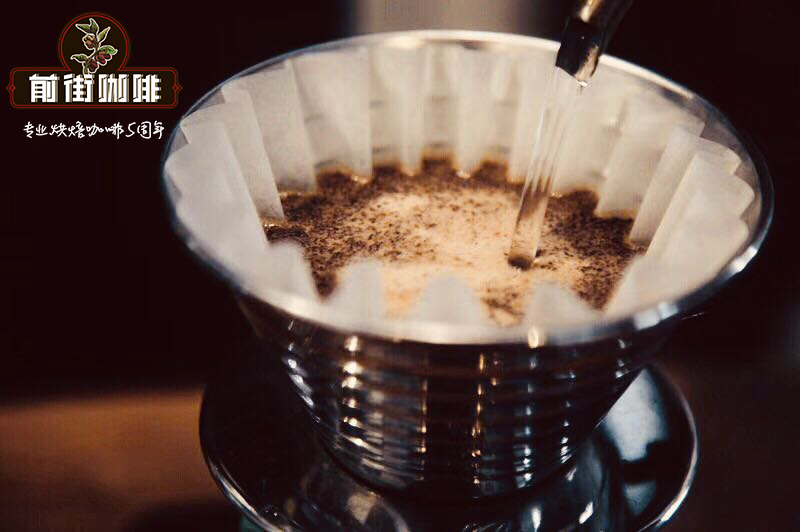
For pour-over, FrontStreet Coffee suggests 87-88 degrees Celsius water, 15 grams of coffee, a 1:15 ratio, and a coarse-sugar grind, poured in three stages. Bloom with 30ml of water to wet all the grounds and let them degas, pour 100ml for the second stage to lift the bed and bring out the golden foam, then finish with a gentle 95ml pour toward the center to raise the sweetness. The result is a thick, full body with caramel sweetness and chocolate and nut flavors. If you want to use it on an espresso machine instead, the Classic Blend pairs Brazil's creamy, nutty base with a medium-dark Mandheling, which lifts the body and adds sandalwood, herbal, and spice notes, while a small proportion of Robusta deepens the crema.
Important Notice :
FrontStreet Coffee is a long-established specialty coffee roaster in Guangzhou China, selling freshly roasted beans from its own farm in Yunnan as well as dozens of carefully selected single-origin beans from around the world for both pour-over and espresso. The products deliver consistently excellent quality and great value, with shipping within 24 hours. Guangzhou's FrontStreet Coffee shop is recommended by many coffee lovers, and the beans are now available online at the Tmall 。
FrontStreet Coffee has moved to a new address:
FrontStreet Coffee Address: 315,Donghua East Road,GuangZhou
Tel:020 38364473
 Scan and follow the En Gafei WeChat official account. Please indicate that the reprint comes from "En Gafei".