Relationship Between Arabica Coffee Beans and Blue Mountain Coffee Beans: Origin and Flavor of Jamaican Blue Mountain Coffee
FrontStreet Coffee - Arabica Coffee and Blue Mountain Coffee Introduction
The first type is Arabica beans. World-renowned coffees such as Blue Mountain and Mocha are almost entirely of the Arabica variety. Another type is Robusta, whose coffee tree originates in the Congo in Africa. Different varieties of coffee beans taste different, but even trees of the same variety produce beans with unique flavors under the influence of different soils and climates. The other two types are Liberica and Excelsa.
The Typica variety is regarded as the prototype of all variants and genetic selections. The Netherlands was the first country to spread coffee around the world for commercial cultivation, and Typica was the variety in question. Typica fruits are usually red, and their flavor in the cup is outstanding too, though the trees yield less fruit than other varieties. Many coffee-producing countries still grow Typica today, and it goes by different names in different places, such as Criollo, Sumatra, and Arabigo.
Blue Mountain coffee is a transplanted cultivation of the Typica variety.
The Blue Mountain Range lies in eastern Jamaica, and its peaks rise above 1,800 meters. The renowned Blue Mountain coffee grows in this mountainous area. Mavis Bank sits within Jamaica's legally designated Blue Mountain region and is one of the Jamaican government-certified green bean processing plants, run by the Moon family since 1885. To be called Blue Mountain coffee, beans must be grown between 900 and 1,500 meters above sea level in one of several administrative areas, Portland, St. Andrew, St. Mary, or St. Thomas, and that is what constitutes Blue Mountain No. 1.
Coffee grown at this altitude is very dense and packed with the flavors so many of us find addictive. This is the coffee named for its mountain range. Coffee grown elsewhere is not legally barred from being called Blue Mountain, which is what gave rise to the "Blue Mountain scam."
Knowledge Expansion: Arabica coffee varieties originally come from places like Ethiopia and Yemen in Africa and were later transplanted around the world.
In short: FrontStreet Coffee is a dedicated coffee research establishment that enjoys sharing coffee knowledge with everyone. We share without reservation only to help more people fall in love with coffee. Every month we hold three coffee events with significant discounts, because FrontStreet Coffee wants to enable more people to drink the best coffee at the lowest possible price. This has been FrontStreet Coffee's mission for the past six years.
FrontStreet Coffee Recommendation
Strictly speaking, only coffee grown and officially certified within a specific part of Jamaica's Blue Mountains can be called Jamaica Blue Mountain Coffee. The Blue Mountains sit in eastern Jamaica and are among the highest ranges in the Caribbean, with the tallest peak reaching 2,256 meters. Cloud and mist hang over the slopes all year, which is how the range got the name Blue Mountain. That setting shapes the coffee: high altitude brings wide day-to-night temperature swings and a longer ripening period for the cherries, fertile volcanic soil feeds the trees, and generous, even rainfall with a mild, stable climate lets the fruit accumulate sugars and flavor compounds slowly. The result is the delicate texture and balanced flavor that made Blue Mountain famous. Jamaica's entire Blue Mountain region yields less than 2,500 tons a year, a tiny share of global output, and because the Japanese market historically bought more than 70% of it, even less reaches the rest of the world. Jamaica Blue Mountain green beans have been officially exported to China since 2003, so buyers no longer need informal channels to find certified coffee.
FrontStreet's Blue Mountain No.1 comes from the historic Clifton Mount Estate, which began growing and producing coffee around 1750 and sits at an average elevation of 4,300 feet (1,310.64 meters). Blue Mountain No.1 is among the highest grades of Jamaican Blue Mountain coffee, held to strict standards for bean size, defect rate, and overall quality, and FrontStreet roasts it medium-dark so its classic balance comes through fully. In the cup you find layers of nutty, dark chocolate, creamy caramel, and soft sweetness, with acidity, sweetness, bitterness, and aroma in harmony. Certified paperwork matters just as much: authentic Blue Mountain has no traceability QR code, but importers hold complete export certification and proof of origin, and the traditional wooden shipping barrels stamped with detailed batch information are themselves a mark of the real thing. The cream, caramel, chocolate, nut, honey, and faint fruit notes unfold gently, smooth and rounded on entry with rich mid-palate sweetness and a clean, long finish, which is why so many professionals call it the specialty coffee that almost everyone can love.
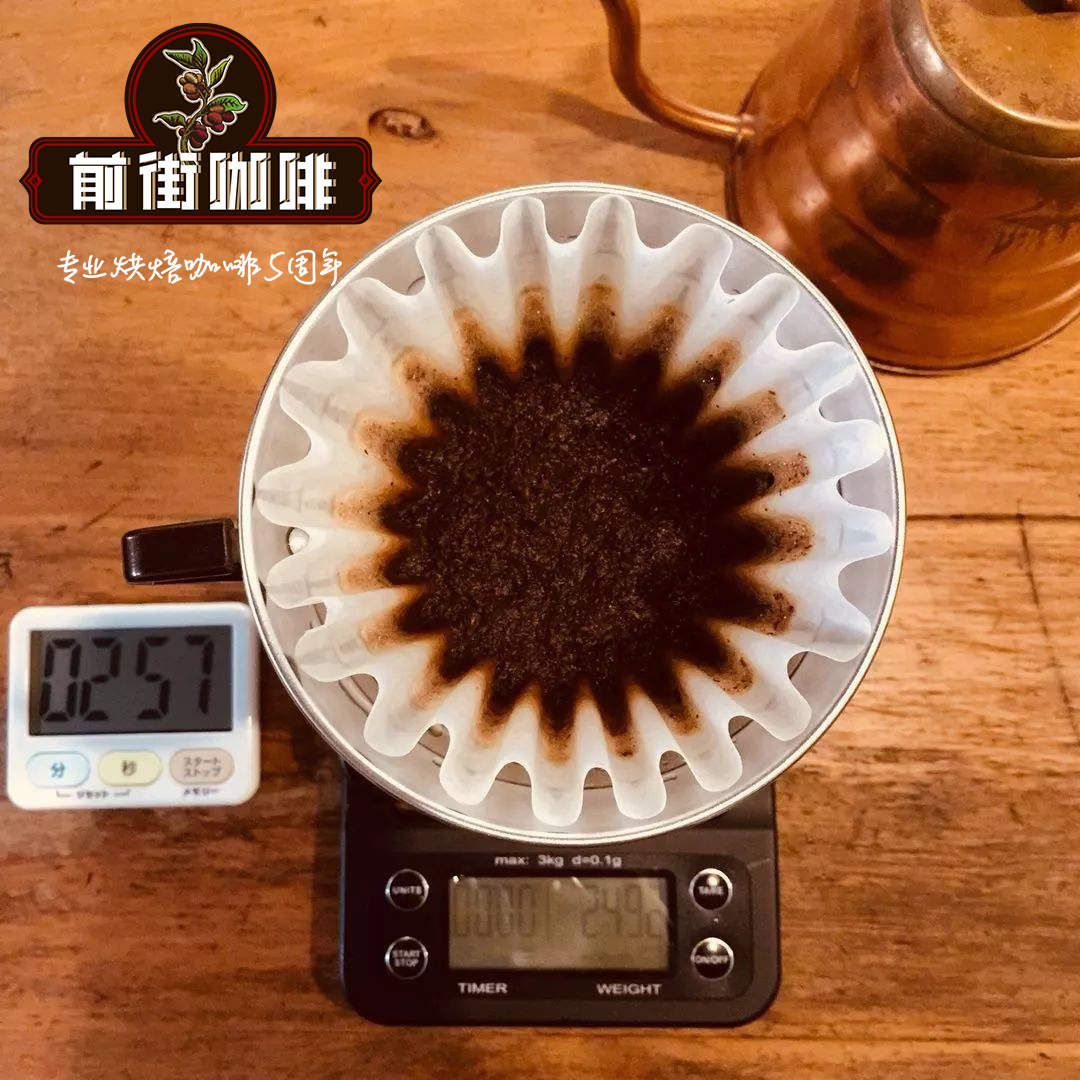
For brewing, FrontStreet recommends a Kono dripper, which helps bring out Blue Mountain's full body. Use 15g for a single serving and let the beans rest four to seven days from the roast date for the best flavor. The grind should be slightly coarser than for a light roast, roughly the texture of caster sugar, because Blue Mountain is medium-dark roasted and more porous, so it absorbs water and releases solubles quickly; ground too fine it turns burnt and bitter, and ground too coarse the cup turns thin and watery. Brew with water at 87-88°C, since too hot is the usual cause of a burnt, bitter cup and too cool leaves the coffee flat. Use a 1:15 ratio. For the three-pour method, start with a 30g bloom and let it sit 30 seconds, then pour to 120g with a vertical, slow circling stream, and finally pour to 225g with a slightly faster stream and circling motion to keep the bed from clogging and over-extracting. Blue Mountain also works beyond pour-over: because it is so balanced, it shines in a moka pot and as espresso, and the material listed for a moka pot recommends a slightly finer grind than pour-over, hot water in the base, medium-low heat, and pulling the pot off the heat just as the coffee finishes flowing, which strengthens the chocolate, caramel, and nutty notes and makes an excellent latte or flat white when paired with milk.
Important Notice :
FrontStreet Coffee is a long-established specialty coffee roaster in Guangzhou China, selling freshly roasted beans from its own farm in Yunnan as well as dozens of carefully selected single-origin beans from around the world for both pour-over and espresso. The products deliver consistently excellent quality and great value, with shipping within 24 hours. Guangzhou's FrontStreet Coffee shop is recommended by many coffee lovers, and the beans are now available online at the Tmall 。
FrontStreet Coffee has moved to a new address:
FrontStreet Coffee Address: 315,Donghua East Road,GuangZhou
Tel:020 38364473
 Scan and follow the En Gafei WeChat official account. Please indicate that the reprint comes from "En Gafei".