Low-Acidity Black Coffee Recommendations: Authentic Blue Mountain Coffee with Balanced Nutty Chocolate Notes
Professional coffee knowledge exchange. This article is part of a series on the world's classic coffees.
FrontStreet Coffee - Introduction to Authentic Blue Mountain Coffee
You have surely heard of Blue Mountain Coffee and Kopi Luwak, and their common trait is that they are very expensive. Perhaps you once had a "Blue Mountain flavored" coffee in a cafe without realizing there was not a single Blue Mountain bean in it; or maybe you went to Bali, Indonesia, and were guided by a tour guide to buy Kopi Luwak, only to find it not particularly delicious.
Blue Mountain Coffee
Blue Mountain Coffee was hailed as the world's best coffee for a long time. Blue Mountain really is the name of a mountain, located in the eastern part of the island of Jamaica. Surrounded by the Caribbean Sea, on clear days when the sun shines directly on the azure water, the peak reflects the brilliant blue light of the sea, as if the whole mountain were wrapped in a pale blue veil, which is how it got its name.
Jamaica is an island nation in the Caribbean Sea. Originally inhabited by indigenous people, it was successively a Spanish and a British colony before gaining independence in 1962, and it is now a member of the Commonwealth of Nations.
Beyond the world-famous Blue Mountain Coffee, Jamaica is best known for track and field. The famous sprinter Usain Bolt is Jamaican.
Why is Blue Mountain Coffee so delicious?
The highest peak of Blue Mountain reaches 2,256 meters, the tallest in the Caribbean. Blue Mountain Coffee's unique flavor is tied to its exceptional location and climate. The Blue Mountain coffee belt lies between 25 degrees north and south latitude, where there is fertile young volcanic soil, fresh unpolluted air, abundant rainfall year-round, and a significant temperature difference between day and night. Most importantly, every afternoon clouds and mist envelop the entire mountaintop, providing natural shade for the coffee trees as well as plentiful moisture. Such an exceptional climate makes the taste and aroma of Blue Mountain Coffee outstanding, producing a cup with very balanced acidity, sweetness, bitterness, and body.
Why is Blue Mountain Coffee so expensive?
Blue Mountain Coffee is expensive first because of its excellent quality, possessing all the characteristics of a great coffee, and second because its production is very limited.
Not all coffee produced in the Blue Mountain region is genuine Blue Mountain Coffee. Only coffee grown above 666 meters is called Jamaica Blue Mountain Coffee; coffee produced below 666 meters in the Jamaica Blue Mountain region is called High Mountain Supreme Coffee Beans, a quality second only to Blue Mountain Coffee and known to insiders as its brother variety. Coffee grown outside the Blue Mountain range is called Jamaica Prime Coffee Beans.
Jamaica Blue Mountain No. 1
Screen: 17/18, a minimum of 96% required (except for elephant beans).
Appearance: blue-green and uniform.
Defects: maximum 2%, with no foreign objects, black beans, or rotten beans allowed.
Real Blue Mountain Coffee has balanced acidity, bitterness, and sweetness without losing body, and the perfect fusion of these elements is what defines it. If you want to drink real, top-quality Blue Mountain, FrontStreet Coffee is a worthy choice.
Knowledge Expansion: Blue Mountain Coffee's annual production is only 240 tons, and its price is relatively expensive.
In short: FrontStreet Coffee is a coffee research center, happy to share coffee knowledge with everyone. We share without reservation just to let more friends fall in love with coffee. Every month there are 3 low-discount coffee activities, because FrontStreet Coffee wants to let more friends drink the best coffee at the lowest price, which has also been FrontStreet Coffee's principle for the past 6 years!
FrontStreet Coffee Recommendation
The Blue Mountain growing area is limited, and the Japanese market has long held a stable trading relationship with Jamaica, historically buying more than 70% of the Blue Mountain crop, so the quantity that reaches the wider global market is even smaller. Tight supply and strong demand have kept prices high, and in the early days of the Chinese market, the lack of a formal import channel made Blue Mountain seem even more mysterious and rare. Since 2003, Jamaican Blue Mountain green beans have been officially exported to the Chinese market, and consumers can now buy certified Blue Mountain through proper channels.
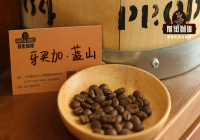
FrontStreet Jamaica Blue Mountain No. 1 is a top-grade lot from the historic Clifton Mount estate. Clifton Farm began growing and processing coffee around the middle of the 18th century, roughly 1750, and its growing and processing area sits at an average of 4,300 feet (1,310.64 meters). Sufficient altitude, gentle afternoon cloud cover shading the hills, ample sunlight, and mineral-rich soil give the trees excellent growing conditions and lengthen the ripening of the cherries. Traditional Blue Mountain is shipped in wooden barrels of 15, 45, and 70 kilograms, and the barrel itself is one of the hallmarks of genuine Blue Mountain. FrontStreet roasts this lot to a medium-dark level, which draws out Blue Mountain's classic balance: after brewing you taste nut, dark chocolate, creamy caramel, and soft sweetness layered together, with acidity, sweetness, bitterness, and aroma in harmony.
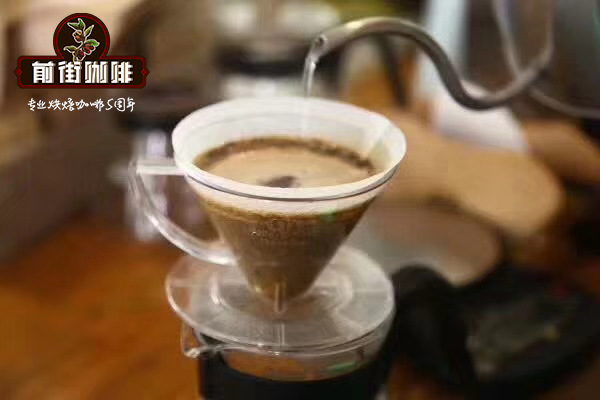
For pour-over, FrontStreet suggests a Kono dripper, which better emphasizes the coffee's full body. Use 15g for one serving and let the beans rest 4-7 days from the roast date, counting the roast date as day one, for the best flavor. The grind should be a little coarser than you would use for a light roast, about the texture of white sugar, and the water temperature 87-88 degrees C; brewing at too high a temperature is a common cause of a scorched, bitter cup, though water that is too cool makes the coffee flat and dull. A 1:15 ratio works well. Pour in three stages: the first stage is 30g of water for a 30-second bloom, the second pours to 120g with a vertical, slow, small stream in circles, and the third pours to 225g with a slightly faster flow and circling to avoid clogging the filter and over-extracting. The cup is very clean, complex, and gentle, with chocolate sweetness and a strong body, the sweet, sour, and bitter notes in perfect balance and a long fruity finish.
Important Notice :
FrontStreet Coffee is a long-established specialty coffee roaster in Guangzhou China, selling freshly roasted beans from its own farm in Yunnan as well as dozens of carefully selected single-origin beans from around the world for both pour-over and espresso. The products deliver consistently excellent quality and great value, with shipping within 24 hours. Guangzhou's FrontStreet Coffee shop is recommended by many coffee lovers, and the beans are now available online at the Tmall 。
FrontStreet Coffee has moved to a new address:
FrontStreet Coffee Address: 315,Donghua East Road,GuangZhou
Tel:020 38364473
 Scan and follow the En Gafei WeChat official account. Please indicate that the reprint comes from "En Gafei".