Which Blue Mountain Coffee Brand is Authentic? The Distinctive Balanced and Rich Flavor of Genuine Blue Mountain Coffee Beans

Jamaican Blue Mountain coffee is so famous that even people outside the coffee world know it commands a premium. At FrontStreet Coffee, customers buying Blue Mountain beans often ask the same question: why is it so expensive?
FrontStreet Coffee sees two reasons. First, Jamaica's annual coffee production is modest — typically 1,200-2,400 tons — and Blue Mountain coffee accounts for only about 40% of that, roughly 300-600 tons. Second, before 2009, Japan held priority purchasing rights over Blue Mountain beans and monopolized more than 80% of them. After 2009, the Jamaican government ended that priority, but prices stayed high for another reason: a run of disasters across Jamaica's coffee regions — pests, disease, typhoons, and leaf rust — cut production further and pushed Blue Mountain prices even higher.

Of course, the price also reflects the flavor. Brewed, authentic Jamaican Blue Mountain produces a remarkably distinctive cup — exceptional clarity and brightness, excellent body, and a perfect balance of acidity, sweetness, and bitterness. Genuine Blue Mountain grows only in the Blue Mountains, and strictly speaking only beans grown between 1,000-1,700 meters qualify as authentic Blue Mountain coffee. The Blue Mountain No.1 offered by FrontStreet Coffee comes from exactly this zone.
Is there genuine Blue Mountain coffee available in China?
Search the keyword "Blue Mountain" and you'll find endless articles about spotting fakes — and for good reason. Blue Mountain's international fame has tempted unscrupulous merchants to sell inferior commercial coffee under its name. Phrases like "Blue Mountain flavor," "Blue Mountain blend," or "Blue Mountain instant" are the most common: none of them has any connection to genuine Blue Mountain coffee.

Fakes abound, but that doesn't mean the real thing is unobtainable. China has records of importing Blue Mountain coffee directly from Jamaica going back to April 2011, when Zhejiang DUNN'S RIVER Import and Export Trading Company, representing the "Hangzhou Coffee and Western Restaurant Association," purchased a total of 1,000*70kg bags for two million US dollars. Jamaica today values the Chinese market highly, and the names of authorized Chinese importers can be found on the CIB's official website.
FrontStreet Coffee's house-roasted Blue Mountain No.1 is produced by Jamaica's Clifton Estate and comes with quality certification from the Jamaica Coffee Industry Board, an authorized sales certificate from the Blue Mountain manufacturer, and a certificate of origin. The Dongshankou store even displays the original wooden barrel that held the Blue Mountain green beans — which doubles as a small table for guests when the shop fills up, a charm of its own.

Why is genuine Blue Mountain so expensive?
Blue Mountain coffee has been called the Hermes of the coffee world. A true cup offers dense, lasting chocolate and roasted hazelnut aromas while holding acidity, sweetness, bitterness, aroma, and body in perfect equilibrium. FrontStreet Coffee believes that reputation is inseparable from the careful management and strict grading practiced by Jamaican growers.
The Blue Mountains possess terroir that is close to perfect for coffee, though as with any agricultural product the final flavor still depends on variety, altitude, harvesting, and processing.

Within the growing regions officially designated by the Jamaica Coffee Industry Board (CIB), only Typica grown between 910-1,700 meters may be called authentic "Jamaican Blue Mountain coffee." Typica needs high altitude for its flavor to fully develop, but the variety has poor disease resistance, low yield per tree, and demands constant human care. The steep terrain at high altitudes makes management and harvesting difficult, and the work requires highly skilled pickers — all of which limits output. In recent years, less than 15% of Jamaica's coffee production — approximately 900 tons — can be labeled Blue Mountain.
You may have heard the claim that "all authentic Blue Mountain is monopolized by Japan." It has a basis in history: UCC, the Japanese coffee company formerly known as Ueshima Coffee Co., Ltd., established a farm in Jamaica in 1981 to run a Blue Mountain project, and Jamaica committed to selling 90% of its Blue Mountain quota to Japan. Japan's energetic promotion of the coffee then created the high prices and scarcity Blue Mountain was known for. Today, with coffee culture thriving, a cup is no longer hard to find — at FrontStreet Coffee, 60 yuan buys a pour-over of top-grade Blue Mountain No.1.


FrontStreet Coffee - Jamaican Blue Mountain No.1 Coffee Beans
Farm: Clifton Estate
Owner: The Sharp family
Certificate: Rainforest Alliance Certification
Location: Newcastle region
Total area: 250 acres
Coffee cultivation area: 180 acres
Altitude: 1,310 meters
Processing method: Washed
Variety: 100% Arabica Typica
Roast level: Medium-dark
Jamaica was among the first producing countries to recognize that coffee has "regional flavor," and its standards for evaluating Blue Mountain green beans span multiple categories: bean size, defect rate, color, uniformity, and cupping performance after roasting (dry fragrance, wet aroma, acidity, flavor, body, cleanliness, and more).

Bean size is tested with screens of various hole sizes — only beans too large to pass the holes meet the standard. Color is judged both by eye and by colorimeter, with blue-green graded highest. On these criteria Blue Mountain is divided into 4 grades, from highest to lowest: NO.1, NO.2, NO.3, and PB, plus blends. NO.1 is the premium grade known in China as "Blue Mountain No.1," and it must meet 17 mesh or larger, a defect rate below 3%, moisture content around 13%, and cupping notes of rich coffee aroma with smooth, balanced flavor, low acidity, and a persistent aftertaste.

The CIB even issues roast-level recommendations to highlight Blue Mountain's classic profile. FrontStreet Coffee's roasters follow this guidance, using a medium roast so that Blue Mountain No.1 shows both rich chocolate sweetness and an appropriate touch of soft fruit acidity.

How to appreciate FrontStreet Coffee's Blue Mountain No.1?
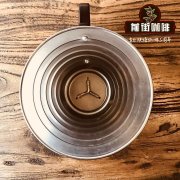
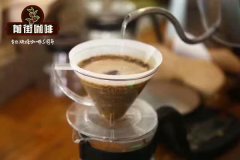
To bring out Blue Mountain No.1's rich, rounded texture, FrontStreet Coffee extracts it with a KONO dripper. The KONO's ribs rise less than half the height of the filter — a design meant to make the filter paper sit flush against the wall once wet, restricting airflow. That lengthens the grounds' contact time with water and produces a more even extraction overall.
Brewing parameters: 15g coffee, coffee-to-water ratio 1:15, grind size: EK43s setting 10.5 (75% retention rate on China No.20 standard sieve), water temperature: 87-88°C, brewing method: segmented extraction.

Seat the filter paper in the KONO and rinse it with water so it fits snugly. Add the coffee and tap gently to level the bed. First segment: pour 30g of water gently to bloom for 30 seconds. Second segment: pour to about 125g in even, steady outward circles. Wait for the coffee level to drop to half, then pour the final segment to 225g. Once all the coffee has dripped through, the total extraction time generally comes to about 2 minutes.

In the mouth, the first impression is extreme balance — acidity, sweetness, and bitterness in perfect proportion, each complementing the others. Classic coffee flavors follow: dark chocolate, nuts, and cream, prominent but never harsh, remarkably gentle. Then comes the texture — not wild like Mandheling, but rich and smooth. Finally the finish, long and persistent, rewarding careful tasting with that famously elegant fragrance. All told, it is a genuinely comfortable cup to drink.
FrontStreet Coffee Recommendation
If you want to verify authenticity yourself, remember the tells. Genuine Blue Mountain ships with Jamaican government certificates and proof of origin, and traditionally travels in wooden barrels of 15, 45, or 70 kg stamped with detailed batch information — every barrel is itself a mark of the real thing. The green beans should be plump and uniform, with slightly upturned ends and a green color; the brewed coffee should be dense, fragrant, and utterly clean, without a trace of off-flavors. FrontStreet Coffee's Blue Mountain No.1, from the historic Clifton Estate (coffee grown there since around 1750 at an average of 4,300 feet / 1,310.64 meters), carries full certification and is roasted within 5 days of shipping so it reaches you at peak flavor.
To brew it at home, rest the beans 4-7 days from roast date, then use a Kono dripper with 15g of coffee at a white-sugar grind, 1:15 ratio, and 87-88°C water — hot enough to avoid the flat, dull cup that comes from water that is too cool. Pour in three segments: 30g bloom for 30 seconds, then to 120g with a slow, vertical flow, then to 225g with a slightly faster pour to keep the bed from clogging and over-extracting. The reward is Blue Mountain's signature harmony — nut, dark chocolate, cream caramel, and gentle sweetness with nothing out of place.
Important Notice :
FrontStreet Coffee is a long-established specialty coffee roaster in Guangzhou China, selling freshly roasted beans from its own farm in Yunnan as well as dozens of carefully selected single-origin beans from around the world for both pour-over and espresso. The products deliver consistently excellent quality and great value, with shipping within 24 hours. Guangzhou's FrontStreet Coffee shop is recommended by many coffee lovers, and the beans are now available online at the Tmall 。
FrontStreet Coffee has moved to a new address:
FrontStreet Coffee Address: 315,Donghua East Road,GuangZhou
Tel:020 38364473
 Scan and follow the En Gafei WeChat official account. Please indicate that the reprint comes from "En Gafei".