Home Coffee Making: Coffee Powder or Coffee Beans? Where to Buy Authentic Blue Mountain Coffee
FrontStreet Coffee Coffee Brand Recommendations: Introduction to Jamaica Blue Mountain Coffee
Blue Mountain coffee's ability to hold its premium status today is closely tied to local business policy. In 1932, Jamaica introduced measures to encourage coffee production and reduce the island's reliance on sugar exports. Unlike most producing countries, which raised output by planting large volumes of high-yield but lower-quality coffee, Jamaica chose quality over quantity. That is why the island remains one of the world's smallest coffee producers. Brazil, the largest coffee exporter on earth, turns out roughly 30 million bags a year, while Blue Mountain produces only about 40,000 bags a year.
Because Jamaica Blue Mountain is so famous, counterfeit "Blue Mountain-style" coffee has appeared on the market, sometimes simply labeled "Blue Mountain Coffee." These are usually blends put together by shop owners and may not contain a single genuine Blue Mountain bean. There is also "Jamaica Blended Blue Mountain," made from 30% Blue Mountain coffee and 70% of the finest Jamaica High Mountain coffee. Both are attempts to imitate Blue Mountain, and neither quite gets there.
The distinctive flavor of Blue Mountain comes from the unusually favorable location and climate of the Blue Mountains. Sitting in the coffee belt between 25° north and 25° south latitude, the Blue Mountains have fertile young volcanic soil, fresh, unpolluted air, year-round rainfall, and wide swings between day and night temperatures. Most important, every afternoon clouds and mist wrap the entire mountain top, providing natural shade for the coffee trees and bringing abundant moisture, which gives Blue Mountain coffee its exceptional taste and aroma.
Only coffee grown in the Blue Mountain region above 1,800 meters may be called Blue Mountain coffee. One coffee lover we met in the United States applies an even stricter rule, insisting that "only coffee grown at 2,256 meters is true Blue Mountain coffee." Coffee grown in the lower mountain areas of Jamaica must instead be sold as "Jamaica High Mountain Coffee," because its quality differs. What is more, the same variety planted in Hawaii, Kenya, Papua New Guinea, or anywhere else with a similar climate cannot reproduce the flavor of Blue Mountain beans.
So to buy authentic Blue Mountain, choose reputable specialty coffee shops or online stores. Blue Mountain sold pre-ground is certainly fake. Authentic Blue Mountain is sold as whole bean, so pay attention when you buy. When you pick up beans, ask whether free grinding is available; many coffee shops offer it at no charge, so you can brew a cup anytime, at home or in the office.
Knowledge Expansion
In the Blue Mountains, the legal production area for Blue Mountain coffee is the zone above 1,800 meters, and Wallenford processes only Blue Mountain cherries grown above 4,000 feet.
In Summary
FrontStreet Coffee is a specialty coffee research center dedicated to sharing coffee knowledge with everyone. We share without reservation only to help more friends fall in love with coffee. We also hold discounted coffee events three times a month, because FrontStreet Coffee wants more friends to enjoy the best coffee at the lowest prices. It has been our mission for six years.
FrontStreet Coffee Recommendation
If you want to be sure the cup in front of you is the real thing, FrontStreet's Jamaica Blue Mountain No.1 is a certified, traceable option. It belongs to the highest batch grade and comes from the long-established Clifton Estate, where coffee has been grown and processed since around 1750. The growing and processing site sits at an average of 4,300 feet (about 1,310 meters), where ample altitude, mild afternoon cloud, generous sunlight, and mineral-rich soil give the trees ideal conditions and stretch out the ripening of the cherries. Traditional Blue Mountain is packed in wooden barrels of 15, 45, and 70 kilograms, each barrel printed with detailed batch information for the green beans, and FrontStreet can show the full origin certification and the original shipping barrels for its No.1.
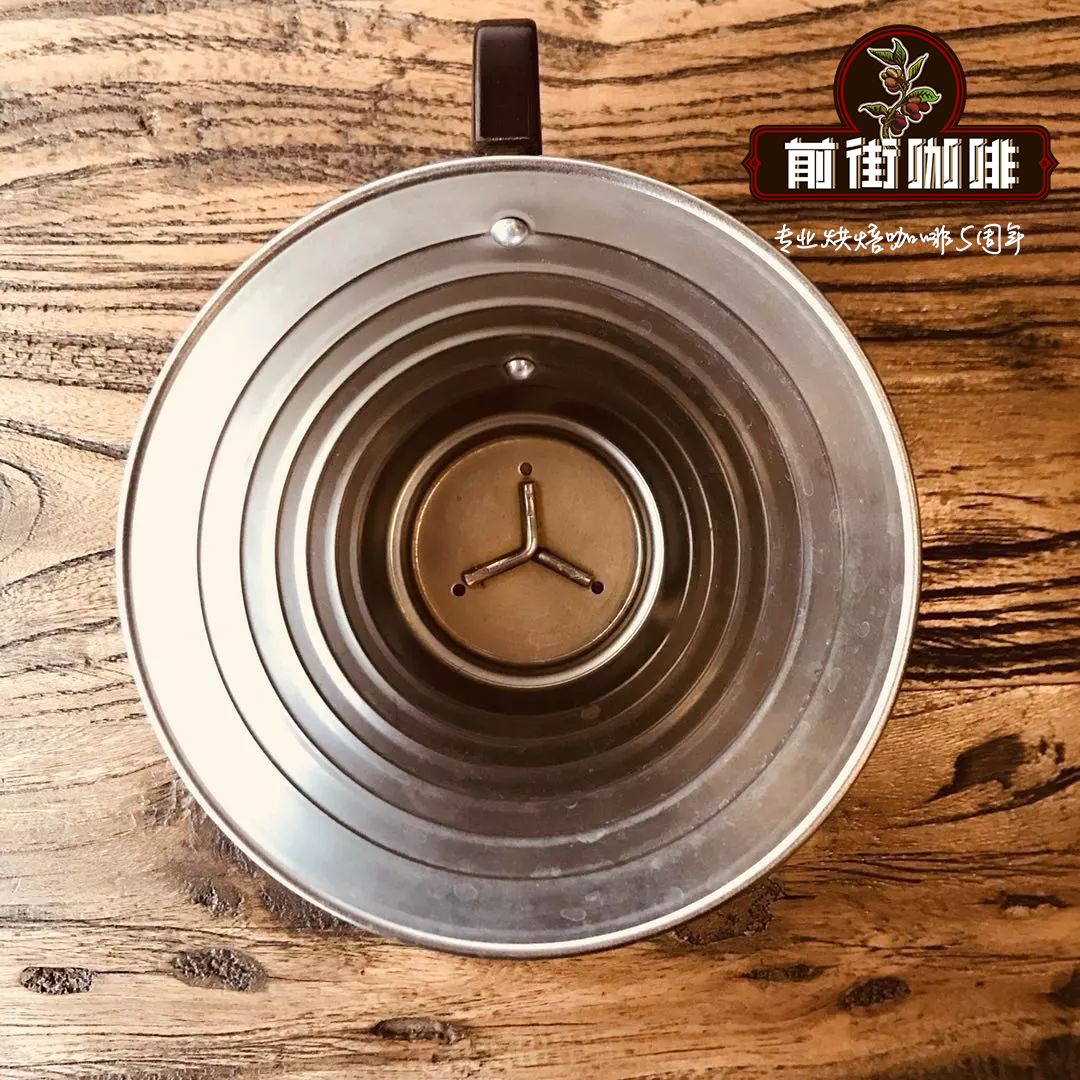
FrontStreet roasts this lot medium-dark to draw out its full body and that classic bitter-then-sweet depth. For pour-over, the shop suggests a Kono dripper, 15g of coffee, a 1:15 ratio, and 87-88°C water, with a grind a touch coarser than you would use for a light roast, roughly the texture of granulated sugar. Let the beans rest four to seven days from the roast date. A three-pour method works well: bloom with 30g of water for 30 seconds, pour to 120g, then finish at 225g, using a slow, vertical, small-stream circle. The result is a very clean, complex, and gentle cup with chocolate sweetness, strong body, and a long fruit finish, the bitter, sweet, and acidic notes in perfect balance.
Important Notice :
FrontStreet Coffee is a long-established specialty coffee roaster in Guangzhou China, selling freshly roasted beans from its own farm in Yunnan as well as dozens of carefully selected single-origin beans from around the world for both pour-over and espresso. The products deliver consistently excellent quality and great value, with shipping within 24 hours. Guangzhou's FrontStreet Coffee shop is recommended by many coffee lovers, and the beans are now available online at the Tmall 。
FrontStreet Coffee has moved to a new address:
FrontStreet Coffee Address: 315,Donghua East Road,GuangZhou
Tel:020 38364473
 Scan and follow the En Gafei WeChat official account. Please indicate that the reprint comes from "En Gafei".