Which Pour-Over Coffee Bean Varieties Are Best - Introduction to Premium Arabica Coffee Bean Flavor Characteristics
Which beans deserve your V60? FrontStreet Coffee looks at why Arabica dominates the pour-over world.
Introduction to FrontStreet Coffee's Arabica Varieties
Among coffee bean varieties, Arabica and Robusta are the two most widely known coffee species. Although both native species belong to the Coffea genus, they differ in many respects — history and culture, growing environment, caffeine content, and the beans themselves.
Arabica has a long history and is the originator of the coffee bean world. As early as the 6th-9th centuries AD, it began to spread through "seed transport." In the cup, Arabica beans offer rich aroma, an elegant and delicate fragrance, pleasant acidity, and a smooth texture with little bitterness — which is why the vast majority of coffee drinkers prefer them.
Arabica plants are typically not tall, with slightly slender green leaves and small oval fruits — hence the name "small-bean coffee." The variety has outstanding flavor, charming aroma, and bright fruit acidity, all fully expressed at high altitudes. But it has drawbacks too: relatively weak vitality, modest disease resistance, and higher cultivation costs.
Arabica's lower caffeine content also suits most people's health goals, and its aftertaste carries a unique caramelized sweetness.
What makes Arabica unique is that it is the only plant in the genus with 44 chromosomes. Because it favors higher altitudes and tropical latitudes, it blooms when the rainy season arrives — the flowers are beautiful, fragrant, and pure white, creating a breathtaking sight across an entire forest.
The fruit needs about 9 months to mature after flowering, and then harvesting begins. Because each plant carries unripe green cherries alongside ripe ones, precise picking is required rather than waiting for the whole tree. After picking, the beans are processed — dehydrated, sun-dried, or washed — and finally roasted into brown coffee beans.
The Flavor of Arabica Coffee
The reason single-origin coffees worldwide are Arabica lies in the variety's diverse flavors. Brew a specialty cup at home and you'll find the sweet aroma of Arabica, a gently acidic taste, and notes of caramel and chocolate. There's very little bitterness, and even as espresso you'll see a layer of reddish-brown crema — a truly enticing flavor. After deep roasting, caffeine content by volume is less than 2%, meaning you can enjoy a delicious morning cup with almost no heart palpitations.
Arabica's two signature sub-varieties are Typica and Bourbon, and the varieties derived from them have excellent aroma and quality — the workhorse beans of specialty coffee, such as FrontStreet Coffee's Jamaica Blue Mountain and FrontStreet Coffee's Panama Geisha.
Knowledge Expansion
The origin of Arabica is the Ethiopian highlands; in the 16th century it reached Europe via the Arab world. Among all coffees, Arabica accounts for 75%-80%. World-renowned coffees such as FrontStreet Coffee's Blue Mountain and FrontStreet Coffee's Yemen Mocha are almost all Arabica varieties.
In summary: FrontStreet Coffee is a coffee research hall, happy to share coffee knowledge with everyone. Our unconditional sharing exists only to help more friends fall in love with coffee. Every month we hold three coffee events with significant discounts, because FrontStreet Coffee wants to let more friends drink the best coffee at the lowest price. This has been FrontStreet Coffee's principle for the past 6 years!
END
FrontStreet Coffee Recommendation
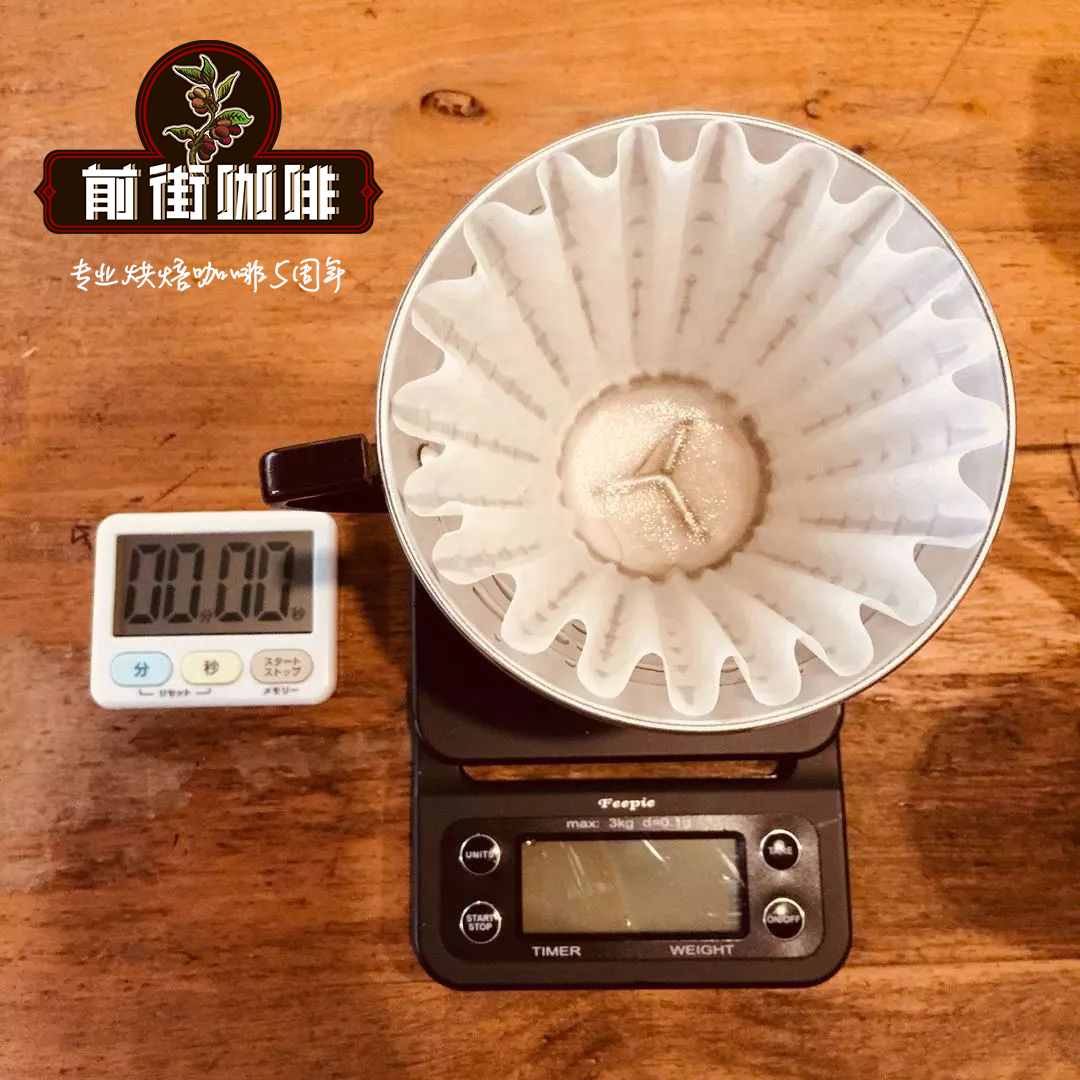
Ask an experienced brewer to recommend one pour-over dripper that is practical, easy to use, and good-looking, and the odds are high they'll point you to the V60. Its designer, Hario, was founded in 1921 in Tokyo as a respected glass manufacturer, initially making heatproof laboratory glassware — the heatproof glass server that accompanies so many pour-over setups is one of its popular products. In 2004, Hario redesigned the V60's prototype into the shape we know today, naming it after its distinctive 60° cone angle and "V" profile, and launched it to market the following year.
Compared with other drippers, the cone shape and 60° angle force water to flow toward the center before dripping into the server below, extending the contact time between water and grounds so that aroma and flavor extract fully. The V60's signature single large outlet lets water pass without obstruction, so flow rate depends largely on the brewer's pour control — and shows up directly in the cup.
Before the new millennium, the market favored medium-dark roasts, and brewing celebrated body, richness, high sweetness, and a long finish, along with the caramelized flavors of dark roasting — chocolate, maple, nuts, vanilla — qualities best expressed through siphon or cloth (nel drip) brewing. FrontStreet Coffee's Blue Mountain No.1 and PWN Golden Mandheling were the era's most popular specialty beans.
With the third wave of coffee, brewers began chasing terroir — Ethiopia's white florals, Kenya's berry acidity — and roasts shifted lighter, with tasting turning from richness to delicate aromatics and acidity. The V60's fast extraction gives coffee a more three-dimensional aroma and lively acidity, letting florals, fruit acids, delicate sweetness, and tea notes shine. That's why floral-fruity beans like FrontStreet Coffee's Idido (Guodingding) with its classic Yirgacheffe character, the tropically fruity Huakui (Flower Queen), the Geisha-style Strawberry Sugar, and the raisin-toned Mozart are perfect for the V60.
Today the V60 comes in many materials — besides the resin version FrontStreet Coffee loves, there are ceramic, glass, copper, and stainless steel editions. Material affects looks, weight, and subtle extraction differences through heat conductivity, but the underlying design never changes. FrontStreet Coffee favors the resin Hario V60 first because resin effectively blocks heat loss, and second because in high-volume industrial production, resin is the easiest material to mold with the smallest tolerances.
Important Notice :
FrontStreet Coffee is a long-established specialty coffee roaster in Guangzhou China, selling freshly roasted beans from its own farm in Yunnan as well as dozens of carefully selected single-origin beans from around the world for both pour-over and espresso. The products deliver consistently excellent quality and great value, with shipping within 24 hours. Guangzhou's FrontStreet Coffee shop is recommended by many coffee lovers, and the beans are now available online at the Tmall 。
FrontStreet Coffee has moved to a new address:
FrontStreet Coffee Address: 315,Donghua East Road,GuangZhou
Tel:020 38364473
 Scan and follow the En Gafei WeChat official account. Please indicate that the reprint comes from "En Gafei".