Panama Geisha Coffee Flavor Description Geisha Coffee Bean Variety Characteristics Price Introduction

Geisha is the most celebrated coffee variety of the specialty era, and its signature citrus-and-honey profile has won over drinkers around the world. In this guide, FrontStreet Coffee takes a closer look at the variety's character, its history, and the estates that made it famous.
The Flavor of Geisha Coffee
Before Geisha became a household name, growers paid it little attention. The tree is tall and slender, it resists disease poorly, it yields very little, and at lower altitudes it simply tastes ordinary. Everything changed in 2004, when Geisha made its international debut at the Best of Panama competition. There it showed delicate jasmine florals and deep fruit aromas that astonished every judge and earned an unprecedented score, taking the championship that year. Since then, Geisha prices have climbed steadily and its reputation has spread throughout the global coffee community.

Geisha won coffee lovers over for a simple reason: rather than the bold, heavy black coffee people were used to, it drinks more like a fragrant floral-fruit tea. Its rich perfumes and layered fruit flavors unfold into a whole range of extraordinary aromas. As the cup cools, you move through delicate textures and sweet-tart fruit notes that fill the entire palate. That extraordinary character is enough to place Geisha at the pinnacle of the coffee world for many connoisseurs. And the talent scout that brought Geisha its fame was none other than Hacienda La Esmeralda.
How Hacienda La Esmeralda Discovered Geisha
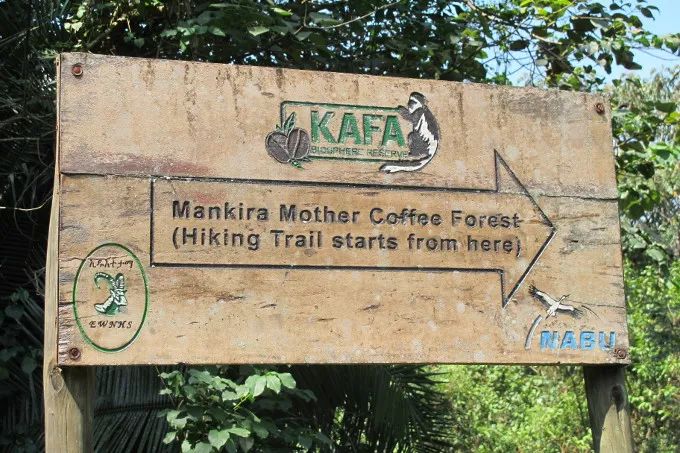
Like many Arabica varieties, Geisha traces its roots to Ethiopia, the birthplace of coffee. In 1931 it was first collected in the wild Kaffa forest of southern Ethiopia, during a search for new disease-resistant varieties, and it took its name from the nearby Geisha Mountain. It was later sent to research institutes in Kenya, Uganda, and Tanzania for trial cultivation. In 1953 the variety reached CATIE, the Tropical Agricultural Research and Higher Education Center in Costa Rica, where it was recorded as T2722. Although it was planted on a number of local farms, Geisha's fragile branches and low yield kept it from winning farmers over, and it was never widely cultivated.
From the 1960s onward, CATIE distributed T2722 to Panamanian coffee farmers, and Geisha began its true journey into Panama's fertile highlands. In the 1990s the Peterson family, owners of Hacienda La Esmeralda, turned their attention to coffee production and acquired a new high-altitude farm called Jaramillo. While leaf rust was damaging many trees on the farm, Daniel Peterson noticed that the Geisha trees had come through largely unharmed, so the family decided to transplant the Geisha that had been mixed in among other varieties into more sections of the farm, and to plant it higher up.
In 2003 the Petersons finally recognized Geisha's potential. In the very first cupping it showed intense white florals, an exceptionally clean mouthfeel, and berry, citrus, and bergamot-like aftertastes — the archetypal Panama Geisha profile. Amazed by what they had found, they entered it in the 2004 Best of Panama competition under the name "Geisha." The stunning Panama Geisha we know today is that same T2722 variety.

Why is Panama's Geisha the Most Famous?
Coffee is an agricultural product, and its flavor depends not only on variety but also on terroir, post-harvest processing, roasting, and brewing. In other words, even if you grew the very same Geisha variety as Hacienda La Esmeralda, you would not necessarily produce the same citrus-and-honey character. Today, besides Panama, Geisha from Costa Rica, Ethiopia, Colombia, Guatemala, and other countries is served in coffee shops around the world, each with its own distinct profile. If you are tasting Geisha for the first time, FrontStreet Coffee suggests starting with Panama, the region where it first became famous. Panamanian estates have the most experience growing the variety, and their Geisha flavors are the most representative.
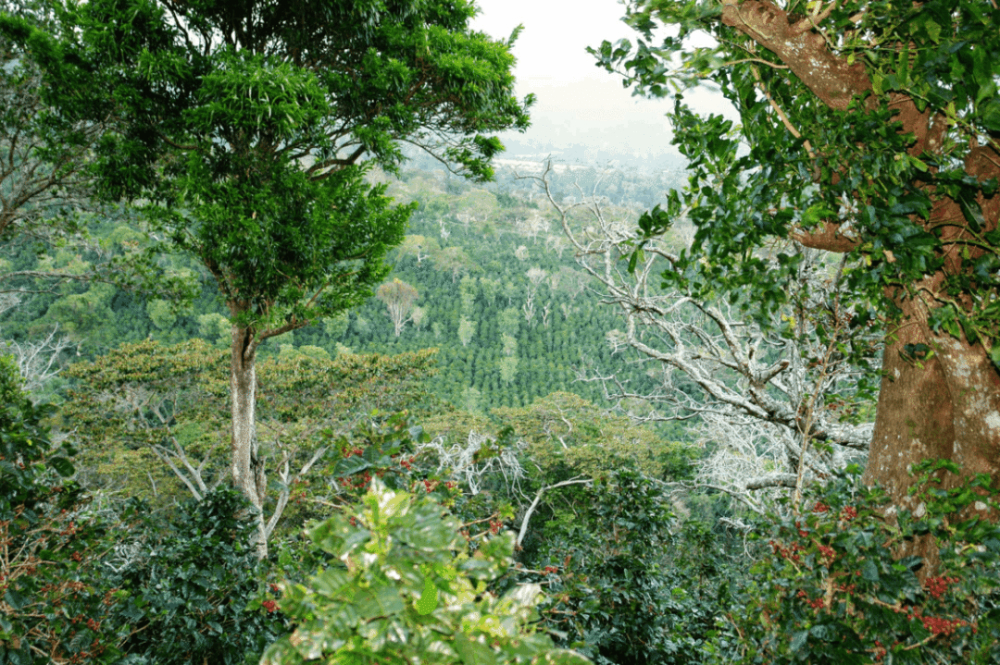
Panama's coffee regions are concentrated mainly in the Boquete Valley of the western highlands and the Volcán area around Barú Volcano. Hacienda La Esmeralda sits here, along with the well-known Elida Estate, Janson Estate, and Hartman Estate.
Boquete is a town in Chiriquí Province, on a plateau at roughly 1,000–2,000 meters on the eastern flank of Barú Volcano. It faces the warm, humid Caribbean monsoon winds while the cold Atlantic current sits behind it, and the terrain is high and steep. Barú Volcano National Park is an ecological reserve of remarkable biodiversity with seven microclimates, and the year-round mist and plentiful rainfall create excellent growing conditions. Thanks to this unusual terroir, the Geisha grown here absorbs a whole range of influences and turns them into an elegant harmony of floral and fruit notes with layered acidity — which is why it appears so often, and places so well, in major competitions.
What Makes Hacienda La Esmeralda's Geisha Coffee Different?
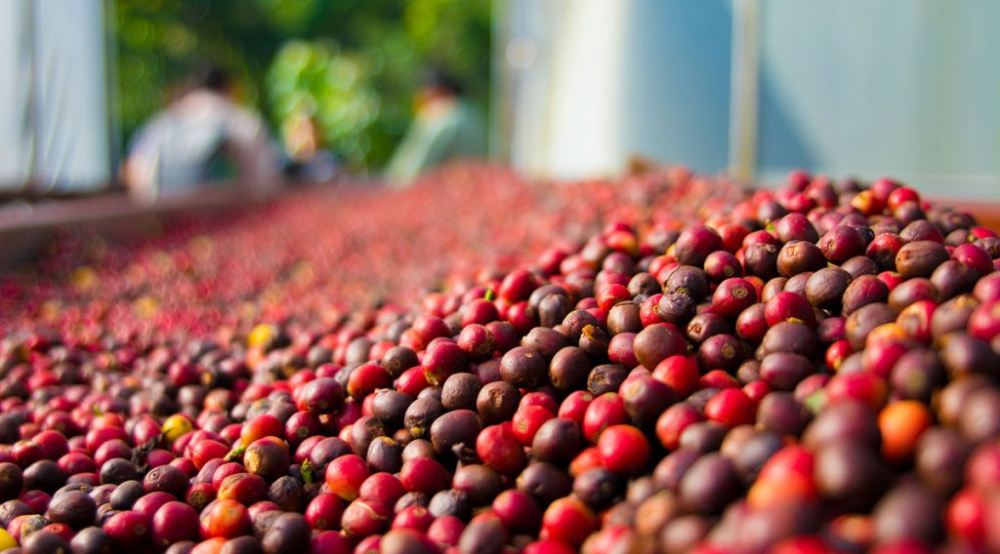
FrontStreet Coffee's bean list carries about 10 different Geisha options. Among the Panama origins, the Red Label and Green Label Geisha from Hacienda La Esmeralda show the most classic Geisha flavors. So what do "Red Label" and "Green Label" actually mean?
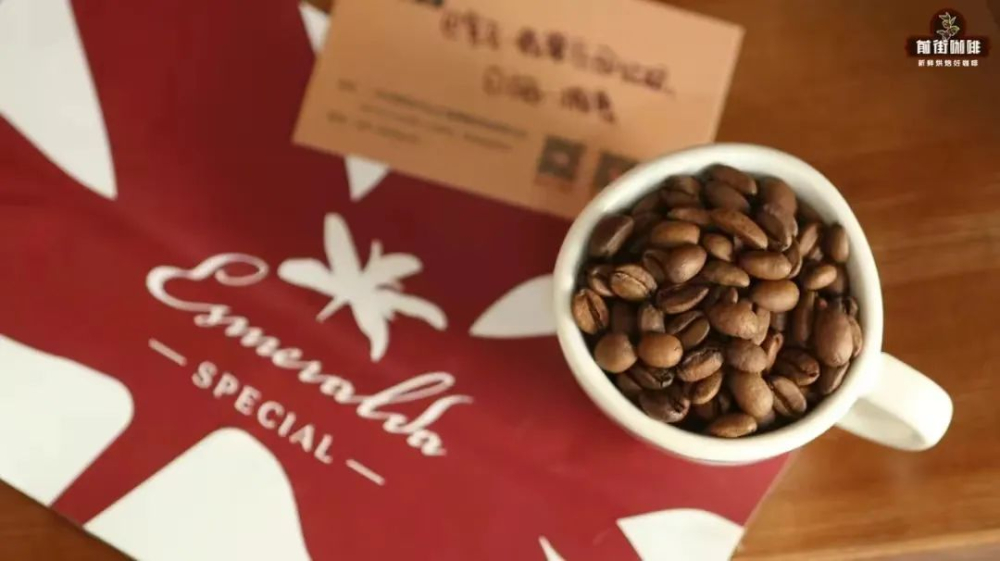
Red Label refers to the ESMERALDA SPECIAL grade, including auction lots — the highest tier. Red Label is picked from high-altitude Geisha (1,600–1,800 meters) whose cupping scores exceed 90 points, mainly from the Jaramillo and Cañas Verdes farms. Although farming and harvesting at such altitude is demanding, the floral and fruit notes of Geisha from the Boquete region are at their most pronounced here. Hacienda La Esmeralda runs its own auctions, in which Red Label lots from designated plots are offered. Auction lots carry a unique number, and each number corresponds to the entire output of one specific plot. The one most people have heard of is probably the Mario plot on the Jaramillo farm. The Hacienda La Esmeralda Red Label Geisha beans FrontStreet Coffee obtains come from the Mario plot and are processed using the natural method.

Green Label refers to PRIVATE COLLECTION, selected from Geisha grown at 1,600–1,800 meters and drawn entirely from the Jaramillo and Cañas Verdes plots. Hacienda La Esmeralda does not specify individual plot information for these lots, so they are not entered in auctions. Although the grade is not as high as Red Label, they chiefly represent the iconic classic flavors of high-altitude Geisha. The Green Label Geisha that FrontStreet Coffee obtains uses the washed process and cups with fresh, natural lemon, berry, grapefruit, and Tieguanyin tea notes.
Because of the extremely high quality, excellent flavor, and great reputation of Hacienda La Esmeralda's Geisha, its prices run well above Geisha from other estates. Taking FrontStreet Coffee's prices as a reference, Hacienda La Esmeralda Red Label roasted beans cost 350 yuan per 100 g, while the Green Label roasted beans cost 168 yuan per 100 g.
How to Brew High-Grade Geisha Coffee Beans
Preparation before brewing matters a great deal. Because this is a high-quality coffee, FrontStreet Coffee suggests choosing freshly roasted beans so you can taste the complete aroma. Beans shipped by FrontStreet Coffee are roasted within five days, so that everyone can enjoy them during their optimal tasting window. For the brew below, FrontStreet Coffee uses Hacienda La Esmeralda Green Label Geisha.
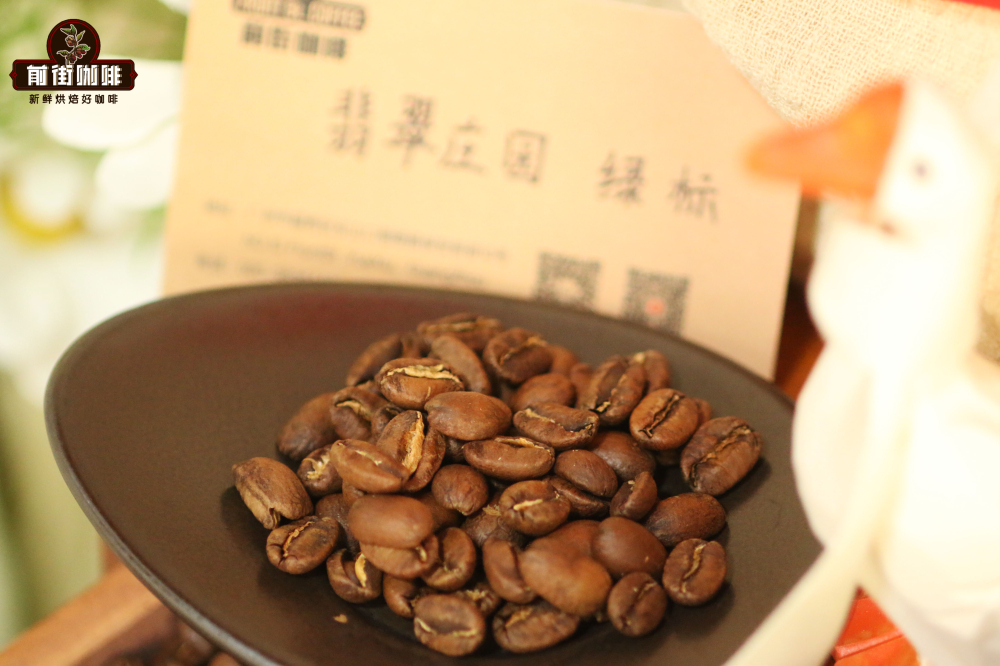
Geisha is world-famous for its rich florals and complex fruit tones. FrontStreet Coffee's roasters want to preserve more of Geisha's fine acidity, so they choose a light-medium roast. That roast level does little to soften the high hardness of beans grown at altitude, so brewing calls for a higher extraction rate to reveal the full range of flavors. FrontStreet Coffee therefore uses a higher water temperature and a slightly finer grind size to draw out more aromatic compounds. And because the florals and fruit notes should read as clearly as possible, the team also uses a slightly larger coffee-to-water ratio of 1:16.
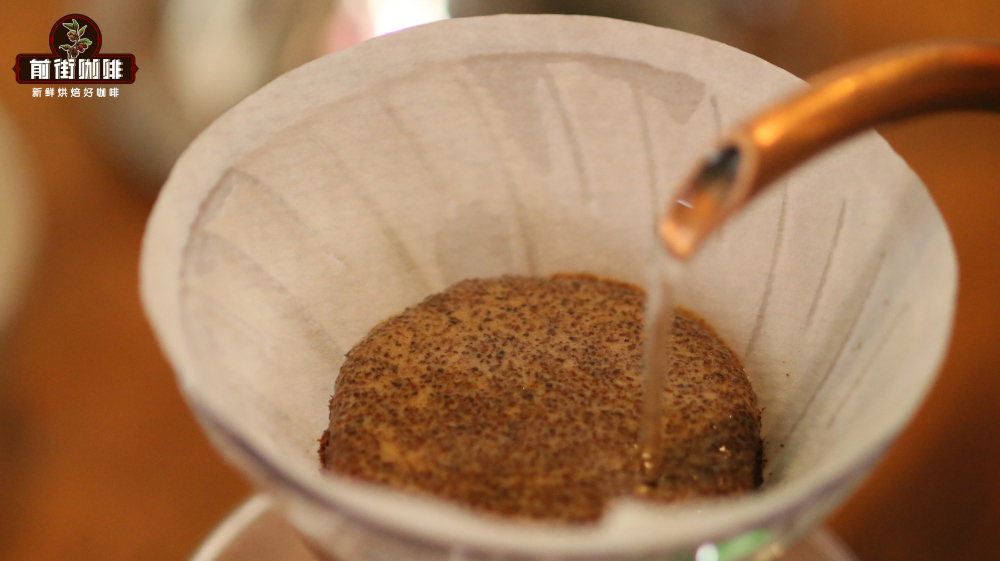
To raise the extraction rate without over-extracting, and to bring out the sweet-tart layers, FrontStreet Coffee's baristas use a V60 dripper. The V60 has flow ribs that connect the top and bottom and a large central hole that speeds up the flow, while its spiral air grooves lengthen the path the water travels, increasing contact time between the grounds and the hot water. Each stream of water converges along the grooves toward the center of the filter, concentrating pressure on the coffee bed and extracting a cup with greater depth.
Filter: V60
Water Temperature: 91–92°C
Coffee Dose: 15 g
Coffee-to-Water Ratio: 1:16
Grind Size: Fine sugar size (80% passes through a #20 sieve)

Three-stage extraction. First stage: bloom with 30 g of water for 30 seconds, pouring in a circular motion to form a dome. Second stage: pour 95 g of hot water, and once the coffee bed has dropped to halfway, begin the third stage with 100 g until all the coffee has finished dripping. Start each pour from the center, using a gentle, small stream in circular motions throughout to avoid uneven extraction. Finally, once the coffee has finished dripping, give it a gentle swirl and you can begin tasting Geisha's flavors from the high temperature onward.
The hand-poured Hacienda La Esmeralda Green Label Geisha opens with bright, fresh lemon acidity alongside subtle, elegant jasmine aromas. As the temperature drops, acidity and sweetness intertwine like berry juice. The aftertaste shows clear green tea notes, with extremely complex layers and a full, smooth, pleasant mouthfeel.

For professional coffee knowledge exchange and more coffee bean information, please follow Coffee Workshop (WeChat official account: cafe_style).
For more specialty coffee beans, please add FrontStreet Coffee's private WeChat account: qjcoffeex
FrontStreet Coffee Recommendation
If this article has made you curious about Panama Geisha, the natural place to start is the same estate it describes. FrontStreet Coffee's Esmeralda Red Label Geisha is the flagship: drawn from the Mario plot on the Jaramillo farm at 1,600–1,800 meters, cupping above 90 points, and processed using the natural method, it delivers the dense floral and fruit character that made the estate famous. The Esmeralda Green Label Geisha is the more accessible route to the same high-altitude profile — a washed Private Collection lot blending Jaramillo and Cañas Verdes, cupping with fresh lemon, berry, grapefruit, and a Tieguanyin tea note. If you want to try Panama Geisha without paying flagship prices, FrontStreet Coffee's Boquete Geisha is the entry point that still shows the classic orange-blossom-honey profile, with oolong-tea body and delicate fruit acidity.
Both Esmeralda labels are roasted light-medium to protect their acidity and are best brewed as a pour-over in a V60. Use 15 g of coffee at a 1:16 ratio, water at 91–92°C, and a grind about the size of fine caster sugar (80% passing a #20 sieve). Bloom with 30 g of water for 30 seconds, pour to 125 g in slow circles, then finish to 225 g once the bed has dropped, for a total drawdown of roughly 2 to 2 minutes 20 seconds.
Important Notice :
FrontStreet Coffee is a long-established specialty coffee roaster in Guangzhou China, selling freshly roasted beans from its own farm in Yunnan as well as dozens of carefully selected single-origin beans from around the world for both pour-over and espresso. The products deliver consistently excellent quality and great value, with shipping within 24 hours. Guangzhou's FrontStreet Coffee shop is recommended by many coffee lovers, and the beans are now available online at the Tmall 。
FrontStreet Coffee has moved to a new address:
FrontStreet Coffee Address: 315,Donghua East Road,GuangZhou
Tel:020 38364473
 Scan and follow the En Gafei WeChat official account. Please indicate that the reprint comes from "En Gafei".