Introduction to the Flavor and Characteristics of Panama Geisha Coffee Beans - French Press Brewing Method for Emerald Geisha Red Label

Today, ask any coffee enthusiast which coffee is the most expensive, and the most common answer is likely "Geisha coffee." As times have evolved, so have people's flavor preferences. The once-popular rich, full-bodied Blue Mountain has given way to the floral and fruity aromas of Geisha.
For those who haven't yet tasted Panamanian Geisha, the first experience can be stunning—intense floral aromas and a sweet-tart fruit juice sensation that make you wonder how such heavenly flavors could exist. Meanwhile, some who have only heard the name "Geisha" without understanding its background may get excited when they see "Red Label" at other cafés, only to be disappointed when the taste is completely different from what they expected.
The Origins and Journey of Geisha Coffee
As is well known, the Geisha coffee variety originated in Ethiopia. In 1931, a British ambassador recorded the Geisha variety during an expedition in Ethiopia—the first documented reference to it. Later, the variety was collected and sent to coffee research institutes in Kenya and Tanzania for study. After several transitions, the Geisha variety was transferred to the CATIE Agricultural Research Center in Costa Rica, where it was cataloged as T2722.
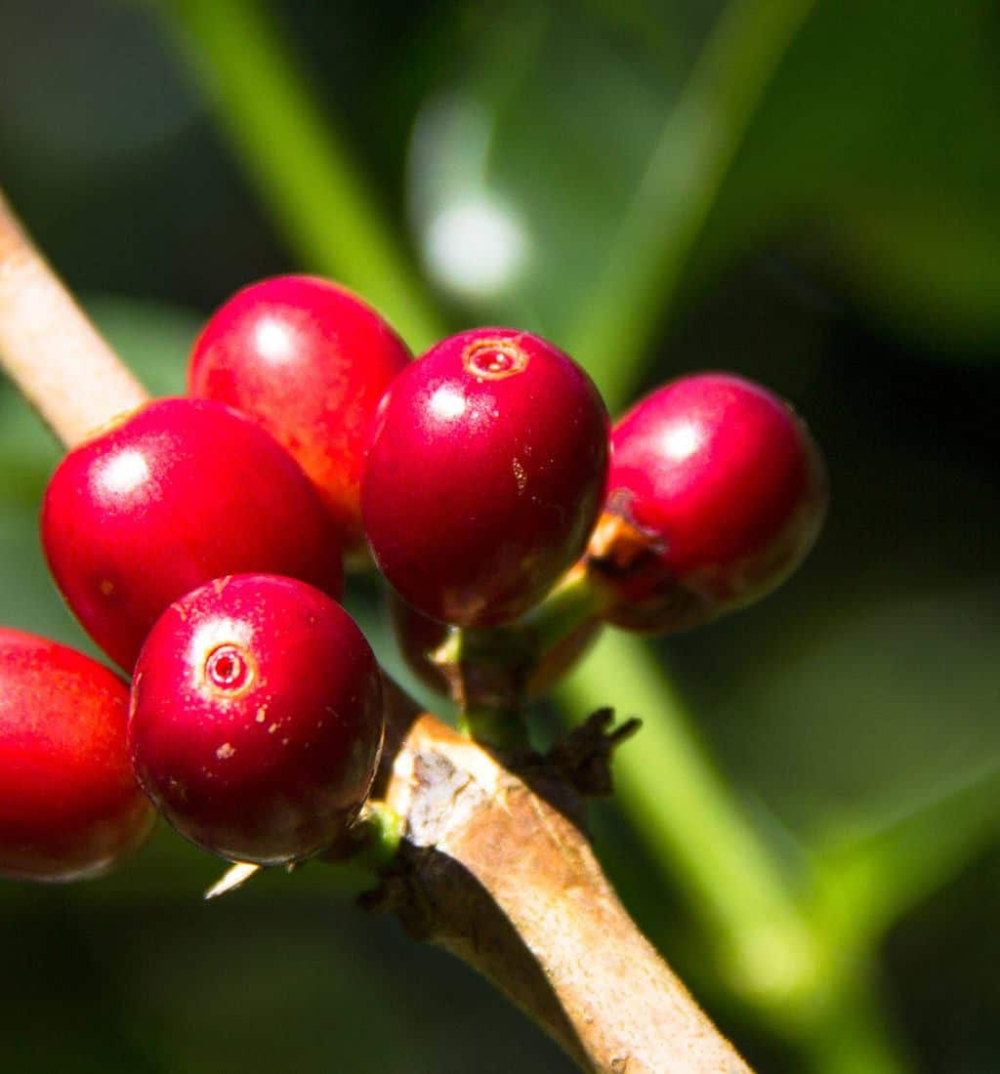
Because Geisha is resistant to coffee leaf rust, some farmers obtained Geisha seeds from CATIE. Among them was a plantation owner named Don Pachi, who introduced and cultivated the Geisha variety in the 1960s and shared different coffee varieties with other plantation owners in Panama. Since many plantations didn't keep detailed records of their plantings, many noticed only that lower-altitude coffee tasted better than higher-altitude coffee without realizing it was due to the variety—until Hacienda La Esmeralda's championship victory awakened them years later.
Meanwhile, Hacienda La Esmeralda, also in Panama, seeking to improve its coffee quality, purchased many different coffee varieties from CATIE in Costa Rica and planted them on their plantation. Through recording and comparison, they discovered that the Geisha variety performed exceptionally well. Traditional Central American coffee flavors typically feature nutty notes, gentle fruit acidity, and caramel sweetness; Geisha, however, revealed white floral aromas and rich fruit flavors.
The Rise to Fame
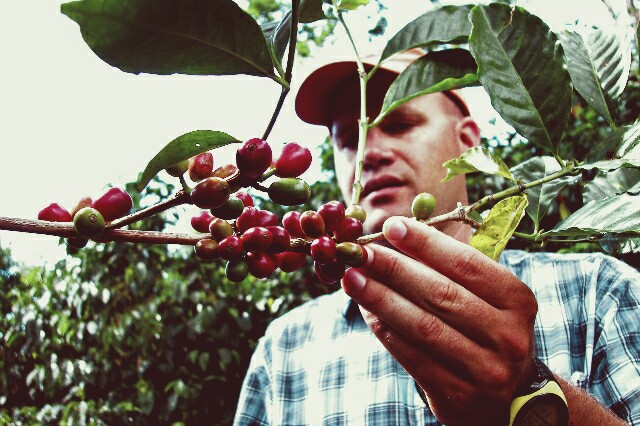
Daniel, the owner of Hacienda La Esmeralda, following advice from industry leaders, submitted a washed Geisha coffee from the Mario lot to the 2004 BOP (Best of Panama) competition, where it won first place and broke the auction price record for green coffee that year—wiping away the shame of finishing last at the BOP competition in the late 1990s.
Subsequently, Panamanian coffee plantations began planting this variety one after another. Since then, Hacienda La Esmeralda has become both the discoverer of Geisha flavors and the promoter of Geisha coffee, with many plantations from Central and South America coming to learn from them. In addition, some people traveled specifically to Ethiopia to trace the roots of the Geisha variety and established the Geisha Village Estate near the Geisha forest. Although the Geisha Village Estate also grows Geisha, scientific verification has shown that Geisha Village's Geisha is genetically very different from Panamanian Geisha, meaning their dominant flavor profiles differ greatly.

Global Cultivation and Panamanian Excellence
The Geisha variety is now cultivated in multiple coffee-producing regions, including Colombia, Costa Rica, El Salvador, Yunnan China, and Taiwan China. However, after cupping and comparing Geisha from various regions, FrontStreet Coffee believes that Geisha beans from Panama are more outstanding in flavor.
Panamanian Geisha's distinctive floral aromas, full fruit juice sensation, and rich layered mouthfeel are unmatched by Geisha grown elsewhere. Panama's coffee-growing areas lie near the Baru Volcano, whose peak reaches nearly 3,500 meters, causing warm moist air currents from both the Pacific and Atlantic Oceans to converge here and bringing abundant rainfall to nearby areas; the surrounding volcano provides fertile soil rich in mineral deposits. Such uniquely advantageous natural climate, combined with higher-altitude terrain, creates heavenly coffee flavors.
Hacienda La Esmeralda's Geisha Offerings
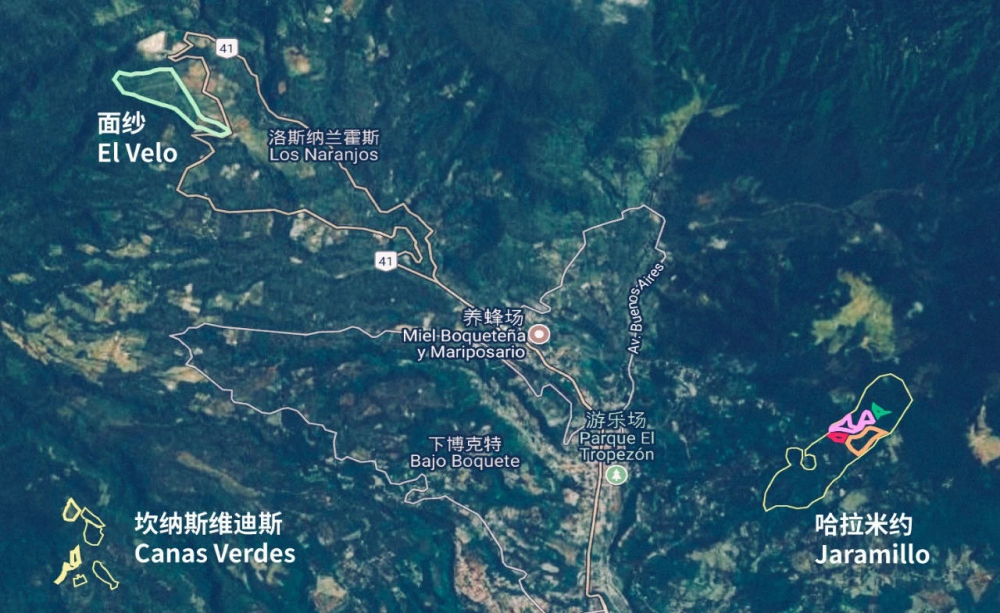
As FrontStreet Coffee mentioned earlier, Hacienda La Esmeralda serves as both the discoverer of Geisha flavors and the promoter of Geisha coffee. Naturally, FrontStreet Coffee's bean list reserves a special section for it. Those familiar with Hacienda La Esmeralda will know that its Geisha brands were originally divided into Red Label, Green Label, and Blue Label. In 2021, to maintain its brand image, Hacienda La Esmeralda discontinued the Blue Label, leaving only Red Label and Green Label Geisha.
Among these, the Red Label represents Hacienda La Esmeralda's most important Geisha brand, selecting Geisha beans from above 1,600 meters altitude that also score above 90 points in cupping. The Hacienda La Esmeralda Red Label Geisha on FrontStreet Coffee's bean list is made from slowly natural-processed Geisha beans from the Mario lot. FrontStreet Coffee specifically chose Geisha from the same lot that won the 2004 BOP championship—the Mario lot.
The slow natural processing method involves drying the entire coffee fruit slowly under the sun, allowing as many sugars as possible to slowly permeate into the green beans, resulting in more intense aromas and sweetness in the coffee.
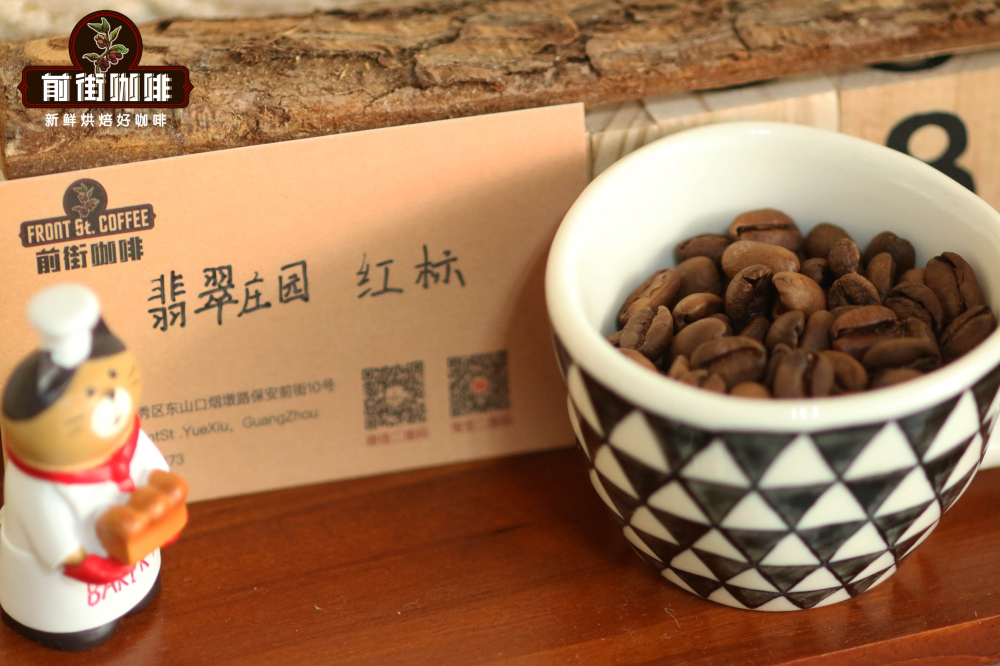
Coffee Details and Brewing Recommendations
FrontStreet Coffee: Panama Hacienda La Esmeralda Red Label Geisha Coffee Beans
Region: Boquete, Panama
Estate: Hacienda La Esmeralda
Lot: Mario
Altitude: 1,600-1,800 meters
Variety: Geisha
Processing: Slow Natural
When roasting these beans, FrontStreet Coffee uses a medium-light roast to best highlight their floral and fruity aromas and the full fruit juice sensation. For brewing, FrontStreet Coffee recommends a 1:16 coffee-to-water ratio, slightly extending the ratio to better appreciate the floral aromas while preventing the flavors from becoming too concentrated and making the acidity more gentle.
Pour-over Parameters:
Dripper: Hario V60
Water Temperature: 90°C
Coffee Amount: 15 grams
Coffee-to-Water Ratio: 1:16
Grind Size: 80% passing through Chinese standard #20 sieve

Pour 30 grams of hot water for blooming for 30 seconds. Then, starting from the center, pour in a fine, steady stream while slowly circling to 140 grams. When the water level in the dripper drops to just above the coffee bed, continue circling while pouring to 240 grams. Total extraction time should be approximately 2 minutes.
Even though FrontStreet Coffee ships freshly roasted beans within 5 days of roasting, they typically undergo a 4–7 day degassing period upon arrival. During brewing, FrontStreet Coffee recommends including the blooming step, because carbon dioxide in the beans prevents hot water from entering the internal structure to dissolve flavor compounds. Blooming is therefore recommended to promote degassing of the grounds, providing more stable conditions for the flavor extraction that follows.

Hacienda La Esmeralda Red Label Geisha, brewed with the above parameters by FrontStreet Coffee, presents berry-like sweet-tart notes, distinct white floral aromas, and honey-like sweetness, with a clean and bright mouthfeel.
French Press Brewing Method
If using a French press, FrontStreet Coffee recommends a grind size of 75% passing through Chinese standard #20 sieve, a 1:15 coffee-to-water ratio, 4 minutes of steeping, and water at 93°C.

First, preheat the French press and discard the hot water. Then add 15 grams of coffee grounds to the press and pour in 225 grams of hot water. Put the lid on.

After 4 minutes, gently press the plunger down to about one-quarter of the press's height, then pour out the coffee liquid to enjoy.
FrontStreet Coffee Recommendation
Geisha may be the modern summit of specialty coffee, but if you want to understand the classic that came before it—and the coffee that many people still judge balance by—Jamaica Blue Mountain is the reference point. FrontStreet Coffee Jamaica Blue Mountain No.1 is among the highest grades of Jamaican Blue Mountain coffee, with strict standards for bean size, defect rate, and overall quality. It comes from the long-established Clifton Mount Estate, which began cultivating and processing coffee around the mid-eighteenth century, roughly 1750, with plots at an average of 4,300 feet (1,310.64 meters). Sufficient altitude, gentle afternoon mist that shades the hills, ample sunshine, and mineral-rich soil give the trees ideal growing conditions and a longer cherry-ripening period.
FrontStreet's Blue Mountain No.1 is roasted medium-dark to fully express Blue Mountain's classic balance, opening up layer after layer of nuts, dark chocolate, creamy caramel, and soft sweetness, with sweetness, acidity, bitterness, and aroma in harmony. It ships roasted fresh within 5 days, and is equally at home as a daily specialty cup or as a high-end gift.
Important Notice :
FrontStreet Coffee is a long-established specialty coffee roaster in Guangzhou China, selling freshly roasted beans from its own farm in Yunnan as well as dozens of carefully selected single-origin beans from around the world for both pour-over and espresso. The products deliver consistently excellent quality and great value, with shipping within 24 hours. Guangzhou's FrontStreet Coffee shop is recommended by many coffee lovers, and the beans are now available online at the Tmall 。
FrontStreet Coffee has moved to a new address:
FrontStreet Coffee Address: 315,Donghua East Road,GuangZhou
Tel:020 38364473
 Scan and follow the En Gafei WeChat official account. Please indicate that the reprint comes from "En Gafei".