What Does Blue Mountain Coffee Taste Like and How to Brew It Deliciously
For professional coffee knowledge and more coffee bean information, follow Coffee Workshop (WeChat official account: cafe_style).
FrontStreet Coffee's Jamaica Blue Mountain Coffee Brewing Guide
Jamaican coffee history reaches back to the 18th century. In 1717, King Louis XV of France decreed that coffee be grown in Jamaica, and in the mid-1720s Governor Sir Nicholas Lawes brought Arabica seeds over from Martinique, launching cultivation around St. Andrew. From there the trees spread into the Blue Mountains. Jamaican coffee is graded in tiers — high-altitude Jamaica Blue Mountain, High Mountain, and lower-grade Jamaica coffee — and the grade determines the price.
FrontStreet Coffee's Jamaica Blue Mountain is Typica, recognizable by its bronze-colored young leaves and oval, slender-pointed beans. The trees grow tall, with branches angled 50–70 degrees from the trunk. The cup is elegant, but the variety is delicate: weak constitution, poor disease resistance, and low yields, with each tree bearing relatively little fruit.
FrontStreet Coffee processes its Jamaica Blue Mountain exclusively with the washed method, using washing and fermentation to remove the peel, pulp, and mucilage. Washed farms must build washing pools and have a constant supply of fresh water. First the peel and pulp are removed, and the beans ferment for 12–18 hours. The fermented beans are then agitated back and forth in the pool, where friction between the beans and flowing water scrubs them smooth and clean. After washing the beans still sit inside their parchment at about 50% moisture; they must be sun-dried down to 12–14%, or they will keep fermenting and turn moldy.
Everyday Brewing
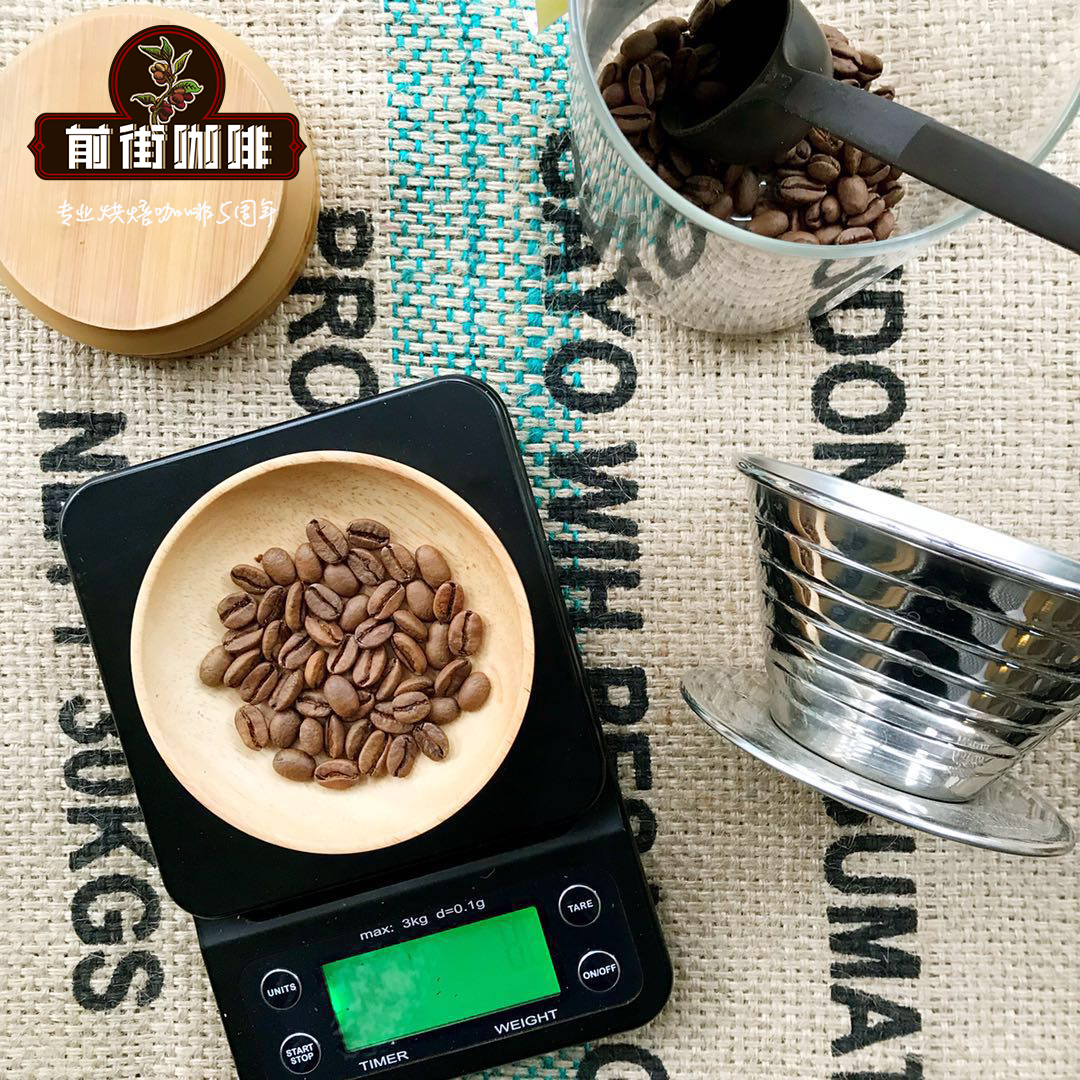
Dripper: V60, Kalita wave, and KONO all work well.
Parameters: 15g of coffee, water at 86°C, grind size BG-6S, water-to-coffee ratio close to 1:15, total brew time around 1:50.
Technique: Start with a 25–30g bloom for 30 seconds. First pour to 120g, then stop; use a vertical flow with slow, small circles. Second pour to 225g, slightly faster flow and circle speed to keep fines from clogging the dripper and causing over-extraction.
FrontStreet Coffee's Jamaica Blue Mountain Flavor Profile
Dark chocolate and nuts, with sweet, sour, and bitter notes in perfect equilibrium.
Knowledge Extension
The Blue Mountain growing region is tiny — just 6,000 hectares under cultivation. Not every coffee sold under the "Blue Mountain" label could possibly have been grown there.
FrontStreet Coffee Recommendation
Buyer beware: much of what is sold as "Blue Mountain" is not. Genuine Jamaica Blue Mountain carries Jamaican government certification and proof of origin, and it traditionally ships in hand-built wooden barrels (in 15kg, 45kg, and 70kg sizes) stamped with batch details — a barrel itself is a hallmark of authentic beans. Check the raw beans too: genuine Blue Mountain beans are uniform and plump, slightly upturned at both ends, and green in color. In the cup, the real thing is dense and fragrant yet clean and restrained, with no off-notes; counterfeits simply can't match that intensity.
FrontStreet Coffee's Jamaica Blue Mountain No. 1 comes from historic Clifton Estate, where coffee has been grown since roughly 1750. At an average elevation of 4,300 feet (about 1311 meters), with mild afternoon cloud cover, ample sunshine, and mineral-rich soil, the cherries ripen slowly and fully. Roasted medium-dark and shipped within five days of roasting, it shows the classic Blue Mountain balance — nuts, dark chocolate, cream and caramel sweetness, and a soft fruit-toned finish with no harsh bitterness.
To brew it as FrontStreet does, choose a KONO dripper for extra body, rest the beans 4–7 days from the roast date, and grind slightly coarser than for light roasts — about white-sugar texture. Use 15g of coffee at a 1:15 ratio with water at 87–88°C (too hot draws out scorching bitterness; too cool leaves the cup flat). Pour in three stages: 30g bloom for 30 seconds, then to 120g with a slow, vertical flow, then to 225g with a slightly faster pour — and you'll taste why this legendary coffee has stayed on top for decades.
Important Notice :
FrontStreet Coffee is a long-established specialty coffee roaster in Guangzhou China, selling freshly roasted beans from its own farm in Yunnan as well as dozens of carefully selected single-origin beans from around the world for both pour-over and espresso. The products deliver consistently excellent quality and great value, with shipping within 24 hours. Guangzhou's FrontStreet Coffee shop is recommended by many coffee lovers, and the beans are now available online at the Tmall 。
FrontStreet Coffee has moved to a new address:
FrontStreet Coffee Address: 315,Donghua East Road,GuangZhou
Tel:020 38364473
 Scan and follow the En Gafei WeChat official account. Please indicate that the reprint comes from "En Gafei".