What is Catimor Coffee: Varietal Characteristics and Genetic Background
The Catimor Variety
Catimor is a hybrid of Timor and Caturra, developed in 1959 by the Portuguese Coffee Rust Research Center (CIFC) with a focus on disease resistance and high yield. It began to be promoted in Brazil during the 1970s and 1980s. With its resistance and productivity, Catimor secured a place among Central and South American coffee varieties, and the periodic coffee leaf rust crises in that part of the world only accelerated its adoption.
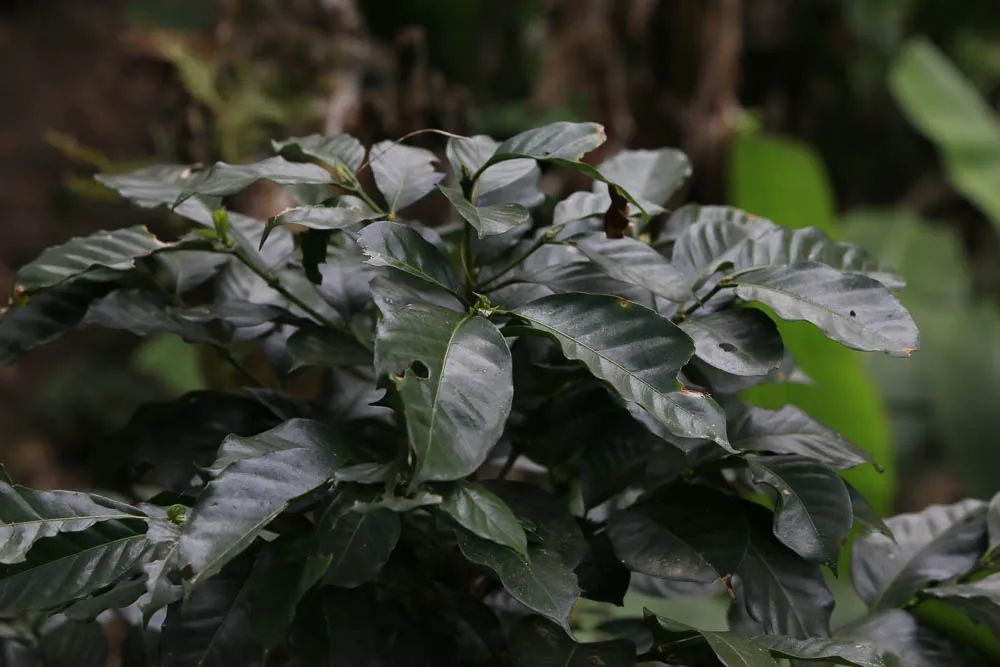
Inherited Robusta genes from Timor give Catimor better resistance to Coffee Berry Disease (CBD) and coffee leaf rust, along with stronger resistance to pests in general. That same inheritance, however, has drawn frequent criticism about its cup performance.
Catimor shows sub-immune or extremely high resistance to leaf rust. Its plant form is compact, which offers some protection against the coffee borer that normally lays eggs on exposed branches, and it yields heavily with no significant alternate bearing.
At low altitudes Catimor's cup shows no clear advantage or disadvantage against other commercial varieties. Planted above 1,200 meters, though, its cup flavor is noticeably inferior to Bourbon, Caturra, and Catuai.

Catimor Plant Characteristics
Catimor grows vigorously with stable secondary characteristics. The terminal buds and young leaves are emerald green, and the foliage stays dark green across the plant. The form is columnar with short internodes and many branches, and it adapts widely, resisting drought strongly and cold to some degree.
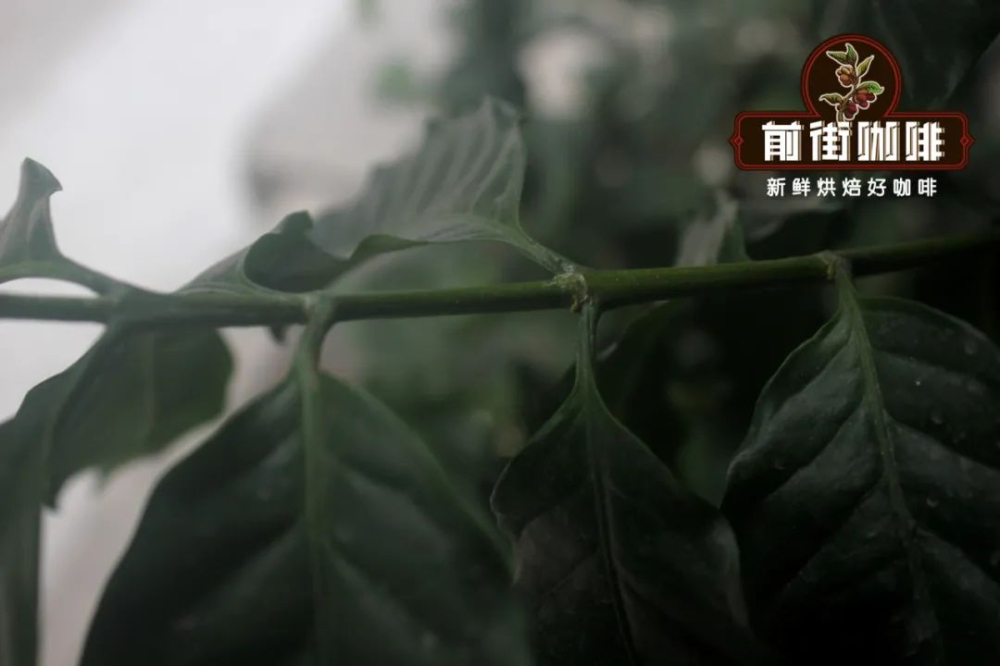
Visually, Catimor seedlings have relatively short branch nodes with short distances between them, which lets the tree bear more fruit. This is one reason Catimor yields more per plant than other traditional low-yield varieties.
Catimor plants are also small, which allows denser planting with shorter distances between trees, one reason it yields more per unit area than other traditional varieties. The compact size also makes harvesting convenient without extra pruning.
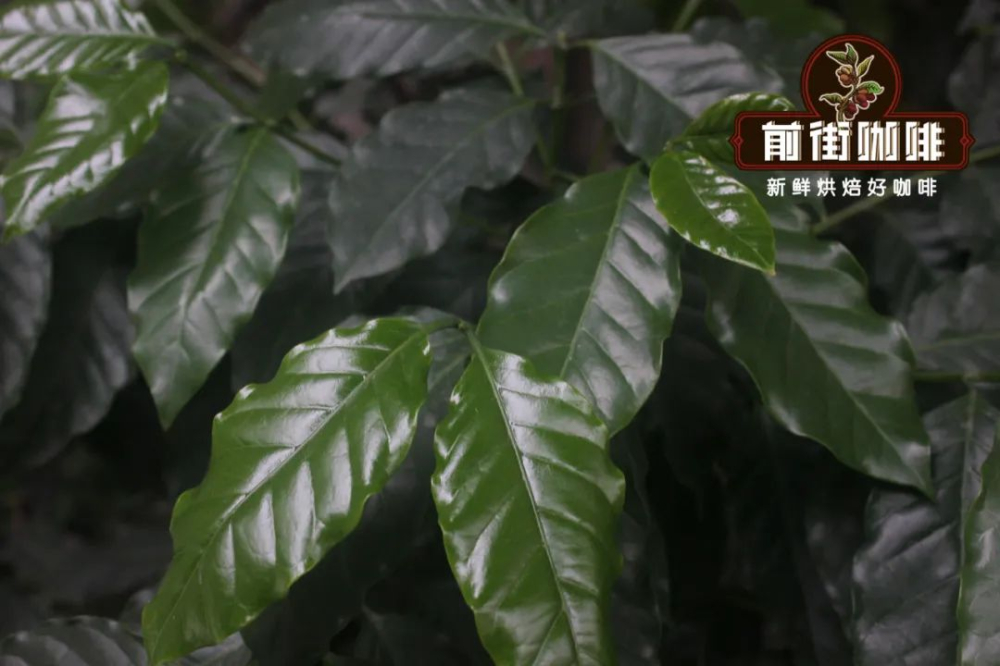
In short, Catimor is defined by high yield, a small plant, and dense planting capability.
Today, 99% of Yunnan's coffee production comes from the Catimor variety. So what we commonly call Yunnan Arabica coffee is really Yunnan Catimor.
The Catimor Flavor Debate
Catimor's flavor has always been a controversial topic in the coffee community. As noted, Catimor comes from a hybrid of Caturra and Timor. Timor is a variety that carries Robusta genes, and it is precisely this genetic component that gives Catimor its super-vital performance, while the other half, Caturra's high yield and Bourbon lineage, gives Catimor more flavor expression.
Undoubtedly Catimor succeeds on yield and on resistance to disease, drought, and cold, but as the saying goes, you cannot have your cake and eat it too. FrontStreet Coffee has explained before that high-quality coffee trees are mainly planted at high altitude, where the large temperature difference between day and night makes the trees grow slowly and accumulate more sugars and nutrients, which is the source of refined flavors.

Catimor, however, takes less time from planting to a real harvest than traditional varieties, accumulating fewer nutrients than varieties that need a long growing period.
High yields also inevitably disperse nutrients. It is like dividing the same cake into four pieces instead of eight: eight pieces may look like more, but the four pieces are larger.
On top of that, the Robusta genes may also raise the chlorogenic acid content in Catimor, since Robusta carries far more chlorogenic acid than Arabica varieties. Chlorogenic acid helps with pest resistance, but it is an organic acid that brings bitterness and an unpleasant acidity to the taste of coffee.
So although Catimor is high-yielding, in today's specialty coffee world, which prizes flavor performance, Catimor may struggle to satisfy some connoisseurs' discerning palates. Take Costa Rica: after independence in 1821 it worked hard to develop its coffee industry to drive economic growth, and in 1989 it passed legislation prohibiting the domestic cultivation of Robusta and began to resist Catimor varieties.

Even if its flavor does not match other varieties, Catimor still occupies many production areas as a main variety. Using Yunnan as an example, we can explore Catimor's flavor through this lens. FrontStreet Coffee selects high-altitude Catimor beans from Lujiangba in Baoshan, Yunnan, and believes the Catimor quality here is relatively high across all of Yunnan and can represent the regional flavor of Yunnan coffee.
FrontStreet Coffee's Roasting Notes for Yunnan Arabica
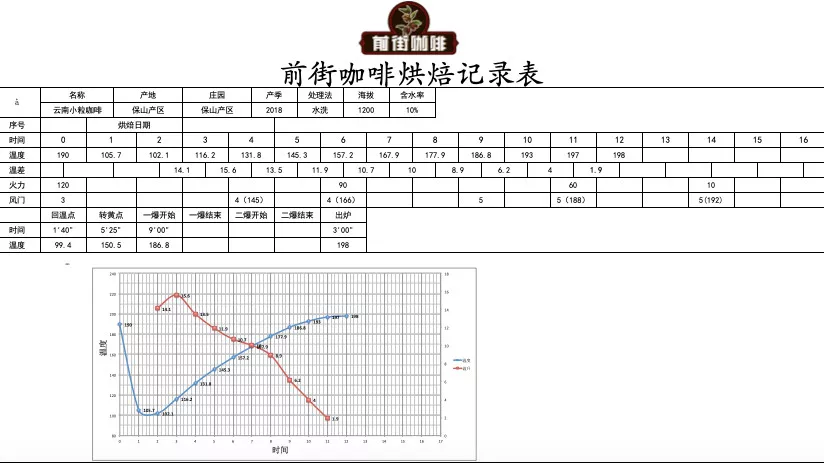
Heat the drum to 190°C, use 120 heat power with the damper at 3. Return to the temperature point at 1'40". When the drum temperature reaches 145°C, open the damper to 4 and keep the heat unchanged. When the drum temperature reaches 166°C the bean surface turns yellow and the grassy aroma disappears completely, marking the start of the dehydration stage. When the drum temperature reaches 188°C, adjust the heat to 60°C with the damper at 5. At 8'37", ugly wrinkles and black spots appear on the bean surface and the toasted bread aroma clearly shifts to coffee aroma, which can be defined as the prelude to first crack. Listen carefully here. First crack begins at 9'00". Keep the damper unchanged, develop for 3 minutes after first crack, then discharge from the drum at 198°C.
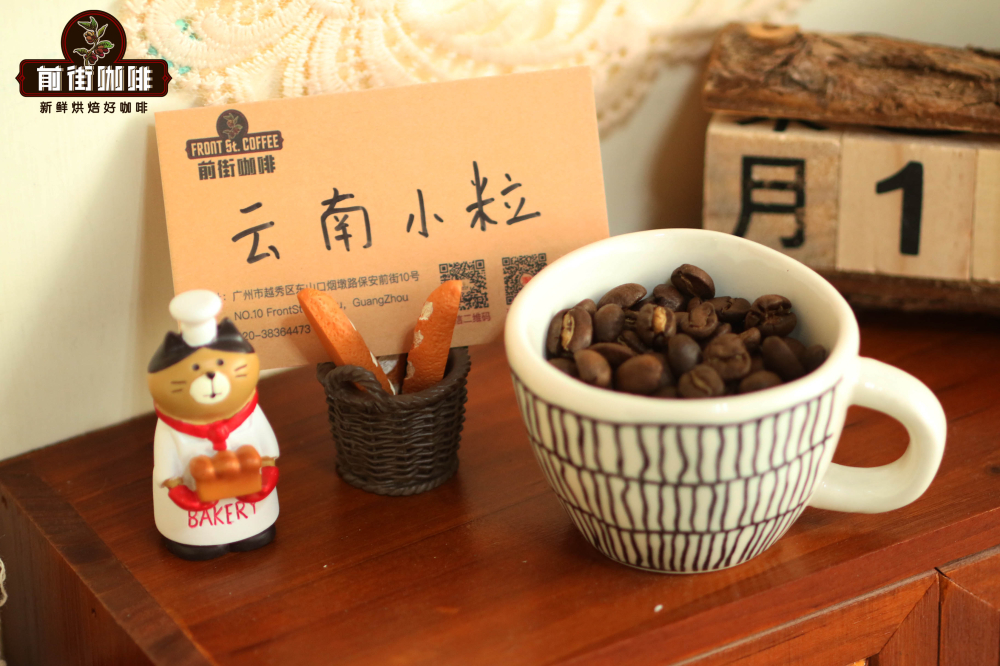
Cupping after roasting showed that FrontStreet Coffee's Yunnan Arabica has a smooth entry with Asian herbal plant aromas, gentle acidity, good balance in body, rich layers, and a finish of distinct dark chocolate, honey, and cane sugar. When it cools completely, brown sugar emerges.
FrontStreet Coffee Recommendation
The Catimor story is a reminder that variety shapes the cup, and for a classic example of bean selection done well, FrontStreet Brazil Cerrado Red Bourbon is a steady choice. This well-known Brazilian single origin comes from the Cerrado region, uses the semi-washed process, and lands at a medium roast with creamy peanut, toast, caramel, and hazelnut aromas, a rounded body, low acidity, and a light bitter note. It works as pour-over and equally well in a moka pot, an espresso SOE, a siphon, or a French press.
For a rarer and sweeter expression, FrontStreet Brazil Queen's Farm is grown in Mogiana, close to South Minas, where fertile red volcanic soil feeds the fruit. Its uncommon Yellow Bourbon variety, a natural mutation of Red Bourbon, brings a cleaner fruit character and a sugarcane sweetness, alongside fruit and chocolate notes that are hard to find elsewhere.
Important Notice :
FrontStreet Coffee is a long-established specialty coffee roaster in Guangzhou China, selling freshly roasted beans from its own farm in Yunnan as well as dozens of carefully selected single-origin beans from around the world for both pour-over and espresso. The products deliver consistently excellent quality and great value, with shipping within 24 hours. Guangzhou's FrontStreet Coffee shop is recommended by many coffee lovers, and the beans are now available online at the Tmall 。
FrontStreet Coffee has moved to a new address:
FrontStreet Coffee Address: 315,Donghua East Road,GuangZhou
Tel:020 38364473
 Scan and follow the En Gafei WeChat official account. Please indicate that the reprint comes from "En Gafei".