What are the Characteristics of the Three Major Native Coffee Species? Introduction to Geisha Coffee Bean Characteristics and Flavors
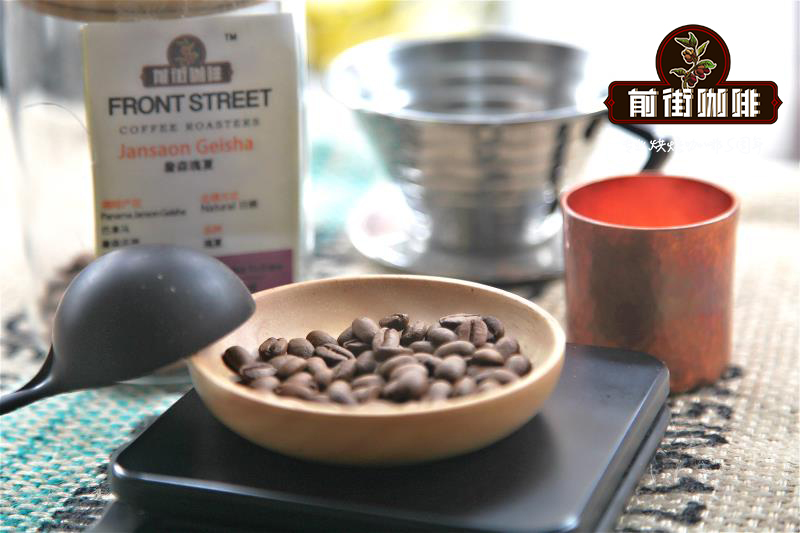
Introduction to FrontStreet Coffee's Three Major Coffee Varieties and Geisha Coffee Characteristics
1. Arabica Species
Characteristics: Rich aroma, delicate and full fragrance, pleasant acidity, smooth texture, minimal bitterness, and a very mild overall profile.
Its weakness is hardiness: extremely low resistance to drought, frost, pests, and diseases—and particular vulnerability to coffee's natural enemy, leaf rust.
2. Robusta Species
Characteristics: An aroma reminiscent of roasted wheat, strong flavor, low acidity, and a distinctly intense, relatively bitter character. Even at just 2-3% of a blend, it dominates the entire cup. On the other hand, it resists disease far better than Arabica.
3. Liberica Species
Characteristics: Highly adaptable to different environments—hot or cold, humid or dry—with leaf rust as its only real vulnerability. Its flavor falls short of Arabica, so it is traded mainly within some West African countries or grown for research.
Varieties of the Arabica Species
1. Typica
In Latin, "Typica" means ordinary or common—and broadly speaking, Typica was indeed the ubiquitous coffee tree across the growing world.
It is the Arabica variety closest to the original species, with elongated beans, excellent aroma, and fine acidity. But it is susceptible to leaf rust, needs considerable shade cover, yields poorly, and can only be harvested once every two years.
2. Geisha
The Geisha variety was discovered in 1931 in the Geisha Forest of Ethiopia and later sent to a coffee research institute in Kenya. In 1936 it was introduced to Uganda and Tanzania; in 1953, Costa Rica imported it.
Geisha is a derivative of Typica and is extremely selective about where it grows, demanding high altitude, cloud shade, fertile soil, and sufficient accumulated temperature. Aurora Coffee Estate sits in the northwestern corner of Chiriquí Province, Panama, at an average altitude of 1,625 meters, with annual temperatures between 16°C and 25°C and average rainfall of approximately 3,500 millimeters. The plantation practices semi-shade cultivation using tree species all native to the region—including some high-altitude Hass avocado. It is precisely this unique environment and climate that cultivates the king of coffees.
FrontStreet Coffee Recommendation
Among Arabica's many descendants, Geisha has become the most coveted—beloved for its singular florals and superb sweet-tart character, yet priced ever higher because of low yields, weak disease resistance, and demanding farm management. La Esmeralda is the estate that made the variety famous, and its line splits into the Red Label ("Esmeralda Special"), grown at 1600-1800 meters with every batch cupping above 90 points and drawn from a single small plot, and the more affordable Green Label ("Private Collection"), a multi-plot blend expressing the estate's signature high-altitude Geisha character.
If you'd like to trace the variety back to its birthplace, Ethiopia now grows Geisha again. Geisha Village Estate, founded by a couple 12 miles from the Gesha forest on 475 hectares, identified the variety closest to Panama Geisha by plant morphology, bean shape, and cup performance, and replanted it from the forest. Its Gold Label—Geisha 1931, just 10% of the estate's output and its top coffee outside auction lots, often chosen by competing baristas—is meticulously natural-processed with complex, richly layered flavors; the Red Label—Gori Gesha, 15% of production and scoring 88 or above on SCA's 100-point scale—is a single-terroir line with fully traceable batch numbers covering farm block, variety, and processing date.
For an accessible entry point, FrontStreet Coffee recommends the Granana Estate Geisha from the Granana processing station (founded in 2014, run by Israel Degefa, amid 700 hectares of mostly uncultivated, shade-dappled land). Hand-picked ripe cherries are dried on raised beds for 14-20 days depending on the weather. Roasted medium-light, it shows bright citrus acidity, elegant ginger-flower aroma, the full sweetness of ripe fruit, and a silky-smooth texture with Geisha's signature refined finish.
Important Notice :
FrontStreet Coffee is a long-established specialty coffee roaster in Guangzhou China, selling freshly roasted beans from its own farm in Yunnan as well as dozens of carefully selected single-origin beans from around the world for both pour-over and espresso. The products deliver consistently excellent quality and great value, with shipping within 24 hours. Guangzhou's FrontStreet Coffee shop is recommended by many coffee lovers, and the beans are now available online at the Tmall 。
FrontStreet Coffee has moved to a new address:
FrontStreet Coffee Address: 315,Donghua East Road,GuangZhou
Tel:020 38364473
 Scan and follow the En Gafei WeChat official account. Please indicate that the reprint comes from "En Gafei".