How Many Authentic Blue Mountain Coffee Bean Brands Are There? Which Brand of Blue Mountain No. 1 Coffee Tastes Best with Flavor Characteristics
What is the growing environment for Blue Mountain Coffee?
As one of the finest coffees in the world, Blue Mountain Coffee has always carried a higher price than coffee from many other producing regions, because its output is relatively small. Yet its elegant, rounded flavor has captivated generations of coffee lovers. In this article, FrontStreet Coffee looks at Blue Mountain Coffee in detail.
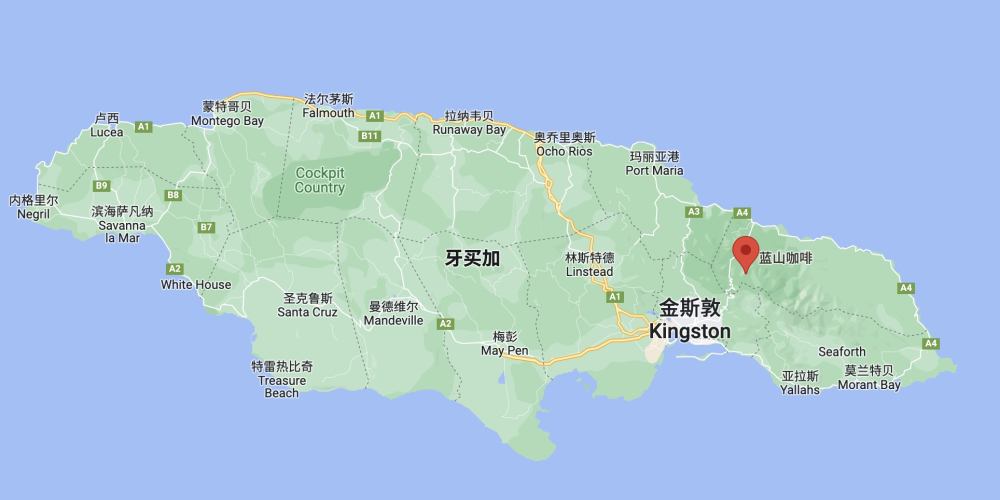
Authentic Blue Mountain Coffee is grown in the Blue Mountains of eastern Jamaica. On a clear day, sunlight falls directly on the azure surface of the Caribbean Sea, and the peaks reflect that brilliant blue light, which is how the range got its name. The highest peak of the Blue Mountains reaches 2,256 meters, the tallest point in the Caribbean and a well-known tourist destination.
What is Blue Mountain Coffee?
Not every coffee grown on the Blue Mountains can claim the title "Blue Mountain Coffee." Because the Blue Mountain variety is Blue Mountain Typica, and it only develops clear, balanced flavors at altitude, only Blue Mountain Typica grown in the 910-1,700m band of the Blue Mountains shows those excellent characteristics.

Typica grown below 910m, or outside the Blue Mountains, will not carry the same appealing flavor. Coffee from below 910m can only be sold as "Jamaica High Mountain Coffee" or "Jamaica Premium Coffee."
Land above 1,700m is designated a nature reserve by the Jamaican government and cannot be used for commercial crops. Authentic Blue Mountain Coffee is therefore limited in volume, at around 900 tons a year. Once it is spread around the world, the somewhat higher price of Blue Mountain beans is easy to understand.
How to distinguish authentic Blue Mountain Coffee?
Because Blue Mountain Coffee's reputation is so strong, some merchants sell products that are not Blue Mountain Coffee using phrases such as "Blue Mountain flavor," "Blue Mountain coffee taste" or "Blue Mountain flavor blend." To help consumers identify the genuine article, the Jamaican government requires all exported Blue Mountain Coffee beans to be packed in wooden barrels, and the Jamaica Coffee Industry Board can issue certificates for every lot exported.

There are three types of certificates:
(1) Quality certification issued by the Jamaica Coffee Industry Board
(2) Authorized sales certificate issued by Blue Mountain Coffee manufacturers
(3) Certificate of origin for Jamaican Blue Mountain Coffee
Quality certification states the time and quantity. The Jamaica Coffee Industry Board randomly selects a package from the submitted Blue Mountain Coffee for inspection, and issues a certificate if it meets Blue Mountain Coffee standards.
Blue Mountain Coffee Brand Recommendations
Blue Mountain Coffee is grown mainly in the Blue Mountains regions of Saint Andrew, Saint Thomas, Portland and Saint Mary. In Saint Andrew lies Clifton Estate, Jamaica's oldest coffee-growing area, with more than two hundred years of coffee history.
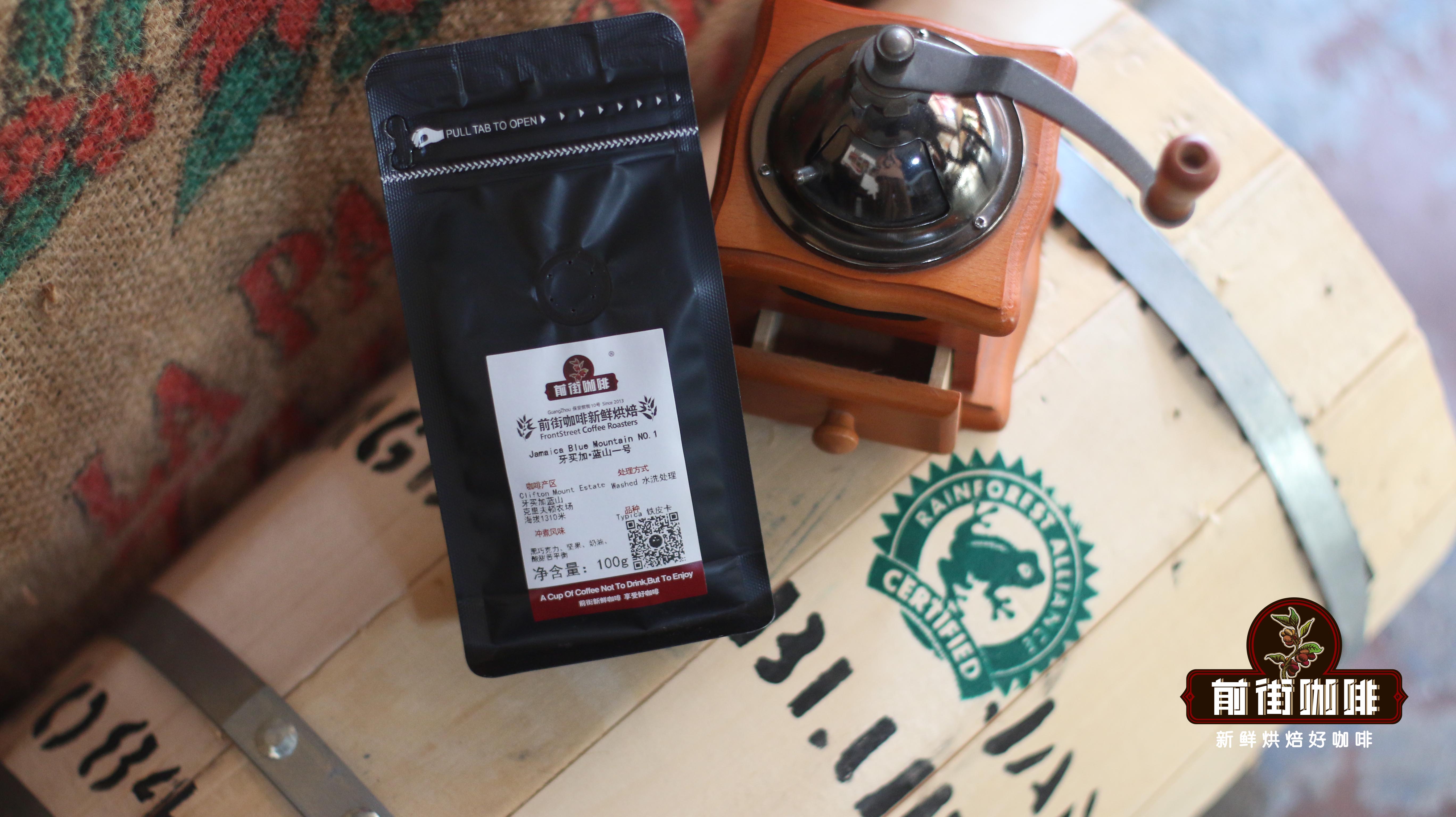
It is also the only estate in Jamaica to have earned Rainforest Alliance Certification, which signals a commitment to environmental responsibility, social equity and economic development in farm communities, and is why exported Blue Mountain Coffee barrels carry the green frog certification logo.
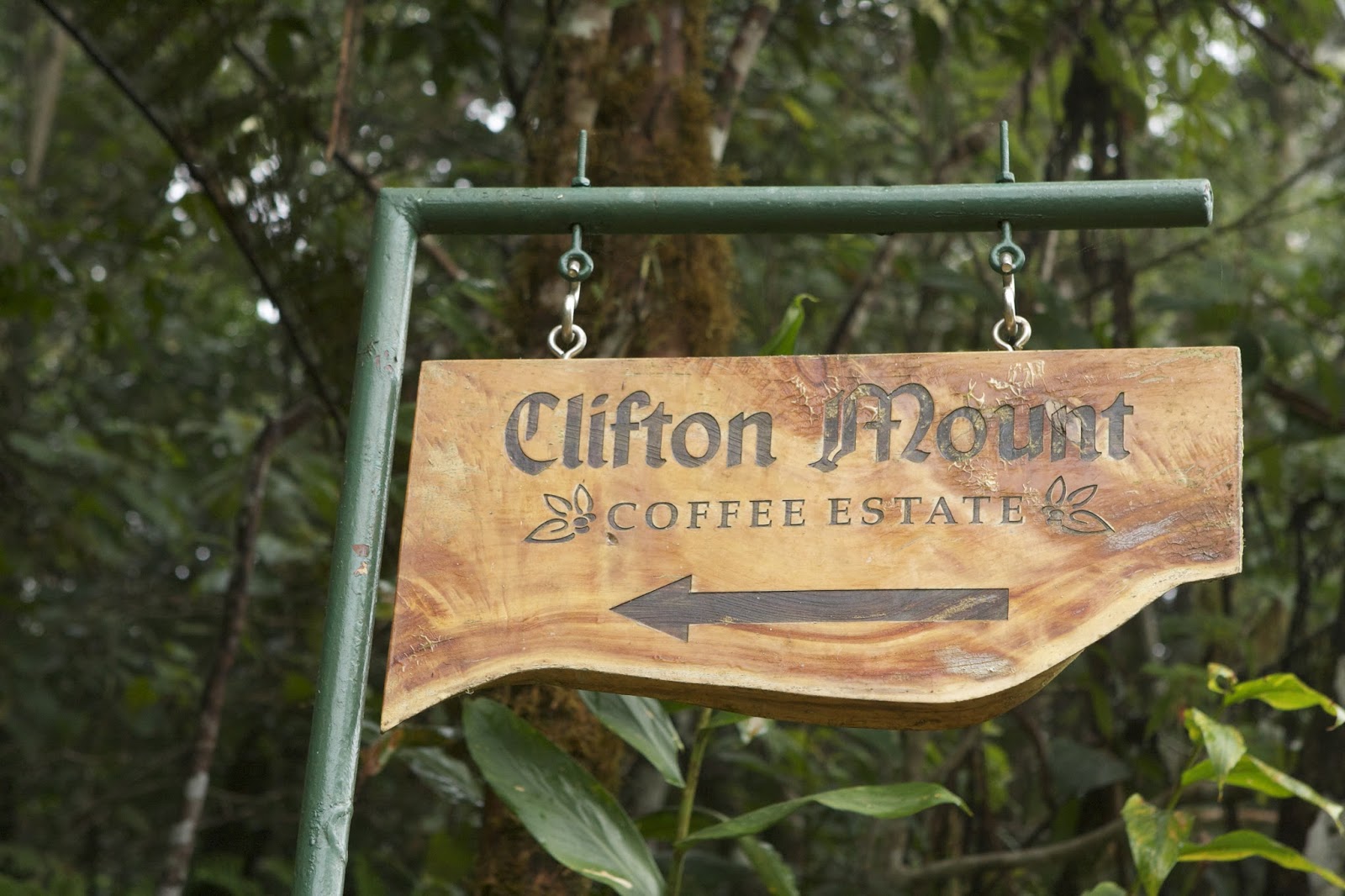
Clifton Estate can also claim to be the most innovative estate in the entire Blue Mountain region. Between 2019 and 2020 it launched natural processed versions of Blue Mountain No. 1 Coffee and Blue Mountain Geisha Coffee. Before that, all Blue Mountain Coffee sold abroad was washed Typica.
Today the Jamaican Blue Mountain No. 1 washed Typica beans sold by FrontStreet Coffee all come from Clifton Estate. FrontStreet Coffee's offline stores display certification certificates issued by Clifton Estate alongside Blue Mountain Coffee wooden barrels carrying the green tree frog, the Rainforest Alliance Certification logo.
How to brew Blue Mountain Coffee?
To bring out the rich, balanced character of Blue Mountain No. 1 Coffee, FrontStreet Coffee recommends a lower water temperature paired with a slow-flowing Kono dripper, so that as much of the coffee as possible is extracted even at low temperature.
Letting Blue Mountain Coffee show its mild richness, FrontStreet Coffee's stores use KONO drippers with a medium-coarse grind, around the texture of coarse sugar with 70% passing the China No. 20 standard sieve, and water at 88-89°C.

The method is as follows. First pour 30g of water for the bloom and let it sit for 30 seconds. Pour a second time to roughly 125g, then wait for the coffee liquid to drop. When it has dropped about halfway, pour the final water to reach 225g. End the extraction once all the coffee has dripped through. Total extraction time is usually around 2 minutes and 10 seconds.
Hand-brewed FrontStreet Coffee Blue Mountain No. 1 Coffee has a flavor profile of rich black chocolate and nutty notes, a creamy, smooth texture, and balanced acidity and bitterness.
FrontStreet Coffee Recommendation
The bean at the center of this article is the FrontStreet Jamaica Blue Mountain No. 1, a washed Typica that comes entirely from Clifton Estate in Saint Andrew, the oldest coffee-growing area in Jamaica, planted since around 1750 and sitting at an average of 4,300 feet, about 1,310.64 meters. That altitude, the mild afternoon cloud that drifts through the hills and shades the trees, the ample sunlight and the mineral-rich soil all give the coffee tree excellent growing conditions and stretch out the ripening of the cherry. FrontStreet roasts it medium-dark and ships within 5 days of roasting, so the beans reach you at full flavor. In the cup it is clean, complex and very gentle, with chocolate sweetness, a strong body and a perfect balance of sweet, acid and bitter, no real bitterness at all, only a moderate and well-judged acidity, and a lasting fruit note in the finish.
For brewing, FrontStreet suggests a Kono dripper to build body, 15g of coffee rested 4-7 days from the roast date, a grind slightly coarser than you would use for a light roast, about the texture of white sugar, a 1:15 ratio and water at 88-89°C. Pour in three stages: 30g for a 30-second bloom, then water to 120g with a steady, vertical stream tracing slow small circles, then a final pour to 225g with a slightly faster stream and faster circling to keep the bed from clogging the dripper and over-extracting.
Because Clifton Estate is also the most innovative estate in the Blue Mountain region, it has released a natural processed Blue Mountain No. 1 alongside a natural Blue Mountain Geisha since 2019-2020, giving anyone who already knows the classic washed Typica a chance to taste the same mountain through a different process. Genuine Blue Mountain beans travel in wooden barrels, traditionally in 15 kg, 45 kg and 70 kg sizes, and each barrel carries the batch details and the green tree frog logo that mark a certified lot.
Important Notice :
FrontStreet Coffee is a long-established specialty coffee roaster in Guangzhou China, selling freshly roasted beans from its own farm in Yunnan as well as dozens of carefully selected single-origin beans from around the world for both pour-over and espresso. The products deliver consistently excellent quality and great value, with shipping within 24 hours. Guangzhou's FrontStreet Coffee shop is recommended by many coffee lovers, and the beans are now available online at the Tmall 。
FrontStreet Coffee has moved to a new address:
FrontStreet Coffee Address: 315,Donghua East Road,GuangZhou
Tel:020 38364473
 Scan and follow the En Gafei WeChat official account. Please indicate that the reprint comes from "En Gafei".