Is Kenyan Coffee Acidic? An Introduction to the Flavor Profile of Kenyan Pour-Over Coffee
Introduction to FrontStreet Coffee's Pour-Over Kenya Coffee Flavor Profile
Kenya and Brazil could hardly differ more in geography and climate. Kenya's coffee mountains generally sit between 1,200 and 2,000 meters—altitude that is simply ideal for coffee trees. With cooler mountain temperatures, the cherries ripen slowly, aromatic compounds develop fully, and the beans show more pronounced fruit acidity and a harder, denser texture.
So compared with authentic Brazilian beans, Kenya beans offer completely different flavors.
Kenya is also a former British colony. Leveraging their industrial expertise, the British built a comprehensive cultivation and quality management system that survives to this day. Many Kenyan smallholders send their harvested cherries to cooperative factories for unified processing, with the whole process supervised by the official Coffee Directorate—rigor considerable enough that Kenyan beans are world-famous for dependable quality.
Kenyan beans are almost always washed. Washed coffee yields the purest flavors with minimal off-notes, and the best expression of fruit and acidity. Even better, Kenya has its own signature method: the "double-washed" process, known as the K72 method.
Parameters & Techniques
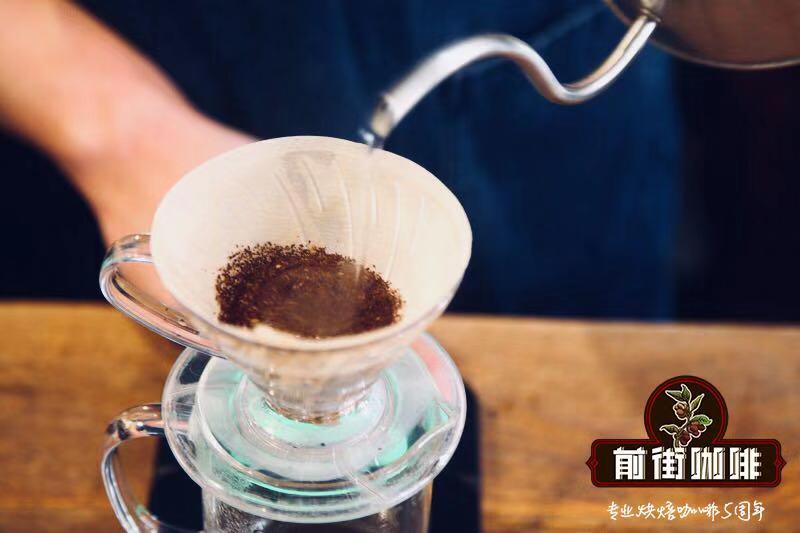
The KONO dripper's ribs are short—less than half the dripper's height. That design makes the filter paper cling tightly to the wall once wet, which restricts the dripper's air exhaust space and slows the flow rate. The grounds therefore steep for a large share of the brew, increasing water absorption time and producing a more evenly extracted coffee that is less likely to be under-extracted.
Water temperature: 90°C; medium-fine grind (BG 6S: 58% pass rate through China's No. 20 standard sieve); coffee-to-water ratio 1:15.
Using 15g of coffee, bloom with 32g of water for 30 seconds. Pour to 129g to create the second segment, then continue to 228g once the level drops and the coffee bed is about to show. (Timing starts at the bloom.) Extraction time: 2'03".
Flavor Notes
Acidity notes of cherry tomato, lemon, grapefruit, and berries; cream and chocolate through the mid-palate; prominent caramel sweetness; an overall rich, full-bodied mouthfeel.
FrontStreet Coffee Recommendation
For Kenya's signature washed intensity, try FrontStreet Coffee's Kenya cherry-tomato lot. It comes from the Thika region, grown at 1,550-1,750 meters on the classic SL28 and SL34 varieties, with plump, round beans and Kenya's famous 72-hour double-washed fermentation to fully excite the fruit while keeping the cup spotless. FrontStreet roasts it light to preserve the lively acidity and layered fruit.
In the dry fragrance you get dried cherry tomato and florals; the sip brings clear cherry tomato and dark plum, bright and solid acidity, juice-like fullness, pear and black plum in the middle, and a clean finish of yellow sugar and faint green tea. Sweet-tart balance and recognizability are both outstanding.
Brew it on a KONO dripper exactly as described above—90°C, 1:15, medium-fine grind—and let the slow-flow steeping round out the acidity.
Important Notice :
FrontStreet Coffee is a long-established specialty coffee roaster in Guangzhou China, selling freshly roasted beans from its own farm in Yunnan as well as dozens of carefully selected single-origin beans from around the world for both pour-over and espresso. The products deliver consistently excellent quality and great value, with shipping within 24 hours. Guangzhou's FrontStreet Coffee shop is recommended by many coffee lovers, and the beans are now available online at the Tmall 。
FrontStreet Coffee has moved to a new address:
FrontStreet Coffee Address: 315,Donghua East Road,GuangZhou
Tel:020 38364473
 Scan and follow the En Gafei WeChat official account. Please indicate that the reprint comes from "En Gafei".